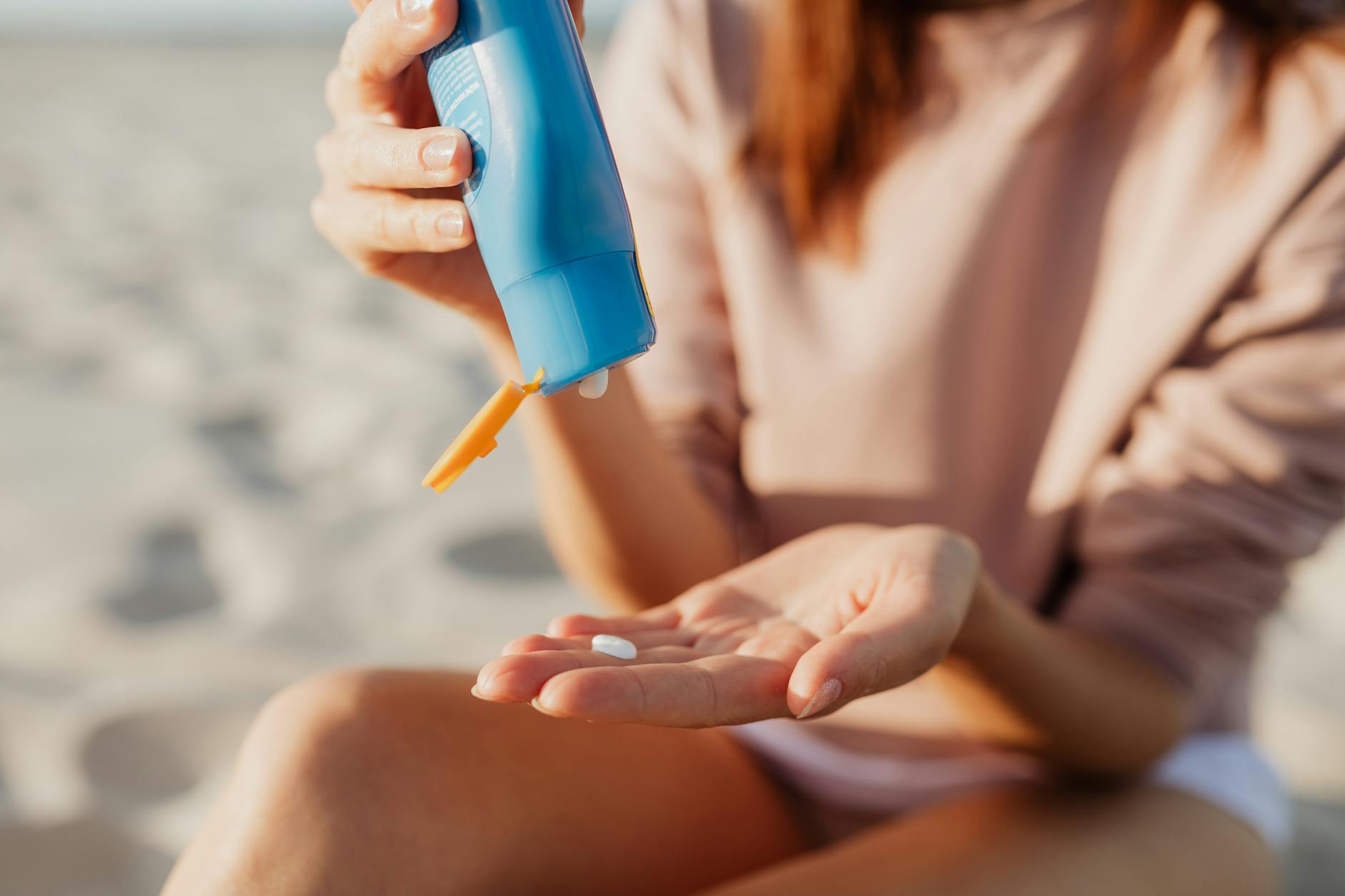

Pick up a bottle of sunscreen from any drugstore shelf and you’ll probably feel like you’re doing something right. The label promises broad-spectrum protection, a reassuring SPF number, maybe even a dermatologist-tested seal. So you buy it, apply it, and head outside, confident you’ve taken care of your skin. But here’s what the label doesn’t tell you: the bottle you just grabbed may be one of the roughly 80% of sunscreens on the American market that independent scientists say don’t fully measure up on safety and effectiveness.
This isn’t a fringe concern from the wellness corners of the internet. The scrutiny is coming from researchers, federal health agencies, and now the U.S. Food and Drug Administration itself. Over the past few years, questions about what’s actually in popular sunscreens, how well they work, and whether some ingredients do more harm than good have grown from whispers into a full-scale conversation among scientists and skin cancer specialists alike.
Finding safe sunscreen brands has never felt more complicated. And this summer, there are real, research-backed reasons to know what you’re looking for before you buy.
The 20% Problem: What the Data Actually Shows
It’s time to stock up on sunscreen, but few choices on store shelves today are both safe and effective. According to EWG’s 2026 Guide to Sunscreens, a report now in its 20th year from the Environmental Working Group (EWG), a nonprofit health and environmental advocacy organization, the guide analyzed 2,784 products and found only 550, about 20%, deliver safe and effective protection against the harmful rays of the sun.
To be recommended by EWG, sunscreens must protect against both UVA and UVB, two types of ultraviolet rays known to damage DNA and age the skin. That sounds straightforward enough. The problem is that the majority of products on the market fall short of that bar. A peer-reviewed study by EWG scientists found that, on average, sunscreens provided only a quarter of the UVA protection stated on their labels. That’s not a small gap. Shoppers buying on the strength of a label claim are often getting significantly less protection than they think.
Recommended sunscreens in the new guide also avoid retinyl palmitate, a form of vitamin A, and chemicals suspected to cause cancer, skin irritation, allergic reactions, reproductive harm, developmental issues, or neurotoxicity. Each of those categories represents a real concern, not theoretical risk, which is why researchers say product selection deserves more thought than most people give it.
The Ingredient Question: What’s Actually Going Into Your Skin
Not all sunscreens work the same way. There are two broad types: mineral and chemical. Of the 550 products recommended by EWG, 497 are predominantly made from minerals that sit on the skin and physically deflect and block the sun’s rays. Because they are not absorbed into the dermis, mineral-based sunscreens cause little skin irritation or toxicity. The FDA approved two minerals for use in sunscreen, zinc oxide and titanium dioxide. Chemical sunscreens, however, are designed to soak into the skin and work by creating a chemical reaction that absorbs ultraviolet radiation as energy, dispersing it as heat.
The mineral vs. chemical distinction matters more than it once did. A dozen types of chemicals were used for decades in sunscreens without concern. Then, a 2019 FDA study published in JAMA found that six of the most commonly used chemical sunscreen ingredients could enter the human bloodstream at unsafe levels after only one day of use. That finding set off a chain reaction of scrutiny that hasn’t let up since. As David Andrews, EWG’s chief scientific officer, noted in a 2026 CNN report, the FDA itself, not EWG, determined that 12 of the 16 chemical filters currently on U.S. shelves lack sufficient safety data to be classified as safe and effective.
According to EWG’s ingredient safety research, the ingredients oxybenzone, octinoxate, octisalate, octocrylene, homosalate, and avobenzone are all systemically absorbed into the body after typical sunscreen use, based on studies published by the FDA. These studies also reported that the ingredients could be detected on the skin and in the blood weeks after they were last used. Other studies have detected sunscreen ingredients in breast milk, urine, and blood plasma samples, confirming they’re absorbed into the body through skin.
One chemical in particular, oxybenzone, has attracted the most scrutiny. The same EWG ingredient safety page cites a 2023 review of 254 studies that found mounting evidence oxybenzone has endocrine-disrupting properties when sunscreen is applied as it normally is. Endocrine disruption means the chemical can interfere with the body’s hormonal system, a process that’s especially concerning for children and pregnant women. A 2025 review of UV filters confirmed that oxybenzone is associated with reproductive harm, with concerns about harm to the developing fetus and pubertal outcomes.
That said, dermatologists are quick to point out that avoiding sunscreen entirely is not the answer. The well-documented risks of UV radiation and skin cancer are real. You can read more about recognizing skin cancer signs to understand what’s at stake. The goal is smarter product choice, not avoidance.
Progress, But Not Enough: Oxybenzone Is Fading, Slowly
There is good news buried in this year’s data. According to the EWG 2026 guide, over the last 19 years, the number of products using oxybenzone has dropped from 70% to only 5%. Despite this change, the guide could recommend only 53 chemically based sunscreens containing few concerning ingredients. That’s a meaningful shift, but it also shows how much further the industry still has to go.
According to the EWG’s 2026 news release, more than one in three sunscreens evaluated in 2026 list undisclosed “fragrance” on the label, a word that can conceal hundreds of chemicals, including allergens, hormone disruptors, and carcinogens. For daily sunscreen users, those exposures accumulate. The same EWG news release notes that Congress set a 2024 deadline for the FDA to address fragrance allergen labeling in cosmetics, a rule that would have covered moisturizers with SPF. The agency missed it. There is no equivalent fragrance disclosure requirement for sunscreens, so consumers have no way to know what is hidden behind that word on a product label.
America’s Ingredient Gap: Why European Sunscreens Are Often Stronger
Part of the problem goes back decades. The EU has approved 34 UV filters for use in sunscreens, compared to 16 in the U.S. The reason for this gap is largely regulatory. The U.S. is unlike most of the world in that the FDA regulates sunscreen as an over-the-counter drug instead of as a cosmetic. U.S. sunscreen ingredients must meet the same strict standards as any over-the-counter drug, like Advil or Tylenol. In the EU, Australia, and most of Asia, sunscreen is classified as a cosmetic, which allows companies to identify and gain approval for safer sunscreen ingredients quicker than in the U.S.
The practical result is that people in Europe and Asia have had access for years to UV filters that offer stronger, more stable UVA protection than most products available in American stores. That gap may finally be starting to close.
A New Ingredient on the Horizon
In December 2025, the FDA proposed classifying bemotrizinol as a new active sunscreen ingredient for the U.S. market, the first time in over 25 years that a new UV filter has been formally considered for American shelves. According to EWG’s executive summary, bemotrizinol has been used in sunscreens in other countries since 1999, offering greater protection against harmful UVA rays. UVA radiation is the sun wavelength that penetrates deepest into the skin, leads to premature skin aging, suppresses the immune system, and increases risk of skin cancers like melanoma.
The FDA’s announcement states explicitly that bemotrizinol provides UVA and UVB protection and has low skin absorption and infrequent irritation. Based on available data, bemotrizinol indicates low concern for toxicity, cancer, and reproductive effects, and studies show that it is non-irritating and does not cause allergic reactions.
A spokesperson for the FDA told CNN that the agency is reviewing public comments received and noted that “these timelines can vary depending on the volume and substantiveness of the comments received,” adding that the FDA could not comment on exact timing. Reporting from CNN’s 2026 sunscreen coverage suggests sunscreen with bemotrizinol could appear on American shelves as early as late 2026. For consumers who have long envied the more effective formulas available abroad, that’s a development worth watching.
The SPF Number Game: What It Really Means
Walk down any sunscreen aisle and you’ll see SPFs ranging from 15 to 100+. The numbers matter, but not in the way most people think. Products with SPF 70, 80, or 100+ may not provide better UVA protection and can create a dangerous false sense of security.
Consumers are often drawn to more expensive products that reach SPF levels of up to 100+, which claim to block 99% of UVB rays. Yet there’s little difference in effectiveness, as a cheaper SPF 50 sunscreen can block 98% of rays, according to the EWG report. A one-percentage-point difference in UVB blocking is not the same as twice the protection. The extra SPF can actually push people toward applying less frequently, which is where real protection breaks down. Experts consistently recommend staying in the SPF 30 to 50 range and reapplying properly rather than chasing inflated numbers.
On the topic of spray vs. lotion: EWG recommends choosing lotions or sticks over sprays. Sprays raise concerns about inhalation and often result in uneven coverage, especially in wind.
How to Actually Use Sunscreen Correctly
Knowing how to choose a sunscreen is only half the battle. Application matters just as much. Most people apply far too little, which dramatically reduces actual protection regardless of which product they use.
Adults should aim to apply 6 to 8 teaspoons of sunscreen to the entire body. Apply sunscreen 15 to 30 minutes before going out in the sun, and reapply at least every 2 hours. If you’re swimming or sweating, that timeline shortens considerably. Water-resistant formulas are rated for either 40 or 80 minutes in water, but the clock restarts the moment you towel off.
For children, the picture is slightly different. If the FDA’s bemotrizinol proposal is finalized, it will be generally recognized as safe and effective for use by adults and children 6 months of age and older, expanding consumer choice. For now, mineral sunscreens with zinc oxide and titanium dioxide remain the safest and most well-studied option for young children and infants over 6 months.
Read More: Rare But Deadly Skin Cancers That People Often Overlook
What to Look for on the Label Right Now
Given everything, here is what the current evidence suggests when evaluating safe sunscreen brands.
First, look for “broad-spectrum” on the label. This means the product protects against both UVA and UVB rays. SPF alone tells you about UVB protection only. A product can have a high SPF and still provide poor UVA coverage, which is the wavelength most linked to skin aging and deeper skin damage.
Second, check the active ingredients. EWG recommends choosing mineral protection and looking for zinc oxide, which provides stable, balanced UVA and UVB coverage. EWG also recommends titanium dioxide for daily use. If you prefer a chemical sunscreen, look for formulas that don’t rely on oxybenzone or homosalate as primary filters.
Third, scan for the word “fragrance” in the ingredient list. There is no fragrance disclosure requirement for sunscreens, so consumers have no way to know what is hidden behind that word on a product label. If fragrance-free options exist in the same SPF and formulation category, they’re worth choosing.
Fourth, match your SPF to your exposure level. The American Academy of Dermatology recommends SPF 30 or higher for most people, with broad-spectrum and water-resistant claims. Stick within the SPF 30 to 50 range and skip the high-number products that promise protection they can’t fully deliver.
The Bottom Line
The main takeaway from this year’s data is not that sunscreen is bad. It’s that most sunscreens are not as good as they could be, and that reading labels matters. Mineral sunscreens built around zinc oxide or titanium dioxide have the most robust safety profile right now. They don’t enter the bloodstream, they don’t raise the hormonal disruption questions that some chemical filters do, and they’re the only actives the FDA currently classifies as both safe and effective without reservation.
If you currently use a chemical sunscreen you love and will actually wear every day, that’s still better than nothing. Researchers and dermatologists agree that consistent, properly applied protection, even from an imperfect product, beats skipping sunscreen entirely. But if you’re rebuilding your routine or shopping for children, a mineral formula is the safer starting point. Look for the EWG’s verified sunscreen list as a practical shortcut. Of the sunscreens carrying the EWG Verified mark, all meet standards that go beyond what U.S. or European regulators currently require. Apply enough, apply early, reapply on schedule, and wear a hat. Sun protection is still worth the effort. You just want to make sure the product is actually delivering it.
Disclaimer: This information is not intended to be a substitute for professional medical advice, diagnosis, or treatment and is for information only. Always seek the advice of your physician or another qualified health provider with any questions about your medical condition and/or current medication. Do not disregard professional medical advice or delay seeking advice or treatment because of something you have read here.
AI Disclaimer: This article was created with the assistance of AI tools and reviewed by a human editor.
Read More: Food and Sun Protection: How This Fruit May Help and What the Research Shows