
Georgia’s youngest-ever U.S. Senator posted 52 times on Truth Social in a single afternoon – and spent part of the next evening telling an Atlanta crowd that was the proof they needed. Trump had used his scheduled “executive time” to flood Truth Social with a torrent of memes, AI-generated content, political attacks, and fan-made tributes. The posts included AI-generated images declaring Trump the GOAT – Greatest of All Time – alongside multiple comparisons to George Washington and other founding fathers. Senator Jon Ossoff watched all of it, and decided it was gift-wrapped campaign material.
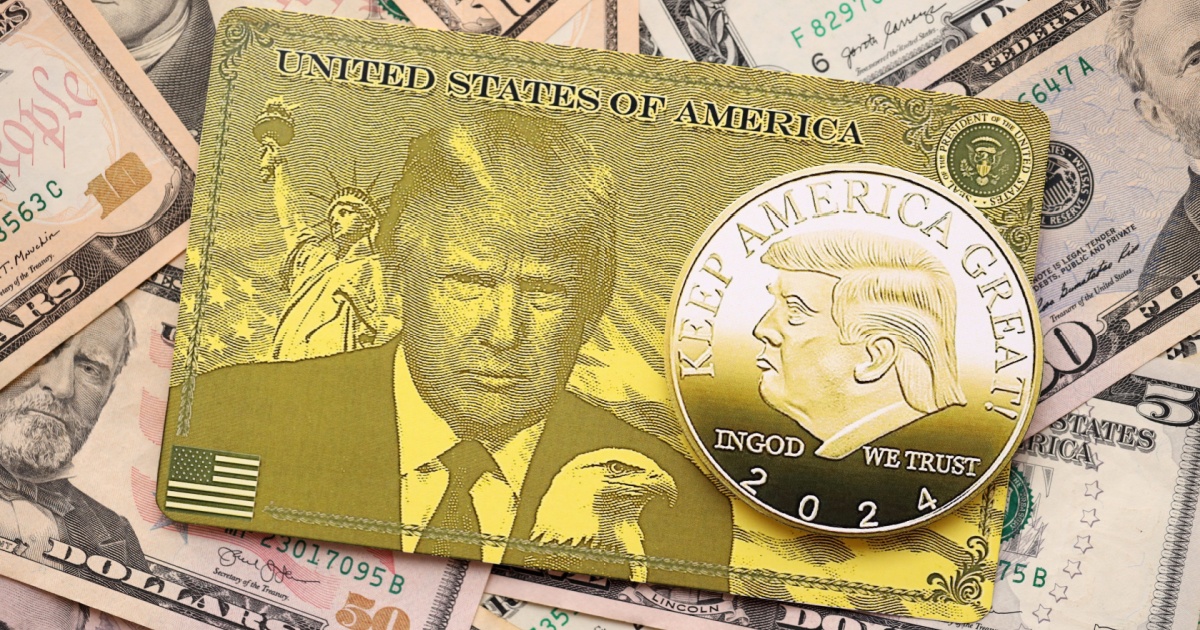
Ossoff used a campaign rally at downtown Atlanta’s The Tabernacle on Sunday to sharpen Democratic attacks against President Trump’s administration. The line that went viral was blunt: “He’s trying to put his face on the money. Did you see that? He’s building a monument to himself. But see, Atlanta, he’s doing these things now because no one will honor him when he’s gone – because he’s a failed president and a national disgrace.”
The crowd cheered. The list of things now bearing the Trump name is longer than most people realize – and the pattern extends far beyond buildings.
The Scale of Trump Branding Psychology in Government
The federal government is undergoing an unprecedented presidential branding makeover, with Donald Trump’s name being added to everything from buildings and battleships to a drug website and a national park pass. No president in American history has done this so comprehensively, so quickly, or so personally.
The first federal building to be named after a sitting U.S. president was the U.S. Institute of Peace headquarters in downtown Washington, in December 2025. The renaming was carried out by the State Department. Secretary of State Marco Rubio framed it as a tribute, writing on social media: “President Trump will be remembered by history as the President of Peace. It’s time our State Department display that.”
Two weeks later came a much bigger name. The White House announced that the John F. Kennedy Memorial Center for the Performing Arts would be renamed the Donald J. Trump and the John F. Kennedy Memorial Center for the Performing Arts – or simply the Trump Kennedy Center. The vote was unanimous among a board whose members were all appointed by Trump. The Kennedy family was not pleased. John F. Kennedy’s niece, Kerry Kennedy, reacted on social media saying “three years and one month from today, I’m going to grab a pickax and pull those letters off that building.”
She may not need to wait that long. In May 2026, a federal judge temporarily blocked the Trump administration from closing the Kennedy Center and ordered the removal of Trump’s name from the building. U.S. District Judge Christopher Cooper ruled that Trump’s handpicked board did not have the authority to rename the facility on its own, writing: “The Kennedy Center’s organic statute makes crystal clear that the Center is to be named for President Kennedy, and it cannot bear any other formal name or public memorial based on the Board’s unilateral say-so.” The ruling came in response to a lawsuit filed by Rep. Joyce Beatty, an Ohio Democrat and ex officio Kennedy Center trustee, whose civil complaint challenged the renaming, the closure of the center for renovations, and her being stripped of voting rights by the board.
Buildings, Battleships, and Babies’ Bank Accounts
The Kennedy Center was not an isolated incident. Trump’s name and face have appeared on multiple federal buildings around Washington, D.C., and he’s unveiled new government programs – and warships – bearing his moniker.
On December 22, 2025, Trump announced a new class of warships, with two ships to be initially constructed of 10 planned. The first ship is planned to be named USS Defiant. The Trump-class battleship is a proposed nuclear-powered guided-missile warship, announced in December 2025. The new platform will be a more than 35,000-ton warship – more than double the size of the 15,000-ton Zumwalt class of destroyers, which is the largest surface combatant currently in the fleet. The announcement marks the first battleship construction plan since 1944, when the USS Missouri was delivered to the Navy.
The branding extends to children’s finances. Created under the “One Big Beautiful Bill,” Trump Accounts are tax-advantaged investment accounts for children under 18 – and babies born between January 1, 2025, and December 31, 2028, will receive $1,000 from the Treasury Department to kick-start their accounts. Regular contributions to Trump Accounts can begin starting July 4, 2026. The accounts open on Independence Day – a branding choice that is almost certainly not coincidental.
There’s also TrumpRx. In February 2026, the administration launched TrumpRx.gov, a self-pay prescription drug website that offers coupons people can take to the pharmacy where they fill their prescriptions. The platform relies largely on prices already available at the discount pharmaceutical marketplace GoodRx.
And then there’s the currency. Ossoff’s line about Trump “trying to put his face on the money” wasn’t rhetorical flourish. The State Department revealed a design for a new passport commemorating the nation’s 250th birthday that includes a page featuring a picture of Trump’s face. Only 19 percent of Americans approved of the Trump passport design, with 62 percent disapproving, according to a poll of 4,559 adults conducted on April 29, 2026.
A commemorative coin is also in the works. In March 2026, the Commission of Fine Arts approved a design for a gold coin featuring Trump on the obverse – the face side – to mark the country’s 250th anniversary. Even the national park pass now bears his image. The Interior Department unveiled the 2026 America the Beautiful National Park pass featuring a side-by-side image of George Washington and Trump to commemorate America’s 250th anniversary. A conservation group sued the administration, arguing that placing the president’s face on the pass violates the 2004 Federal Lands Recreation Enhancement Act, which requires the pass to feature the winner of an annual photo competition.
What Psychology Research Says About Presidential Self-Branding
The trump branding psychology question Ossoff raised in Atlanta has a serious body of research behind it. Political psychologists study a cluster of traits they call the “dark triad” – narcissism, Machiavellianism, and psychopathy – and how those traits manifest in leaders. Narcissism, defined in the research literature as bombastic self-promotion and egotistic entitlement, is one of the three traits researchers have linked to heightened political aggressiveness.
A 2025 paper published in the European Journal of Political Research found growing evidence that dark personality traits in political leaders correlate with increased polarization in the public – with the in-party’s leader having the strongest effect on shaping how supporters view the out-group.
Research on narcissistic leaders notes that the desire for admiration and power drives them to engage in more self-promotion and seek recognition than less narcissistic leaders, though the literature is less clear on whether these strategies ultimately work. A 2025 paper examining grandiose narcissism and leadership found that confidence and high self-regard – helpful traits in leaders – can tip into overconfidence and eventual failure. A pivotal obstacle for narcissistic leaders is their inability to sustain benevolent perceptions over time.
The research literature is also careful to distinguish between theatrical self-promotion and clinical diagnosis – a distinction that matters here. There is no formal psychiatric assessment of Donald Trump in the public record. What exists is observable behavior, and that behavior is extensive.
The public polling suggests the branding effort has real costs. The TrumpRx numbers are particularly instructive. When the drug discount website was described without mentioning the name TrumpRx, 57% of Americans approved and only 19% disapproved. When the name TrumpRx was mentioned, opinions became far more divided. The results suggest the choice of TrumpRx as the name could increase uptake among Republicans but may decrease usage among Americans overall – meaning the branding may actually reduce access to cheaper drugs for the people it was supposedly designed to help.
The Gold Card, the Meme Coin, and the White House Ballroom
Some of the branding operates at the intersection of government and commerce in ways that have drawn legal scrutiny. The Trump Gold Card visa program, established via Executive Order 14351, created a new visa for people willing to pay $1 million to enter the U.S., or whose employers are willing to pay $2 million to sponsor them. As of May 2026, only one person had been approved for the Trump Gold Card, Commerce Secretary Howard Lutnick confirmed.
The $TRUMP meme coin – a cryptocurrency bearing the president’s image – was launched three days before his inauguration, on January 17, 2025. Critics have argued it constitutes a direct financial instrument tied to the president’s personal brand, creating conflicts of interest while he holds office.
Even the White House itself has been physically altered. Trump demolished the East Wing of the White House to build a ballroom – a structural change to the most symbolically significant building in the country.
Trump has long been known for putting his name on everything from skyscrapers to golf clubs to steaks. During his time in the White House, he’s brought that same penchant for branding into various corners of the U.S. government, applying it to federal buildings and programs the same way he did his business empire and campaign merchandise.
Ossoff’s framing – that this is the behavior of someone who doubts how history will remember him – aligns with what researchers describe as the anxiety beneath grandiose self-promotion. Political scientists describe a “compound appetite” process in ambitious leaders, in which each new success encourages more intense cravings for power and a bigger sense of entitlement, a cycle the research literature suggests does not naturally self-correct.
Read More: Trump and Psychosis: What the Evidence Shows
What the Polling Actually Shows
Trump dropped to a record low for presidential job approval in the May 22-26, 2026 Economist/YouGov poll, with 34% of Americans approving and 59% disapproving, for a net approval of -26 – a record low for either of his terms or Biden’s term. The rating is also lower than any approval rating former President Biden received during his presidency, according to YouGov.
Those numbers matter in direct relation to the branding campaign. When the name on a government drug-discount program reduces how many people use it – as the TrumpRx polling data shows – branding becomes a public health issue, not just a political one. When a federal judge rules that a major cultural institution was illegally renamed, the legal precedent carries weight for every future administration. When children’s investment accounts are named after a sitting president, the question of what happens to those accounts – politically and financially – if the name becomes a liability is real and practical.
Attaching a polarizing name to a government service – a drug website, a children’s savings account, a national park pass – divides the country over things that should be routine. The passport polling captures that dynamic cleanly: 62% of Americans opposed a commemorative design that was, at its core, just a travel document. That’s the measurable cost of trump branding psychology at scale, and it’s one that outlasts any single Senate campaign speech in Atlanta.
AI Disclaimer: This article was created with the assistance of AI tools and reviewed by a human editor.
Read More: Expert Claims Trump Showed Stroke Signs On Camera – Here’s What To Look For