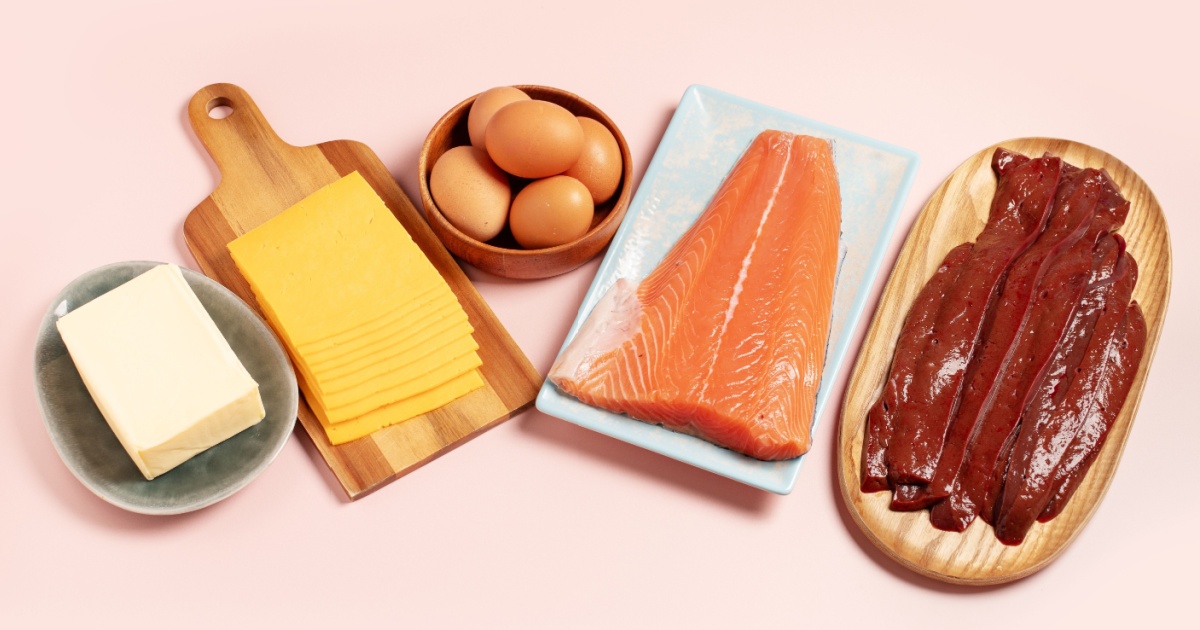

The last time the U.S. government overhauled its food pyramid, Bill Clinton was in the White House and low-fat yogurt was considered a health food. The new food pyramid diet released earlier this year has a different set of priorities, and for millions of Americans who grew up with bread and pasta filling the base of every meal, the visual alone is disorienting. The whole structure has been flipped upside down.
On January 7, 2026, the United States Department of Agriculture and the Department of Health and Human Services released the 2025-2030 Dietary Guidelines for Americans. The guidelines reflect a new “Eat Real Food” messaging campaign and a redesigned food pyramid consistent with the current administration’s broader Make America Healthy Again (MAHA) agenda. The old image of grains anchoring the base while fats were banished to the tip? Gone. In its place sits an inverted pyramid that elevates protein and dairy to prominent positions – alongside a formal endorsement of beef tallow as a healthy cooking fat.
The context for the overhaul is hard to ignore. According to the HHS press release, more than 70% of American adults are overweight or obese, and nearly 1 in 3 adolescents has prediabetes. The guidelines are updated every five years based on the most recent health and nutrition research, but this cycle produced changes so significant that they’ve divided the nutrition community along sharp lines. What the new guidelines say about protein, fat, dairy, sugar, and alcohol represents a genuine departure from the framework most adults have followed for decades – with some shifts drawing broad applause and others drawing pointed concern from cardiologists and nutrition scientists alike.
The New Food Pyramid Diet: What’s Actually Changed
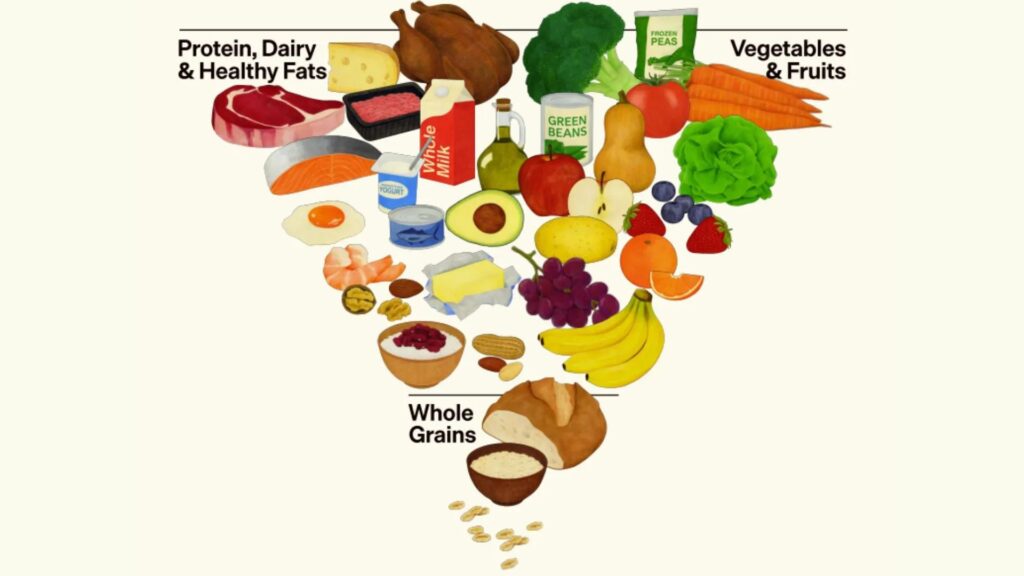
A redesigned food pyramid now places protein, dairy, and healthy fats alongside vegetables and fruits in the largest sections, with whole grains occupying a smaller portion at the base. At a high level, the 2025-2030 guidelines place increased emphasis on protein intake and whole foods, and limits on highly processed foods, while retaining many foundational elements of prior guidance, including recommendations related to fruits, vegetables, whole grains, and saturated fat intake.
The single most dramatic numerical change is in protein. The new target jumps from 0.8 grams per kilogram of body weight per day to 1.2 to 1.6 grams per kilogram. For a 150-pound adult, that means roughly 82 to 109 grams of protein daily – up to double the previous recommendation. The guidelines urge Americans to include a protein-rich food at every meal, drawing from both animal sources – red meat, poultry, seafood, eggs – and plant sources like beans, lentils, nuts, seeds, and soy.
Not everyone is convinced the change is scientifically justified. Christopher Gardner, PhD, the Rehnborg Farquhar Professor of Medicine at Stanford University and a former member of the 2025 Dietary Guidelines Advisory Committee, wrote on LinkedIn that the guidelines “overemphasize protein despite widespread adequacy, downplay fiber, and offer vague guidance on processed foods.” He added that they “promote foods high in saturated fat while advising saturated fat limits that are difficult, if not impossible, to meet given their food recommendations.”
Marion Nestle, professor emerita of nutrition, food studies, and public health at New York University, was more pointed. On her Food Politics blog, Nestle called the guidelines “muddled, contradictory, ideological, retro,” and described them as big wins for “the meat, dairy, and alcohol industries.” She argued that prioritizing animal-based proteins over plant-based ones “is inconsistent with research on diet and health.”
Beef Tallow, Butter, and Full-Fat Dairy: What the Guidelines Actually Say
When consuming dairy, the guidelines specifically recommend full-fat dairy with no added sugars. Dairy is described as an excellent source of protein, healthy fats, vitamins, and minerals, with a target of three servings per day as part of a 2,000-calorie dietary pattern. That’s whole milk, full-fat Greek yogurt, and real cheese – a significant reversal from decades of low-fat dairy messaging.
On cooking fats, the guidelines recommend cooking with “healthy fats” like olive oil, butter, and beef tallow, while maintaining the recommendation to limit saturated fat to no more than 10% of daily calories. The broader definition of healthy fats has also expanded considerably. The HHS fact sheet emphasizes that most dietary fats should come from whole-food sources such as meats, seafood, eggs, nuts, seeds, full-fat dairy, olives, and avocados – while nutrient-dense oils like olive oil are preferred when adding fats to a meal.
The beef tallow endorsement is the change generating the most debate. A January 2026 analysis from the American College of Cardiology found that “evidence from feeding trials and/or cohort studies does not support promotion of butter or beef tallow,” and that if the newly recommended servings of animal protein and proposed healthy fats including butter and beef tallow are incorporated into the diet, saturated fat intake will exceed the 10% daily ceiling. The ACC analysis also noted that the guidelines simultaneously retain the 10% saturated fat limit while promoting foods that collectively push intake past it.
The numbers explain why. On a 2,000-calorie diet, the 10% saturated fat limit equates to roughly 22 grams. Three servings of the full-fat dairy options recommended – one cup of whole milk, three-quarters cup of full-fat Greek yogurt, and one ounce of cheddar cheese – already deliver around 17 grams of saturated fat before a single other meal is considered.
Meanwhile, fiber – one of the nutrients Americans most consistently fail to consume in adequate amounts – is notably downplayed by the guidelines.
The American Heart Association responded directly to the fat and protein guidance. It encouraged consumers “to prioritize plant-based proteins, seafood and lean meats and to limit high-fat animal products including red meat, butter, lard and tallow, which are linked to increased cardiovascular risk.” Separately, the AHA’s own dietary guidance, published on its saturated fats page, recommends capping saturated fat at less than 6% of daily calories – well below the 10% ceiling maintained in the new federal guidelines.
For anyone specifically wondering about beef tallow: its inclusion alongside olive oil is one of the clearest contradictions nutrition researchers have identified, and cardiologists in 2026 have noted that beef tallow is about 50% saturated fat – a type that’s solid at room temperature and can raise LDL (the form of cholesterol linked to arterial plaque buildup) in ways that unsaturated fats do not. Using it occasionally in cooking is unlikely to cause harm for most people, but treating it as a daily cooking fat equivalent to olive oil carries meaningful caveats.
The Sugar and Processed Food Overhaul
The section of the new guidelines drawing the most unanimous praise is its stance on sugar and ultra-processed foods – and the changes here are more aggressive than in any previous edition.
Refined grains have been kicked off the pyramid entirely. The guidelines advise people to “significantly reduce” highly processed refined carbohydrates – described as “sugar in disguise” – including white bread, packaged breakfast foods, flour tortillas, crackers, and pasta. This is a sharper position than the previous guidance, which simply recommended that at least half of all grains be whole grains.
On added sugar specifically, the new guidelines take an overall strict position, noting that “no amount of added sugars or non-nutritive sweeteners is recommended or considered part of a healthy or nutritious diet.” In practical terms, the guidelines maintain longstanding recommendations on limiting sodium intake, promoting whole grains, and highlighting the importance of consuming fruits and vegetables, and introduce notable shifts focused on increasing daily protein intake from nutrient-dense sources, emphasizing the benefits of dairy, and advising against “highly processed” foods.
Added sugars in children receive heightened attention. The HHS fact sheet calls on parents to completely avoid added sugar for children aged four and under, a stricter position than previous guidance, which only discouraged added sugars for children under two.
For whole grains, the target is 2-4 servings per day – fewer than in previous editions, but the emphasis on quality over quantity is firm. Whole grains have been demoted to the narrow tip at the bottom of the pyramid, with daily recommendations reduced to two to four servings. Fiber received relatively little attention in the guidelines despite its well-established role in gut health, blood sugar control, and reduced risk of heart disease. That fiber gap is one reason several nutrition researchers, including those at Harvard’s T.H. Chan School of Public Health, have pointed to a practical tension in the new framework: pushing protein and dairy while pulling back on whole grains risks trading one nutrient gap for another – given that meat and dairy provide virtually no fiber while whole grains and legumes do.
You can read more about how animal fats interact with LDL levels in our detailed look at foods that affect cholesterol, especially if animal fats are becoming more prominent in your diet.
The Alcohol Recommendation
The change to alcohol guidance is brief and notably vague. The previous 2020-2025 guidelines set clear numerical limits – two drinks per day for men and one for women. The 2025-2030 edition replaces those specific numbers with a single instruction: consume less alcohol for better overall health. No upper limit. No gender-specific guidance. Just “less.”
Marion Nestle, in a separate comment to NBC News, summarized the ambiguity bluntly: “The alcohol industry is a big winner here (meat and dairy are the others). What does ‘limit’ mean to someone who drinks alcohol? Less than what they are currently drinking, but how much less?”
The American Heart Association, responding to the full guidelines on January 7, 2026, stated that “protein is an essential component of a healthy diet, and we urge more scientific research on both the appropriate amount of protein consumption and the best protein sources for optimal health” – a signal that even the areas of partial agreement come with significant reservations from major health bodies.
What the Federal Programs Will Now Reflect
As the foundation for all federal nutrition assistance, the new guidelines will trigger operational and policy shifts across programs serving millions of Americans. SNAP is expected to tighten eligibility for items such as sugar-sweetened beverages, candy, and energy drinks – several states have already secured USDA waivers to restrict these purchases, with some policies effective as of January 1, 2026. WIC program administrators may also be tasked with reshaping food packages, specifically regarding protein sources, dairy, and infant feeding standards, and USDA will gradually translate the guidelines into updated meal standards for school nutrition programs including the National School Lunch Program.
The stated motivation for the overhaul is the U.S. chronic disease burden. According to the HHS press release accompanying the new guidelines, nearly 90% of health care spending goes toward treating chronic disease, much of it linked to diet and lifestyle.
Read More: 9 Worst Foods for Your Cholesterol, According to Research
Pyramid Critique
After looking at how the new food pyramid is being framed and what it includes, it’s also worth considering a more critical perspective. Dr. Idrees Mughal (Dr. Idz), a UK-trained medical doctor with a master’s degree in Nutritional Research, is known for using his large TikTok and Instagram following to challenge medical misinformation and provide evidence-based nutrition commentary.
In the video below, he breaks down what has actually changed in the updated guidance, whether it represents a genuine shift in nutritional science or a rebranding of existing advice, and also highlights questions raised about potential conflicts of interest among some contributors involved in reviewing the guidance, including links to the meat and dairy industries.
What to Do With All of This
The new food pyramid diet is not a single, coherent prescription – it’s a collection of shifts, some broadly supported by evidence and some genuinely contested. The clearest wins are its hard line on sugar and ultra-processed foods. Reducing white bread, packaged snacks, and sugar-sweetened beverages is a recommendation supported by decades of research on metabolic health, regardless of political context.
The protein increase to 1.2-1.6 grams per kilogram of body weight is worth discussing with a doctor, particularly for anyone over 50, since maintaining muscle mass as we age is well-supported by research – though the source of that protein matters. Lean meats, eggs, omega-3-rich seafood, legumes, and nuts offer protein without the saturated fat load that comes with fatty cuts of red meat, full-fat dairy at every meal, or daily use of beef tallow.
For saturated fat specifically, the 10% daily limit remains in place. On a 2,000-calorie diet, that’s roughly 22 grams. Three servings of full-fat dairy already put you at roughly 17 grams – which means if you follow the dairy guidance, the cooking fat you choose will largely determine whether you stay within that limit. Olive oil, with about 2 grams of saturated fat per tablespoon, leaves more room. Beef tallow, at roughly 50% saturated fat, does not. Treat beef tallow and butter as occasional options rather than daily defaults, unless you’re carefully accounting for saturated fat intake across the whole day.
Children’s added sugar guidance is actionable and specific: avoid added sugars entirely for children under four. Cap added sugars at no more than 10 grams per meal for everyone else. Whole fruit, unsweetened dairy, and water cover most needs – the guidelines are clear that the natural sugars in fruit and milk don’t count toward that limit.
The broader message is genuinely useful even where the details are contested: eat real, whole food, avoid anything that arrives in a package designed to outlast you, and get your protein from sources that don’t simultaneously flood your body with saturated fat and sodium. That part is not new. The pyramid just finally flipped to say it louder.
Disclaimer: This information is not intended to be a substitute for professional medical advice, diagnosis, or treatment and is for information only. Always seek the advice of your physician or another qualified health provider with any questions about your medical condition and/or current medication. Do not disregard professional medical advice or delay seeking advice or treatment because of something you have read here.
AI Disclaimer: This article was created with the assistance of AI tools and reviewed by a human editor.
Read More: Weight Loss Pyramid: What’s Most Important For Losing Weight