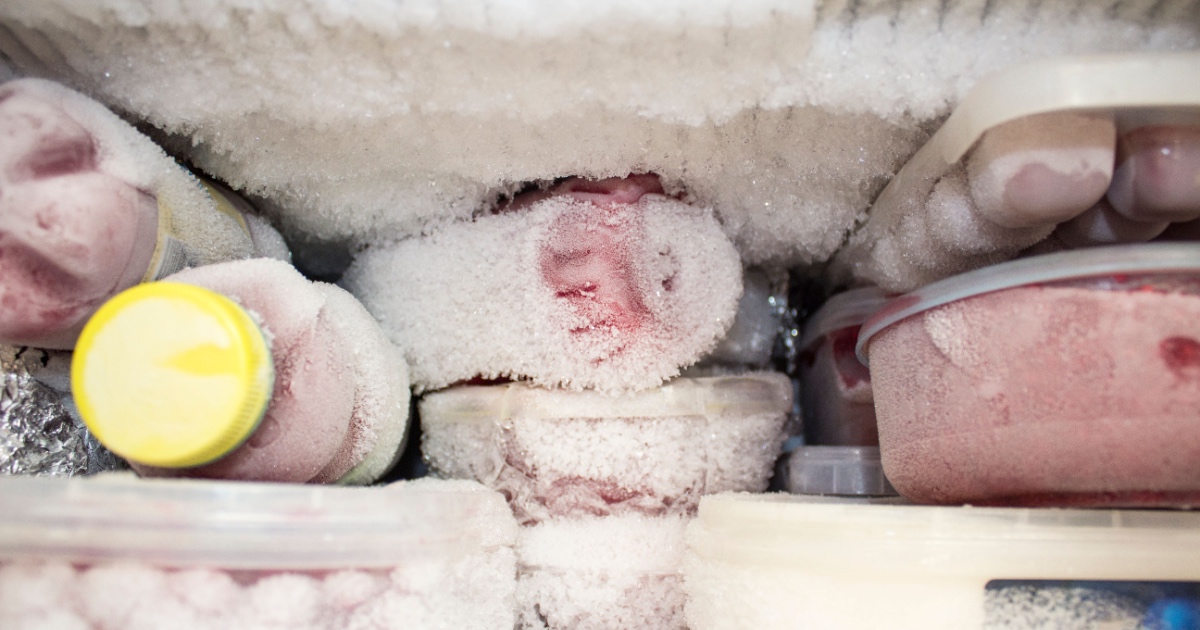

Most people who pull a frost-covered chicken breast from the back of their freezer assume something has gone wrong. The white crust, the strange texture, the papery edges – it looks like the food has been compromised. But that ice isn’t what most people think it is, and whether to cook the food or throw it away comes down to a distinction that most home cooks have never been taught to make.
The phenomenon has a name – freezer burn – and the ice crystals that signal it are the visible result of a process happening at the molecular level inside your freezer every single day. They’re not evidence that bacteria have been at work. They’re the visible signature of moisture that has escaped the food and crystallized on its surface. Understanding exactly what that means, and what it doesn’t, changes how you think about everything in your freezer.
What separates edible food from food worth discarding often has less to do with those crystals themselves and more to do with what’s underneath them, how long the food has been stored, and how it was packaged before it went in.
What Ice Crystals on Frozen Food Actually Are
The phenomenon of freezer burn happens when tiny ice crystals on the food’s surface evaporate directly into vapor without first going through the liquid water phase – a process called sublimation. This moisture loss leaves the food’s surface layers dried out and discolored. Those crystals on your food are the food’s own water molecules, which migrated to the surface and re-froze there before eventually escaping into the freezer air.
All foods contain water, which forms thousands of ice crystals when frozen. These crystals migrate to the surface of food and eventually to the coldest part of your freezer through the same sublimation process. The result – that thick, frosty coating on a forgotten bag of peas or the white film on a steak – is simply the evidence that water has been leaving the food over time.
Color changes can occur in frozen foods. The bright red color of meat as purchased usually turns dark or pale brown depending on its variety. This may be due to lack of oxygen, freezer burn, or abnormally long storage. When you peel back that icy layer and find grayish-brown, leathery patches beneath it, that’s the textbook sign of advanced freezer burn – and a useful indicator of how much quality has been lost.
The Safety Question: Can You Still Eat It?
Freezer burn is a food-quality issue, not a food safety issue. The FDA confirms this directly: while freezer-burned food may not look appetizing, it is usually safe to eat. The two things that make frozen food dangerous – microbial growth and contamination – are both stopped cold by proper freezer temperatures.
If your freezer is set to 0°F (-18°C), bacteria and other harmful pathogens cannot grow, and your food will be safe to eat, as long as it was fresh when you put it in and you thaw it correctly. The USDA’s Food Safety and Inspection Service goes further, noting that food stored continuously at 0°F can technically remain safe indefinitely – though quality is another matter entirely.
Where things get more complicated is when the food hasn’t stayed continuously frozen. If food thawed for too long, sat at room temperature, leaked, smells off after thawing, or shows signs of spoilage unrelated to dryness and frost, the safety question changes. Ice crystals alone are not cause for alarm. A package that feels soft, warm, or smells unusual after a power outage is a different situation entirely. According to the FDA, if the food still contains ice crystals or is 40°F or below, it is safe to refreeze or cook.
Ice Crystals vs. Freezer Burn: There Is a Difference

Not every frost-covered package is equally affected, and the distinction between light ice crystal formation and full freezer burn matters for deciding what to do with the food.
Foods with freezer burn may appear covered in ice crystals, discolored in spots, or shriveled. A light dusting of tiny crystals on a bag of broccoli is very different from grayish, leathery patches on a piece of beef – the first is cosmetic, the second indicates that significant dehydration and oxidation have already altered the food. If you see discolored patches under the ice crystals, Eat or Toss explains that’s the actual freezer burn – not the crystals themselves.
Rapid freezing prevents undesirable large ice crystals from forming throughout the product because the molecules don’t have time to form into the characteristic six-sided snowflake. Slow freezing creates large, disruptive ice crystals. During thawing, they damage the cells and dissolve emulsions. This causes meat to “drip” and lose juiciness. So the size of the crystals matters too – a commercially flash-frozen fillet will thaw very differently from a thick cut of meat frozen slowly in a home freezer at inconsistent temperatures.
For foods destined to be cooked rather than eaten raw, the practical impact of mild ice crystal formation is often minimal. The heat involved in cooking compensates for much of the texture loss – which is why a slightly frosty bag of frozen peas thrown into a soup is unlikely to produce a noticeably different result than a pristine one.
Why Your Freezer Causes Ice Crystals Even When You Do Everything Right
Changes in freezer temperature draw moisture out of foods and promote ice crystal formation. Opening the freezer door introduces warm air and humidity – and in a typical household, that door gets opened dozens of times a day. Each time warm, humid air enters, it eventually freezes inside the appliance, and some of that moisture settles on your food.
Iowa State University Extension notes that temperature fluctuations are one of the most common and underappreciated drivers of ice crystal formation in home freezers. The freezer isn’t always running at a perfectly steady 0°F. Defrost cycles, frequent door openings, and even placing warm food directly into the freezer can all cause brief temperature spikes that encourage moisture migration out of food.
Keeping foods chilled at proper temperatures is one of the best ways to prevent or slow the growth of bacteria including Salmonella, E. coli O157:H7, and C. botulinum. The FDA recommends maintaining your freezer at exactly 0°F (-18°C) – not just “below freezing,” but at that specific temperature – to prevent both microbial growth and accelerated quality loss. According to the FDA’s refrigerator thermometer guidance, a cheap appliance thermometer inside the freezer takes the guesswork out of this entirely.
Foods with high water content are also naturally more vulnerable. Meat, fish, fruits, and vegetables all lose moisture faster than drier foods like bread or grains – which is why a forgotten bag of shrimp looks devastated after six months while a loaf of bread looks relatively intact. If you store a lot of high-moisture proteins, this makes airtight packaging even more important.
The Real Culprit: Poor Packaging
The single biggest driver of ice crystals freezer burn is not how long food sits in the freezer – it’s how it was wrapped before going in. Stop the air contact between the food’s surface and the dry freezer environment, and you slow the process dramatically.
The thin plastic wrap that most supermarket meat comes in is not designed for long-term freezer storage. The USDA’s FSIS notes that it is safe to freeze meat or poultry in its original packaging, but for prolonged storage, overwrapping is essential. Using airtight containers or freezer bags is the most effective practical step – for meat and fish specifically, a double-wrap approach – plastic wrap followed by heavy-duty aluminum foil, then a freezer bag – is the most reliable method for long-term storage.
Vacuum sealing takes it further. Vacuum-sealed beef can remain in excellent condition for two to three years in the freezer, while beef stored in regular freezer bags is best consumed within six to twelve months, according to storage data compiled from USDA guidelines. A vacuum sealer isn’t a kitchen luxury for most serious home cooks – it’s the most effective tool available for preserving freezer quality over months rather than weeks.
One often-overlooked tip: never stack packages to be frozen. Instead, spread them out in one layer on various shelves, stacking them only after frozen solid. The faster food freezes, the smaller the ice crystals that form – and smaller crystals do far less damage to cell structure during thawing.
You can find practical guidance on what’s actually worth keeping in your freezer versus what to throw out in this freezer audit guide.
What to Do With Freezer-Burned Food
Light surface ice crystals on a piece of chicken or a bag of vegetables usually present no problem – cook the food normally and the quality difference is negligible. The USDA advises simply cutting away any heavily affected areas before or after cooking if the freezer burn is more advanced.
For meat with more significant freezer burn, marinating before cooking helps compensate for moisture loss and the slightly off flavor that oxidation can produce. Slow-cooked preparations – stews, braises, soups – are the best use for heavily burned proteins, since the extended cooking time and added liquid mask texture changes that would be glaring in a pan-seared preparation. Freezer-burned vegetables work best blended into soups or cooked into sauces rather than eaten on their own.
Ice cream is the one exception where there’s little salvaging to be done. When ice cream develops freezer burn, it loses its creaminess and gains a coating of ice crystals instead – the emulsion that creates smooth ice cream has been disrupted, and no amount of heating or mixing will restore it. If the top of a carton has a thick, icy layer and a gummy texture beneath, it’s worth discarding.
Read More: 9 Things In Your Freezer to Toss Out
What to Do Now
Ice crystals on frozen food are not a sign that food has spoiled. Foods with freezer burn may appear covered in ice crystals, discolored in spots, or shriveled – but though they may have changes in taste and texture, they’re usually safe to eat. The one situation that genuinely warrants caution is when food has partially thawed and re-frozen, which can affect both safety and texture in ways that ice crystals alone do not.
Keep your freezer at 0°F – verify this with a thermometer, not by feel. Rewrap any meat, fish, or high-moisture produce in freezer-grade packaging before long-term storage, removing as much air as possible. If you open the freezer frequently, reserve that appliance for shorter-term storage and keep a dedicated chest or upright freezer for items you plan to keep for months. A package with light surface frost and no discoloration underneath has lost nothing meaningful; grayish-brown leathery patches mean quality has declined significantly, though the food remains safe to eat with the affected areas trimmed away.
Disclaimer: This information is not intended to be a substitute for professional medical advice, diagnosis, or treatment and is for information only. Always seek the advice of your physician or another qualified health provider with any questions about your medical condition and/or current medication. Do not disregard professional medical advice or delay seeking advice or treatment because of something you have read here.
AI Disclaimer: This article was created with the assistance of AI tools and reviewed by a human editor.
Read More: 20 Nutritious Foods That Taste Better Than Junk Food