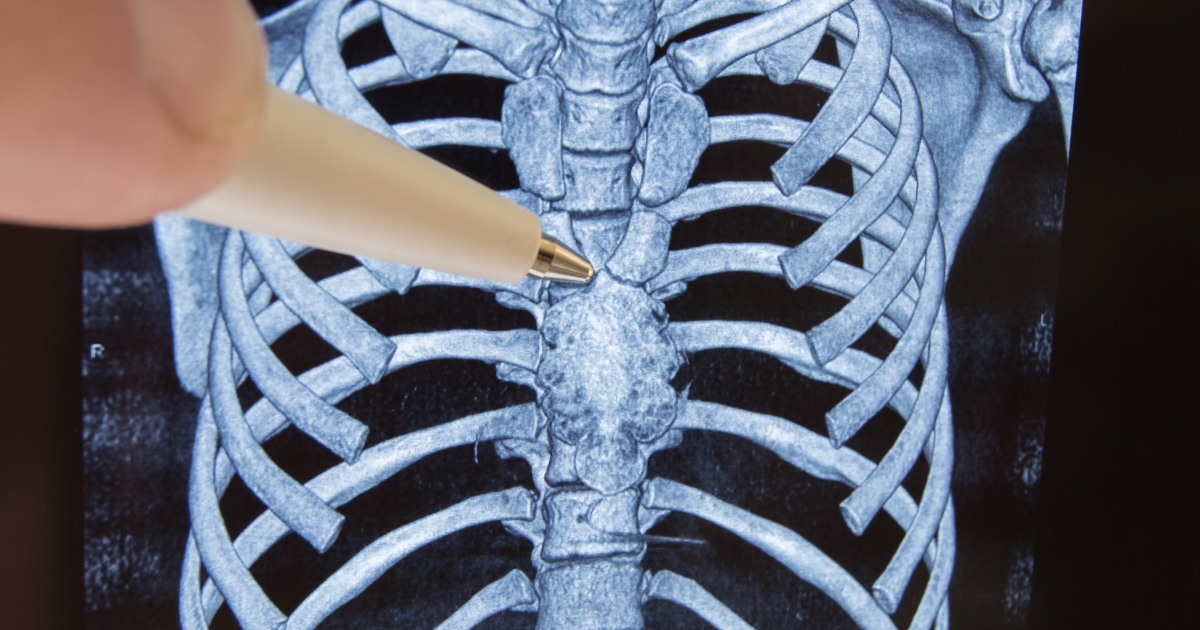

Adults who had their thymus surgically removed showed significantly higher five-year all-cause mortality than patients who had comparable chest surgery without thymus removal. That finding, published in 2023 in the New England Journal of Medicine, came as a surprise to many clinicians who had long treated the thymus as expendable in adults. The organ was thought to do most of its meaningful work in childhood and then quietly retire.
New research published in 2026 has pushed that finding much further. The health of the thymus now appears to predict risk of dying from heart disease, developing cancer, and how well the immune system responds to cancer treatment.
Two studies (here and here) from investigators at Mass General Brigham, published in the journal Nature, built and validated a deep-learning AI model that reads CT scans to score thymic health. The results challenge what medical training had long held as settled: that the adult thymus is biologically irrelevant.
What the Thymus Actually Does
The thymus is a small organ located in the upper chest. Its core job is producing T cells – specialized immune cells that recognize and destroy both pathogens and early-stage cancer cells. By the time most people reach their 40s, thymic output has declined significantly, because the organ gradually shrinks after puberty and much of its tissue is replaced by fat. That process, called thymic involution, led scientists for decades to assume the organ was no longer contributing meaningfully to adult health.
As the thymus loses function, the body’s pool of diverse, capable T cells stops being refreshed. An immune system running on older, less varied T cells becomes less able to identify new threats – including early-stage cancer cells and infections the immune system hasn’t previously encountered.
A Deep Learning Tool That Changed the Picture
Mass General Brigham researchers developed a deep-learning AI model that analyzes CT scans to estimate thymic health as an indicator of immune function. The model assessed each scan for the size, shape, and composition of the thymus, then generated a score placing each person into a low, average, or high thymic health category.
The team evaluated this model’s associations with longevity and risk of major age-related diseases in two large cohorts of asymptomatic adults: the National Lung Screening Trial and the Framingham Heart Study. Together, the two cohorts comprised over 27,000 people. The Framingham Heart Study, initiated in 1948 to map cardiovascular risk factors, has since become one of the most influential long-term health studies in history.
Leading the research was Hugo Aerts, director of the Artificial Intelligence in Medicine (AIM) Program at Mass General Brigham and affiliated with Harvard University. His team’s results appeared in a March 2026 study in Nature and a companion paper in the same journal, and could change how doctors predict a patient’s long-term health outcomes.
Thymic Health: What the Numbers Show
The associations between thymic health and survival were substantial. In the National Lung Screening Trial cohort, people with high thymic health scores had roughly a 50% lower relative risk of death by 12 years later compared to those with low thymic health scores, a 63% lower risk of cardiovascular death, and a 36% lower risk of developing lung cancer. These associations held after adjusting for age, sex, smoking, and comorbidities.
In the Framingham Heart Study cohort, the cardiovascular finding was more pronounced: high thymic health corresponded to up to 92% lower risk of cardiovascular death compared to those with low thymic health scores.
The second Nature study, focused on cancer treatment rather than general longevity, applied a similar deep-learning framework to CT images from patients with various cancers receiving immunotherapy – a treatment that depends directly on the strength of a patient’s own immune system. Patients with higher thymic health showed better outcomes across multiple cancer types, including lung cancer, melanoma, and breast cancer. The specific risk reductions from that study require independent replication before firm conclusions can be drawn.
These results do not prove causation. The studies show correlations, and the authors themselves note the findings warrant replication. Consistent correlations of this magnitude, however, across two independent cohorts and tens of thousands of people, are difficult to set aside.
Why Removing the Thymus Is Riskier Than Surgeons Assumed
The 2023 New England Journal of Medicine research adds important context. In that study, all-cause mortality and cancer risk were higher among patients who had undergone thymectomy (surgical thymus removal) than among matched controls who had comparable chest surgery without thymus removal. The differences in five-year mortality and cancer incidence were clinically meaningful, and the thymectomy group showed consistently lower production of new T cells along with higher levels of proinflammatory molecules in the blood.
Thymus removal doesn’t simply take out a dormant structure – it actively impairs the immune system’s capacity to renew itself. The thymus is sometimes removed incidentally during cardiac or thyroid surgery, often without significant discussion of long-term consequences. The NEJM authors concluded that thymectomy disrupts immune homeostasis and may lead to adverse health outcomes, recommending preservation of the thymus whenever clinically possible.
The Lifestyle Connection
One of the more actionable findings from the 2026 Nature research is that thymic health isn’t purely a matter of genetics. Thymic health scores correlated with modifiable lifestyle factors – specifically smoking, obesity, and physical activity. Those are variables people can genuinely influence.
In the Framingham cohort, lower thymic health was linked to features of metabolic syndrome including higher blood pressure, blood sugar, and triglycerides, as well as higher levels of inflammatory proteins. Researchers suggest thymic health could improve early detection of at-risk patients, guide selection of appropriate immunotherapies, and optimize treatment timing.
A cluster of biotechnology companies is now attempting to regenerate the thymus directly or replicate its function to reinvigorate patients’ immunity, according to a May 2026 piece in Nature Biotechnology. That pipeline is still early-stage, but targeted strategies to strengthen or restore thymic function are becoming a genuine research focus.
For now, the most concrete protective steps remain familiar: avoiding smoking, maintaining a healthy body weight, and staying physically active. Each of those behaviors appears to correlate with thymic health directly, and through thymic health, with immune function across decades of adult life.
Read More: Eat These 10 Foods to Fight Aging From the Inside Out
What This Means for You
The research from Hugo Aerts and his colleagues at Mass General Brigham, published across two 2026 studies in Nature, has repositioned the adult thymus from biological footnote to a potential central factor in how people age and survive life-threatening disease. The research doesn’t yet tell us how to improve thymic function through direct clinical intervention – that work is ongoing – but it reframes the organ’s importance in ways with practical implications right now.
If you’re scheduled for chest surgery that might involve the thymus, ask your surgeon specifically whether the organ will be removed and whether it can be preserved. The NEJM authors recommend prioritizing preservation whenever possible. For everyone else, the consistent message from both the 2023 NEJM data and the 2026 Nature research is concrete: smoking accelerates thymic decline, obesity correlates with lower thymic health scores, and physical activity correlates positively with thymic function. Those three factors are within the reach of most people, and the evidence that acting on them may protect one of the body’s most underappreciated immune organs gives each of them new weight.
Disclaimer: This information is not intended to be a substitute for professional medical advice, diagnosis, or treatment and is for information only. Always seek the advice of your physician or another qualified health provider with any questions about your medical condition and/or current medication. Do not disregard professional medical advice or delay seeking advice or treatment because of something you have read here.
AI Disclaimer: This article was created with the assistance of AI tools and reviewed by a human editor.
Read More: Pancreatic Cancer Risk Factors: What the Latest Research Actually Shows