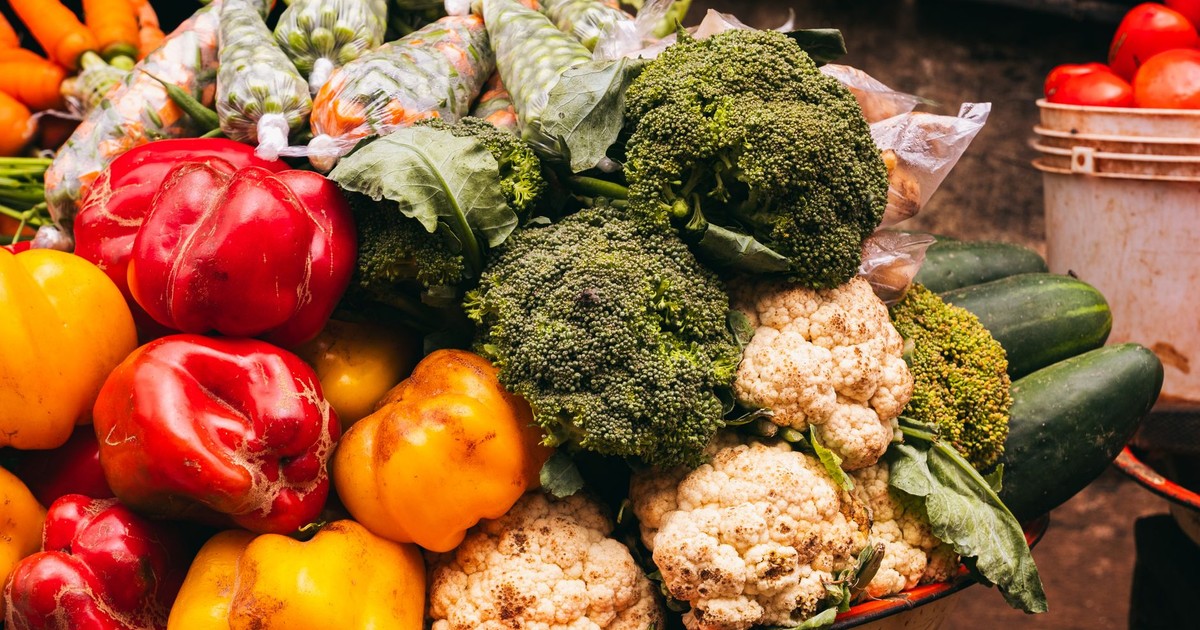

There probably isn’t one food that can protect you from colorectal cancer. But a new study suggests the overall mix of plant foods on your plate may matter more than any single “superfood.”
Researchers compared the diets of 980 adults, half of whom had been diagnosed with colorectal cancer. They then looked at how much of each person’s diet came from foods rich in phytochemicals, the naturally occurring compounds found throughout fruits, vegetables, whole grains, legumes, nuts, seeds, and other plants.
The difference was substantial.
People whose diets contained the highest proportion of phytochemical-rich foods had 52% lower odds of colorectal cancer than those with the lowest intake, according to the study published in Frontiers in Nutrition.
That doesn’t mean eating berries or adding beans to dinner will cut your personal cancer risk in half. The study was observational and can’t prove that the foods themselves caused the difference.
But the finding adds to a much larger question researchers have been exploring for years: could eating a wider variety of plants help create an environment in the body that makes colorectal cancer less likely to develop?
What the new study actually found
This hospital-based case-control study included 490 patients with newly diagnosed colorectal cancer and 490 cancer-free controls. Dietary intake was assessed using a validated food frequency questionnaire, and the Phytochemical Index was calculated as the percentage of total energy derived from phytochemical-rich foods. Researchers weren’t counting individual compounds – they were looking at the overall proportion of calories that participants got from plants known to be dense in phytochemicals.
People with the highest Phytochemical Index scores had 52% lower odds of colorectal cancer compared to those with the lowest scores. The group eating the most phytochemical-rich foods also showed more favorable markers related to inflammation and oxidative stress.
Biomarker concentrations were measured after colorectal cancer diagnosis, so these analyses cannot establish temporal or causal relationships and are presented for hypothesis generation, not as evidence of biological mediation. The findings suggest an inverse association between phytochemical-rich dietary patterns and colorectal cancer risk, though prospective studies are needed for confirmation.
Case-control studies are a type of observational study used to look at factors associated with diseases or outcomes. Researchers look back retrospectively to determine whether certain exposures were more common in the case group than in controls. Diet was assessed using questionnaires, meaning it depended on participants accurately recalling what they had eaten. Because some participants already had cancer when they were asked about their diets, it is not possible to confirm that their reported dietary patterns preceded the disease. The study shows an association, not a cause.
A 2025 systematic review and meta-analysis pooled findings from multiple case-control studies and similarly found that higher Dietary Phytochemical Index scores were associated with decreased odds of cancer overall, including colorectal cancer specifically.
What phytochemicals actually are
Phytochemicals include polyphenols, flavonoids, carotenoids, and phytosterols, all of which have antioxidant and anti-inflammatory properties. They’re what gives blueberries their deep blue color, spinach its earthy bite, turmeric its yellow hue, and green tea its slightly astringent finish.
Flavonoids are found in fruits such as blueberries and raspberries, as well as in tea and red wine. Carotenoids are found in colorful vegetables like carrots and bell peppers. Both classes belong to the broader polyphenol family, itself one branch of the phytochemical tree, and both are associated with antioxidant effects that may help neutralize cellular damage linked to cancer development.
Tea polyphenols have demonstrated antioxidant activity, anti-inflammatory effects, and potential cancer-prevention properties. Green, black, and white teas all contribute meaningfully to this category, making a regular cup of tea one of the more accessible sources of dietary phytochemicals available.
The underlying biology isn’t fully mapped. Researchers have proposed several mechanisms by which phytochemical-rich diets might influence colorectal cancer risk, including effects on inflammation, oxidative stress, metabolic regulation, and the integrity of the gut lining.
The foods that deliver phytochemicals
Plant-based foods such as fruits, vegetables, whole grains, nuts, seeds, and legumes all contain phytochemicals. The challenge isn’t identifying the right foods – it’s getting enough variety of them into a week’s worth of eating.
Berries and fruit. Berries rank among the most phytochemical-dense foods by weight. Blueberries, raspberries, strawberries, and blackberries are rich in flavonoids, particularly anthocyanins – the pigments responsible for their red, blue, and purple colors. Alongside their phytochemical content, they also supply vitamin C and dietary fiber.
Leafy greens. Spinach, kale, Swiss chard, arugula, and other dark leafy greens provide carotenoids, including lutein and beta-carotene, alongside folate and fiber. High intake of fruits, vegetables, fiber, and whole grains is associated with reduced risk of colorectal cancer, and leafy greens contribute to several of those categories simultaneously.
Legumes. Beans, lentils, and chickpeas are rich in fiber, phytochemicals, and plant-based protein. According to the American Institute for Cancer Research, dietary fiber from legumes is linked to reduced colorectal cancer risk, in part by supporting beneficial gut bacteria. They also deliver resistant starch, which feeds those bacteria and supports a healthy colon environment.
Whole grains. Oats, brown rice, quinoa, barley, and whole wheat supply fiber, vitamins, minerals, and phytochemicals concentrated in the bran and germ layers that are stripped away during refining. Switching from white rice to brown, or from white bread to whole grain, restores phytochemicals the refining process removes.
Nuts and seeds. Nuts and seeds are rich in phytochemicals including polyphenols, phytosterols, and carotenoids. Regular consumption is linked to lower risks of cardiovascular disease, cancer, and type 2 diabetes. Chia seeds, flaxseeds, walnuts, almonds, and pumpkin seeds all fit this profile, with the added benefit of providing healthy fats and minerals that support general metabolic health.
Tea. Both green and black tea are among the richest dietary sources of polyphenols available without any preparation beyond brewing. A single daily cup adds a meaningful phytochemical contribution that requires essentially no dietary restructuring.
Why variety matters more than any single food
The Phytochemical Index doesn’t reward eating large quantities of one food. It measures how broadly phytochemical-rich foods feature across the diet as a whole. Different plants carry different combinations of compounds. A blueberry delivers anthocyanins. A cup of lentils brings isoflavones and fiber. A handful of walnuts adds ellagitannins and phytosterols. No single food replicates the breadth of what a varied plant-rich diet provides.
Plant-based foods contribute different phytochemical combinations depending on the variety consumed, meaning the synergistic effects of multiple compounds across a diverse diet are likely to exceed what any single food can provide – a pattern consistent with what the Phytochemical Index measures at the population level.
Someone who eats a narrow selection of even very healthy foods will score lower on the Phytochemical Index than someone who rotates through a wide variety of plant foods throughout the week. The goal isn’t to optimize a single ingredient – it’s to expand the range.
The same foods that score well on the Phytochemical Index tend to be high in fiber, low in refined carbohydrates, and associated with healthier gut microbiome profiles – all of which have been independently studied in the context of colorectal cancer risk. Researchers looking at anti-inflammatory dietary patterns have observed that plant-rich diets work across multiple biological pathways simultaneously, which likely explains why the associations in studies like this one tend to be robust even when individual mechanisms remain incompletely understood.
Study limitations and what the research can’t tell us
The case-control design of this study comes with limitations that researchers acknowledged directly. Dietary assessment relied on questionnaires, which depend on accurate self-reporting and recall. People with colorectal cancer may also report their diet differently than healthy controls, introducing recall bias. Diet was assessed after diagnosis for the case group, so the direction of any relationship cannot be confirmed from this study alone.
Case-control studies look back retrospectively to determine whether certain exposures were more common in the case group than in controls, but retrospective designs cannot rule out that the differences observed reflect other unmeasured variables. Participants with higher Phytochemical Index scores may also exercise more, smoke less, or have other lifestyle characteristics that independently reduce cancer risk.
The 52% figure is an odds ratio from a single study, not a verified reduction in absolute risk from a clinical trial. It should be read as a signal pointing in a consistent direction, not as a guarantee. The researchers called for prospective cohort studies to validate the findings, which is the appropriate next step before stronger conclusions can be drawn.
Read more: 9 colon cancer foods: what to eat and what to avoid, backed by science
What this means for you
The most useful takeaway from this research probably isn’t to start counting phytochemicals.
It’s that variety matters.
Berries bring one collection of plant compounds. Leafy greens bring another. Beans, whole grains, nuts, seeds, and tea each add something different. And many of these foods also provide fiber, vitamins, minerals, and other nutrients that have their own links to health.
This study can’t tell us that eating more phytochemicals will prevent colorectal cancer, and its 52% figure shouldn’t be interpreted as a personal risk reduction.
What it does suggest is that the dietary pattern associated with lower odds of colorectal cancer wasn’t built around one exotic ingredient or supplement. It was associated with something much simpler: getting more of your diet from a broad range of plant foods.
You don’t need to know the difference between a flavonoid, carotenoid, or phytosterol to do that.
Sometimes the simplest approach may be the most practical one: put more different plants on the plate.
Disclaimer: The author is not a licensed medical professional. The information provided is for general informational and educational purposes only and is based on research from publicly available, reputable sources. It is not intended to constitute, and should not be relied upon as, medical advice, diagnosis, or treatment. Always consult a licensed physician or other qualified healthcare provider regarding any medical condition, symptoms, or medications. Do not disregard, avoid, or delay seeking professional medical advice or treatment because of information contained herein.
AI Disclaimer: This article was created with the assistance of AI tools and reviewed by a human editor.
Read More: The Cholesterol Particle Your Doctor Isn’t Testing — and Why It Matters