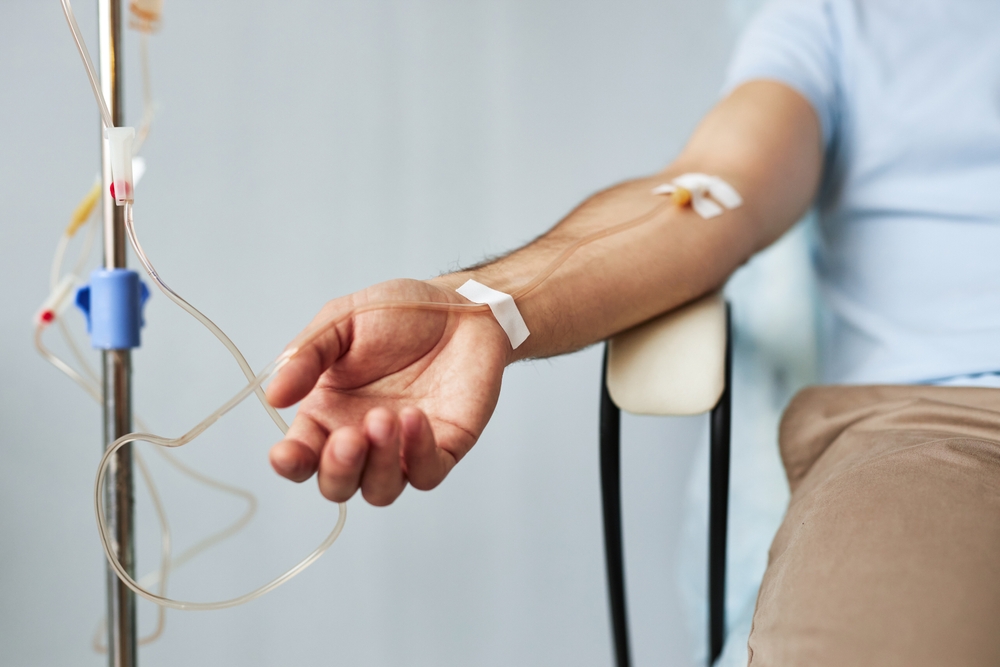

A 49-year-old Florida man joined a leukemia clinical trial. His blood cancer had already pushed his organs close to failure. Just over two weeks later, he was in remission. CBS News covered his story in October 2026. Trial data showed 25 of 36 younger patients saw their cancer shrink or go away. This happened during a single 28-day treatment course.
Ryan Goepel knew he had gout. His knee had given him trouble before. So when the pain started during a trip in September 2024, he assumed it was another flare. It wasn’t. His doctor ran blood tests two days later. Those tests told a very different story.
AML, or acute myeloid leukemia, is a kind of blood cancer. Acute myelogenous leukemia’s early symptoms, such as fatigue, bruising, and infection, can look like a dozen other things. For Goepel, the disguise was a sore knee.
A Diagnosis That Changed Everything
Goepel’s doctor told him to stop what he was doing and go straight to the hospital. When he arrived at a nearby sports medicine facility, his blood work alarmed staff. They brought an oncologist to his bedside.
His condition was critical. His organs were on the verge of shutting down. Doctors didn’t tell Goepel himself. They told his girlfriend. The family was told to consider arrangements. He was not expected to leave alive. She refused to accept that conclusion and pushed for a second opinion.
That decision sent them to Sylvester Comprehensive Cancer Center in Miami, where a biopsy confirmed AML. The Cleveland Clinic puts AML’s five-year survival rate at about 30%.
Why Standard Chemo Wasn’t the Answer
Not all AML behaves the same way. The genetic profile of the disease at diagnosis shapes which treatments are likely to work.
Goepel’s AML was classified as adverse-risk. According to Dr. Justin Watts, chief of the leukemia section at Sylvester, said standard chemotherapy would likely not work well for Goepel’s disease. Even if it worked at first, he would have faced a high chance of relapse. The genetic makeup of his tumor looked more like that of a 70- or 80-year-old’s AML than a 49-year-old’s.
Read More: First-Ever Lung Cancer Vaccine Undergoing Clinical Trial Stage in Multiple Countries
There was one opening left in a clinical trial Watts was running. Goepel joined a trial that studied two drugs often given to older AML patients. The trial asked whether the same drugs would work in younger patients. His disease shared genetic features with the older-patient profile. Watts considered him a good fit.
The Leukemia Clinical Trial and What It Found
The trial enrolled newly diagnosed patients aged 60 and under. All had non-favorable-risk disease. Patients took two medicines. One was a pill taken daily for 28 days. The other was an infusion given each day during the first week. The trial tested whether this drug combo could work in younger AML patients. These were patients whose disease genetics make standard chemo a poor choice. Before the trial, it had only been used in older or less fit patients.
One day after joining the leukemia clinical trial, Goepel began his treatment. He took a pill daily for 28 days and received an infusion each day during the first week. His cancer began responding quickly. He called that result “bonkers.”
He was not alone. Trial patients spent less time in the hospital than those who got standard treatment. They also needed fewer blood transfusions and had fewer infections.
The full data were published in Haematologica in September 2026. This trial included 36 younger adults with non-favorable-risk AML. Twenty-five patients saw their cancer shrink or go away. This happened during the 28-day treatment course. For comparison, about 44% of patients with adverse-risk AML see their cancer shrink or go away with standard treatment.
The combination appears safe and workable for younger patients with newly diagnosed AML. It is meant for those whose disease is not low-risk. That is the finding in the Haematologica paper. Investigators launched this trial themselves. It was a prospective, single-arm study run at more than one site. Thirty-six patients is a small number. The trial did not include a randomized comparison group. Because of this, comparisons with matched controls have limits. Larger trials will be needed before this approach becomes standard care.
After Remission: The Road to Recovery
Remission after a leukemia clinical trial is not the end of treatment. Patients in the trial were urged to move quickly to an allogeneic stem cell transplant. This was to happen while they were still in first remission. An allogeneic transplant uses donor stem cells. These often come from a sibling or a matched donor.
For Goepel, both of his sisters turned out to be perfect matches. He underwent the transplant in November 2024, just weeks after entering remission. After the procedure, he spent three weeks in hospital. During that time, his immune system began to recover. He then spent 100 days isolated at home. He developed rotavirus and pneumonia after the transplant. Both were treated and resolved. As of the CBS News report in October 2026, he had been cancer-free for two years.
Dr. Watts was his treating physician. He said that in his view, Goepel would likely not be alive if they had followed the standard treatment path. This is not a reason to avoid talking with an oncologist about standard treatment options.
What This Means for You
AML moves fast. It usually announces itself over weeks rather than months. Someone who felt fine recently can suddenly bruise for no reason. They may run fevers and be too tired to climb stairs without stopping to rest. Joint or bone pain that does not go away deserves a blood count. So do lasting fatigue and infections that keep coming back. A full evaluation should follow. Goepel’s case shows that a common symptom can turn out to be a serious illness.
Clinical trials are not last resorts. By joining a trial, Goepel got access to a treatment that was not yet standard care for his age group and risk level. If you have AML, getting a second opinion at a cancer center is a reasonable step. This is especially true if your disease is classified as adverse-risk.
The five-year survival rate for AML is around 30% overall, according to the Cleveland Clinic. That number will keep shifting as researchers find which patients respond best to which regimens. The 36-patient trial published in Haematologica is a small but meaningful part of that work.
Talk with your doctor or a hematologist-oncologist before making any choices about treatment. Do not make changes on your own. Never stop or change a cancer treatment plan without medical guidance.
Disclaimer: The author is not a licensed medical professional. The information provided is for general informational and educational purposes only and is based on research from publicly available, reputable sources. It is not intended to constitute, and should not be relied upon as, medical advice, diagnosis, or treatment. Always consult a licensed physician or other qualified healthcare provider regarding any medical condition, symptoms, or medications. Do not disregard, avoid, or delay seeking professional medical advice or treatment because of information contained herein.
AI Disclaimer: This article was created with the assistance of AI tools and reviewed by a human editor.