After Major System Outage, Airline Grounded All Flights Nationwide
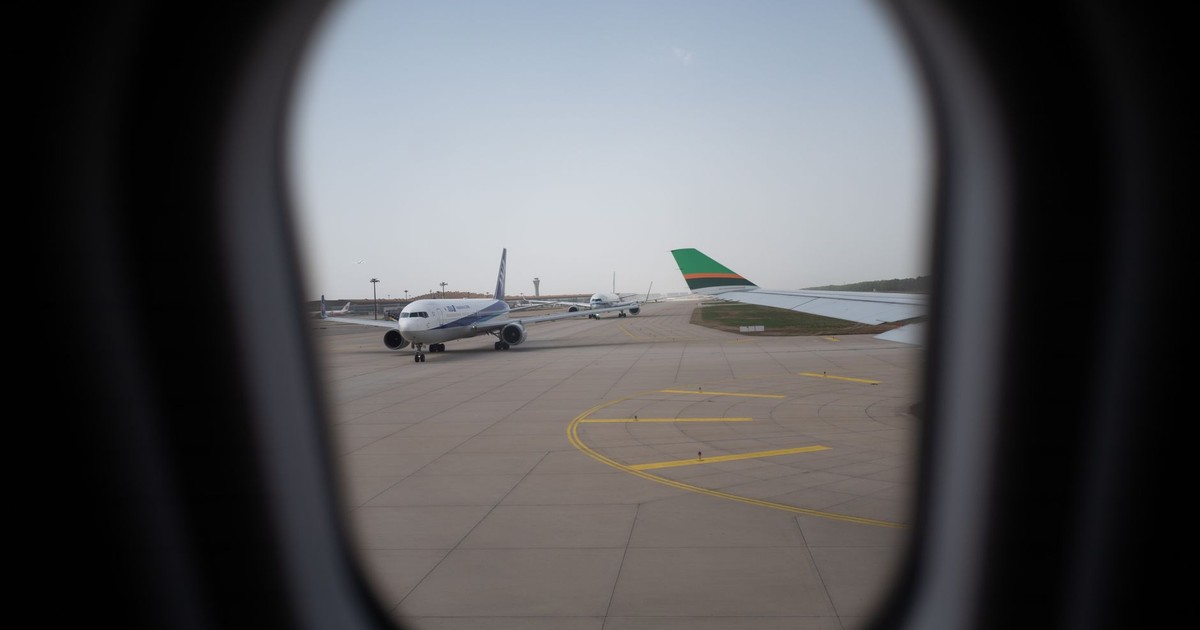
More than 40 planes sat on the taxiways at Dallas/Fort Worth on the evening of July 28, 2026, engines running, going exactly nowhere. Pilots had completed their pre-departure checks. Passengers had boarded. The issue wasn’t weather, staffing, or a mechanical fault. Every single aircraft at one of the world’s busiest airports was frozen in place because of an airline system outage that had knocked out the software needed to authorize takeoffs across American Airlines’ entire network.
The stoppage wasn’t limited to Dallas. The FAA advisory applied to all American Airlines destinations and facilities – not a single hub, not a regional subset, but every airport where American operates. For the tens of thousands of passengers sitting at gates from Charlotte to Chicago to Los Angeles, the departure boards went quiet at the same moment.
American Airlines confirmed at 7:21 p.m. ET that its systems were coming back online and flights were departing again, stating: “A technology issue briefly impacted connectivity for some of our systems on Tuesday evening. Systems are coming back online now and flights are departing again. We put a temporary ground stop in place while our teams worked to resolve the issue.” The window between those two moments – frozen and flying – was roughly 45 minutes. The ripple effects, however, would last well into the next day.
What the Airline System Outage Actually Shut Down
American Airlines‘ July 28 outage grounded every US departure after a connectivity failure froze dispatch, weight-and-balance, and crew scheduling systems at all hubs. American’s Allied Pilots Association identified the failed system as the Flight Operations System, or FOS – the software that handles the operations required to get airplanes released for departure. Before any commercial aircraft can push back from a gate, the FOS must confirm that weight-and-balance calculations are complete, dispatch has cleared the flight plan, and crew assignments are verified. When the connectivity layer that links those subsystems fails, all dependent systems stop communicating, effectively freezing the entire operation even if individual applications are intact.
The FAA’s Air Traffic Control System Command Center issued the ground stop at approximately 6:30 p.m. ET on Tuesday, July 28, 2026. Although aircraft already in the air continued to their destinations as scheduled, the freeze hit during the peak evening rush and on a night when severe thunderstorms were already disrupting operations across the US East Coast. East Coast airports were experiencing significant delays and ground stops due to thunderstorms – meaning the IT failure landed on top of an already strained system.
The Scale of the Disruption at Every Major Hub
At Dallas/Fort Worth, CBS Texas journalist Doug Dunbar documented more than 40 aircraft queued on taxiways at 6:30 p.m. local time, engines running, going nowhere. The scene at Charlotte Douglas and Chicago O’Hare was similar. Aviation tracking service Flightradar24 reported approximately 130 fewer American Airlines flights airborne than at the same hour the previous week, a real-time measure of how quickly the disruption materialized.
The ground stop was lifted at 7:18 p.m. ET, with American stating the total duration of the halt was 45 minutes. American Airlines acknowledged the issue prevented it from releasing flights from the gates, and the FAA subsequently lifted its nationwide ground stop order.
After the nationwide order was lifted, the FAA scaled back restrictions to Charlotte Douglas International Airport (CLT) in North Carolina, one of American’s largest hubs. Conditions there deteriorated significantly. The FAA noted that American had requested the nationwide ground stop, but average arrival delays in Charlotte climbed from 24 minutes to nearly 50 minutes, with a 30% to 60% chance the localized restrictions could be extended.
According to FlightAware, American Airlines logged 1,387 delays – representing 38% of its mainline schedule – alongside 341 cancellations, or 9% of mainline flights. Despite service restoration, residual delays and cancellations continued to impact travelers, further complicated by severe weather in the Northeast aviation corridor. No other major US carrier – not United, Delta, or Southwest – reported any flight disruptions tied to the same event.
This Was the Third Time in Two Years
The July 28, 2026 airline system outage wasn’t an isolated incident. Tuesday’s outage was the third time in under two years that American Airlines grounded itself through a connectivity-layer failure affecting its core operational systems.
On December 24, 2024, a hardware fault at DXC Technology – the third-party vendor that maintains American’s Flight Operations System – took down the dispatch, flight planning, and weight-and-balance systems needed to release aircraft from gates. As NBC News confirmed at the time, American attributed the disruption to a “vendor technology issue” with DXC Technology, which “maintains our flight operating system.” The nationwide ground stop that followed lasted approximately one hour, with more than 1,000 flights delayed and more than 90 mainline flights canceled.
Six months later, the pattern continued. On June 27, 2025, a connectivity outage disrupted American’s booking, check-in, ticketing, baggage tagging, and maintenance systems simultaneously across Dallas/Fort Worth, Miami, Charlotte, O’Hare, Los Angeles, New York, Phoenix, and Washington. More than 1,194 flights were delayed – 32% of American’s schedule – with 98 cancellations.
The core architectural problem is consistent across all three events: American’s crew scheduling, dispatch, weight-and-balance calculations, and passenger systems run as siloed applications that depend on a shared connectivity layer to communicate with each other and with dispatchers. Three failures in 24 months, all tracing back to the same structural weakness, point to a recurring infrastructure gap that hasn’t been comprehensively addressed between incidents. DXC Technology’s own published case study on its work with American describes the Flight Operations System as “a mission-critical system for flight schedules and crew management” – the exact system at the center of each shutdown.
Your Rights When an Airline System Outage Grounds Your Flight
An IT outage is categorically different from a weather delay – and that difference matters for what passengers are owed.
Tech outages are generally considered “controllable” delays or cancellations by the airline, which means a different set of obligations applies compared to weather events. If an airline cancels a passenger’s flight or makes a significant change, regardless of the reason, airlines are required to provide a prompt refund to a ticketed passenger – including those with non-refundable tickets – should the passenger choose not to accept the alternative offered, such as rebooking on another flight, according to the US Department of Transportation’s Airline Cancellation and Delay Dashboard.
The same rule framework covers qualifying significant changes, which means a disruption can create a refund right even when the carrier doesn’t use the word “canceled.” This matters because many travelers still get pushed first toward vouchers or credits instead of the original form of payment.
Passengers who received meal vouchers or hotel accommodation should keep their receipts; there is no guarantee of compensation for an IT outage of limited duration, but documentation matters if a dispute arises. For those whose flights were simply delayed rather than canceled outright, American’s contract of carriage governs for delays below the DOT’s significant-delay threshold.
If your July 28 flight was delayed or canceled by the American Airlines outage, act on the refund process before the backlog clears. As of June 2026, US Department of Transportation refund rules entitle travelers to a cash refund when an airline cancels a flight and the passenger declines the alternative offered. That means you can decline the rebooked flight and request a full refund – even on a non-refundable ticket – if you choose not to travel.
DOT rules also state that if you paid a checked baggage fee and your luggage was not delivered within 12 hours of a domestic arrival, the airline must automatically refund that fee. Most passengers don’t know to ask. If American issued a travel credit when a cash refund was owed, call American Airlines Customer Relations directly at 1-800-433-7300 to request conversion to cash.
For anyone with upcoming American Airlines flights in the coming days, check flight status directly on aa.com or the mobile app once systems have stabilized, and rebook early – seats fill fast once a backlog clears. Confirm your flight’s status rather than assuming the outage’s resolution means your specific departure is back on schedule. Cascading delays from one evening can ripple forward for 24 to 48 hours as aircraft and crews reposition across the network.
According to American Airlines’ own investor relations page, the carrier serves more than 200 million customers annually from its Fort Worth, Texas headquarters, which means even a 45-minute airline system outage touches an enormous number of travelers. The technical fix may take minutes. The full operational recovery always takes longer.
AI Disclaimer: This article was created with the assistance of AI tools and reviewed by a human editor.