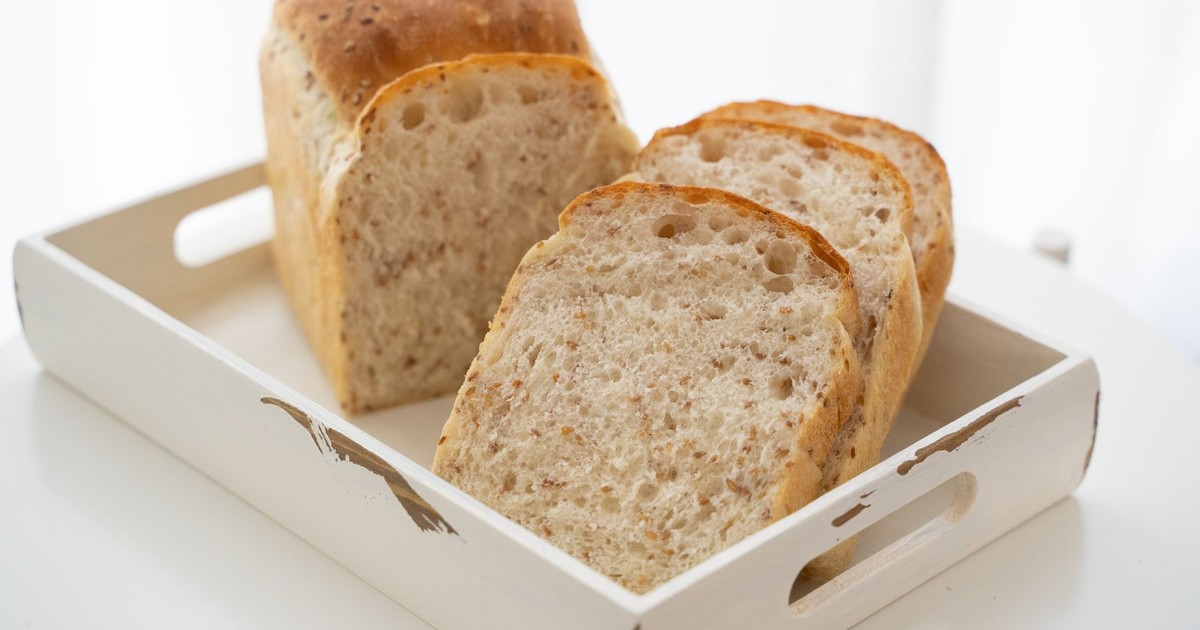

Bread probably isn’t the first food that comes to mind when you think about salt.
Chips, processed meats, canned soups, and fast food are much more obvious sources. A slice of bread rarely tastes particularly salty, which makes it easy to overlook when you’re trying to cut back on sodium.
But there’s a catch: bread is something many people eat every day, often several times a day.
A couple of slices at breakfast, a sandwich at lunch, and another serving with dinner can turn relatively modest amounts of sodium into a meaningful daily contribution. And depending on the loaf you choose, the difference can be surprisingly large.
That matters because sodium intake has a well-established relationship with blood pressure. Researchers have therefore started asking a simple question: what happens if you reduce the salt in something people already eat all the time?
Several studies have put that idea to the test by replacing ordinary bread with lower-sodium versions.
The results suggest you don’t necessarily have to eliminate bread from your diet to make a difference. Changing the loaf itself may be enough to meaningfully reduce one of the most easily overlooked sources of sodium in your diet.
Why Bread Can Be a Surprising Source of Sodium
Salt plays several roles in bread beyond making it taste better. It helps control fermentation, influences dough structure, and contributes to texture and shelf life. That means sodium can be present in meaningful amounts even when a loaf doesn’t taste particularly salty.
The amount also varies considerably from one product to another.
The Center for Science in the Public Interest found large differences in sodium levels between breads, including products within the same category. In some cases, sodium levels varied by as much as two-and-a-half times between brands of the same type of bread.
In other words, two loaves that look almost identical on the shelf can contribute very different amounts of sodium to your diet.
The concern isn’t necessarily any individual slice. It’s repetition.
If a food containing a moderate amount of sodium is eaten several times a day, every day, it can become an important contributor to total intake without ever registering as a particularly salty food.
And that’s what makes bread an interesting target for researchers studying blood pressure.
What Happened When Researchers Lowered the Salt in Bread
Researchers have tested whether simply replacing regular bread with lower-sodium bread could help people reduce their overall salt intake.
In a randomized crossover trial involving 97 adults with mildly to moderately elevated blood pressure, participants followed periods of usual and reduced salt intake. Low-salt bread was one of the major changes used during the reduced-salt phase.
Overall salt intake fell by approximately 1.7 grams per day, and average systolic blood pressure was about 3.3 mmHg lower during the reduced-salt period.
That doesn’t mean bread alone was responsible for the entire change. Participants were reducing salt elsewhere in their diets as well. But the researchers identified bread as a practical place to make that reduction because it was consumed so regularly.
More recently, a 2024 randomized controlled pilot study tested a similar approach in adults with hypertension.
Participants assigned to a low-sodium diet that included specially prepared low-sodium bread reduced their sodium intake and experienced improvements in blood pressure. After six months, diastolic blood pressure was about 9 mmHg lower compared with the standard-bread/free-diet group.
Again, this wasn’t evidence that ordinary bread causes hypertension, nor did researchers simply swap one loaf and change nothing else.
Instead, the studies point toward a more useful idea: reducing sodium in a staple food can make it easier to reduce sodium across the entire diet.
This Isn’t Really a White Bread vs. Whole Wheat Story
It’s tempting to turn this into another argument about white bread versus whole wheat.
Whole-grain breads generally have nutritional advantages, particularly when it comes to fiber and the nutrients retained from the grain. But when the question is specifically sodium, the color of the loaf doesn’t tell you very much.
A whole-wheat or multigrain bread can still contain substantial sodium. Likewise, some white breads may contain less sodium than competing whole-grain products.
That’s why checking the nutrition label matters more than assuming a darker loaf is automatically the better choice for blood pressure.
If you’re choosing between breads, you can consider both sides of the equation: look for a genuinely whole-grain product with useful fiber while comparing sodium between similar serving sizes.
Read More: 20 Best Foods To Help Lower Blood Pressure Without Medication
What to Do at the Bread Aisle
Reading a bread label takes about twenty seconds. If you’re eating bread regularly, choosing a lower-sodium option can meaningfully reduce your sodium intake over time.
Sodium per serving is the starting point, but confirm the serving size printed on the label before comparing numbers between loaves. Since serving sizes can differ, comparing two packages based only on the number displayed beside “sodium” can be misleading.
As a general reference point, the FDA allows foods containing 140 milligrams of sodium or less per serving to be labeled “low sodium.” For bread, however, serving sizes can differ between products, so check both the sodium amount and the number of slices included in the listed serving before comparing loaves.
And sodium doesn’t have to be the only consideration.
If fiber and grain type matter to you, look for “100% whole wheat” or “100% whole grain” near the beginning of the ingredient list and compare the fiber content between products. Finding a loaf that combines whole grains, useful fiber, and relatively modest sodium is entirely possible. It just requires looking past the marketing on the front of the package.
What This Means for You
None of this means bread suddenly belongs on a list of foods to avoid.
The more useful takeaway is that some of the biggest opportunities to reduce sodium may come from foods that don’t taste especially salty at all.
Bread is a good example because relatively small differences between products can become meaningful when the food is eaten day after day. Someone who regularly eats toast and sandwiches could consume multiple servings without thinking of any of them as a significant source of salt.
The intervention studies also suggest that changing staple foods can be a practical way to lower sodium intake without completely changing the way someone eats. Researchers weren’t asking participants to abandon bread. They were testing whether making the bread itself less salty could help.
And it did appear to contribute.
That doesn’t mean switching loaves will single-handedly treat high blood pressure. Blood pressure is influenced by numerous factors, and the trials involved broader dietary changes rather than bread alone. But they demonstrate why seemingly small changes to frequently eaten foods can add up.
At the grocery store, that makes the nutrition label more useful than the color or marketing on the front of the bag. Compare sodium using equivalent serving sizes, then consider whole-grain content and fiber alongside it.
A loaf doesn’t have to taste salty to contribute sodium to your diet.
And when it’s something you eat every day, what’s hiding in each slice can add up surprisingly quickly.
Disclaimer: This information is not intended to be a substitute for professional medical advice, diagnosis, or treatment and is for information only. Always seek the advice of your physician or another qualified health provider with any questions about your medical condition and/or current medication. Do not disregard professional medical advice or delay seeking advice or treatment because of something you have read here.
AI Disclaimer: This article was created with the assistance of AI tools and reviewed by a human editor.
Read More: How Eating Bread Every Day Impacts Your Body