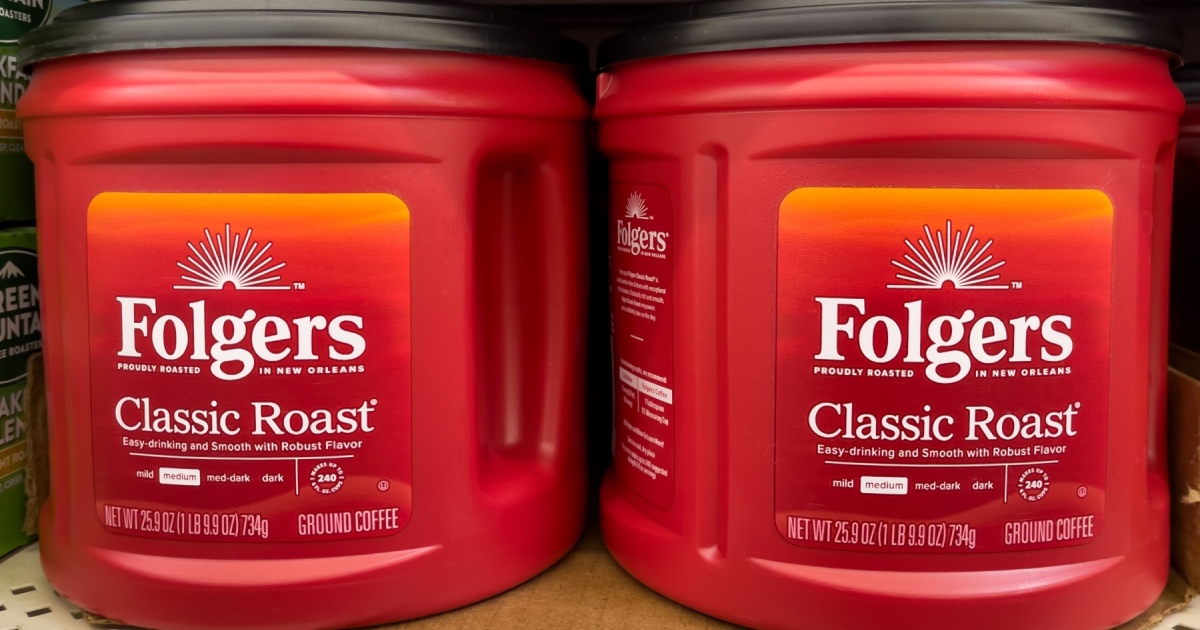

Roughly a third of American adults watch birds from their backyards at some point during the year, yet most of those same people toss their empty coffee containers straight into recycling without a second thought. That container – metal or plastic, round or square – turns out to be one of the most capable raw materials for a backyard bird feeder you’ll ever have sitting in your kitchen.
The connection isn’t as obvious as it first sounds. Coffee cans and large plastic coffee containers share a few traits that expensive commercial feeders often lack: a built-in lid that protects seed from rain, sturdy walls that hold up outdoors year-round, and a shape that can be adapted two completely different ways depending on what you’ve got on hand. The DIY takes less than an afternoon and costs almost nothing beyond a few basic supplies you likely already own.
There’s also a reason beyond thrift. Metal containers can be recycled indefinitely without losing quality, which makes reusing one before it ever reaches the recycling bin the more environmentally sound choice. Many birds also help your garden directly by eating weed seeds and gobbling up pest insects, so attracting them closer to your yard pays dividends well beyond the pleasure of watching them.
Two Builds, Two Container Types
The first approach works best with a rounded metal coffee can – the kind Folgers and Maxwell House have sold for decades. Cut the plastic lid in half, trim about an inch off the straight edge of each half, then cut out the bottom of the can entirely. Run a bead of all-weather adhesive along the inside lip of each semicircle and glue one to each side of the can’s open bottom. When you rotate the can on its side, those half-lids form a pair of curved seed trays that hold feed while letting birds land and eat from both sides. Keep the original lid on to act as a rain cover and refill it when needed. This style works particularly well for smaller seed-eating birds like finches and sparrows, because the cylindrical opening naturally keeps larger species from monopolizing the feeder.
The second build suits large plastic containers – the wide, cylindrical kind that holds 30 or 48 ounces of coffee grounds. Stand the container upright and use sharp scissors or a utility knife to cut arched openings with flat bottoms, starting about an inch or two above the base. You can cut four openings, one per side, for a fully open platform design, or leave one solid for mounting against a wall or fence. Make sure all cuts are smooth – rough edges can injure birds’ feet and beaks. Poke a hole through the center of the lid, thread a loop of sturdy twine through it, and knot it securely on the underside before replacing the lid. Fill from above, snap the lid back down, and hang from a branch.
Both designs benefit from one optional modification that most guides overlook: drainage. Using a small drill bit (around 1/8 to 1/4 inch), drill four to six evenly spaced holes across the base of the feeder. These allow any rainwater that enters through the openings to escape, preventing seed from getting wet, clumping, and growing mold – all of which are harmful to birds.
The Paint Question – and Why It Matters
Decorating your coffee container feeder is optional, but if you want to paint it, the paint choice is not trivial. Volatile Organic Compounds (VOCs) emitted by many paints can cause severe respiratory irritation and neurological damage in birds. A bird that feeds daily from a freshly painted feeder is exposed to those compounds repeatedly.
Water-based acrylic or latex paints labeled as non-toxic and suitable for exterior use are the safer option for any outdoor feeder. Spray the exterior only – never the interior surfaces that will contact seed. If you want a more durable finish, a clear non-toxic outdoor sealant applied after the paint dries adds weather resistance without adding chemical risk.
Chalk paint, which is popular for upcycling projects, is a different matter. Chalk paint is not food-safe and can be toxic to birds. If you still want to use it on the exterior, seal it afterward with a layer of non-toxic water-based polyurethane spray. Whatever paint you choose, allow it to cure fully before filling the feeder – most water-based acrylic paints need at least 48 hours outdoors before they stop off-gassing.
Choosing the Right Seed
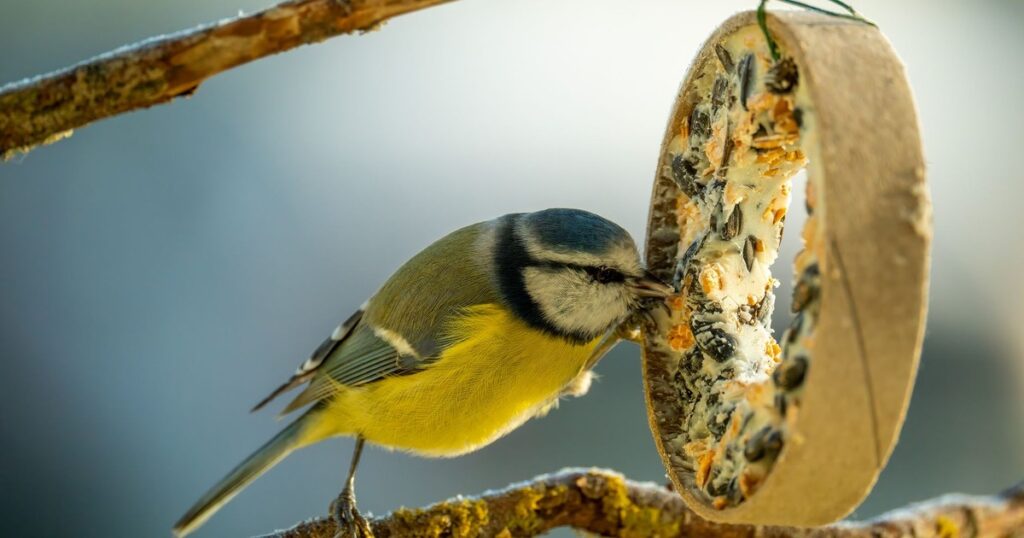
The feeder design you choose will partly determine which birds you attract, but seed selection has the bigger influence. Sunflower seed attracts the widest variety of birds, making it the mainstay for most backyard feeders. Black oil sunflower seeds have very thin shells that are easy for virtually all seed-eating birds to crack open, and the kernels have a high fat content that’s especially valuable for birds in winter. Cardinals, chickadees, nuthatches, house finches, and goldfinches all reliably visit feeders stocked with black oil sunflower.
If you want to attract ground-feeding species like doves, juncos, and native sparrows, white proso millet is worth adding. White millet is a favorite with ground-feeding birds including quails, native American sparrows, doves, towhees, juncos, and cardinals. Scatter a small amount beneath the hanging feeder and you’ll often draw two different feeding guilds – the perching birds above and the ground-feeding birds below.
One thing to avoid: mixed seed bags that contain large amounts of red millet, oats, cracked corn, or wheat. Mixtures with these filler ingredients are not attractive to most birds and lead to significant waste as birds sort through the mix. Buy single-seed options or blends where black oil sunflower makes up the bulk of the contents.
Where to Hang It – and Where Not To
Placement affects both how many birds you get and how safe those birds are once they arrive. Keep feeders away from windows to avoid fatal window strikes, which are a common and preventable cause of bird deaths. An estimated one billion birds die from collisions with glass annually in the United States, according to the National Park Service. Positioning a feeder more than 30 feet from a window gives birds enough flight distance that a strike becomes far less likely. If that’s not possible, keeping the feeder closer than three feet – essentially flush with the glass – reduces momentum enough that a strike, if it happens, rarely causes serious injury.
Squirrel access is the other placement challenge. The plastic lid on most coffee containers provides decent seed protection from rain, but it won’t stop a determined squirrel. Hanging the feeder from a smooth metal wire, rather than a branch, removes the easy route. Placing the feeder at least five feet off the ground and at least eight feet from any horizontal surface that squirrels can jump from will exclude most of them without requiring a baffle.
For tin or metal coffee cans specifically, placing the feeder in a shady area of the yard helps prevent it from overheating in direct sun – something to consider in warmer months.
Keeping the Feeder Clean
A coffee container bird feeder that goes uncleaned becomes a disease vector. Common diseases that birds can spread through feeders include house finch eye disease (mycoplasmal conjunctivitis), salmonellosis, aspergillosis, and avian pox. These spread when infected birds shed pathogens into shared seed or onto feeder surfaces, and other birds pick them up on contact.
The National Wildlife Health Center recommends cleaning bird baths and feeders with a solution of nine parts water to one part bleach – that’s roughly one cup of bleach per gallon of water. Research confirms that methods involving a bleach soak are more effective at reducing Salmonella bacteria on feeder surfaces than scrubbing with soap and water alone. Empty and rinse the feeder, then soak it in the diluted bleach solution for several minutes, scrub with a brush, rinse thoroughly, and allow to dry completely before refilling. Do this every week during peak use, and more often in humid weather when mold forms quickly.
Read More: 30+ Upcycle Ideas To Restore Any Outdoor Space
What This Means for You
A coffee container you’d otherwise recycle becomes, in about an hour of work, a functional bird feeder that can last several seasons. The build costs almost nothing, requires no special tools beyond scissors or a utility knife, and produces something that genuinely benefits the birds visiting your yard. Harsh winter conditions can deplete natural food sources such as insects, fruits, and seeds, making supplemental feeders a meaningful source of energy for birds when they need it most.
The benefits run in both directions. A study published in Scientific Reports in October 2022 by researchers at King’s College London found that seeing or hearing birds improved mental wellbeing for up to eight hours – an effect that held even for people with a diagnosis of depression. Separately, a 2019 study from the University of Exeter found that spending at least 120 minutes a week in nature is associated with measurable improvements in health and wellbeing across nearly 20,000 participants. The feeder you make from a repurposed container may be a small object, but the habit it builds around time outdoors is not.
Start with whatever coffee container is emptying out on your counter right now. Clean it, cut it, hang it, and fill it with black oil sunflower seeds. The cardinals will find it before you think they will.
AI Disclaimer: This article was created with the assistance of AI tools and reviewed by a human editor.