
For many people, COVID was not a short illness that faded with time. Months later, they still report fatigue, brain fog, chest discomfort, or gut trouble that never quite settles. This cluster of ongoing problems is now called Long Covid and is often grouped under the umbrella of post-COVID symptoms. In simple terms, these are Symptoms of COVID years after infection, still affecting daily life long after the virus first arrived. Yet the basic question remains unsettled. Is there something still “active” inside the body, or are these Long COVID symptoms only the echo of an infection that has passed?
A research group based at the University of California, San Francisco, has tried to look directly inside the body for clues. They used a specialised scan that lights up activated T cells, the white blood cells that respond to infection. The results suggest that in some people, immune activity remains switched on across several organs long after the first positive test. Some participants described feeling as though their bodies never fully powered down after Covid. This article walks through what the study did, what it actually found, and why it may change how we think about post-COVID symptoms and Long COVID symptoms in the years ahead.
A New Way to “See” Post-COVID Symptoms Inside the Body
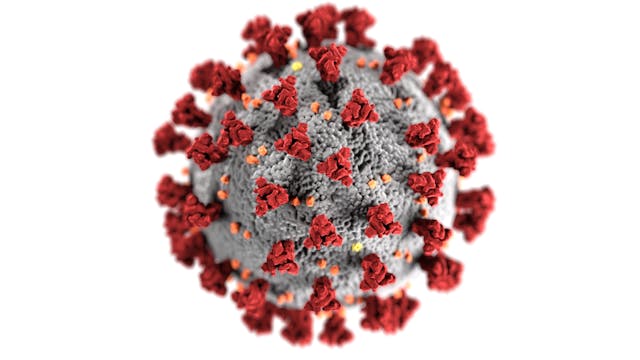
Long Covid is a broad umbrella. One person might struggle with crushing fatigue, while another mainly notices memory lapses or a racing heart. Those differences make it hard to link post-COVID symptoms to clear biological changes. Blood tests show signs of lingering inflammation in many cases, yet blood only tells part of the story. Many key events unfold inside tissues that are hard to sample, including the spinal cord and deeper parts of the gut. To bridge that gap, the team used whole-body PET imaging with a tracer called [18F]F-AraG.
This compound is taken up by activated T cells more than by resting ones, so bright spots on the scan highlight where immune cells are unusually active. Researchers call it a way to map live T cell traffic in real time. In practical terms, people received an injection of the tracer, then lay in the scanner while cameras recorded how much signal appeared in selected regions. The measure is called the standardized uptake value, or SUV. Higher SUV usually means more activated T cells in that spot. Instead of only counting immune cells in blood, this approach shows where immune cells are actually gathering inside tissues. This approach gives scientists a fresh way to connect Long COVID symptoms with what is happening deep inside organs.
Who Was Studied, and How the Researchers Designed the Scan

The study enrolled 24 adults who had previously tested positive for COVID using PCR or antigen tests. Some had returned to their baseline health, and others still lived with Long COVID symptoms. A separate group of six people, who were scanned before the pandemic, served as comparison controls. Participants were imaged between 27 and 910 days after their first Covid symptoms. That broad range reflects how unpredictable post-COVID symptoms can be, and it raises ongoing questions about how long COVID symptoms appear and then evolve after the initial illness. Many had relatively mild acute infection, and only two required hospital care.
By the time of the scan, some people reported no ongoing problems, while others described clusters such as fatigue and neurocognitive complaints. The median number of Long COVID symptoms in that second group was more than five. Most had received the COVID vaccination before imaging, and the protocol tried to avoid scanning people soon after a shot, so that vaccine-related immune activity would not blur results. Safety checks showed that the tracer was well tolerated. The goal was to capture a stable snapshot of the post-Covid state, rather than immune activity from a very recent trigger.
What the Scans Revealed in the Brain Stem, Spine, and Nerves
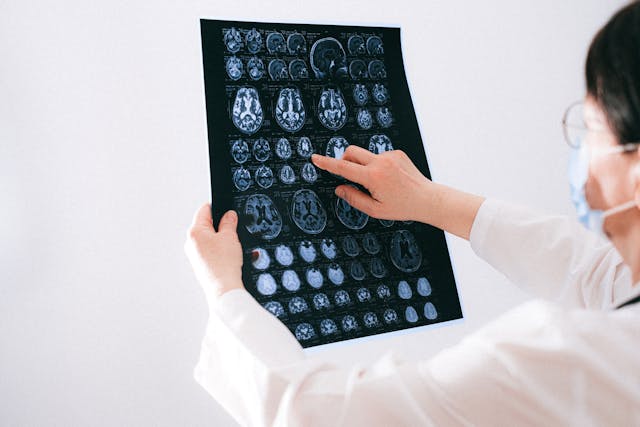
When the team compared post-COVID participants with the pre-pandemic controls, they saw higher tracer uptake in several nervous system regions. These included the brain stem, the thoracic spinal cord, and the bundle of nerves called the cauda equina near the base of the spine. The signal in these locations was modest in absolute terms, yet consistently higher than in the control group. That pattern suggests persistent T cell activation in areas that help regulate breathing, heart rhythm, and key reflexes.
Some scientists suspect that subtle inflammation in these structures could contribute to post-COVID symptoms such as dizziness, disordered breathing, or unusual heart-rate swings. The choroid plexus, a structure where virus receptors are rich, showed high background uptake in everyone, so differences there were less clear. Interestingly, activation in parts of the spinal cord and gut wall tended to be higher among those who reported Long COVID symptoms than among people who felt fully recovered. Clinicians find it striking that immune activity appears in the same tissues that patients often report as not feeling right.
Heart and Lung Signals That Track With Breathing Symptoms

The scans also highlighted differences in the cardiovascular system. People who had recovered from COVID, with or without post-COVID symptoms, tended to show higher tracer uptake in the aortic arch wall, the pulmonary artery wall, and the right ventricle wall when compared with prepandemic controls. Lower lung lobes showed increased signal as well. When the researchers looked more closely at symptom groups, an important pattern emerged. Participants with persistent pulmonary complaints, such as cough or shortness of breath, showed particularly high tracer uptake in lower lung tissue and in the pulmonary artery wall. Those without breathing complaints still had some changes, but the association was weaker.
This link does not prove direct causation, yet it strengthens the idea that ongoing immune activity in lung and vascular tissues may underlie some Symptoms of COVID years after infection. Standard CT scans can look normal, yet the PET images suggest a different, more active immune picture beneath the surface. For people whose lungs never feel quite the same, that mismatch between routine imaging and lived experience is very familiar, and helps explain how long COVID symptoms appear in everyday life.
The Gut as a Long-Term Viral Reservoir

One of the most striking findings involved the gut. Across the post-COVID group, SUV values in the proximal colon wall, rectal wall, and nearby bone marrow were higher than in controls, suggesting sustained T cell activation in those tissues. This prompted a deeper question. Were these immune cells reacting to something still present, or only to older tissue damage that now manifests as post-COVID symptoms? To explore that question, the team invited a subset of five people with Long COVID symptoms to undergo flexible sigmoidoscopy. Biopsies from rectosigmoid tissue were then studied with highly sensitive RNA in situ hybridisation.
In every participant, researchers found single-stranded SARS-CoV-2 spike RNA inside cells of the lamina propria, the immune-rich layer beneath the gut lining. In three people, they also detected double-stranded viral RNA, which appears only during active transcription or replication. The authors interpret these findings as evidence that viral genetic material may linger in the gut for up to two years. They did not see much RNA in the epithelial surface, where infection first takes hold, which raises questions about how and where the virus persists. For people living with ongoing digestive issues as part of their Long COVID symptoms, the idea that the gut might shelter a quiet reservoir is deeply resonant and offers one plausible route through which symptoms of COVID years after infection can arise.
What Blood Tests and Immune Markers Added
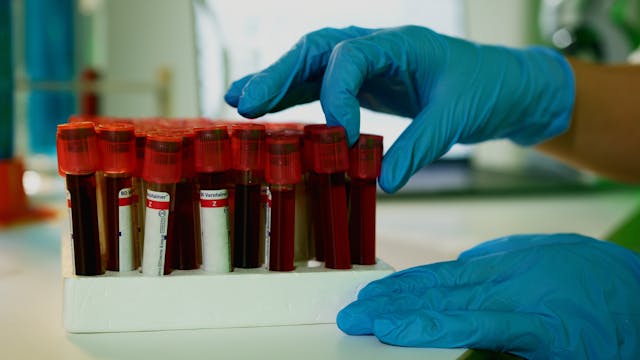
Alongside the imaging, the team analysed blood samples for patterns of inflammatory proteins using a large panel assay. They also performed detailed spectral flow cytometry to characterise many T cell and B cell subsets in circulation and in gut tissue. These tools allowed them to build “modules” of related proteins that tended to rise or fall together in people with higher tracer uptake in specific organs. Individually, no single protein reached strong statistical significance after strict corrections, which reflects the small sample size. However, clusters of markers related to immune activation showed coherent trends. That coherence supports the idea that the PET signal reflects real biological pathways, not random noise.
Interestingly, the team did not find simple one-to-one links between most circulating cell phenotypes and the level of tissue uptake. Gut tissue contained more effector memory T cells than blood, yet many activation markers were similar across groups. Blood tests remain important, but they do not always mirror what is happening inside individual organs. For patients, this underlines why normal routine blood work does not necessarily rule out meaningful immune activity in harder-to-reach tissues, or explain how long COVID symptoms appear and then fluctuate over time.
Why the Findings Are Provocative but Not Final
The study offers compelling visual evidence that T cell activation and viral RNA can persist long after acute COVID. At the same time, the authors are careful about what their data cannot prove. The sample is relatively small, which limits the power to detect subtle links between exact symptoms and exact tissues. Prepandemic controls were scanned using a slightly different machine and dose, which always raises the chance of technical bias, even when SUV values are used to adjust. Another challenge involves reinfections. Although participants were followed closely, completely ruling out silent new exposures is difficult. That said, many were infected during periods when other respiratory viruses were relatively suppressed by public health measures.
It is also important to note that Long Covid is a heterogeneous condition. Not every person with post-COVID symptoms will share the same pattern of immune activation or viral persistence. The authors state this clearly. “Our data are consistent with a model in which persistence of SARS-CoV-2 results in chronic tissue inflammation,” they conclude, but they also emphasise that causal links between persistence and specific Long COVID symptoms still need to be confirmed in larger cohorts. For readers, the key message is that this is strong evidence, yet it is still one part of a larger scientific picture about Symptoms of COVID years after infection.
What This Could Mean for Future Long Covid Care

Even with its limits, the work helps shift the narrative about Long Covid away from doubt and toward biology. It supports earlier studies that found lingering viral proteins in tissues and dysregulated T cell responses in blood, and it adds whole-body imaging to that evidence base. Together, these findings challenge the idea that Covid is always a short, self-contained event that ends when the swab turns negative. They also offer a framework for understanding how long COVID symptoms appear and persist in different tissues. Clinically, the study hints that future diagnostics might combine careful symptom histories, blood markers, and targeted imaging to identify subtypes of post-COVID symptoms.
One person might have prominent lung and vascular involvement. Another might have heavier gut-centred activity. In time, these patterns could inform more tailored treatment trials that focus on antiviral strategies, immune modulation, or rehabilitation, depending on the biology behind each cluster of Long COVID symptoms. For now, the practical message for patients is more emotional than technical. Symptoms of COVID years after infection are not “all in the head,” and science is steadily revealing objective footprints of the condition inside the body. Patient advocates often emphasise that scans may not solve everything, yet they can still demonstrate that something real is happening in the body. That validation can be a powerful starting point for better care, and for renewed hope that targeted therapies will eventually follow for people living with post-COVID symptoms.
The Bottom Line

Taken together, this research brings Long Covid and post-COVID symptoms into clearer biological focus. The scans show consistent pockets of T cell activity in the nervous system, heart, lungs, and gut. Biopsies reveal lingering viral RNA in intestinal tissue long after the first infection. These signals point toward a body that, in some people, remains engaged in a quiet and exhausting fight. For those living with symptoms of COVID years after infection, that picture can feel deeply validating. At the same time, the study is still an early step. The group was small, and the methods were complex. It cannot fully explain why one person develops disabling Long COVID symptoms while another recovers quickly. It also cannot yet tell clinicians exactly which treatments will calm this persistent immune activity. More work is needed across larger and more diverse groups before practice can change on a wide scale.
Even so, the message is already important. Long Covid is not just a collection of vague complaints. It is a condition where measurable changes appear inside organs that matter for breathing, circulation, and thinking. Many advocates feel that scientific research is finally catching up to what patients have been reporting for years. Future research will refine how post-COVID symptoms are classified, how long COVID symptoms appear in different subtypes, and which therapies hold the most promise. For now, this study offers something valuable on its own. It shows that the search for answers is serious, methodical, and ongoing, and that the lived reality of people with Long COVID symptoms is firmly rooted in biology, not imagination.
Disclaimer: This article was created with AI assistance and edited by a human for accuracy and clarity.
Read More: How COVID Might Be Affecting Male Fertility and the Health of Future Children