Crown Princess Mette-Marit Wears Oxygen at Constitution Day – What Her Condition Means
Norway’s most beloved national celebration usually looks the same every May 17. Children parade in traditional dress, flags blanket the streets, and the royal family waves from the palace balcony as the crowd below erupts in cheers. This year’s Constitution Day was all of that. But for anyone paying close attention, something was different. Something that made the image of Crown Princess Mette-Marit standing among her family feel simultaneously ordinary and quietly extraordinary.
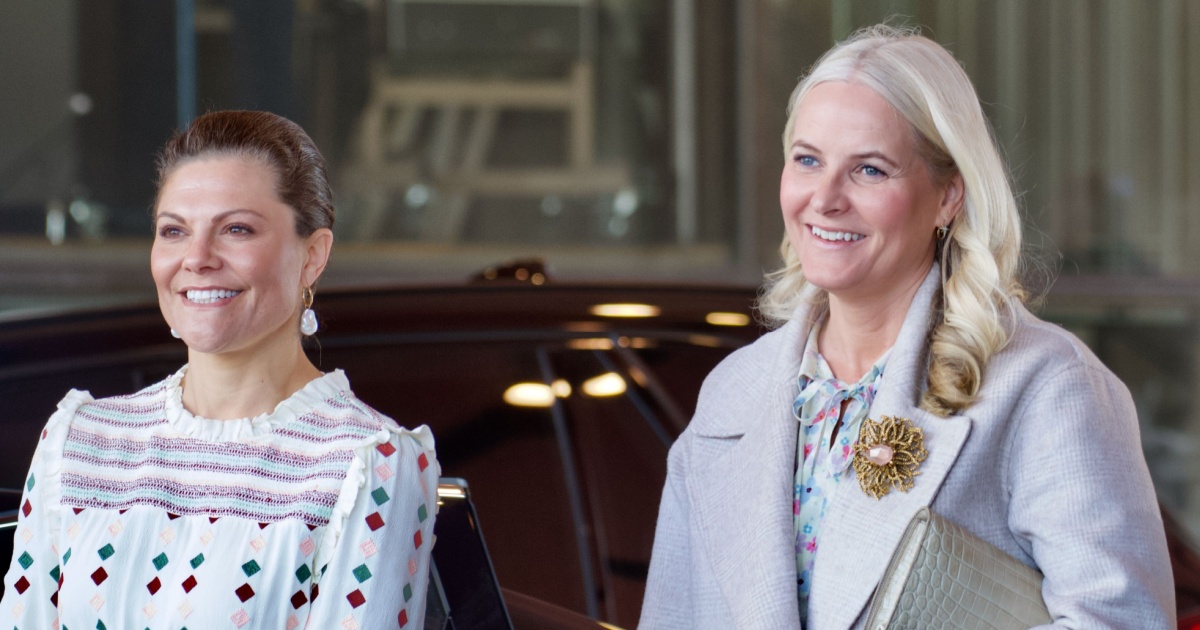
She smiled. She waved. She stood beside her husband, Crown Prince Haakon, as their son Prince Sverre Magnus carried a small piece of equipment up to the balcony and set it carefully beside her. She was wearing a nasal cannula – a thin tube delivering supplemental oxygen from a portable tank – and she was doing it in front of the whole country, on the biggest national holiday of the year, without apology or explanation.
For the 52-year-old Crown Princess, just showing up was an act of determination. And for the millions of people worldwide who live with progressive lung disease, her presence that morning was something much more personal.
What Happened on Norway’s National Day
On Sunday, May 17, 2026, Princess Mette-Marit of Norway appeared with an oxygen device during a public family gathering marking Norway’s Constitution Day, watching the children’s parade at Skaugum, the royal residence near Oslo.
She wore a nasal breathing device and stopped for photographs on the balcony and outside the palace alongside her husband Crown Prince Haakon, their son Prince Sverre Magnus, Queen Sonja, and King Harald of Norway.
During the traditional greeting of schoolchildren at Skaugum, Mette-Marit needed a chair discreetly placed off to one side of the main entrance, with local media reporting this was part of the medical plan set for what was expected to be an especially demanding day for the princess. As the children’s parade passed by the family residence, she alternated between standing and sitting, with Norwegian outlet Dagbladet reporting she was “visibly struggling to breathe.”
According to NRK, it was Prince Sverre Magnus who brought the oxygen device up to the balcony and set it beside her, just as he had done earlier at Skaugum.
Another detail that drew attention was that Mette-Marit wasn’t wearing the traditional bunad, the regional folk costume she normally dons each May 17. The Royal Household confirmed she wouldn’t be able to wear any of her regional costumes on doctors’ advice, and she instead opted for a coat, even as Crown Prince Haakon and Prince Sverre Magnus wore traditional dress.
Despite her health challenges, she took part in the celebrations with her family but withdrew earlier than the rest of the group. That small detail – leaving before the others – is easy to overlook on paper. For anyone managing an illness that drains energy with every breath, it speaks volumes.
The Condition Behind the Oxygen Tank
Crown Princess Mette-Marit was diagnosed with pulmonary fibrosis in 2018. The disease involves a buildup of scar tissue in the lungs, which makes it more difficult for the lungs to carry oxygen into the bloodstream.
To understand what that means in daily life, consider what the Cleveland Clinic explains about the condition: pulmonary fibrosis is scarring in the lungs that makes it hard to breathe, and it can be idiopathic (without a known cause) or result from autoimmune diseases, environmental factors, or medications. It usually gets worse over time, though how quickly varies from person to person.
The most common symptoms, according to the Pulmonary Fibrosis Foundation, are a dry, persistent cough and shortness of breath, which may be mild or even absent early in the disease but worsen as the lungs develop more scar tissue. Other symptoms include fatigue, unexplained weight loss, reduced appetite, and in some cases, swollen or rounded fingertips.
The particular form of fibrosis affecting Mette-Marit’s lungs remains relatively uncommon, with the Royal House stating there is “broad consensus that, unlike other more common types of pulmonary fibrosis, it is not related to environmental or lifestyle factors.” Her doctor, Professor Kristian Bjøro at the National Hospital, noted that her disease progression has been slow, and the Royal House confirmed the unusual variant detected in her lungs is not linked to environmental or lifestyle factors.
Early detection has improved her prognosis, according to previous Palace communications, giving her a more favorable outlook than might otherwise have been expected.
A Condition That Has Been Worsening
What makes this Constitution Day appearance especially significant is the health trajectory that led to it. In the autumn of 2025, Mette-Marit took time away from her duties to undergo pulmonary rehabilitation. After a number of tests showed a clear worsening of her health, the physicians at Rikshospitalet University Hospital started the process toward an evaluation for potential lung transplant surgery.
A statement from the Royal Court quoted the lead physician saying, “We are reaching the point where a lung transplant will be necessary, and we are undertaking the necessary preparations to ensure that this will be possible when the time comes,” adding that no decision had yet been taken as to when the Crown Princess would be placed on the waiting list.
In March 2026, the Royal Court described her condition as having “deteriorated,” and she has used supplemental oxygen during both of the family’s public appearances on May 17.
Her health has recently limited her public appearances significantly, and in December, the Royal Court announced that Mette-Marit would need a lung transplant sooner or later.
According to Rikshospitalet University Hospital, Crown Princess Mette-Marit will not receive priority on the transplant waiting list. Lungs are allocated based on medical urgency and best donor-recipient match, in line with Norway’s healthcare principles, where all patients are treated equally regardless of status.
What Oxygen Therapy Means at This Stage
Oxygen therapy is prescribed when a patient doesn’t have enough oxygen getting to their blood or tissues. The nasal cannula Mette-Marit wears is one of the most common delivery methods – a lightweight tube that sits just inside the nostrils and connects to a portable tank or concentrator. Oxygen therapy involves breathing in oxygen through nose tubes or a face mask. It won’t stop lung damage, but it can help manage symptoms and improve functioning.
As the lung scarring in pulmonary fibrosis progresses, breathing becomes more difficult with increased demand for higher flows of oxygen, and that demand can cause increased breathlessness – particularly with activity – as well as anxiety. In other words, the oxygen tank at a national celebration isn’t just a medical accessory. It’s a sign of how hard the body is working to do something most people never think about.
There is no cure for pulmonary fibrosis. Treatment focuses on easing symptoms, slowing down progression, and improving quality of life. Antifibrotic medications such as nintedanib and pirfenidone may slow down lung scarring and help preserve lung function. But for patients whose disease has advanced significantly, these medications can only do so much.
When Transplant Becomes the Path Forward
For those with advanced pulmonary fibrosis, a lung transplant is often the only remaining option that offers meaningful improvement. Current medical treatments for IPF (idiopathic pulmonary fibrosis) are limited and include antifibrotic agents that can slow but not reverse disease progression. For patients with end-stage disease, lung transplantation remains the most viable option.
Lung transplantation improves survival in individuals with pulmonary fibrosis, with approximately 89% surviving at least one year post-transplant, and about 74% surviving three years post-transplant. Outcomes depend on a range of factors including the patient’s age, the severity of disease at the time of transplant, and overall health.
A 2024 study in The Annals of Thoracic Surgery shows that survival is improving for patients undergoing lung transplantation for IPF, despite transplant recipients presenting with progressively higher risk profiles. That is genuinely encouraging news in a field that has historically offered limited hope at this stage.
The waiting period itself carries risk. Patients with limited life expectancy benefit from early referral for transplant, according to researchers from Johns Hopkins University’s Division of Cardiac Surgery. The challenge is that suitable donor lungs are scarce, and not every patient remains stable enough to receive one.
What the May 17 images communicate most clearly isn’t medical – it’s human. When her diagnosis was first confirmed in 2018, Mette-Marit opened up by saying that for a number of years she had experienced regular health challenges, and added: “Although such a diagnosis will limit my life at times, I’m glad that the disease has been discovered so early. My goal is still to work and participate in the official programme as much as possible.”
After restricting her royal duties, she told Norwegian TV network NRK in 2019: “I am exhausted faster than before, so today I have to take more care of myself than I did before.”
By speaking publicly about her illness, Crown Princess Mette-Marit has shown genuine openness. Her visibility brings attention to conditions that often remain invisible until they become severe, and may help others better understand the challenges faced by people living with chronic and progressive lung disease.
Greater awareness of conditions like pulmonary fibrosis can contribute to earlier diagnosis, improved access to specialist care, stronger support for research into new treatments, and better understanding of associated conditions.
That framing matters. There are over 250,000 Americans currently living with pulmonary fibrosis, with approximately 50,000 new cases diagnosed each year. For most of them, there is no royal platform, no photographer, no public record of the daily effort it takes to simply be present. Mette-Marit’s visibility – oxygen tank, chair by the front entrance, early departure and all – offers something those 250,000 people rarely see: a public figure showing what this disease actually looks like.
What This Means for You
Pulmonary fibrosis is one of those conditions that most people don’t hear much about until someone they know is diagnosed with it. The Crown Princess’s public appearances are a reminder that it can affect people in the prime of their lives, and that its progression can be slow, unpredictable, and deeply exhausting.
If you or someone you care about has noticed persistent shortness of breath, a dry cough that won’t go away, unusual fatigue, or unexplained weight loss, these are symptoms worth taking seriously and discussing with a doctor. Healthcare providers can’t easily predict how pulmonary fibrosis will progress – symptoms may get worse very slowly over years, or in some cases the disease may lead to severe symptoms quickly over months. Early diagnosis genuinely changes outcomes. Seeking proper diagnosis and treatment early can help preserve lung function for longer and reduce symptoms to improve quality of life.
For those already navigating this disease, Mette-Marit’s presence on that palace balcony, standing beside her family on Norway’s most joyful day, with a small oxygen tube and a genuine smile, is its own kind of message. Showing up, even partially, even with assistance, still counts.
Disclaimer: This information is not intended to be a substitute for professional medical advice, diagnosis, or treatment and is for information only. Always seek the advice of your physician or another qualified health provider with any questions about your medical condition and/or current medication. Do not disregard professional medical advice or delay seeking advice or treatment because of something you have read here.
AI Disclaimer: This article was created with the assistance of AI tools and reviewed by a human editor.