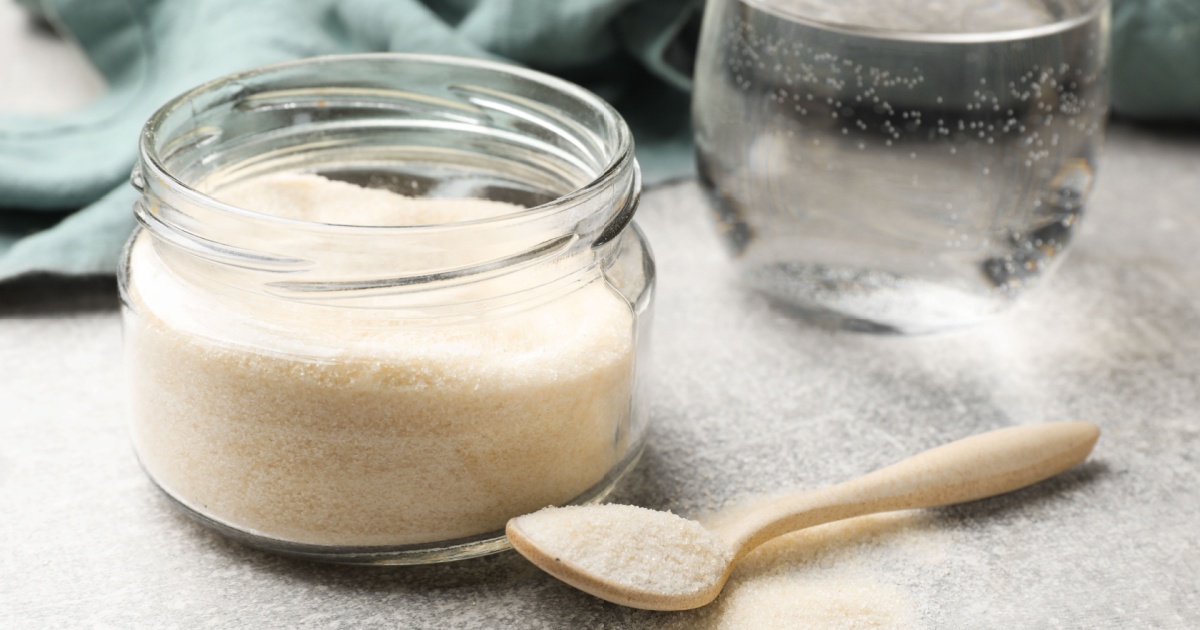

A spoonful of gelatin dissolved in warm water costs roughly a dollar. A monthly prescription for Wegovy costs around $1,350. The fact that anyone is seriously comparing the two tells you something – not about gelatin, but about how desperate people are for an affordable answer to weight loss.
The latest viral trend circulating on social media has people turning to gelatin, dubbed the “gelatin natural Ozempic,” to curb their appetites without a GLP-1 prescription. The routine involves mixing a spoonful of gelatin into warm water and drinking it 15 to 30 minutes before a meal, with proponents claiming the beverage helps with weight loss by forming a gel in the stomach and taking up space, signaling to the brain that they’re getting full.
The nickname has stuck partly because it sounds plausible. Gelatin does interact with your digestive system in a measurable way, and it does contain amino acids that play a role in gut hormone signaling. The biology isn’t fiction. But the gap between “has some effect” and “works like Ozempic” is where the trend goes sideways – and it’s a bigger gap than most people scrolling through TikTok realize.
What Gelatin Actually Is
Gelatin is derived from collagen, the structural protein found in animal bones, skin, and connective tissue. When collagen is subjected to heat, its complex molecular structure breaks down into gelatin. That process concentrates certain amino acids – gelatin’s composition runs to roughly 26 – 34% glycine and 10 – 18% proline by weight, making it one of the richest dietary sources of those two amino acids available.
That amino acid profile sounds impressive until you look at what’s missing. Gelatin is not a complete protein. While it contains very high amounts of protein, it lacks the essential amino acid tryptophan – the precursor to serotonin and a compound required for dozens of metabolic processes the body cannot run without. A 2025 nutritional analysis published on ResearchGate was direct on this point: “gelatin alone cannot support growth or nitrogen balance in humans.” That’s a significant limitation for anyone treating it as a dietary staple rather than a pre-meal supplement.
The Stomach Expansion Mechanism – Real, but Limited
There’s a legitimate biological reason the gelatin trick produces some short-term satiety. According to Erin Palinski-Wade, RD, CDE, a registered dietitian and certified diabetes educator based in New Jersey, once the gelatin reaches your stomach, the acidic environment helps it form a thicker, semi-gelled mixture that increases the volume and thickness of what’s sitting in your stomach.
That physical expansion stretches the stomach wall, sending signals to the brain that you’re starting to get full. The protein in gelatin also triggers a gut hormone response that helps slow eating. The result is a temporary increase in fullness that may help some people consume fewer calories in a meal.
Protein-rich foods generally do have a satiety advantage over carbohydrates and fats. Protein has the highest thermic effect of all the macronutrients, with approximately 20 – 30% of its calories burned during digestion and metabolism. High-protein meals also stimulate the release of gut hormones that signal fullness – one reason higher-protein diets tend to reduce overall calorie intake.
Gelatin fits loosely within that protein framework. But there’s a critical absence: fiber. As Today.com noted, gelatin doesn’t provide any fiber – and that’s the nutrient that really drives durable feelings of fullness. The stomach expansion from gelatin dissipates fairly quickly, leaving you back at baseline long before your next meal. The evidence supports short-term satiety, not sustained weight loss.
How GLP-1 Medications Actually Work – and Why Gelatin Can’t Replicate Them
GLP-1s, or glucagon-like peptide-1 receptor agonists, mimic the GLP-1 hormone produced in the gut after eating. ABC News reported that they work by helping the pancreas increase insulin production to move sugar from the blood into body tissues – which reduces blood sugar and helps control Type 2 diabetes – and also slow down the movement of food through the stomach to curb appetite.
These drugs operate at the receptor level across multiple systems simultaneously. GLP-1 receptors are primarily located in the gastrointestinal tract, pancreas, and brain, which is why semaglutide affects not just stomach emptying but also the reward and hunger centers of the brain – essentially recalibrating how strongly food cravings register. Semaglutide slows gastric emptying, prolonging digestion and promoting early satiety through a pharmacological mechanism that works continuously, not just for the 20 minutes after you drink something warm.
Dr. Stephanie Widmer, an emergency medicine physician and medical toxicologist who has served as a recurring toxicology expert for ABC News, put the distinction plainly: “Gelatin is mostly a protein. It can help you feel fuller for a short period of time, whereas GLP-1s really work on a hormonal level. These are two entirely different things.”
Palinski-Wade drew a similarly direct comparison. Calling gelatin the equivalent of prescription semaglutide, she said, is “a little like calling a garden hose a fire hydrant – there’s a similar idea in the background, but the strength and impact are completely different.”
Gelatin supports a brief, food-triggered hormone response. It does not mimic prescription medications at the receptor level, nor does it possess any hidden fat-burning properties. It simply fills the stomach to help reduce calorie consumption.
The Cost Comparison That’s Fueling the Trend
The cost gap between gelatin and GLP-1 drugs is real and significant, and it goes a long way toward explaining why the trend has grown so fast. Wegovy’s list price is about $1,350 per package, while Ozempic’s list price is about $1,028 per pen. Gelatin packets, by contrast, cost less than a dollar at any grocery store. For people who can’t access or afford prescription weight management medications, a low-cost intervention that does anything at all is understandably appealing.
That economic reality is worth taking seriously, not dismissing. The frustration driving this trend is legitimate. But the risk of conflating a food-based hack with a prescription drug is that people may overestimate results, under-eat in other areas, or delay conversations with their doctors about treatments that could actually help.
The broader context around GLP-1 medications also complicates the comparison. Randomized withdrawal trials – including the STEP 4 trial published in JAMA and the SURMOUNT-4 trial – consistently show that stopping GLP-1-based therapy is followed by rapid weight regain, typically observed within one year of withdrawal. A 2026 systematic review published in eClinicalMedicine confirmed that weight regain after stopping GLP-1 medications is substantial and rapid – which means both gelatin and prescription drugs share at least one thing in common: neither produces lasting results without sustainable lifestyle habits underneath them.
Who Should and Shouldn’t Try It
Gelatin is not dangerous for most healthy adults. If you want to try mixing a tablespoon of plain, unflavored gelatin powder in hot water, then diluting it with room-temperature water or herbal tea and drinking it 15 to 30 minutes before one daily meal, the risk is low, and the potential for modest appetite reduction is real.
Anyone who is pregnant, breastfeeding, or managing kidney disease or animal allergies should consult a physician before trying this approach. Kidney disease is a particular concern because higher protein loads can stress kidney function over time, and adding gelatin daily means adding protein to your overall intake.
The more important caution is nutritional. Using gelatin as a meal replacement can create severe amino acid gaps and fail to support muscle health. It should only be viewed as a pre-meal appetite support tool – a small, low-calorie pre-load, not a substitute for food that contains complete proteins, fiber, micronutrients, and everything else a meal actually needs to deliver.
For anyone looking for genuinely satisfying pre-meal options that also support fullness, research on protein and satiety consistently points toward combinations of protein, fiber, and healthy fat – things like Greek yogurt, a small handful of nuts, cottage cheese, or a cup of bone broth. These foods bring more complete nutritional value than gelatin alone, and they don’t require comparing them to a $1,000-a-month prescription drug to justify their place at the table.
Read More: Here’s the Powerful Impact Jell-O Has on Your Joints, Bones and Skin
What to Do Now
Dr. Widmer has described gelatin as something that “may be a quick fix but is not a magic bullet for weight loss.” That framing is accurate and fair. One tablespoon before a meal may modestly reduce how much you eat at that sitting – and for some people, that marginal reduction adds up. But the effect depends on what follows: a meal with complete protein, fiber, and real nutrients, not a smaller version of an already nutrient-thin plate.
Gelatin fills physical space in your stomach for roughly 20 minutes. A prescription GLP-1 recalibrates appetite-regulating hormones across your gut, pancreas, and brain for as long as you take it. Treating them as comparable can lead people away from effective strategies – whether that means delaying a doctor’s conversation or misunderstanding why they stopped losing weight after a promising first week.
The practical takeaway: use gelatin as one small tool in a broader strategy, not the strategy itself. Mix one tablespoon of plain, unflavored gelatin in hot water 15 to 30 minutes before one meal per day if you’re curious. Make sure the meal that follows delivers complete protein, fiber, and genuine nutritional value. That combination – not the gelatin alone – is what actually moves the needle on sustained appetite regulation.
Disclaimer: This information is not intended to be a substitute for professional medical advice, diagnosis, or treatment and is for information only. Always seek the advice of your physician or another qualified health provider with any questions about your medical condition and/or current medication. Do not disregard professional medical advice or delay seeking advice or treatment because of something you have read here.
AI Disclaimer: This article was created with the assistance of AI tools and reviewed by a human editor.
Read More: GLP-1 Drugs Like Ozempic May Cut Cancer Risk Up to 58%