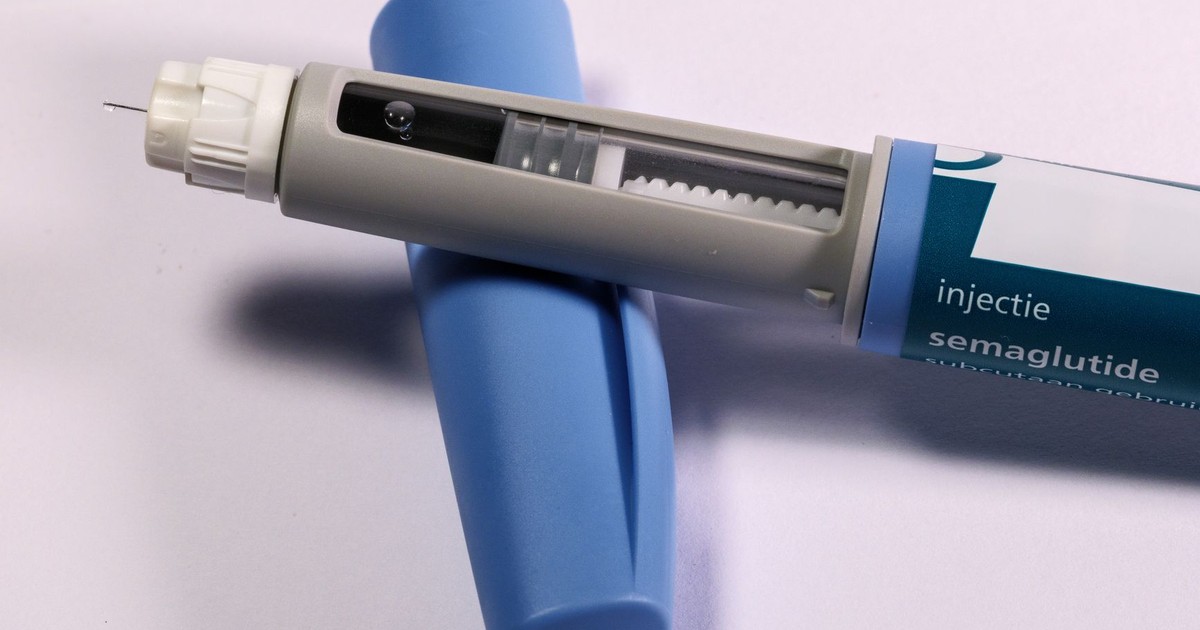

Millions of people taking GLP-1 drugs like Ozempic and Mounjaro track nausea, fatigue, and blood sugar closely, but hair loss rarely makes the list. However, a major peer-reviewed study published in July 2026 is changing that, with the clearest population-level evidence yet that these blockbuster medications carry a measurably higher risk of alopecia – hair loss – than the alternative diabetes drugs patients could have taken instead.
The study, led by researchers at the University of Pennsylvania Health System and published in The BMJ, didn’t rely on anecdote or small case series. It drew on real-world electronic patient data, covered tens of thousands of people, and adjusted carefully for age, sex, ethnicity, body mass index, and pre-existing conditions. The finding wasn’t a borderline signal. It was a statistically significant, consistent elevation in alopecia risk that held up across multiple analyses.
The GLP-1 side effects conversation has long centered on nausea, vomiting, and, more recently, muscle and bone loss. Hair thinning has circulated in patient forums and social media threads for years, largely dismissed as an indirect consequence of rapid weight loss rather than the drug itself. This study doesn’t fully resolve that question – but it raises it with far more precision than anything that came before.
What the BMJ Study Actually Found
Researchers used electronic patient data from the University of Pennsylvania Health System to compare rates of alopecia in adults with type 2 diabetes who had newly started GLP-1 receptor agonists or one of two other common diabetes drug classes. After adjusting for age, sex, ethnicity, pre-existing conditions, other medication use, and body mass index, GLP-1 use was associated with a 37% higher risk of alopecia compared to SGLT-2 inhibitors (6.91 versus 5.04 per 1,000 person-years) and a 68% higher risk compared to DPP-4 inhibitors (6.53 versus 3.89 per 1,000 person-years).
To put the scale of the study in context: 12,004 patients using GLP-1 drugs were compared with 15,221 using SGLT-2 inhibitors, with an additional 11,964 GLP-1 users compared to 11,233 using DPP-4 inhibitors. These are not small convenience samples – they are among the largest cohorts to date examining this specific question.
Actual rates of alopecia were low, ranging from roughly 3 to 9 per 1,000 people per year across drug-class groups. The elevated relative risk is real and statistically robust, but the absolute numbers remain modest. “Although the absolute risk is low, awareness of this potential effect may help to inform shared treatment decisions,” the researchers noted.
Critically, the hair loss identified in the study was not the permanent, follicle-destroying kind. Further analysis suggested the link related to non-scarring alopecia, where hair follicles remain intact, leaving the potential for hair to regrow.
GLP-1 Drugs Covered in the Analysis
GLP-1 drugs in the study included semaglutide, sold by Novo Nordisk as Wegovy and Ozempic; tirzepatide, sold by Eli Lilly as Zepbound and Mounjaro; and older drugs in the class. SGLT-2 inhibitors included Johnson & Johnson’s Invokana, AstraZeneca’s Farxiga, and Jardiance from Boehringer Ingelheim and Eli Lilly. DPP-4 inhibitors included Merck’s Januvia and AstraZeneca’s Onglyza.
Study Design and Its Limitations
The researchers acknowledged that a lack of clinical information limited their ability to assess details such as severity, extent, duration, and reversibility of alopecia after stopping treatment. They also could not rule out the possibility that other unmeasured factors may have influenced their results. However, the study was described as based on high-quality data from a large representative cohort, and results were consistent after additional analyses. The researchers concluded their findings “extend previous anecdotal safety signals and provide more systematic evidence to inform clinical awareness of this potential adverse effect.”
Tirzepatide vs. Semaglutide: Which Carries More Risk?
A separate analysis published around the same time adds important texture to the BMJ findings by comparing the two most widely prescribed GLP-1 drugs head-to-head. Researchers at Cambridge, Massachusetts-based analytics firm nference compared 11,046 patients taking tirzepatide with the same number taking semaglutide, finding new-onset alopecia rates of 4.24% with tirzepatide and 3.33% with semaglutide in a preprint submitted for peer review.
In female users specifically, those rates climbed to 5.44% with tirzepatide versus 3.63% with semaglutide. The difference is consistent with tirzepatide’s more aggressive weight-loss profile – it is a dual GLP-1 and GIP receptor agonist that tends to produce greater caloric restriction and more rapid body weight reduction than semaglutide alone, which may amplify the metabolic stress on hair follicles.
A 2026 systematic review published in PMC found that androgenetic alopecia and telogen effluvium were the predominant subtypes of hair loss reported in GLP-1 users, with tirzepatide, associated with the greatest magnitude of weight loss, most frequently linked to telogen effluvium.
Regulatory Signals: What the FDA and MHRA Have Already Done
The research community isn’t alone in taking this seriously. Regulators on both sides of the Atlantic have been accumulating reports for several years.
Following an FDA investigation of post-market data, GLP-1 drugs including Ozempic and Zepbound are now required to list alopecia as a potential adverse reaction on their product labeling.
UK data tells a similarly consistent story. In 2026 alone, the UK’s Medicines and Healthcare products Regulatory Agency (MHRA) received 399 reports of hair loss linked to tirzepatide, following 541 reports the previous year. It also received 148 reports of hair loss associated with semaglutide, alongside 164 reports the year before.
These are spontaneous reports from patients and healthcare providers – a system known to significantly undercount real-world adverse events. And they aren’t isolated to the UK. Findings from a 2025 scoping review suggest that GLP-1 receptor agonists may alter the hair follicle cycle, with more than 1,000 spontaneous cases reported in the U.S. alone.
Nine studies met the inclusion criteria for the 2025 scoping review, comprising randomized clinical trials, cohort studies, and pharmacovigilance analyses. Most studies lacked dermatological diagnostic confirmation, and only one described the clinical pattern of alopecia – identifying telogen effluvium and androgenetic alopecia as the most frequent subtypes.
The Biology Behind the Hair Loss
Understanding why GLP-1 drugs may be associated with hair thinning requires a brief look at how hair actually grows – and how it fails.
In a normal, healthy scalp, about 85% of hair is in the active growth (anagen) phase and 15% is in the resting (telogen) phase. Anagen hair is actively growing, while telogen hair is resting. A hair follicle typically produces actively growing hair for almost four years before resting for about four months.
When the body undergoes significant metabolic stress, that ratio can shift sharply. If the body remains under significant stress, approximately 70% of anagen hair can be pushed prematurely into the telogen phase, triggering widespread hair shedding. This is the mechanism behind telogen effluvium – a reactive process rather than permanent follicular damage.
For anyone interested in how GLP-1 medications interact with the body’s broader physiology, including muscle and bone, The Hearty Soul’s analysis of what orthopedic surgeons know about Ozempic covers related mechanisms in detail.
Telogen effluvium is a temporary hair loss from excessive shedding due to a shock to the system, with triggers including surgery, major trauma, infection, extreme weight loss, and changes in diet. Rapid weight loss caused by GLP-1 medications fits squarely into this category.
Hair is almost entirely composed of keratin, a structural protein. Researchers point out that rapid weight reduction is already associated with hair loss, as well as iron and zinc deficiencies, which might further disrupt the normal hair cycle. When caloric intake drops sharply – as it typically does in the first months of GLP-1 treatment – dietary protein, iron, and zinc can all fall below the thresholds the follicle needs to sustain active growth.
Why the Timing Catches Patients Off Guard
In telogen effluvium, the proportion of hair follicles in the telogen (shedding) phase can increase significantly, up to 50%, leading to mass shedding – but there is generally a two- to three-month lag between the stressful event and the onset of visible hair loss. For GLP-1 users, this means that noticeable shedding often starts around the two-to-four-month mark after initiating treatment, at a point when patients may not associate it with the drug at all.
The good news, for most people, is the prognosis. According to Cleveland Clinic, hair will usually grow back in three to six months once the underlying trigger is addressed – though this assumes that nutritional deficiencies are identified and corrected, and that the metabolic disruption driving the hair cycle shift is brought under control.
A Growing Body of Evidence, Not a Settled Case
The BMJ study is observational – it demonstrates an association between GLP-1 use and elevated alopecia risk but cannot establish that the drug is the direct biochemical cause. The researchers used a target trial emulation design, which is a rigorous method for extracting causal inference from observational data, but it has limits. Unmeasured confounders – such as whether GLP-1 users lost more weight faster than the comparison groups – could partly explain the gap.
Accumulating evidence from pharmacovigilance databases and clinical cohorts suggests an increased risk of hair loss with certain GLP-1 receptor agonists, particularly semaglutide and tirzepatide, though further studies are needed to clarify the etiology, identify vulnerable populations, and determine whether the drug itself or the weight loss it produces is the primary driver.
Alopecia has been noted in cohort studies with limited sample sizes and in pharmacovigilance analyses, with no comprehensive clinical characterization currently available to determine its prevalence, clinical features, or underlying mechanisms. Although infrequent, this adverse effect raises concern due to its potential impact on treatment adherence and patient quality of life.
The BMJ study goes further than anything preceding it in scale and methodological rigor, but it is still one data point. A dedicated prospective trial tracking hair loss outcomes, nutritional status, and weight loss trajectories simultaneously would be needed to fully disentangle the mechanisms.
Read More: Reddit Knows About Ozempic Side Effects That Doctors Don’t – and How It Can Affect You
Key Takeaways
The evidence trail from 2025 into 2026 points in a consistent direction: GLP-1 drugs carry a statistically elevated risk of hair loss compared to other diabetes medications, and both US and UK regulators have taken the signal seriously enough to act on product labeling. The absolute risk remains low – roughly 3 to 9 cases per 1,000 person-years – but for the patients who experience it, particularly women using tirzepatide at higher doses, the impact on quality of life and treatment adherence can be significant.
Anyone starting a GLP-1 medication should be aware that noticeable hair thinning, if it occurs, most commonly appears two to four months after treatment initiation. It is typically non-scarring, meaning follicles remain intact and hair can regrow. Addressing nutritional status early – specifically monitoring iron, zinc, and dietary protein – is the most actionable step. A complete blood count with ferritin and zinc levels at baseline, and again at three months, is a reasonable precaution for anyone on these medications who has a prior history of hair thinning or nutrient deficiency. Clinicians prescribing GLP-1 drugs now have peer-reviewed, large-cohort data to support discussing this risk explicitly with patients before treatment begins, rather than after the first clumps appear on the shower floor.
Disclaimer: The author is not a licensed medical professional. The information provided is for general informational and educational purposes only and is based on research from publicly available, reputable sources. It is not intended to constitute, and should not be relied upon as, medical advice, diagnosis, or treatment. Always consult a licensed physician or other qualified healthcare provider regarding any medical condition, symptoms, or medications. Do not disregard, avoid, or delay seeking professional medical advice or treatment because of information contained herein.
AI Disclaimer: This article was created with the assistance of AI tools and reviewed by a human editor.