A Massive Hidden Megma Reservoir Was Just Found Beneath Tuscany — And It Rivals Yellowstone
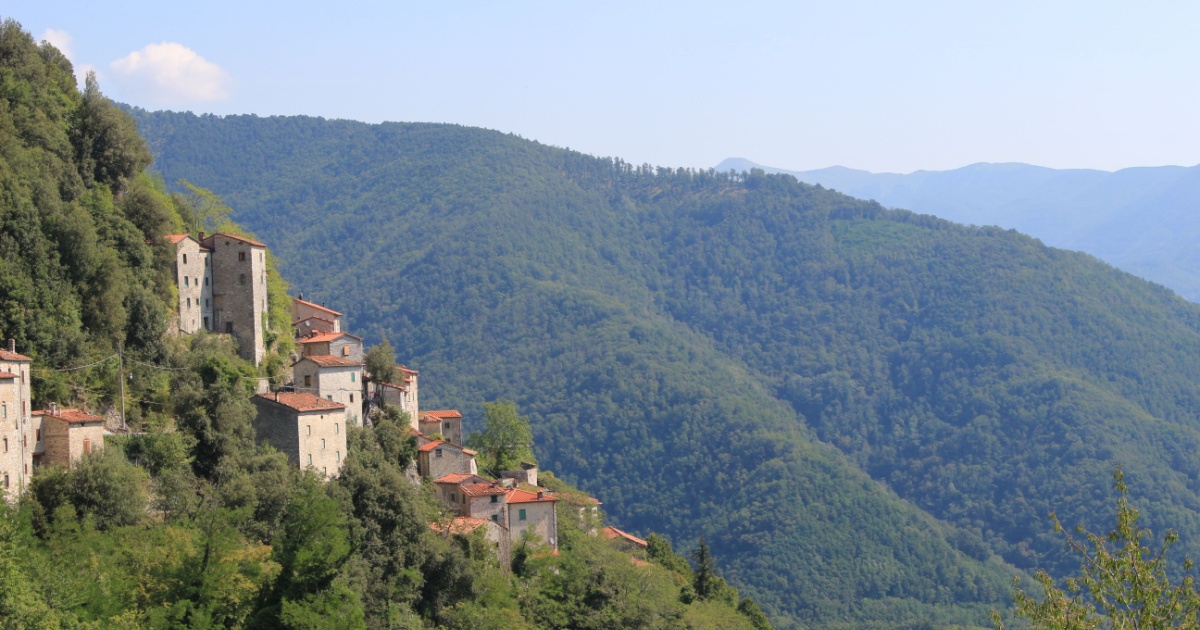
Tuscany is famous for many things: rolling vine-covered hillsides, Renaissance masterworks, some of the most celebrated food and wine in the world. What it has never been famous for is volcanoes. There are no brooding craters on the Tuscan skyline, no ash-stained ancient towns, no recorded eruptions in the living memory of any civilization. The region’s geological identity has always been defined by tranquility – at least on the surface. What has been stirring beneath it is an entirely different story, and one that geologists are only now fully beginning to understand.
In April 2026, an international research team published findings that reframe everything scientists thought they knew about the geological character of central Italy. The study, published in the journal Communications Earth & Environment, describes the discovery of a vast magma reservoir buried deep within the continental crust of Tuscany – a body of molten and partially molten rock so large that it sits in the same size category as the magma systems that powered some of the most catastrophic volcanic events in Earth’s history. The region has generated geothermal electricity for over a century. It turns out there was always a very good reason for that heat. Nobody realized quite how good until now.
The discovery raises questions that go well beyond academic geology. If a system of this magnitude can hide in plain sight beneath one of Europe’s most visited and well-documented regions, what else might be lurking undetected beneath other densely populated parts of the planet? And what does finding it change – for volcanic science, for energy policy, and for the people living above it?
What the Study Actually Found
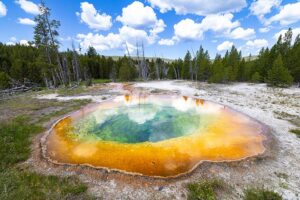
A team from the University of Geneva (UNIGE), the Institute of Geosciences and Earth Resources (CNR-IGG), and the National Institute of Geophysics and Volcanology (INGV) identified a vast reservoir containing approximately 6,000 km³ of magma beneath Tuscany. To appreciate that number, consider the scale: this volume is comparable to the crustal reservoirs found below supervolcanoes such as Yellowstone, according to ambient noise tomography analysis.
The team identified reservoirs of volcanic fluids totaling about 6,000 km³, located at depths of 8 – 15 km within the continental crust. The reservoir is concentrated beneath two areas: the Larderello-Travale geothermal field and the Monte Amiata system further to the southeast. These volumes are interpreted as accumulation zones of partially molten rock, with dimensions of approximately 6,000 km³ and 2,000 km³ for the Larderello-Travale and Mount Amiata systems, respectively.
The lead researcher on the study was Matteo Lupi, an associate professor in the Department of Earth Sciences at UNIGE. His team’s surprise at the magnitude of what they found comes through clearly in their published remarks. “We knew that this region, which extends from north to south across Tuscany, is geothermally active, but we did not realize it contained such a large volume of magma, comparable to that of supervolcanic systems such as Yellowstone,” Lupi explained.
Why Nobody Saw It Coming
Scientists typically identify volcanic systems through clear surface signs, including volcanic deposits, craters, ground movement, and gas emissions. Without these indicators, large magma accumulations can remain hidden deep within the crust.
Tuscany displayed almost none of the standard signals. The region exhibits almost none of the typical surface indicators that usually signal the presence of such a massive underground magma body. There are no major volcanic craters, no significant eruptions recorded in hundreds of thousands of years, and no dramatic ground deformations to hint at the activity below. No volcanic eruptions are known to have occurred in the region during the Holocene period, which spans the last 11,700 years.
What scientists did know was that the Larderello area was intensely geothermally active – but that activity was attributed to shallow crustal processes rather than a deep magmatic source. Scientists had already suspected that there was a great deal of magma hidden deep inside Tuscany’s middle crust for some time. What is now understood to be a region of liquid rock was previously thought to perhaps be a tectonic boundary or an underground deformation.
Unlike comparable supervolcanic sites such as Yellowstone, Lake Toba, or Lake Taupo, no craters, eruptive deposits, or surface deformations had been detected in Tuscany, demonstrating that large accumulations of magma can remain hidden for millions of years without generating visible volcanic activity. The last known volcanic event in this area occurred around 300,000 years ago from Mount Amiata and was relatively minor in scale.
The Detection Method: Listening to the Earth’s Own Noise
The breakthrough that made this discovery possible was a technique called Ambient Noise Tomography (ANT). ANT is a subsurface imaging technique that makes it possible to “X-ray” the Earth’s crust by using natural environmental vibrations generated by ocean waves, wind, or human activity. As these signals travel through the ground, they are recorded by high-resolution seismic sensors deployed at the surface – around 60 instruments were used in this study.
The physics behind the method are elegantly simple. Shear waves – the secondary seismic waves produced by earthquakes and ground movement – slow dramatically when they pass through molten or partially molten material, because liquids cannot sustain the shearing motion that gives these waves their name. The maps showed shear-wave velocities dropping to 1.25 km per second at 10 km depth below Larderello, a reduction of approximately 40 percent below the regional baseline.
A network of 63 broadband seismometers, deployed across southern Tuscany from September 2020 to September 2021 and integrated with Italy’s national INGV monitoring grid, recorded continuous ambient ground vibration. Those vibrations, processed using ambient noise tomography, allowed scientists to reconstruct three-dimensional shear-wave velocity maps of the crust from the surface down to 15 kilometers depth.
By combining all of the collected data, the team created a detailed three-dimensional image of the region’s internal structure. That 3D image revealed not an isolated pocket of magma but a regionally connected system. The low-velocity anomaly below Larderello is not an isolated pocket but part of a regionally continuous magmatic zone extending southeast to the Piancastagnaio and Amiata geothermal systems, across a horizontal distance of more than 100 kilometers. That lateral extent places multiple geothermal operating zones, multiple provincial towns, and large sections of southern Tuscany over a single connected magmatic province of supervolcano-scale dimensions.
A Technique With Growing Importance
The value of ANT extends far beyond this single discovery. According to Gilberto Saccorotti from INGV, this technique “allows for precise and sustainable subsurface exploration,” reinforcing its usefulness in both fundamental research and practical applications. The technique carries zero environmental impact because it relies entirely on the Earth’s continuous natural vibrations. With ANT, magma deposits as deep as 15 kilometers below the surface can be detected without any above-ground indicators.
This matters enormously for planetary-scale volcanic hazard assessment. If a 6,000 km³ magma body went undetected beneath a region that has been geologically studied for centuries, the implication is that other systems of comparable scale may exist in areas not yet subjected to this level of scrutiny.
How It Compares to Known Supervolcanoes
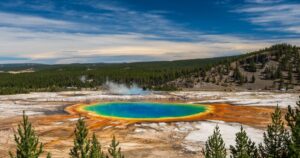
The term “supervolcano” has a formal scientific threshold. The term implies a volcanic center that has had an eruption of magnitude 8 on the Volcano Explosivity Index (VEI), meaning that at one point it erupted more than 1,000 cubic kilometers of material. Yellowstone is the most frequently cited example: the shallower of its two magma bodies is composed of rhyolite and stretches from 5 km to about 17 km beneath the surface, measuring about 90 km long and 40 km wide.
Yellowstone’s upper magma chamber is estimated to contain around 4,000 km³ of partially molten material, making it one of the largest of its kind globally. The Tuscan system, at an estimated 6,000 km³ for its primary reservoir alone, exceeds that figure. In geological terms, magma bodies of this size are comparable to those that fuel so-called “supervolcanoes” like Yellowstone National Park in the United States, Lake Toba in Indonesia, or Taupo Volcano in New Zealand, which house immense magma reservoirs beneath them.
The comparison with Toba is particularly striking in terms of context. The largest eruption in the last two million years occurred about 74,000 years ago at Toba Volcano on the island of Sumatra. The volume of that eruption is estimated at 670 cubic miles (2,800 cubic kilometers). These are the kinds of systems the Tuscan magma reservoir now sits alongside, in volumetric terms.
For more on how known supervolcanic systems behave and are monitored, see our earlier report on the Yellowstone supervolcano.
Why an Eruption Is Unlikely
Despite the scale of the discovery, the researchers are clear: this does not represent an active volcanic threat. Although this magma body could, in theory, contribute to the formation of a supervolcano over geological timescales, it currently poses no threat.
The reason lies in the chemistry of the magma itself. The magmas in the Tuscan system are highly viscous, having formed through the melting of the surrounding crustal rocks rather than rising directly from the Earth’s mantle. This high viscosity makes them far less likely to erupt explosively compared to the magmas found beneath conventional supervolcanoes like Yellowstone.
The magma stored beneath the Tuscan Magmatic Province is classified as peraluminous anatectic granite – a highly viscous type of melt generated by the partial melting of the sedimentary basement rocks of the Tuscan crust, rather than by mantle-derived basalt ascending from below. Crustal melts of this type tend to accumulate slowly and remain in place over extremely long geological periods rather than building toward explosive eruption. The magma is deep (8 – 15 km), far below the 3 – 5 km depth where most eruptive magma chambers form, and there are no surface indicators of imminent volcanic activity, including no uplift, no significant seismicity, and no gas emissions.
The study authors note this is also part of what makes the system scientifically compelling: it represents a mature magmatic province that has sustained intense heat output for millions of years without ever erupting.
The Larderello Connection: A Century of Hidden Energy
This discovery provides a compelling explanation for a persistent mystery surrounding Tuscany: why the region exhibits such extreme geothermal activity despite the apparent absence of an obvious volcanic source. The Larderello area, historically nicknamed the Devil’s Valley due to its intense fumarolic activity, is home to one of the world’s most productive geothermal energy systems. The newly identified magma reservoir is now understood to be the powerful engine driving this geothermal activity, supplying the immense heat necessary for energy production.
The history of Larderello as an energy site stretches back over a century. Larderello produced its first electricity from geothermal sources in 1904, when Piero Ginori Conti used a simple dynamo generator to power the first five geothermal-powered light bulbs. By 1913, the first geothermal power plant in the world was built in Larderello. The site now produces 10% of the world’s entire supply of geothermal electricity, amounting to 4,800 GWh per year and powering about a million Italian households.
The field that has been generating electricity for 120 years was always sitting above a buried supervolcano-scale system. Geologists simply lacked the tools to see it.
Strategic Implications: Energy, Lithium, and Rare Earths
Beyond the volcanological significance, the research team emphasized the practical implications of both the discovery and the detection method itself.
The discovery could lead to faster, more affordable ways to identify geothermal energy sources and locate critical materials like lithium and rare earth elements, which often form in association with deep magmatic activity.
Magmatic fluids often carry dissolved lithium, a critical mineral for EV batteries. Geothermal brines in volcanic regions are increasingly targeted as lithium sources. Similar magmatic processes also concentrate rare earth elements needed for wind turbines, electronics, and defense applications. As Europe works to reduce dependence on Chinese rare earth supplies and expand domestic clean energy, a better understanding of Tuscany’s underground could have strategic value well beyond academic geology.
Lupi directly connected the technique to the energy transition in his concluding remarks. “These results are important both for fundamental research and for practical applications, such as locating geothermal reservoirs or deposits rich in lithium and rare earth elements, which are used, for example, in electric vehicle batteries. In addition to their great scientific interest, these studies show that tomography, by exploring the subsoil quickly and at low cost, can be a useful tool for the energy transition,” he said.
The region beneath Mount Amiata, located at the southern edge of the study area, may harbor even larger volumes of magma. However, the research team has emphasized that further detailed analysis is required to confirm this possibility.
The Tuscany discovery is significant on multiple levels, and each merits clear, direct understanding.
First, it confirms that supervolcano-scale magmatic systems can exist without any of the surface features that scientists traditionally rely on to find them. While the west of Italy is known to harbor major volcanic activity, this is the first time such reservoirs have been identified in central Italy, despite some suspicions that such deposits may exist. The absence of craters, ground uplift, or seismic swarms is no longer sufficient evidence that a region lacks a major subsurface magmatic system.
Second, the Ambient Noise Tomography technique itself may be the more consequential breakthrough for the long term. It is non-invasive, cost-effective, and capable of probing depths that conventional seismic surveys cannot reach without major infrastructure. No permanent dense seismic monitoring array equivalent to those deployed at Yellowstone or Campi Flegrei currently operates across the full extent of the Tuscan Magmatic Province – a gap in monitoring infrastructure that this discovery makes more visible.
Third, and most practically: there is no current hazard. Lupi was explicit on this point in the paper: “Although this magma body could, in theory, contribute to the formation of a supervolcano over geological timescales, it currently poses no threat.” The magma is deep, highly viscous, and geologically stable. What it does represent is a massive natural resource sitting beneath a region that has already been harnessing its heat for over a century, and a proof of concept that the Earth’s interior still holds discoveries capable of reshaping how geologists understand entire continental regions.
As the study authors noted, such partial melt systems are crucial for understanding the long-term evolutionary processes of volcanic systems that have experienced super-eruptions in the past, as well as regional-scale, high-enthalpy systems that have not yet erupted. Tuscany, it turns out, belongs firmly in that second category.
What This Means for You
You don’t need to live in Tuscany for this discovery to matter. The broader lesson is that the Earth’s geological story is still being written, and some of its most significant chapters are hidden in places that looked completely unremarkable. Regions once considered geologically quiet may warrant a second look – and scientists now have an affordable, non-invasive tool to do exactly that.
For anyone thinking about the practical upside: Tuscany’s subsurface is now a proven template for what buried geothermal and mineral wealth can look like. Ambient Noise Tomography could be deployed in other geothermally warm but volcanically quiet regions across Europe, Asia, and South America, potentially revealing hidden energy resources or lithium and rare earth deposits that don’t show any obvious surface clues. That has real implications for the clean energy supply chain – and for the countries trying to build it domestically rather than import it.
As for the people living in southern Tuscany, the clearest takeaway from the science is this: the ground beneath you has been geologically active for millions of years, and it has never erupted. The magma is too deep, too viscous, and too chemically stable to be heading anywhere soon. What it is doing – and has been doing for a century and a half – is quietly powering homes across Italy. Understanding that source more precisely is not a reason for alarm. It is a reason to use it more wisely.
AI Disclaimer: This article was created with the assistance of AI tools and reviewed by a human editor.