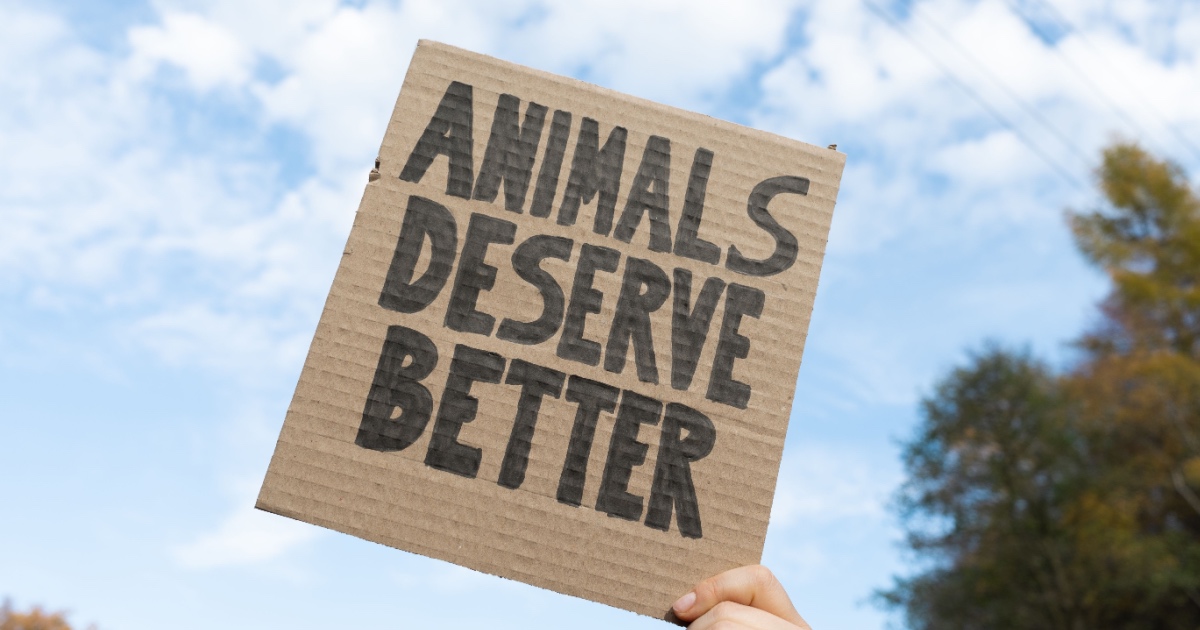

Oregon’s animal cruelty law already bans the “intentional, knowing, and reckless injury” of an animal. For most Oregonians, that language applies exclusively to pets. A ballot campaign working through 2026 wants to change that to cover deer, cattle, salmon, and mice in a pantry trap – with nearly identical legal consequences.
Initiative Petition 28, formally titled the People for the Elimination of Animal Cruelty Exemptions (PEACE) Act, is a proposed ballot initiative filed with the state of Oregon for the November 2026 general election. The idea is straightforward on paper: if enacted, IP28 would extend the legal protections that currently keep companion animals safe to animals on farms, in research labs, and in the wild, since animal abuse in Oregon is already defined as the intentional, knowing, and reckless injury of an animal – and IP28 doesn’t change that definition, it simply changes who is protected under it.
The effect of that single legal change, however, is anything but small. IP28 would remove the legal exemptions that currently protect hunting, fishing, trapping, and farming from Oregon’s animal abuse statutes, under which these activities are explicitly exempted from criminal animal abuse charges. A licensed deer hunter, a commercial salmon trawler, a rancher performing routine breeding procedures, and a homeowner setting a mousetrap would all face the same legal exposure as someone convicted of animal cruelty toward a pet. Because the initiative removes exemptions for causing “physical injury,” fishing would become a criminal act – this applies even to catch-and-release fishing, as the physical trauma caused by a hook would constitute abuse under the revised statute.
Whether Oregon voters actually see this measure in November 2026 now depends on a signature count. The Yes On IP28 campaign made its final submission of signatures, submitting a total of 142,784. IP28 requires 117,173 valid signatures by July 2, 2026. Those raw totals still need to survive verification by the Oregon Secretary of State, and proponents submitted a total of 126,115 raw signatures to the Oregon Secretary of State earlier in the process – while this exceeded the statutory baseline, the measure had not yet qualified, because raw submission numbers always include invalid entries, and proponents had a thin cushion of roughly 9,000 signatures. The final 142,784 figure provides a more comfortable buffer ahead of that verification phase.
The Man Behind the Hunting Ban State Campaign
David Michelson, co-chief petitioner, is a substitute teacher at Portland Public Schools who previously filed two similar initiatives in 2020 and 2022. This is the third iteration of an initiative first introduced by animal rights advocates, making IP28 not a sudden political surprise but a persistent campaign. Each previous version carried the same core goals but failed to gain enough signatures to place the initiative before Oregon voters.
What’s notable about Michelson’s own framing of the effort is the candor about its prospects. He says he’s “under no illusion that IP28 will pass this year,” but making the ballot would start a conversation that he hopes will eventually lead to success – and he likens the effort to the women’s suffrage movement, which took many elections to succeed. “For us, a win would be getting on the ballot, just to make history by actually having the vote,” Michelson told The Oregonian/OregonLive. By Michelson’s own account, it’s part of a long-term effort to reshape how society views hunting, fishing, farming, ranching, food production, and animal ownership – and even if IP28 fails, supporters intend to continue advancing the effort in future election cycles.
The campaign received financial backing beyond the grassroots level. It received a $10,000 contribution from People for the Ethical Treatment of Animals (PETA) and $30,000 from the Craigslist Charitable Fund, with the influx of national money allowing the campaign to hire paid signature gatherers, shifting this from a fringe local effort to a professional political operation.
What Would Actually Change
IP28 would criminalize “any activity – other than self-defense and veterinary practices – that intentionally injures, kills, or sexually violates a nonhuman animal,” meaning no killing animals for food, either commercially or recreationally, and no elective animal husbandry such as artificial insemination, castration, or dehorning.
That last clause lands particularly hard on dairy and livestock operations. If passed, the bill would dramatically expand animal abuse laws to criminalize hunting, fishing, livestock slaughter, many standard farming practices, and artificial insemination. This measure would reclassify all hunting, fishing, trapping, standard animal husbandry, and livestock processing as misdemeanor or felony offenses. The proposal would define “animal” as any nonhuman mammal, bird, reptile, amphibian, or fish.
By removing long-standing exemptions within Oregon’s animal cruelty statutes, this measure would criminalize harvesting game or catching a fish to feed your family, and would decimate scientific wildlife management, strip conservation funding generated by license sales, and completely ignore treaty-protected Tribal rights. Oregon’s tribal communities, would receive no exemption, even for ceremonial or subsistence hunting and fishing.
IP28 also proposes its own economic cushion. It attempts to mitigate economic damage by establishing a “Humane Transition Fund” for farmers and anyone else whose livelihood is criminalized, creating a “Transitional Oversight Council” to issue grants that would “help with food assistance” either through food and cash benefits or “opening private or state-run grocery stores.” Critics argue this framework vastly underestimates the scale of disruption it would have to address.
The Economic Scale Opponents Cite
The initiative could severely curtail Oregon’s animal agriculture sector, which contributed more than $4 billion to the state’s economic output and employed more than 30,000 people in 2022. A 2022 economic analysis puts that figure more precisely: animal agriculture contributed more than $4.4 billion to Oregon’s total economic output and accounted for more than 30,325 jobs statewide.
Beyond agriculture, Oregon’s sporting economy faces equally significant disruption. The Oregon Department of Fish and Wildlife estimates that hunting and fishing generate over $1.9 billion annually in economic activity for Oregon communities, and the state’s wildlife management and conservation programs are funded almost entirely through hunting and fishing license fees, tags, and federal excise taxes on sporting goods. ODFW’s entire budget runs north of $180 million, and Oregon State Senator David Brock Smith has noted that sportsmen contribute 45 to 55 percent of ODFW’s budget, comprising the majority of dollars used for wildlife management and conservation.
The hunting industry carries national weight, too. Approximately 15.2 million Americans purchased hunting licenses in 2024, the latest year with complete national data, and hunting statistics compiled in 2026 show that hunting amounts to a $29.7 billion annual industry in the United States when direct spending and indirect economic impacts are combined.
Nationally, the broader policy context matters here. Because the initiative removes exemptions for causing “physical injury,” catch-and-release fishing would also become a criminal act, as the physical trauma caused by a hook would constitute abuse under the revised statute. Meanwhile, the Oregon initiative removes exemptions for the “control of vermin or pests,” meaning that setting a trap for a mouse in a pantry or controlling gophers in a garden would legally be considered animal abuse.
Opposition Has Grown Broad and Bipartisan
Oregon Legislative Sportsmen’s Caucus Co-Chairs, Senators David Brock Smith and Anthony Broadman, have formally opposed Initiative Petition 28. The Oregon Hunters Association has warned that IP28 would turn nearly one million Oregonians into criminals and strip the state’s primary conservation funding mechanism.
The Oregon Farm Bureau has stated that IP28 would redefine “sexual assault” to include routine breeding practices, potentially exposing farmers, ranchers, veterinarians, breeders, and animal owners to criminal liability for standard, humane practices that are essential to food production – effectively turning Oregon into a “no kill or harm” sanctuary state, eliminating in-state meat, dairy, and animal protein production.
Agricultural organizations ranging from small groups such as Friends of Family Farmers to the Oregon Cattlemen’s Association see the PEACE Act as an existential threat. That opposition now extends far beyond Oregon’s borders. The petition has already drawn national attention, including coverage in Field & Stream magazine, and Texas Governor Greg Abbott even weighed in.
The statutory landscape reveals why opponents view this not just as an Oregon fight. Under IP28, most routine livestock and agricultural practices would be reclassified as sexual assault of an animal under Oregon law. Artificially inseminating dairy cows, a standard practice across the country, would fall under that classification – and nearly 80% of dairy producers in North America use artificial insemination to breed cows, according to Deseret News reporting from May 2026. At the federal level, Oregon law already defines animal abuse as the intentional, knowing, and reckless injury of an animal, and IP28 doesn’t change that definition – it simply changes who is protected under it.
Read More: This Factory in Holland Is 3D Printing 500 Tonnes of Steaks a Month
What to Watch For
Oregon voters have rejected previous attempts to significantly restrict hunting. Twenty-five states have enshrined a right to hunt and fish in their state constitutions, according to Ballotpedia’s 2026 coverage, which reflects how deeply the cultural and legal presumption runs in favor of these activities across much of the country. Even if IP28 does not make it on the November ballot, Michelson believes the movement is starting a valuable conversation.
For Oregon specifically, the final answer on ballot eligibility comes after the state completes its signature verification. The next major step is signature verification – if enough signatures are verified, IP28 qualifies for Oregon’s 2026 general election ballot; if not, the proposal dies before voters see it. Oregon’s final signature submission deadline is July 2, 2026, and the state’s verification deadline is August 2, 2026.
The practical significance of IP28 goes beyond its likelihood of passing in any single election cycle. According to multiple published interviews, Michelson has openly acknowledged that the measure is unlikely to pass in 2026 and has described the effort as part of a longer campaign to shift public attitudes about animals and their use by humans. Each ballot appearance builds public familiarity with the argument, generates media coverage, and tests the coalition that would need to defeat it. Opponents of the hunting ban state proposal have taken that long-game framing seriously, treating a 2026 loss at the polls not as a conclusion but as round three of a fight that’s expected to keep returning.
For anyone who hunts, farms, fishes, or simply sets pest traps in their garage, the August 2026 verification deadline is the next date that matters. If signatures hold, Oregon voters will be asked to weigh in on the most sweeping animal rights proposal any U.S. state has placed before its electorate.
AI Disclaimer: This article was created with the assistance of AI tools and reviewed by a human editor.
Read More: Mexico Bans Dolphin Shows in Landmark Animal Welfare Victory