
Three people dead on a cruise ship in the middle of the Atlantic Ocean. A rodent-borne virus spreading, perhaps, between human beings in close quarters. The World Health Organization is scrambling to contain a cluster of cases spanning multiple continents in a matter of days. For anyone who lived through the early, unnerving months of 2020, the headlines arriving this first week of May 2026 carry a familiar, uncomfortable charge.
The virus at the center of it all is called hantavirus. For most people in the Western world, it’s barely a name they recognize, something vaguely associated with mice, rural America, and outdoor excursions gone wrong. Yet here it is, aboard a Dutch-flagged polar expedition ship called the MV Hondius, drifting off the coast of Cape Verde with nearly 150 people on board, forcing governments across Europe and Africa to scramble, and putting a single question on everyone’s lips: could this be the next COVID-19?
The honest answer requires understanding both viruses clearly. Hantavirus and SARS-CoV-2 share some surface-level similarities. They both attack the respiratory system, they both emerge from animal reservoirs, and they are both capable of killing people quickly. The differences between them, however, run deep, and those differences matter enormously for how worried the world should actually be right now. This report covers everything you need to know.
What Is Hantavirus?
Hantavirus is not a single virus. It’s a family of viruses carried by rodents on every inhabited continent. Infected rodents shed the pathogen in their urine, feces, and saliva without becoming sick themselves. Humans get infected almost exclusively through environmental exposure, typically by inhaling microscopic particles disturbed from contaminated rodent droppings in enclosed or poorly ventilated spaces.
The history of hantavirus goes back further than most people realize. Researchers first identified these viruses during the Korean War in the 1950s. The WHO classified them in 1987, but it wasn’t until a 1993 outbreak in the United States’ Four Corners region that hantavirus pulmonary syndrome was formally characterized, splitting the virus into two subgroups: Old World, which can cause renal failure, and New World, which can cause pulmonary failure.
Old World vs. New World Strains
The geographic distinction matters enormously, because the two groups of hantavirus behave very differently in the human body.
In Europe and Asia, hantaviruses cause hemorrhagic fever with renal syndrome (HFRS), a condition that primarily attacks the kidneys and blood vessels. In the Americas, infection leads to hantavirus cardiopulmonary syndrome (HCPS), a rapidly progressive condition affecting the lungs and heart. According to the WHO’s hantavirus fact sheet, hantavirus infections are relatively uncommon globally, but carry a case fatality rate of less than 1% to 15% in Asia and Europe, and up to 50% in the Americas.
In practical terms, the European strains are considerably milder. Puumala virus, which circulates in Europe and is carried by the bank vole, causes a milder form with fatality rates typically well below one percent. The American strains are a different story. Hantavirus cardiopulmonary syndrome begins like influenza, with fever, muscle aches, and fatigue, but can rapidly progress to severe respiratory failure as the lungs fill with fluid. Deaths from HCPS exceed 35 percent, making it one of the more lethal diseases spread from animals to humans in the Americas.
How Hantavirus Spreads
People usually become infected by breathing in air contaminated with virus particles from rodent urine, droppings, or saliva. The virus can also enter the body through cuts, the eyes, or, very rarely, a rodent bite.
What trips people up is how this actually happens in everyday life. You have to inhale virus-carrying particles released when rodent-contaminated materials are disturbed, and even then, the virus only survives on surfaces for a few days. The risk spikes in specific environments. People face the greatest exposure in enclosed or poorly ventilated spaces such as homes, cabins, or sheds where rodent activity is present. Even a visually clean cabin can harbor risk. If rodents are present, the virus may be as well.
The One Exception: Andes Virus
Here is where the story gets more complicated, and where the 2026 cruise ship outbreak enters the picture directly.
Only one hantavirus, the Andes strain native to South America, has spread from person to person, and this remains rare. Researchers have documented human-to-human transmission only for Andes virus in the Americas, and only through close and prolonged contact, particularly among household members or intimate partners.
The Andes virus is endemic to Argentina and Chile. The largest outbreak of the Andes strain occurred in Argentina in 2018, leading to 34 cases and 11 deaths. Research reviewed by CBC News in 2025 analyzed the Epuyén village outbreak in southern Argentina. Researchers found that “the strain demonstrated a high capacity for sustained transmission among the human population” requiring quarantine measures, contact tracing, and active clinical monitoring to prevent further spread.
The MV Hondius Outbreak: What Happened
In April 2026, health officials identified an outbreak of hantavirus on the cruise ship MV Hondius, anchored off the coast of Praia, Cape Verde. The chain of events unfolded rapidly across several weeks.
The vessel departed Ushuaia, Argentina, on April 1, 2026, and followed an itinerary across the South Atlantic, with multiple stops in remote and ecologically diverse regions, including mainland Antarctica, South Georgia, Nightingale Island, and Tristan da Cunha. As of May 4, 2026, seven cases had been identified, two laboratory-confirmed and five suspected, including three deaths, one critically ill patient, and three individuals reporting mild symptoms.
WHO confirmed that samples from the outbreak were analyzed by the National Institute for Communicable Diseases in South Africa and the Geneva University Hospitals in Switzerland, and both institutions confirmed Andes hantavirus. A new case then emerged beyond the ship itself. Swiss authorities identified a man receiving treatment for hantavirus at the University Hospital Zurich. He had consulted his doctor after experiencing symptoms, and physicians established he carried the Andes strain of the virus, bringing the total to eight cases.
How the Virus May Have Reached the Ship
The WHO is working on the assumption that the Dutch couple who both died were infected off the ship, perhaps while participating in activities in Argentina before joining the cruise. Argentine officials investigating the outbreak’s origins suggest the leading theory is that the couple contracted the virus during a bird-watching tour in Ushuaia before boarding.
The first person to become sick, a man who traveled in Argentina before joining the cruise, fell ill within the first week and died shortly after. The other patients became sick a couple weeks later. That timing gap is significant. The incubation period between exposure to the virus and symptom onset can be anywhere between one and eight weeks.
WHO epidemiologist Maria Van Kerkhove told a news conference that hantavirus, unlike influenza or COVID-19, spreads between people only through close contact, such as sharing a bed or food.
Symptoms, Diagnosis, and Treatment
Symptoms usually start with fatigue, fever, and muscle aches, but can also include headaches, dizziness, chills, and additional problems such as nausea, vomiting, diarrhea, and abdominal pain. The disease can then progress to coughing, shortness of breath, and chest tightness as the lungs fill with fluid.
The early phase is the most deceptive. Fever, muscle aches, headache, nausea, vomiting, and diarrhea are easy to mistake for other illnesses. “The symptoms are very non-specific, especially in the beginning,” said Dr. Amy Vittor, an assistant professor of infectious disease at the University of Florida College of Medicine. Someone with a New World hantavirus can rapidly fall into pulmonary or heart failure within a matter of days after those initial symptoms appear.
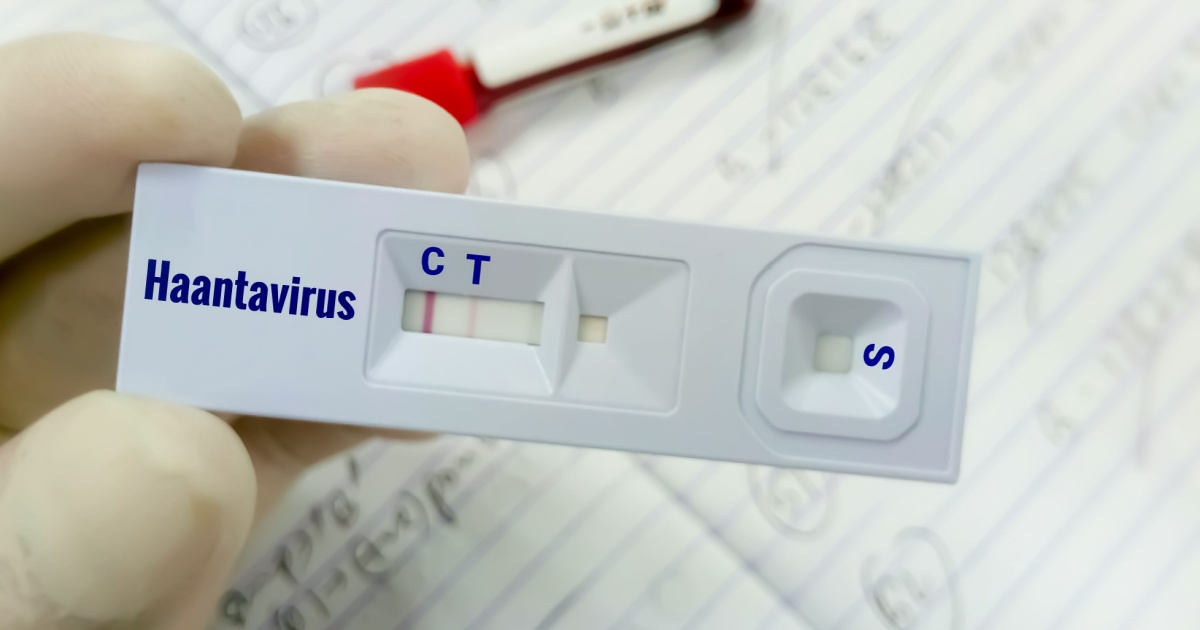
Doctors confirm the diagnosis through blood tests that check for antibodies or detect viral genetic material, though results can take days to weeks to return. Treatment options are limited. There are no specific treatments or vaccines for hantavirus infections, and patients typically receive supportive care, which can include oxygen therapy, mechanical ventilation, and, in severe cases, dialysis. Early medical attention significantly improves survival chances. In the most severe cases, the most effective intervention is ECMO, or extracorporeal membrane oxygenation, which temporarily takes over heart and lung function to give the body a chance to recover.
Hantavirus in the United States: Current Scope
As of the end of 2023, 890 cases of hantavirus disease had been reported in the United States since surveillance began in 1993. The numbers are small relative to most infectious diseases, but the fatality rate is not. More than one third of patients who experience respiratory symptoms may die from the syndrome, according to the CDC’s hantavirus data.
Roughly half of all US cases have been reported in the Four Corners region and California, including more than 120 each in Colorado and New Mexico. The virus gained wider public attention after investigators identified it as the cause of death of Betsy Arakawa, wife of actor Gene Hackman, after the couple were found dead at their New Mexico home in February 2025.
Hantavirus vs. COVID-19: A Direct Comparison
This is the question dominating public health conversations right now, and it deserves a clear, structured answer.
Transmission: The Fundamental Divide
This is where the two viruses differ most profoundly. COVID-19, caused by SARS-CoV-2, spreads efficiently from person to person through respiratory droplets and aerosols. Simply breathing shared air, touching contaminated surfaces, or spending time in close proximity with an infected person can transmit it. That mechanism is what allowed it to circle the globe within weeks.
Hantavirus doesn’t work that way. Aerosolized viruses like measles or influenza stay in the air much longer and transmit more easily than hantaviruses do. While the cruise ship situation might call to mind the early days of COVID-19, scientists have been quick to stress that hantavirus is not a major global threat. “People really do need to understand that there are different degrees of person-to-person transmission,” said Angela Rasmussen, a virologist with the University of Saskatchewan’s Vaccine and Infectious Disease Organization, to CBC News.
Even in the one strain where human-to-human transmission has been documented, the behavior is fundamentally different from a virus like SARS-CoV-2. If the Andes virus were highly transmissible, “you would have a lot more cases on the cruise ship, just from people being around each other in pretty close proximity,” as one researcher noted. With nearly 150 people confined to a ship for over a month, only eight became ill, a stark illustration of how constrained that transmission pathway really is.
Fatality Rate: Hantavirus Is Far More Deadly Per Case
Fatality rates range from 1 to 15% for Old World strains, while New World strains carry a fatality rate of up to 50%, even with treatment. COVID-19’s overall infection fatality rate during the pandemic was estimated in the range of 0.5 to 2% for most variants. On a per-infection basis, the comparison is stark: contracting a New World hantavirus is far more likely to kill you than contracting COVID-19 ever was.
The critical caveat is that hantavirus infects far fewer people. Worldwide, an estimated 10,000 to over 100,000 hantavirus infections occur each year, with the largest burden in Asia and Europe. COVID-19 infected hundreds of millions. The deadliness per case and the deadliness at the population level are very different calculations.
Vaccines and Treatment: COVID-19 Has the Advantage
No licensed vaccine against hantavirus exists globally, though experimental vaccines are in development. COVID-19, by contrast, has multiple highly effective vaccines available worldwide, along with approved antiviral treatments. Hantavirus has none. The virus reaches humans through contact with organic matter from infected rodents, and for now, there is nothing specific to treat it once infection takes hold.
Pandemic Potential: Why Hantavirus Is Not the Next COVID
WHO chief Tedros Adhanom Ghebreyesus stated directly that “the risk to the rest of the world is low,” and when asked if he saw similarities with the beginning of the COVID-19 crisis, he responded: “No, I don’t think so.”
The science supports that assessment. Hantaviruses are serious, rare, usually rodent-borne diseases, but they lack the person-to-person communicability required to become a pandemic on the scale of COVID-19. For a virus to cause a pandemic, it needs to spread efficiently between people with little or no prior immunity, a characteristic SARS-CoV-2 possessed in full. Hantavirus, even its most transmissible strain, requires prolonged, intimate contact for spread between people.
The WHO currently assesses the risk to the global population from this event as low and will continue to monitor the epidemiological situation.
That said, researchers are not dismissive of hantavirus as a long-term concern. Climate change, by altering the range and abundance of reservoir rodent species, is expected to shift hantavirus risk geographically, potentially bringing these viruses into areas where human populations have little prior exposure or awareness. Land-use change also matters: deforestation, agricultural expansion, and urbanization bring humans into closer contact with rodent habitats, increasing the likelihood of spillover.
Read More: Animal Viruses That Could Affect Humans
What to Do Right Now
For the vast majority of people reading this, hantavirus poses no immediate personal risk. You cannot get it from another person walking past you, sharing an office, or sitting on an airplane. Human-to-human transmission requires prolonged close contact, and as one expert put it, “this is not a pandemic kind of virus.” The WHO’s response to the MV Hondius outbreak has been methodical, coordinated, and, critically, not frantic.
Practical Prevention for High-Risk Situations
The risk worth thinking about is environmental exposure. If you hike, camp, clean out old sheds, work on farms, or travel to rural parts of the American Southwest, South America, or central Europe, these precautions matter.
Avoid sweeping or vacuuming rodent droppings. Doing so aerosolizes the virus. When cleaning up rodent-contaminated areas, wear protective gloves and use a bleach solution instead of sweeping. Seal gaps in your home’s foundation and walls to prevent rodent entry. Store food in rodent-proof containers, and if you stay in a cabin or rural property that may have been unoccupied, open it up and air it out thoroughly before spending time inside. The WHO recommends that any crew and passengers on affected vessels monitor for symptoms for 45 days and practice frequent hand hygiene.
If you develop a high fever, severe muscle aches, and unexplained shortness of breath within eight weeks of any potential rodent exposure, seek medical care immediately. Tell your doctor about any recent rodent contact or time spent in rural or wilderness environments. Clinicians do not routinely test for hantavirus, and they need that context to order the right tests.
The Bottom Line
The MV Hondius outbreak is alarming in the same way any cluster of deaths from an unfamiliar disease is alarming. But the alarm does not mean the world is heading toward another COVID-style pandemic. The science is clear: hantavirus does not spread through the air at a concert, across a conference table, or in a shared elevator. Even the one strain capable of human-to-human transmission requires prolonged, intimate contact, and eight cases among 150 confined passengers illustrates just how constrained that pathway is.
What this outbreak does remind us is that hantavirus is real, that it kills quickly when it strikes, and that anyone spending time in rodent-prone environments needs to know the basics of prevention. You don’t need to panic. You do need to be aware. Knowing how to clean a rodent-infested space, recognizing the early symptoms, and telling your doctor about potential exposures could, in the right circumstances, save your life. That’s not fear-mongering. That’s just good information.
Disclaimer: This information is not intended to be a substitute for professional medical advice, diagnosis or treatment and is for information only. Always seek the advice of your physician or another qualified health provider with any questions about your medical condition and/or current medication. Do not disregard professional medical advice or delay seeking advice or treatment because of something you have read here.
AI Disclaimer: This article was created with the assistance of AI tools and reviewed by a human editor.
Read More: The Virus That Lurks for Years Until Your Body Can No Longer Keep It in Check