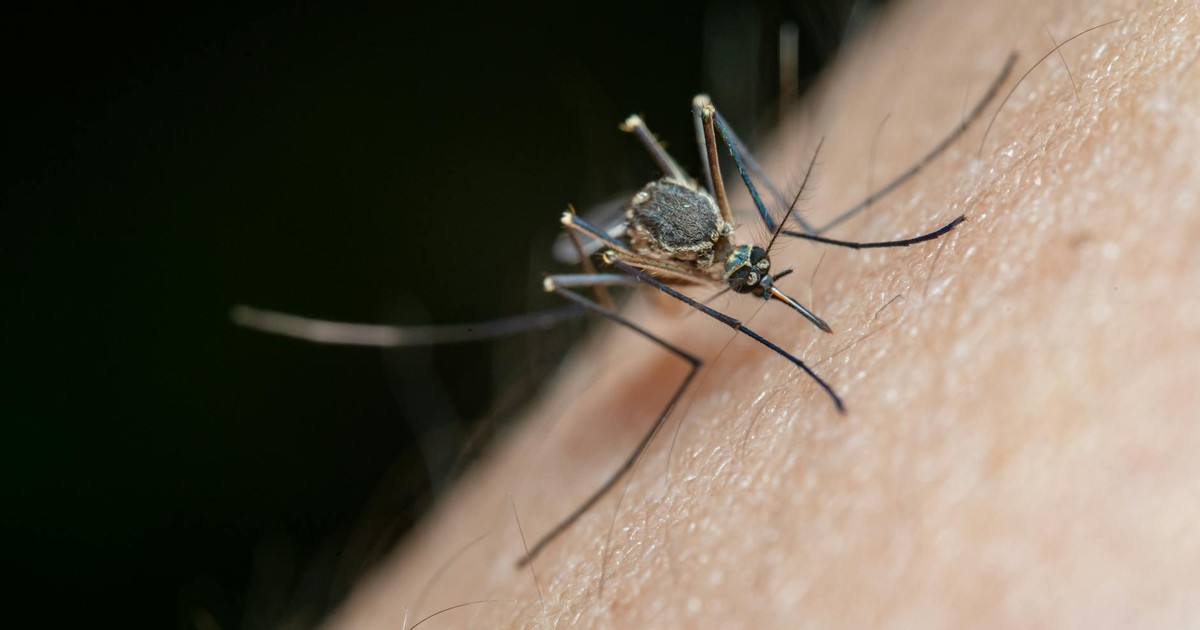

Spending an evening on the back porch with friends and walking inside covered in bites while everyone else is fine isn’t bad luck. The mosquitoes in your yard made a deliberate chemical calculation, and some people are genuinely, measurably more irresistible to them than others, for reasons that scientists have now largely pinned down.
The question of why mosquitoes bite certain people has puzzled researchers for decades. The folk answers have piled up over the years: blood type, skin color, diet, even how sweet you smell. Most of those explanations collapse under scrutiny. What’s replaced them is a clearer, more specific picture, one built around the chemistry your body produces every minute, whether you’re aware of it or not.
Female mosquitoes can detect carbon dioxide from several meters away, and as they close the distance, they begin layering in a person’s body odor and temperature. The variation between people in how much of each signal they produce and in what combination can determine whether two people sitting side by side in the same garden walk away with wildly different bite counts.
How Mosquitoes Actually Track You Down
According to NIH MedlinePlus, mosquitoes can sense carbon dioxide exhaled by humans from more than 30 feet away. They detect this CO2 through specialized sensory organs called maxillary palp receptors, which are tuned specifically to pick up the gas. Every exhale is essentially a signal flare.
As the mosquito closes in, the chemistry gets more layered. Research published in Cell found that multimodal integration of CO2, human odor, and heat works together to orchestrate mosquito attraction to humans, meaning the insect isn’t just following one cue, it’s running a composite analysis of several at once. Disrupting one doesn’t necessarily make you invisible.
At close range, heat becomes the dominant guide. A 2024 study found that surface body temperature generates thermal infrared radiation detectable by mosquitoes at distances of up to 0.7 to 0.8 meters. The biological mechanism behind this is surprisingly precise: researchers at UC Santa Barbara found that mosquitoes use a protein called TRPA1, essentially a temperature sensor, to detect infrared radiation from the human body. Within 10 centimeters, the system shifts again: at that close range, mosquitoes switch to sensing convection heat and humidity through ionotropic receptors. By that point, the insect has run through multiple layers of sensory confirmation before it lands.
The Real Reason Some People Get Bitten More
A 2025 study identified 27 volatile organic compounds from human body odor that appear to be involved in regulating mosquito host preference. The concentrations of those compounds vary between individuals, and that variation is largely what separates the people who get destroyed at a summer barbecue from those who walk away clean.
One compound in particular stands out. The compound 1-octen-3-ol, present in body odor, was found at higher concentrations in people mosquitoes strongly preferred. You can’t smell 1-octen-3-ol on yourself – it’s detectable at concentrations far below what the human nose registers. But to a mosquito, it functions like a flashing neon sign.
Skin bacteria are the primary producers of most of the chemicals that attract mosquitoes to humans. Research published in Scientific Reports found that the resident human skin microbiome is responsible for producing most of the human scents that attract mosquitoes. Two bacterial species in particular, Staphylococcus epidermidis and Corynebacterium amycolatum, are major contributors. A 2024 study published in PNAS Nexus identified L-(+)-lactic acid, produced by these skin bacteria, as a key trigger for mosquito short-range attraction and landing.
Their skin bacteria happen to produce higher volumes of the compounds mosquitoes track, which is why recent showering lowers mosquito attraction: it reduces that bacterial load temporarily. Within hours, though, the bacteria re-establish themselves and chemical output resumes.
Pregnancy, Hormones, and Hormonal Cycles
Some of the clearest evidence for why mosquitoes target specific people comes from research on hormonal changes. A study found that twice as many mosquitoes were attracted to pregnant women compared to non-pregnant women. The reasons are mechanical: women in later stages of pregnancy exhale about 21% more carbon dioxide per breath, meaning the number of mosquitoes drawn to them can double when other factors stay constant. Their abdominal skin temperature also runs higher, releasing more volatile compounds.
The menstrual cycle produces a similar, if smaller, effect. A 2025 study published in the journal Insects found that ovulation was associated with the shortest protection time from mosquito repellents and the highest mosquito landing rate. The hormonal shifts around ovulation appear to alter the body’s chemical output enough that mosquitoes notice. For women who have always suspected their bite rates vary across the month, the data backs them up.
Beer, Bacteria, and What You Can Actually Change
The link between alcohol and mosquito attraction has been suspected for years, but a large-scale field experiment finally put hard numbers on it. A study conducted at the Lowlands Music Festival in the Netherlands, involving 465 participants, found that people who had consumed beer in the previous 24 hours were 1.35 times more attractive to mosquitoes than those who hadn’t. Drinking beer raises body temperature, increases carbon dioxide output, and alters skin odor, three changes that all push in the same direction.
The same study cleared up one persistent myth. Blood type played no role in mosquito preference in the experiment, confirming previous research on the topic. The blood type theory has circulated for decades – some studies claimed type O was preferred, others claimed type A – but the evidence never held up at scale. Skin chemistry, not blood type, drives the preference.
Read More: Mosquito Bites Sting and Swell? You Could Have Skeeter Syndrome
A Future Without DEET?
The skin microbiome finding opens an angle that researchers are now actively pursuing. If specific bacteria produce the chemicals that make people attractive to mosquitoes, then engineering those bacteria to stop producing those chemicals could offer protection that outlasts anything in a spray bottle.
Researchers at UC San Diego and Stanford University engineered strains of Staphylococcus epidermidis and Corynebacterium amycolatum that no longer produce L-(+)-lactic acid. When applied to mice, these modified bacteria reduced mosquito attraction for up to 11 uninterrupted days. For comparison, DEET, the gold-standard synthetic repellent, provides only 4 to 8 hours of protection.
The research is still in its early stages and has only been tested in animals. Whether the engineered bacteria can safely colonize human skin and compete against the naturally occurring microbiome remains an open question. But the underlying logic is sound: if the bacteria on your skin are producing the chemical beacon that mosquitoes follow, removing that beacon at the source makes more sense than applying a temporary surface deterrent.
A 2025 study in Scientific Reports also found that CO2 enhances mosquito attraction to host odors, while it enhances aversion to repellents, suggesting that the interplay between these signals is more complex than simply blocking one cue. Effective prevention may ultimately require targeting multiple parts of the sensory system simultaneously.
What This Means for You
The person who always gets bitten isn’t imagining it, and they’re not doing anything especially wrong. Their skin microbiome, body temperature, breath volume, and specific blend of volatile compounds add up to a profile mosquitoes find hard to resist. Most of those factors are partly genetic and partly situational, changing by the hour depending on what you’ve eaten, drunk, whether you’ve exercised, and where you are in your hormonal cycle.
The most immediately practical steps are the ones that directly address the chemistry: shower before spending time outdoors to temporarily reduce bacterial load and skin volatiles, apply sunscreen (which forms a physical barrier over skin-emitted compounds), and skip the beer if you’re in a high-mosquito environment. None of these will make you invisible, but each one reduces the signal strength mosquitoes are tracking.
Longer term, the engineered microbiome research points toward a genuinely different kind of protection, one applied once to the skin’s bacterial community rather than reapplied every few hours. That’s years from a consumer product, but the direction is clear. Scientists now understand the system well enough to start disrupting it from the inside out.
Disclaimer: This information is not intended to be a substitute for professional medical advice, diagnosis, or treatment and is for information only. Always seek the advice of your physician or another qualified health provider with any questions about your medical condition and/or current medication. Do not disregard professional medical advice or delay seeking advice or treatment because of something you have read here.
AI Disclaimer: This article was created with the assistance of AI tools and reviewed by a human editor.
Read More: States That Are Going to Have the Worst Mosquito Problems in 2026 (Ranked)