
Every year, hundreds of millions of people pack their bags and head somewhere they’ve never been – or somewhere they can’t stop going back to. Some of those destinations keep appearing at the top of the list, year after year, for reasons that go far beyond famous landmarks. It’s the food, the culture, the feeling of a place, and sometimes something completely unexpected.
What makes one country pull 100 million visitors while its neighbor draws a fraction of that? The answer is rarely simple. It involves geography, history, infrastructure, and occasionally the pure luck of timing. In 2024, a handful of remarkable stories played out across the globe – a country hit 100 million tourists for the first time ever, a destination saw arrivals jump nearly 50% in a single year, and a region that most people thought of as newly open for tourism quietly shattered its own records.
If you’ve been building a bucket list, or just want to understand where the world is actually going right now, this breakdown covers the 21 most-visited countries on earth, based on the latest international arrival data.
1. France
France maintained its position as the world’s most visited country, receiving 102 million international arrivals in 2024 – making it the first country ever to surpass 100 million annual tourists. France has held the top spot as the most visited country globally for more than 30 years, accounting for 7% of the global tourism market.
There are over 50 UNESCO World Heritage Sites in France, including Mont-Saint-Michel and the Palace of Versailles. The Paris Olympics gave arrivals an extra boost too, with numbers rising around 2% in 2024. And while the Eiffel Tower and the Louvre grab the headlines, the appeal runs far deeper – from the wine routes of Burgundy and the lavender fields of Provence to the alpine resorts of Chamonix.
Aside from being the most popular country for international tourism, France also has the most Michelin-starred restaurants globally, with 654 in the 2025 guide. If you’re planning a visit, food alone could fill a full itinerary.
2. Spain
Spain welcomed 93.8 million international tourists in 2024, a 10.2% increase from 2023. Domestic and international tourism combined accounted for 12.6% of Spain’s GDP in 2024.
In 2025, Spain was the second most visited country in the world, recording around 97 million international tourists – marking the eighth consecutive year of record-breaking numbers. The country’s mix of sun-drenched beaches, world-class cuisine, and deeply layered history keeps visitors coming from every corner of the globe. The UK alone accounts for around 24% of total arrivals, with Germany and France each contributing around 15 – 16%.
One thing worth knowing if you’re planning a trip: Spain’s most popular regions are feeling the pressure. Nearly 60% of all international tourists in July 2024 visited just three regions in Spain, a concentration that is straining local infrastructure and affecting residents in those areas. Traveling outside Barcelona and Mallorca can offer a richer, less crowded experience.
3. United States
The United States ranked third with 72.4 million international visitors in 2024. Those visitors spent $215 billion, or about 12% of global tourism receipts, averaging roughly $2,970 per visitor. No other country generates tourism revenue at that scale.
Though visitor numbers declined slightly in 2025, the US remained a tourism powerhouse in 2024 thanks to its sheer scale and diversity of attractions, from New York City’s multicultural boroughs and California’s coastline to Florida’s theme parks and Colorado’s ski resorts. The country spans six time zones, offering everything from desert landscapes to Arctic tundra. Visitors looking to go beyond the obvious cities will find national parks, road trips, and small-town America equally rewarding.
If the outdoors is what draws you, the US National Park system alone is one of the most compelling reasons to visit. You can explore the wild side of America through Yellowstone, Yosemite, and dozens of other protected landscapes that attract millions of visitors on their own.
4. Turkey (Türkiye)
Turkey secured fourth position among the world’s most-visited destinations, reporting 60.6 million international arrivals in 2024. Istanbul, straddling Europe and Asia, had a record year, with tourist arrivals jumping by nearly 10%, making Turkey 2024’s surprise star.
The country’s geographic position – literally at the crossroads of two continents – gives it a cultural richness that few places can match. Istanbul and Antalya ranked among the world’s most-visited cities in 2024, with Istanbul drawing 23 million arrivals and offering history from the iconic Hagia Sophia to the Grand Bazaar. Turkey is also one of the more affordable major destinations for Western visitors, which contributes significantly to its popularity.
Beyond Istanbul, the rock formations of Cappadocia, the turquoise coastline of Bodrum, and some of the best street food in Europe (technically Asia, depending on which neighborhood you’re standing in) make Turkey worth serious consideration for any 2026 travel plan.
5. Italy
Italy ranked fifth globally with 57.8 million international visitors in 2024. Rome, Venice, Florence, and the Amalfi Coast continue to drive demand, though Italy experienced a slight decline compared to its 2019 levels.
The country’s cultural and culinary identity is unmatched. From the Roman Colosseum to the Renaissance art of the Uffizi Gallery, Italy packs more UNESCO-listed heritage into its borders than almost any other nation. Recent restoration work in Rome has refreshed key landmarks, and the city reclaimed its ranking as one of the world’s best vacation destinations for 2026, according to US News & World Report.
Italy is also a strong option for food-focused travelers. Regional cuisines vary dramatically – Neapolitan pizza, Sicilian seafood, Ligurian pesto, and Bolognese ragù are genuinely different dishes from genuinely different places. Renting a car and driving through the countryside remains one of the most rewarding travel experiences Europe has to offer.
6. Mexico
UN Tourism ranks Mexico sixth globally for international tourist arrivals, and Mexico exceeded pre-pandemic levels in 2024 thanks to early reopening strategies and strong North American demand.
Mexico’s tourism geography is unusually diverse. The Caribbean beaches of Cancún and Tulum draw the headline numbers, but the colonial cities of Oaxaca, San Cristóbal de las Casas, and Mexico City’s world-class food and art scene are attracting a completely different type of traveler. The country’s proximity to the United States gives it a natural advantage – millions of Americans can reach beach resorts in under three hours of flying.
If your mental image of Mexico is limited to all-inclusive resorts, it’s worth reassessing. The country’s indigenous cultural heritage, pre-Columbian archaeological sites, and rapidly growing culinary reputation on the world stage make it one of the most underrated deep-dive destinations on this entire list.
7. United Kingdom
The UK ranks seventh globally for international tourist arrivals according to UN Tourism data. Among the world’s top five tourism earners, the United Kingdom saw 40% growth in receipts in the first nine to eleven months of 2024 compared to 2019 levels.
London consistently ranks among the most visited cities in the world, but Edinburgh, Oxford, and Bath are also firmly on the international travel map. The UK’s strength is its accessibility – English as a first language removes the friction many international travelers feel elsewhere, and the concentration of museums, theaters, and historic sites within a small geographic area means a two-week trip can cover an enormous amount of ground.
Scotland’s highlands, the Lake District, and the Jurassic Coast in Dorset are increasingly drawing nature-focused visitors. And for American travelers in particular, the cultural familiarity combined with genuine novelty makes the UK a reliable first international destination.
8. Germany
Germany ranks eighth globally for international arrivals based on UN Tourism data. Berlin, Munich, Bavaria, and the Romantic Road draw in visitors with a combination of cool cities, dramatic nature, and fairy-tale routes.
Germany is often underestimated as a travel destination. Berlin’s history, contemporary art scene, and nightlife make it one of Europe’s most fascinating cities. Munich’s Oktoberfest is globally known, but the surrounding Bavarian Alps – with towns like Garmisch-Partenkirchen and Berchtesgaden – rival anything in Switzerland. Data from 2024 shows German travelers also spend heavily when abroad, with outbound tourism expenditure 35% above 2019 levels, a sign of the country’s strong travel culture flowing both ways.
9. Japan
Japan became Asia’s most visited country, attracting 36.9 million international tourists in 2024 – a remarkable recovery that represented a 47% surge from 2023, surpassing its pre-pandemic levels.
Much of the tourism boom was driven by a weakened Japanese yen, which made visiting the country significantly more affordable for travelers from North America, Europe, and Australia. Foreign visitor spending in Japan reached JPY 5.8 trillion (about $39 billion) between January and September 2024, surpassing the previous year’s full-year record.
Japan offers a travel experience that genuinely can’t be replicated elsewhere: ancient Buddhist temples alongside hyper-modern technology, rigorous food culture that runs from street-level ramen to more Michelin-starred restaurants than any other city on earth. Highlights include the bustling cities of Tokyo and Osaka, the bamboo forests of Arashiyama, Buddhist temples and Shinto shrines in Kyoto, and world-class ski resorts on the island of Hokkaido. The 47% growth in arrivals also came with growing pressure on popular spots – plan visits to Kyoto’s Fushimi Inari or Hakone’s Mt. Fuji views early in the morning to avoid the densest crowds.
10. Greece
Greece ranks tenth among the world’s most-visited countries, luring travelers with its blend of ancient landmarks, idyllic islands, and Mediterranean charm, drawing approximately 36.9 million arrivals in 2024.
Greece saw an increase in tourist arrivals in 2024 compared to 2023, and the country has consistently outperformed its pre-pandemic numbers. Athens remains the main gateway, with the Acropolis and the Parthenon visible across the city’s rooftops. But the islands are the real draw for most visitors: Santorini’s famous caldera views, the white-cube architecture of Mykonos, the less-visited medieval streets of Rhodes, and the olive groves of Corfu.
One practical note: the summer peak season (July and August) in Greece is genuinely crowded, particularly on the Cyclades islands. May, June, and September offer similar weather with meaningfully fewer visitors and lower prices.
11. Thailand
Thailand welcomed 35.5 million arrivals in 2024, benefiting from its rich cultural heritage, beaches, and growing medical tourism sector, according to data from the Thai Ministry of Tourism and Sports. Bangkok alone welcomed 32.4 million international visitors in 2024, a 37% increase versus 2023, making it the single most-visited city in the world.
Thailand’s appeal is broad: it works for budget backpackers, luxury travelers, wellness tourists, and culinary adventurers simultaneously. The islands of Koh Samui, Phuket, and Koh Lanta offer world-class beach experiences. Chiang Mai in the north gives access to hill tribe culture, cooking classes, and elephant sanctuaries. And Bangkok’s street food scene, which ranges from riverside night markets to hole-in-the-wall shops with decades-long lines, is considered among the finest in the world.
12. Saudi Arabia
Saudi Arabia holds the top spot for tourism in the Middle East, with 29.7 million international visitors in 2024. It exceeded pre-pandemic levels by 69% for the full twelve months of 2024, one of the most dramatic turnarounds of any major destination on this list.
The country’s Vision 2030 initiative – a government program designed to diversify the economy away from oil – has poured massive investment into tourism infrastructure. New heritage sites like Al-Ula (a vast open-air museum with ancient Nabataean tombs similar to Petra), plus restored coastline along the Red Sea, are drawing visitors who wouldn’t previously have considered the country a destination. This is genuinely emerging territory for international travelers, and the window to experience it before mass tourism arrives is still open.
13. Canada
Canada saw a 70% increase in international tourism receipts in 2024 compared to 2023, one of the strongest surges of any country in the Americas. The country’s vast geography gives it an almost unfair range of experiences – from the Rocky Mountain parks of Alberta (Banff and Jasper), to the French-speaking café culture of Montréal, to the urban energy of Toronto and Vancouver.
Canada is particularly strong for nature-based tourism. The Americas nearly completed their post-pandemic tourism recovery in 2024 at 97% of 2019 levels, with expectations to exceed those numbers in 2025 as the US inbound market strengthens – and Canada benefits directly from that North American momentum. Wildlife watching, glacier trekking, whale watching off Vancouver Island, and the autumn foliage of Quebec make it a compelling year-round destination.
14. Morocco
Morocco took its place as the most visited country in Africa, drawing 17.4 million international visitors in 2024. Morocco reached 135% of its 2019 pre-pandemic levels – meaning it didn’t just recover, it blew well past where it was before.
The country sits at a remarkable crossroads of Berber, Arab, French, and Spanish cultural influences, which makes its cities feel genuinely unlike anywhere else on earth. The medinas of Marrakech and Fès are two of the most immersive urban environments in the world – densely layered, sensory, and navigated entirely on foot through alleys that haven’t changed structurally in centuries. The Sahara Desert, accessible from the town of Merzouga, offers some of the most dramatic landscapes anywhere in North Africa.
15. Austria
Austria rounds out UN Tourism’s top arrivals ranking, consistently drawing visitors with an exceptional combination of alpine scenery, classical music heritage, and one of Europe’s most elegant capital cities.
Vienna’s museums, concert halls, and coffee house culture form a travel experience that’s genuinely slow and deliberate – the city rewards lingering. Salzburg, birthplace of Mozart and backdrop to The Sound of Music, draws visitors year-round. And in winter, Austria’s ski resorts – particularly in the Arlberg region and the Tirol – compete directly with the Swiss Alps in quality while often undercutting them on price.
16. Portugal
Portugal saw a 57% increase in international tourism receipts through mid-2024 compared to the same period in 2019, one of the strongest performances among established European destinations.
Lisbon has emerged as one of Europe’s most talked-about cities over the past five years – a compact, walkable capital with great food, a vibrant music scene rooted in fado (a deeply emotional form of Portuguese song), and some of the most affordable fine dining in Western Europe. Porto, in the north, combines colorful riverside architecture with the country’s famous port wine lodges. The Algarve coast in the south remains a perennial favorite for beach travelers from across Europe.
Read More: World’s 40 Most Beautiful Countries to Visit in Your Lifetime
17. Malaysia
Between January and November 2024, Malaysia attracted 22.5 million tourists, surpassing its full-year 2023 total of 20.14 million.
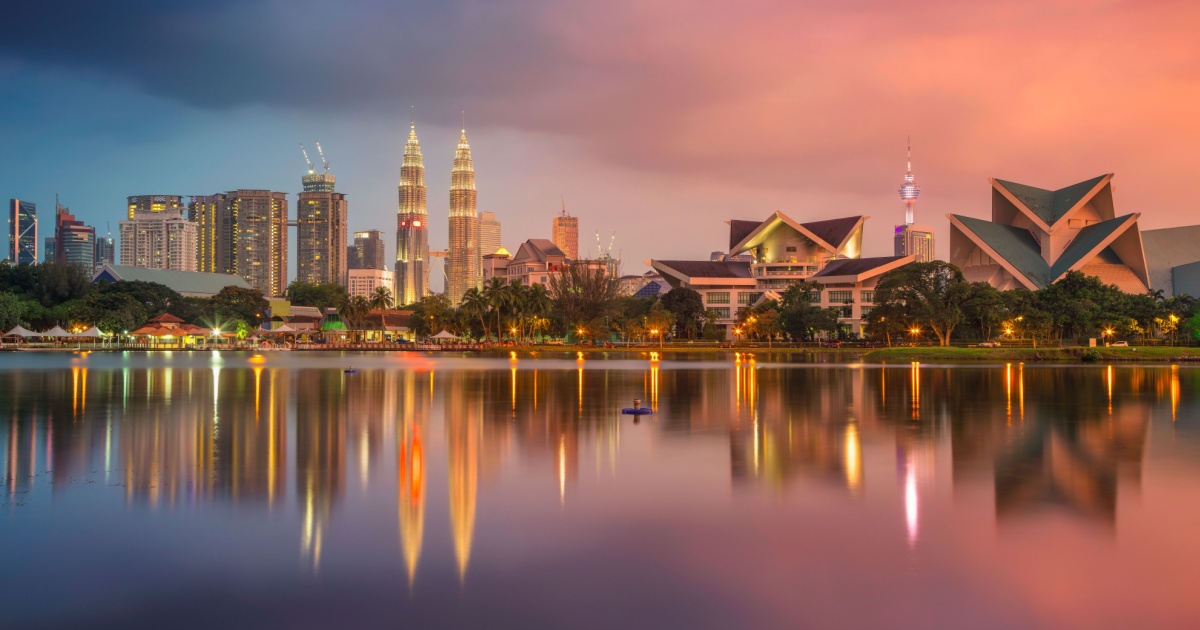
Malaysia is one of the most underrated destinations in Southeast Asia. Kuala Lumpur offers a modern, multicultural city break with world-class food at low prices. The island of Penang is considered one of Asia’s top street food destinations. And for nature travelers, Malaysian Borneo – home to wild orangutans, pygmy elephants, and some of the oldest rainforests on the planet – offers wildlife experiences that rival anything in Africa.
18. UAE (United Arab Emirates)
The UAE, particularly Dubai, remains a global leader in attracting tourists with luxury experiences and innovative events. The country has built an entire tourism ecosystem essentially from scratch over the past three decades, and what exists now is genuinely world-class: the Burj Khalifa, the Louvre Abu Dhabi, desert safari experiences, and some of the most ambitious modern architecture anywhere on earth.
Dubai in particular has positioned itself as a global transit and luxury destination, and its centrality between Europe, Asia, and Africa gives it a natural advantage for stopover tourism. The UAE’s investment in cultural institutions (including the Guggenheim Abu Dhabi, currently under development) suggests it has long-term ambitions beyond pure spectacle. The Middle East led the global tourism recovery with international arrivals reaching 132% of 2019 levels – the highest of any region in the world.
19. Netherlands
The Netherlands ranked among the top-performing destinations globally for growth versus 2019 levels, drawing millions of visitors to Amsterdam’s canal-lined streets, the tulip fields of the Keukenhof, and the museums that hold some of the world’s most celebrated paintings – including Rembrandt’s The Night Watch at the Rijksmuseum and Van Gogh’s entire body of work at the museum dedicated to his art.
Amsterdam does face genuine overtourism pressure, and the city government has introduced restrictions on new hotels and cruise ship visits. Visitors who travel outside the capital – to Delft, Haarlem, or the windmills of Kinderdijk – often report a richer experience with less of the crowd friction.
Read More: Criticizing the Government? In These 16 Countries, That Could Mean Jail
20. Poland
Poland follows as a major European destination, welcoming more than 70 million international visitors according to recent data.
Warsaw and Kraków form the backbone of Poland’s tourism offer. Kraków’s UNESCO-listed Old Town, the sobering history of the Auschwitz-Birkenau Memorial nearby, and the Wieliczka Salt Mine (a cathedral-like underground complex entirely carved from salt) make it one of Central Europe’s most layered destinations. Warsaw, rebuilt almost entirely from rubble after World War II, carries a resilience that’s palpable in its architecture and in the stories told by its residents.
21. China
China ranked fourth in international arrivals globally in 2019 but remains outside the top 10 in 2024, still recovering from its late reopening after the pandemic. China’s outbound tourism, though not yet at full strength, is set to accelerate 2025’s growth globally – and inbound recovery is expected to follow.
The scale of what China offers is almost beyond categorization: the Great Wall stretches thousands of miles across northern landscapes; the Terracotta Army in Xi’an is one of the greatest archaeological discoveries of the 20th century; Zhangjiajie National Forest Park, with its towering sandstone pillars, inspired the floating mountains in Avatar. As visa processes ease and air routes rebuild, China is positioned to re-enter the global top tier faster than most people expect.
Enjoy the world
According to the UN Tourism World Tourism Barometer, international tourist arrivals grew 4% in 2025, with an estimated 1.52 billion tourists recorded worldwide – almost 60 million more than in 2024 – making it a new record year in the post-pandemic era. Experts rate 2026 as another strong year for tourism, scoring it 126 out of 200 on the UN Tourism Confidence Index, though geopolitical tensions and ongoing conflicts continue to pose risks that could weigh on travel confidence.
What this list shows is that the world’s most visited countries earned those numbers honestly. France, Spain, Italy, Japan, and Greece don’t sit at the top because of luck – they’ve invested in infrastructure, cultural preservation, and accessibility over decades. The newer entrants like Saudi Arabia and Morocco tell a different story: with the right conditions, a destination can go from niche to mainstream within just a few years. If you’re planning international travel in 2026, the practical takeaway is simple: book the famous destinations outside peak season when you can, research emerging options like Morocco or Saudi Arabia’s Al-Ula region before they become crowded, and don’t limit your itinerary to just the capital city. The most memorable experiences consistently happen a train ride or a short drive away from where everyone else is standing.
AI Disclaimer: This article was created with the assistance of AI tools and reviewed by a human editor.
Read More: 10+ Countries Will Actually Pay You to Move There in 2026