

A bottle of Beekeeper’s Naturals Saline Nasal Spray shipped to Amazon customers in April 2026 had already tested above acceptable mold limits before it ever left the warehouse. The test results just hadn’t come back yet. A clerical error caused the lot to be dispatched before testing results were available, sending 585 bottles into customers’ medicine cabinets weeks before anyone at the company knew what was growing inside them.
The product – Lot 5950 of Beekeeper’s Naturals Saline Nasal Spray – was announced as a voluntary nationwide nasal spray recall on June 11, 2026, after testing found contamination above acceptable microbiological limits for yeast and possible presence of Aspergillus spp. For most healthy adults, that finding might be manageable. For people with weakened immune systems or lung diseases, the FDA’s risk statement is direct: there is a reasonable probability that using the product could cause serious and life-threatening infections, such as invasive sinusitis and lung infections.
585 units from Lot 5950 were sold through Amazon between April 2 and April 24, 2026, after the lot was mistakenly shipped before testing results became available. Beekeeper’s Naturals partnered with Amazon to directly notify every purchaser of that lot. No other Beekeeper’s Naturals products, including its Nasal Spray Max, are affected by this recall.
The company has received four reports from customers of adverse reactions potentially related to the recalled product, including sinus congestion, irritation, or infection. That number is small relative to the number of bottles distributed, but the concern isn’t statistical frequency. It’s what can happen when Aspergillus reaches the wrong person.
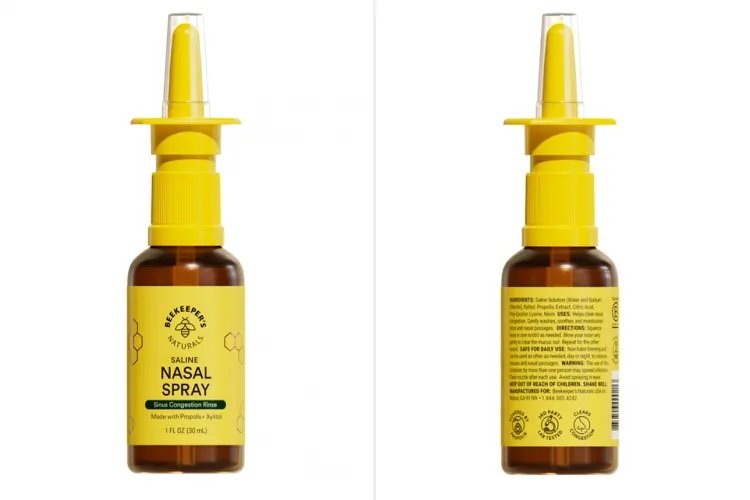
How to Identify the Recalled Product
The recalled spray is sold in a single-unit 1 FL OZ (30 mL) bottle, with the lot number 5950 and expiration date 02/2028 printed on the bottom or back label. If you bought a Beekeeper’s Naturals nasal spray through Amazon between early April and late April 2026, check those two details before using it again. Any other lot number means the product is not part of this recall.
According to the FDA’s official recall notice, consumers who have the recalled product should stop using it immediately and contact Beekeeper’s Naturals for a full refund. The company has set up customer support through its website for affected purchasers.
Why Aspergillus in a Nasal Spray Is a Serious Problem
Aspergillus spores are everywhere in the environment. Most people inhale them daily without any consequence because a healthy immune system clears them efficiently. The problem starts when those spores reach the nasal passages and sinuses of someone whose defenses are already compromised.
Aspergillus is a common mold found throughout nature – it’s one of the most widespread fungi on earth. In people with weakened immune systems, aspergillosis becomes an invasive infection of the lungs or sinuses, usually accompanied by fever, cough, and chest pain. The infection can spread to other organs including the brain, skin, and bones.
Aspergillus can invade the sinuses directly, producing a stuffy nose, drainage that may contain blood, fever, facial pain, and headache. A contaminated nasal spray is a distinct concern because it delivers the organism directly to the sinus cavity – bypassing the initial filtration stages that might otherwise trap and neutralize airborne spores.
Groups at highest risk include people with weakened immune systems or underlying lung conditions, for whom exposure to Aspergillus can lead to serious infections including sinus or lung infections. People with blood cancers, those who have received a stem cell or solid organ transplant, those on high-dose corticosteroids, and those living with diabetes, HIV/AIDS, or chronic obstructive pulmonary disease also face elevated risk. For these individuals, invasive aspergillosis carries a mortality rate ranging between 35% and 90%.
According to the CDC, azole-resistant Aspergillus fumigatus is a growing global public health concern. Azoles are the first-line treatment for A. fumigatus infections, and antimicrobial resistance is emerging in this species – which is the leading cause of invasive mold infections in people. Drug-resistant strains make some infections significantly harder to treat.
The MediNatura Recall: A Second Contaminated Nasal Spray
The Beekeeper’s Naturals nasal spray recall didn’t arrive in isolation. Six months earlier, in December 2025, a separate recall flagged contamination across multiple homeopathic products – and that recall grew considerably before it was contained.
On December 10, 2025, MediNatura New Mexico, Inc. voluntarily recalled one lot of ReBoost Nasal Spray after the product was found to contain yeast/mold and microbial contamination with one species identified as Achromobacter, at levels above specifications. The recalled ReBoost Nasal Spray carried lot number 224268 with an expiration date of December 2027.
The initial single-lot recall quickly expanded. MediNatura subsequently recalled all lots of ReBoost Nasal Spray after the product was found to contain yeast/mold and microbial contamination with one species identified as Achromobacter at levels above specifications. The company also recalled all lots of ClearLife Nasal Spray, which showed microbial contamination potentially linked to Achromobacter.
The initial recall applied to one lot of ReBoost Nasal Spray sold nationwide at places like CVS, Walmart, and Amazon. The expanded recall covered all lots with expiration dates ranging from December 2022 through December 2025.
Achromobacter is not a household name, but it poses real clinical risks. One of the bacteria found in the recalled spray, Achromobacter, may cause fever, chills, lethargy, and various infections such as pneumonia, endocarditis, and meningitis. It is also known for being resistant to antibiotics and may be particularly dangerous – and even fatal – in people with weakened immune systems. As of December 2025, MediNatura had not received any reports of health incidents related to either product.
Both homeopathic nasal sprays were distributed through retail and online channels nationwide. Consumers who purchased either product can contact MediNatura at [email protected] or by calling 800-621-7644 for a refund.
Homeopathic Nasal Sprays and the FDA’s Oversight Gap
The two MediNatura products involved in the December 2025 recall – ReBoost and ClearLife – are homeopathic formulations. Homeopathic products occupy a distinct regulatory position that affects how they reach store shelves.
The recall is limited to the nasal spray liquids only; ReBoost Cold & Flu Tablets and Sore Throat Sprays are not affected.
According to the FDA, homeopathic products have not been approved by the agency for any use, meaning they may not meet the same modern standards for safety, effectiveness, and quality that apply to conventional over-the-counter drugs. The agency’s enforcement focus for homeopathic products prioritizes routes of administration that carry the highest risk of harm, including nasal sprays used directly in the sinuses.
This regulatory gap doesn’t make all homeopathic products dangerous, but it does mean their manufacturing processes face different scrutiny than conventional pharmaceuticals. When contamination occurs in a product that bypasses standard drug approval testing, users bear the consequences.
Walgreens: A Third Nasal Spray Recall in Recent Months
The pattern of contaminated nasal sprays extends beyond these two companies. An active recall covers approximately 41,328 bottles of Walgreens Saline Nasal Spray with Xylitol, 1.5-ounce bottles, due to microbial contamination. The recalled bottles carry lot code 71409 with expiration date 02/28/2027, or lot code 71861 with expiration date 08/31/2027.
The FDA found the microorganism Pseudomonas lactis in the recalled spray; exposure can lead to infection, which can be severe for people with weakened immune systems. The Walgreens recall was classified as Class II, meaning the impacted products may lead to minor, temporary health problems – though risks are greater for immunocompromised users. A Walgreens spokesperson confirmed the recall was conducted “under the guidance of the FDA” and that “the safety of our customers remains our top priority.” Consumers holding either of those Walgreens lot codes should return the product to their local Walgreens for a full refund.
Three separate nasal spray recalls across a roughly seven-month span – from different manufacturers, using different formulations, distributed through different retail channels – is an unusually dense concentration of contamination events in a single product category. Nasal sprays are not sterile products in the pharmaceutical sense, but they carry a direct route to sensitive sinus tissue, which raises the stakes when something goes wrong in production.
What to Do Now
Check your medicine cabinet with these specific identifiers. For the Beekeeper’s Naturals recall, look for Lot 5950 with expiration date 02/2028 on the bottom or back label of a 1 FL OZ (30 mL) bottle purchased from Amazon between April 2 and April 24, 2026. Stop using it immediately if you have it, and contact Beekeeper’s Naturals for a refund.
For MediNatura products, check any 20 mL bottles of ReBoost or ClearLife Nasal Spray with expiration dates from December 2022 through December 2025. All lots within those date ranges are included. Return the product to the store where you bought it or email [email protected]. For Walgreens Saline Nasal Spray with Xylitol, look for lot codes 71409 or 71861 on 1.5-ounce bottles and return them to any Walgreens for a refund.
If you’ve already used any of these products and you have a weakened immune system, a blood cancer, a recent organ transplant, diabetes, or chronic lung disease, call your doctor and describe your symptoms. Get immediate medical care if you develop an unexplained fever, shortness of breath, or a cough that brings up blood. Sinus pain, facial pressure, nasal drainage with blood, or a new fever after using any recalled spray are all reasons to seek care promptly rather than waiting to see if symptoms resolve.
Any adverse reactions tied to recalled products can also be reported directly to the FDA’s MedWatch program.
Disclaimer: The author is not a licensed medical professional. The information provided is for general informational and educational purposes only and is based on research from publicly available, reputable sources. It is not intended to constitute, and should not be relied upon as, medical advice, diagnosis, or treatment. Always consult a licensed physician or other qualified healthcare provider regarding any medical condition, symptoms, or medications. Do not disregard, avoid, or delay seeking professional medical advice or treatment because of information contained herein.
AI Disclaimer: This article was created with the assistance of AI tools and reviewed by a human editor.
Read More: Nationwide Recall Issued for a Widely Used Anxiety Medication