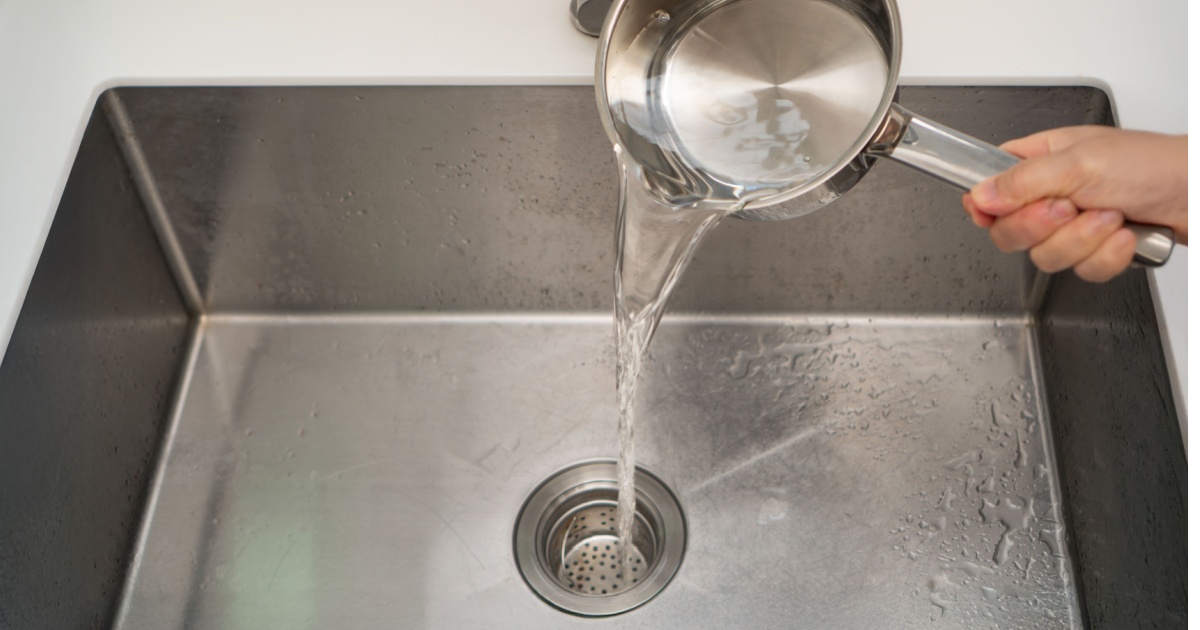

There’s a tip that’s been passed around kitchens for decades, whispered by well-meaning relatives and shared across household advice columns: when your drain slows down, just pour a pot of boiling water down it. Simple. Free. Chemical-free. It sounds like exactly the kind of low-effort fix a busy household needs.
The only problem is that this advice, repeated so often it feels like fact, can quietly cause serious damage to your home’s plumbing. Not immediately, and not always visibly. That’s what makes it so deceptive. By the time you notice water pooling under the sink cabinet or a slow leak staining the cabinet floor, the damage has often been building for months.
Understanding why boiling water is problematic requires a closer look at what your kitchen drain pipes are actually made of, how they work, and what happens to them when they’re exposed to extreme heat. The answers are more complicated than most homeowners realize.
The Material Reality: What’s Actually Under Your Sink
Most people assume their plumbing can handle anything hot because they’ve been washing dishes in warm water their whole lives. Hot water from a tap, yes. But boiling water straight from a stovetop kettle is a different proposition entirely.
The key issue centers on PVC pipes. These are common in many modern plumbing systems and are typically rated to handle water temperatures up to around 140°F. Boiling water straight off the stove reaches 212°F, which is more than enough to soften or even warp PVC pipes and joints.
That 72-degree gap matters enormously. The maximum operating temperature of PVC pipe is 140°F, and the pipe’s pressure rating and other performance characteristics must be reduced for all temperatures above 73.4°F. At operating temperatures approaching that 140°F ceiling, PVC pipes are already 78% weaker than their standard pressure capacity.
Plastic drain pipes are durable and common, but boiling water can damage some types. PVC is most at risk, softening and warping at high heat. ABS holds up better, while polyethylene and polypropylene resist boiling water more effectively. So while not every pipe under every sink is equally vulnerable, PVC is by far the most common material in residential drain systems built since the 1980s, and it’s the one most homeowners are likely to have.
Thermal stress affects not just pipe walls but also their connections. Seals and threads may shift, leading to slow leaks that go unnoticed until water damage appears. That’s the scenario that ends with a soggy cabinet and a plumbing bill.
What Happens to PVC When Heat Sits in the Pipe
Pouring boiling water down the sink is arguably acceptable if your plumbing is completely clear and flowing freely. The problem is when a blockage traps the water in the pipe. This can melt PVC pipes and seals, causing serious damage.
This is an important distinction. If boiling water flows straight through, it cools rapidly as it moves. But a clogged drain is the exact scenario where people reach for the kettle most often, and a clogged drain means that boiling water isn’t going anywhere. Once PVC becomes soft, it may deform permanently. This compromises water flow and can lead to sudden bursts or structural failure.
If you pour boiling water down a sink with PVC plumbing, you could damage the pipe over time. Warping may not cause an immediate leak, but it weakens the structure and shortens the pipe’s life.
The Grease Clog Problem Gets Worse, Not Better
Beyond pipe damage, there’s a second reason boiling water is counterproductive in a clogged kitchen drain, one that most people never consider. Even when the water does manage to move some of the blockage, it’s not actually solving the problem. It’s relocating it.
Grease buildup in kitchen drain pipes begins the moment hot FOG (an industry term for fats, oils, and grease) enters the drain and contacts cooler pipe surfaces. Each type of FOG solidifies at a different rate, but all follow the same pattern: liquid going in, solid building up on the pipe wall.
The problem begins the moment liquid grease moves past the drain opening into the cooler pipe section below the sink. As temperature drops, the fat transitions from viscous to a sticky, waxy solid that clings to the interior pipe wall. This cooling and solidification process begins within inches of the drain opening.
While boiling water can initially melt grease and push it further down the line, it often causes grease to re-solidify deeper in the plumbing system, creating more stubborn blockages that are harder to reach. Think of it like pushing a snowball further down a hill rather than removing it. The clog doesn’t disappear. It moves to a spot where no DIY tool can easily reach it.
Pouring grease down the sink with hot water does not prevent solidification. The grease simply travels further into the pipe before cooling and depositing on the wall. Over time, FOG deposits build in layers, with each new coating of grease bonding to the one before it. Food particles, soap residue, and organic debris that pass through the drain get trapped in the sticky grease surface, creating a rougher texture that catches even more material on the next drain cycle.
This is the compounding effect that turns a manageable slow drain into a complete blockage requiring professional intervention.
The Winter Risk: Thermal Shock and Cold Pipes
During cooler months, the danger escalates further. Cold pipes and boiling water are a particularly bad combination, and the mechanism is called thermal shock. It refers to the stress created when a material is forced to expand or contract rapidly due to a sudden temperature change.
Plumbers who see this play out firsthand are unequivocal about the risk. According to Homes & Gardens, Devin Conley, founder and CEO at Mountain Standard Plumbing, puts it bluntly: “That shot of 212-degree water down the drain hits pipes that may be only a degree or two above freezing, depending on insulation and exposure. With PVC, which has become the norm since about the 1980s, that’s bad news. PVC starts to soften at 140 degrees. At 212, it can sag and develop hairline cracks at joints and bends.”
As temperatures drop, PVC becomes more brittle. This increased brittleness makes it more susceptible to cracking and breakage under pressure. So in winter, you’re dealing with pipe material that’s simultaneously more fragile from the cold and more prone to softening at the exact spots where the boiling water contacts it.
Never pour boiling water onto frozen or very cold pipes. If they thaw too quickly, they will break. The quick change between hot and cold temperatures will cause them to burst if they haven’t already.
Porcelain Sinks Face Their Own Risk
There’s one more piece of the picture worth knowing. Sudden temperature changes can cause surface cracking or internal damage in porcelain or ceramic sinks. If your sink is porcelain, you should reconsider the boiling water approach. Hot water can cause minor cracks in anything made out of some form of china, including sinks, toilets, and tubs.
Porcelain cracks from thermal shock are often hairline and invisible at first. Over time, they create surfaces where bacteria can colonize and where stains are impossible to clean. In worse cases, a crack deep enough to compromise the basin’s structure means a full sink replacement.
What Actually Works Instead
The good news is that there are several effective, pipe-safe alternatives to boiling water that actually address the underlying cause of a slow drain rather than temporarily displacing it.
Hot tap water with dish soap. This is the approach most plumbers recommend for routine maintenance. Using dish soap and hot tap water, not boiling water, right after cooking and letting it run for 30 to 60 seconds helps keep grease suspended and moving through the system rather than sticking to pipe walls.
Baking soda and vinegar. A mix of half a cup of baking soda with half a cup of vinegar poured down the drain creates a fizzy reaction that helps break down residue. Flushing with hot water after 10 minutes completes the process. This is safe for PVC pipes and doesn’t push grease deeper into the system.
A drain snake or hand auger. A drain snake, or hand auger, is ideal for pulling out hair, soap, or food debris. It reaches deeper than a plunger and is safe for most residential piping systems. For kitchen drains with grease-based clogs, a snake physically removes the blockage rather than melting and relocating it.
Enzyme-based drain cleaners. Applying enzyme treatments monthly can support clean pipes. Products like Green Gobbler’s Enzymatic Drain Cleaner use lipase enzymes to break down oil and grease molecules, which are then digested by bacteria, without corroding pipe walls or releasing caustic fumes. Earthworm is another well-regarded option. According to Earthworm’s product information, their formula introduces live bacteria that colonize the inside walls of drain lines and produce enzymes continuously, with regular monthly doses keeping the bacterial colonies active long after application. Unlike chemical drain cleaners, enzyme treatments break down organic matter without attacking the pipe itself.
Proper grease disposal at the source. The most effective long-term strategy is keeping grease out of the drain entirely. Immediately after cooking, pour excess grease into a container that can withstand heat, such as an old coffee can or glass jar. Once the grease cools and solidifies, securely seal the container and discard it with regular trash. Wiping pans with paper towels before rinsing is one of the most effective habits for reducing FOG introduction into the drain line.
Professional hydro-jetting for serious clogs. When DIY methods haven’t resolved a persistent blockage, hydro-jetting uses high-pressure cold water to clear grease and roots out of main house sewer lines. According to Angi’s 2026 cost guide, the average cost for residential hydro-jetting runs around $475, though the full range spans from $100 to $2,000 depending on the severity of the blockage and local labor rates. That’s a meaningful investment, but far less than repairing a failed pipe joint or dealing with water damage behind a cabinet wall.
Read More: Make Your Kitchen Cabinets Sparkle Like New With These 6 Tips
How to Identify Your Pipe Material
If you’re unsure what type of pipes are under your sink, identifying the material before reaching for the kettle is a simple and worthwhile step. PVC is usually visually apparent because it’s plastic. It’s typically white and not a metallic color. Plastic piping is not colored like any metal, so even a regular homeowner can tell at a glance whether a pipe is PVC or not.
Only pour boiling water if your pipe is made of metals such as iron or copper, as these have the highest temperature resistance. Even then, only do it when necessary. Metal pipes expand and contract with temperature changes, but their structural integrity holds far better than PVC at 212°F.
The main difference between CPVC and standard PVC is the temperature range each can handle. CPVC can handle temperatures up to 200°F, while standard PVC peaks at 140°F. Above those temperatures, both materials begin to soften, increasing the risk of joints and pipes failing. So even if you have CPVC, which is less common in residential drain systems, you’re still pushing the material’s limits with a full boiling-water pour.
What to Do Now
The boiling-water-down-the-drain advice has persisted for so long because it occasionally appears to work. A minor, fresh grease clog may loosen temporarily, and the drain seems to flow better for a few days. But the underlying issues remain and often worsen: the grease has moved deeper, the pipe joints have experienced repeated thermal stress, and in PVC systems, the pipe material has been pushed well beyond its rated operating temperature.
Stop using boiling water on kitchen drains entirely, particularly if you have PVC pipes, a partial or full blockage, a porcelain sink, or cold pipes in winter. Switch to hot tap water with dish soap for routine maintenance, use baking soda and vinegar for mild clogs, and keep a drain snake on hand for anything more stubborn. For ongoing prevention, a monthly pour of an enzyme-based cleaner is one of the easiest habits you can add to your kitchen routine. It takes 30 seconds and keeps grease from accumulating in the first place.
When a clog doesn’t respond to these methods, it signals the problem is deeper in the system than DIY tools can reach. A licensed plumber with hydro-jetting equipment can clear the line without adding thermal stress to pipes that are already compromised. The short-term savings of a kettle of boiling water are rarely worth the repair costs that follow when a joint fails, a pipe warps, or a slow leak behind a cabinet wall goes unnoticed long enough to cause water damage. Dispose of cooking grease in the trash, wipe your pans before rinsing, and let the enzymes do the rest.
Disclaimer: This article is for informational purposes only and should not be considered professional plumbing advice. Always consult a licensed plumber for repairs, installations, or issues involving your home’s plumbing system.
AI Disclaimer: This article was created with the assistance of AI tools and reviewed by a human editor.
Read More: Say Goodbye to That Pesky Toilet Bowl Ring With This Hack