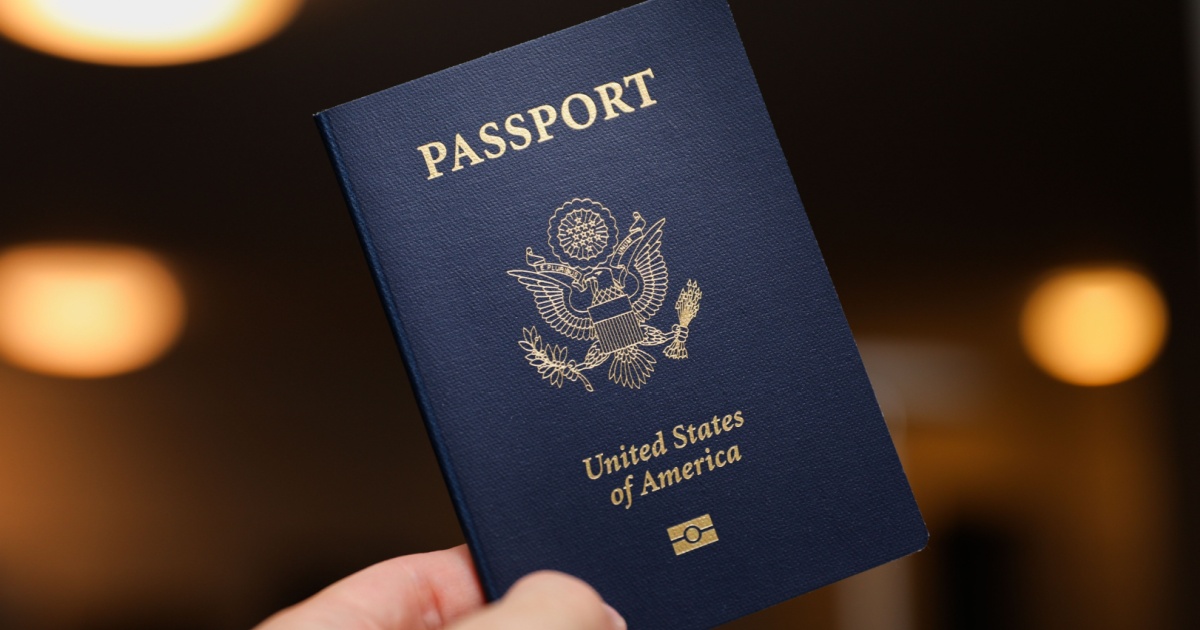

The passport card has been around since 2008, and for most of that time, Americans treated it as a novelty – a smaller, cheaper alternative that sat forgotten in a wallet. What changed is less about the card itself than about the rules surrounding the travel documents most people carry without thinking twice.
Deciding between a passport card vs book isn’t just a question of convenience. The two documents do fundamentally different things, and choosing the wrong one for the wrong trip can mean being turned away at a boarding gate or waiting longer at a land border than you needed to.
The U.S. passport card is a wallet-sized, plastic passport that has no visa pages. That alone tells you most of what you need to know about its limitations. But the card also does a handful of things the book can’t – and in 2026, with passport fees higher than ever and a major redesign of the book on the horizon, understanding the actual difference between the two is worth a few minutes of anyone’s time.
What Each Document Actually Does
Passport books allow you to travel internationally by air, sea, or land. That’s the broadest possible mandate – a passport book gets you on any international flight to any destination that accepts American travelers. Passport cards are not valid for international travel by air. Full stop. No exceptions.
The card is for U.S. citizens who travel by land and sea from Canada, Mexico, Bermuda, and some Caribbean countries. If your travel falls cleanly into that category – a road trip to Montreal, a day trip across the Texas border, a Caribbean cruise – the card works perfectly. The moment you need to board an international flight, it doesn’t.
This distinction catches people off guard more often than you’d expect. Both documents are official U.S. government-issued passports. Both prove citizenship and identity. But the card’s use case is narrow and non-negotiable. Someone driving from San Diego to Tijuana for the weekend has exactly the same document needs as someone spending three days at a resort in Bermuda – the card covers both. Someone flying from Houston to Cancún needs the book, even though Cancún and the Tijuana day trip are geographically similar trips.
The Cost Difference
The U.S. Department of State currently issues two passport book sizes – a 26-page book and a 50-page book – with plans to shift to a single-sized 38-page passport book with the release of the next redesign.
Fees updated in April 2026 make the pricing gap between the two documents significant. Adults applying for the first time pay $165 total for a passport book, $65 total for a passport card, or $195 total for both. That $165 for the book breaks down as a $130 application fee plus a $35 acceptance fee paid to the processing facility, according to the State Department’s 2026 fee chart. The card’s $65 total covers a $30 application fee and the same $35 acceptance fee.
Crucially, you can save $35 by applying for both documents together instead of separately. That means getting both at once costs $195 rather than the $230 you’d pay applying for each individually. For anyone who lives near the Canadian or Mexican border and also travels internationally by air, the combined application at $195 is almost always the smarter move.
Renewal costs follow the same pattern. Acceptance fees are dropped for renewals of both the passport book and card. Travelers can expect to pay $130 to renew an adult passport book and $30 to renew an adult passport card.
Validity, Pages, and the 2028 Redesign
The card has the same length of validity as the passport book. For adults 16 and older, that’s 10 years. For children under 16, both documents expire after 5 years, according to State Department FAQ guidance.
The passport book’s page count is about to change. According to the Federal Register notice published in April 2026, on average, 92 percent of customers applying for a passport book request the 26-page book. Of the 8 percent of customers receiving the 50-page book, most do so due to a policy practice to issue 50-page books to special-issuance and overseas applicants. Given that lopsided split, the State Department conducted a feasibility study in 2024 and decided the two-size system was inefficient. The Department of State proposes eliminating the 26-page and 50-page passport book options in favor of a single 38-page book format with the anticipated Series B redesign in 2028.
For most travelers, this change is a net positive – the new 38-page standard gives more visa and entry stamp pages than the current 26-page default. Existing passports, both 26-page and 50-page, remain fully valid until their expiration date. Travelers with valid passports do not need to replace them early due to this change.
The RFID Advantage at Land Borders
One practical edge the passport card holds over the book is something most people haven’t heard of: Ready Lanes at U.S.-Mexico and U.S.-Canada land border crossings.
If you are entering the United States through a land border port of entry on the northern or southern border using an RFID-enabled document, you are eligible to use a Ready Lane for reduced wait times and faster processing. According to U.S. Customs and Border Protection, Ready Lane-eligible cards contain Radio Frequency Identification (RFID) technology, and include U.S. Passport Cards, Enhanced Driver’s Licenses, Enhanced Tribal Cards, Enhanced Border Crossing Cards, Enhanced Permanent Resident Cards, and Trusted Traveler Program cards.
Standard U.S. passport books do not contain the RFID chip required for Ready Lane use. This is a point worth sitting with for anyone who regularly drives across the border. The book gets you everywhere, but at a land crossing, the card can actually get you through faster. CBP confirms that processing in Ready Lanes is 20 percent faster than normal lanes, with a time savings of up to 20 seconds per vehicle. For someone making that commute daily or weekly, those seconds add up quickly.
The card also works as employment verification. It’s a List A document for Form I-9 purposes, meaning employers can accept it as proof of both identity and work authorization during the hiring process, according to State Department documentation.
The REAL ID Connection
Both documents have one more use that’s worth knowing. Both are REAL ID-compliant and valid for 10 years for adults, and five years for children under 16. That means if your state-issued driver’s license isn’t REAL ID-compliant, you can use either your passport book or passport card as acceptable identification for domestic flights – a practical backup that matters more now that REAL ID is fully enforced.
The card’s wallet size makes it especially convenient for domestic travel. Someone without a REAL ID-compliant license doesn’t need to dig their passport book out of a carry-on bag at a TSA checkpoint. The card slides out of a wallet slot like any other ID.
Read More: New US Passport Rules in 2026 – What Millions of Americans Need to Know Now
Passport Power: Where the Book Wins by a Wide Margin
The phrase “passport power” in travel circles usually refers to how many countries a document can get you into visa-free. Here, the card and book aren’t comparable. As of 2026, a United States passport allows visa-free travel to 179 countries and territories, ranked as the tenth most powerful in the world in terms of travel freedom, according to the Henley Passport Index. That reach belongs exclusively to the book. The card works in four regions – Canada, Mexico, Bermuda, and some Caribbean nations – and only by land or sea.
Most countries, and many airlines, deny boarding if your passport expires within six months of your travel date. This is not a U.S. rule. Destination countries and airlines enforce it independently. This six-month validity rule is important for book holders planning international travel – but it also clarifies why the book is the document you need to keep current and valid if you travel internationally at all.
For anyone considering whether the card is a substitute for the book: it isn’t. It’s a supplement.
What to Do Now
The right answer to the passport card vs book question depends entirely on how you travel. For international air travel anywhere in the world, the book is non-negotiable. The card cannot board an international flight, full stop.
Where the card earns its $65 is for specific, predictable use cases: cross-border driving to Canada or Mexico, cruise travel to Caribbean ports, and anyone who wants a more convenient form of federal ID for domestic flights or employment verification. For those travelers, the card is a low-cost, practical tool that pays for itself quickly in convenience.
The clearest advice for anyone currently without either document: apply for both at the same time. At $195 combined for first-time adult applicants, you save $35 compared to applying separately, and you end up with a full passport book for international air travel and a wallet-sized card for land crossings and domestic use. The State Department issued approximately 27.3 million passports in fiscal year 2025, a record according to official passport issuance data – processing times are strained, and applying once is simpler than applying twice.
If you already have a book and are deciding whether to add a card, the math is simple: $65 at renewal time, or $30 if you renew your book and add the card simultaneously. For anyone who crosses a land border more than a few times a year, or who regularly needs federal ID outside of air travel, the card covers those needs without carrying a booklet.
AI Disclaimer: This article was created with the assistance of AI tools and reviewed by a human editor.