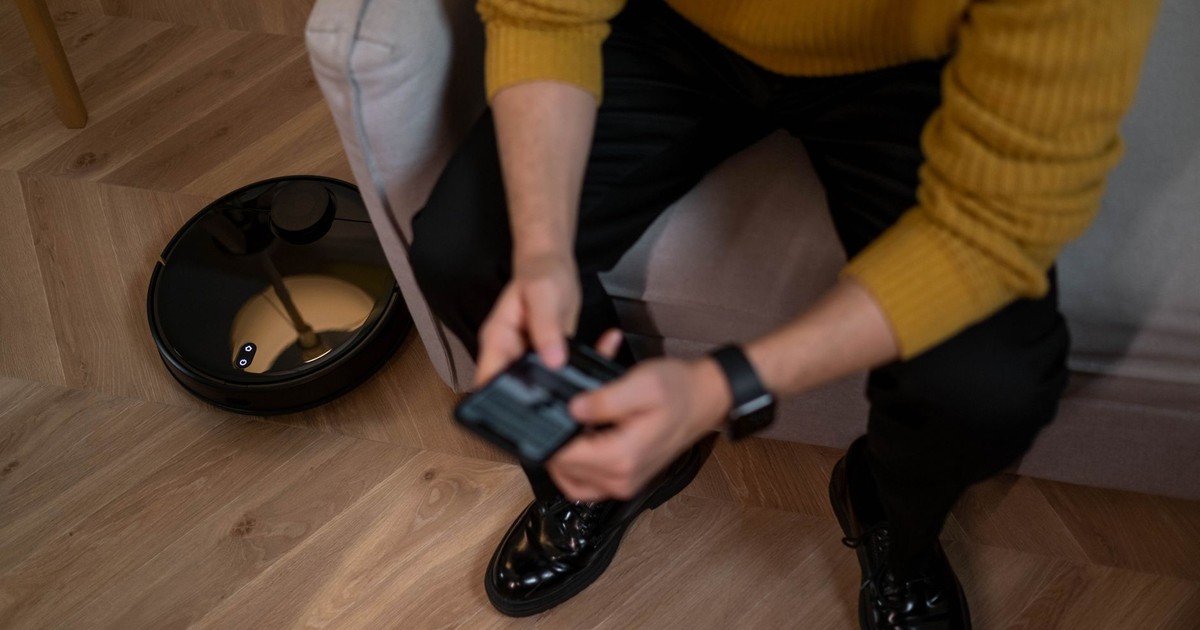

The robot vacuum sitting in your living room almost certainly maps every room in your home, connects to the cloud while it works, and transmits data to servers you can’t inspect. Until last week, that was a privacy conversation. Now it’s a federal policy matter.
On July 28, 2026, the FCC’s Public Safety and Homeland Security Bureau added two new product categories to its Covered List: foreign-produced power inverters and “advanced robotic devices.” The initial headlines focused on humanoid robots – the kind that walk on two legs and feature in viral videos from factory floors in Shenzhen. The device sitting in its charging dock in your hallway is squarely in scope too.
When the Trump administration announced it was banning “advanced robotic devices” from entering the United States, the headlines were all about humanoids. Spying doesn’t require legs, and neither does the FCC’s robot ban. FCC media relations director Katie Gorscak confirmed to The Verge that the ban sweeps up robot vacuum cleaners too. The Roomba ban in the US is now official policy.
In December 2025, iRobot – the original maker of the Roomba – filed for Chapter 11 bankruptcy as part of a restructuring agreement with Chinese manufacturers, handing ownership to Shenzhen PICEA Robotics. Every new Roomba model it produces now falls under the ban.
What the Roomba Ban in the US Actually Covers
If a device lands on the FCC’s Covered List, the commission will deny the Equipment Authorization required for sale in the U.S. To understand which devices qualify, the FCC uses a specific technical definition.
An advanced robotic device must weigh more than 4.4 pounds including its dock, travel across the ground, and offer wireless connectivity. On top of that, the device must support wired or wireless communications at 200 kbps or faster in either direction. Virtually every robot vacuum sold in the past five years clears all of those thresholds comfortably.
The definition excludes road and rail vehicles, aircraft, underwater vehicles, medical robots, mobility devices, and fixed industrial robot arms. A standard factory robotic arm bolted to the floor is outside the rule’s scope. The autonomous device that navigates your kitchen every Tuesday morning is not.
The scope goes beyond vacuums. Robot lawnmowers and delivery robots that move along the ground are all captured by the same definition.
Why the Government Says These Devices Are a Risk
The FCC did not reach this conclusion on its own. Under the Secure and Trusted Communications Networks Act, the commission can only update its Covered List at the direction of national security authorities. The trigger here was a determination by a White House-convened interagency body that these foreign-made products pose “unacceptable risks to the national security of the United States or the safety and security of United States persons.”
The FCC’s official FAQ states that “foreign-produced advanced robotic devices could be weaponized to directly harm U.S. national security and U.S. persons.” Two specific risk categories drive that finding. The first is supply chain: a dependence on foreign-produced hardware that could be disrupted in ways that ripple through the U.S. economy and critical sectors. The second is cybersecurity.
The cybersecurity concern isn’t purely theoretical. Dennis Giese, a security researcher and PhD student at Northeastern University who has presented his robot vacuum findings at DEF CON multiple times since 2018, spent years reverse-engineering robot vacuums and documenting how these devices collect Wi-Fi credentials, home maps, and telemetry – often with weak encryption. In a widely reported 2024 incident, one particular robot vacuum was found to contain vulnerabilities that allowed attackers to hijack its camera and speakers completely wirelessly and remotely.
The government’s stated concern extends beyond individual privacy breaches. These devices “could create supply chain vulnerabilities that could disrupt U.S. economic and national security and could create a cybersecurity risk that threatened American critical infrastructure,” the FCC said.
Who Makes These Robots, and Why That Matters
PBS News reported that China dominates the global market for humanoid robots with an estimated market share of roughly 85%. The story in robot vacuums follows the same pattern. According to research firm IDC, Chinese brands Roborock, Ecovacs, Dreame, Xiaomi, and Narwal Robotics combined to account for 68 percent of the global robotic vacuum cleaner market in 2025. Roborock led that group with a 17.7 percent overall share in smart cleaning robots and a dominant 24.1 percent share in the pure robot vacuum cleaner segment. Ecovacs and Dreame filled out the top tier behind it.
Major robot vacuum brands such as Roborock, Ecovacs, Narwal, and countless others are all based outside of the U.S., and largely in China. That concentration is exactly what makes the waiver pathway so narrow.
Manufacturers can theoretically apply to the Department of War for what the FCC calls Conditional Approval to continue selling new foreign-produced models. But virtually no robot vacuum makers will be eligible for a waiver, since 65 percent of components for even devices designed and assembled in the U.S. must be sourced domestically. That’s the current threshold under the Buy American Act standard, and meeting it from a standing start – with no existing U.S. component supply chain – is close to impossible in the near term.
The Verge also reported that the FCC doesn’t want to ask questions about actual security. Instead, the commission only wants to know where devices are “designed and made and assembled and tested and influenced,” seeking a specific commitment to start manufacturing them in the U.S. The ban is less a security audit and more a manufacturing ultimatum.
The FCC’s moves follow a series of U.S. restrictions on imports of Chinese products, including drones, and on exports of U.S. advanced technology to China. In recent months, the FCC took similar Covered List steps against Chinese-linked drones and their critical components, as well as consumer-grade routers.
The iRobot Story Gets Complicated
The trajectory of iRobot, the Massachusetts company that invented the modern robot vacuum with the Roomba in 2002, gives the ban an additional layer of complexity. As iRobot shifted more of its production overseas in recent years, Shenzhen Picea Robotics became its primary large-scale manufacturing partner and, eventually, its secured lender.
Faced with an army of cheaper competitors and 46 percent tariffs imposed by the U.S. on goods from Vietnam, iRobot tried to compete with a suite of new products. In January 2024, the firm laid off 31 percent of its staff and its then-CEO Colin Angle stepped down. iRobot filed for Chapter 11 bankruptcy on December 14, 2025, in an effort to reorganize its debt and become a private company. The Massachusetts-based maker of robotic vacuums and mops notified investors that it entered into an agreement to be acquired by secured lender and primary contract manufacturer Shenzhen Picea Robotics Co. through a court-supervised process.
Now Chinese-owned, iRobot’s new Roomba models face the same Covered List ban as any Roborock or Ecovacs unit.
What This Means for You
Consumers can continue to use the devices they lawfully purchased before July 28, 2026. Models that have already been authorized may continue to be sold and imported during a transition period. No one is collecting devices from American homes.
An FCC waiver permits software and firmware updates that maintain functionality through at least January 1, 2029. Your current model will keep receiving security and compatibility updates for roughly two and a half more years.
The practical impact for most consumers is this: the range of new models available to buy in the U.S. will almost certainly shrink. Brands that can’t qualify for a waiver won’t be able to release new models here. Prices on currently authorized models may rise as inventory tightens. Any manufacturer that genuinely wants access to the American market going forward will need to commit to building domestically – a multi-year undertaking that few, if any, are positioned to execute quickly.
Samm Sacks, a senior fellow at the New America think tank focused on Chinese technology policies, called the ban “a steady drumbeat of potential flashpoints” heading into a planned Trump-Xi summit in September.
Read More: Little-known TV Feature May Be Spying on You. Change It Immediately
What to Do Now
If you own a robot vacuum, there’s no immediate action required. Your device works, your warranty stands, and software updates continue until at least January 2029. The ban applies to new imports and new model authorizations, not devices already in American homes.
The decision that does carry a deadline is your next upgrade. If you’ve been considering a new foreign-made robot vacuum, the window to buy approved inventory is open now but won’t stay that way. As brands lose the ability to launch new U.S.-authorized models, retail selection will narrow and prices on available units will likely rise. Buying a currently authorized model sooner gives you more options than waiting until the shelf has thinned. For consumers prepared to pay more for a domestic product, the ban may eventually push manufacturers to build U.S. assembly lines – but that timeline is measured in years, not months.
AI Disclaimer: This article was created with the assistance of AI tools and reviewed by a human editor.
Read More: These Types of Vehicles Are Sometimes Banned from Ferries — Here’s Why