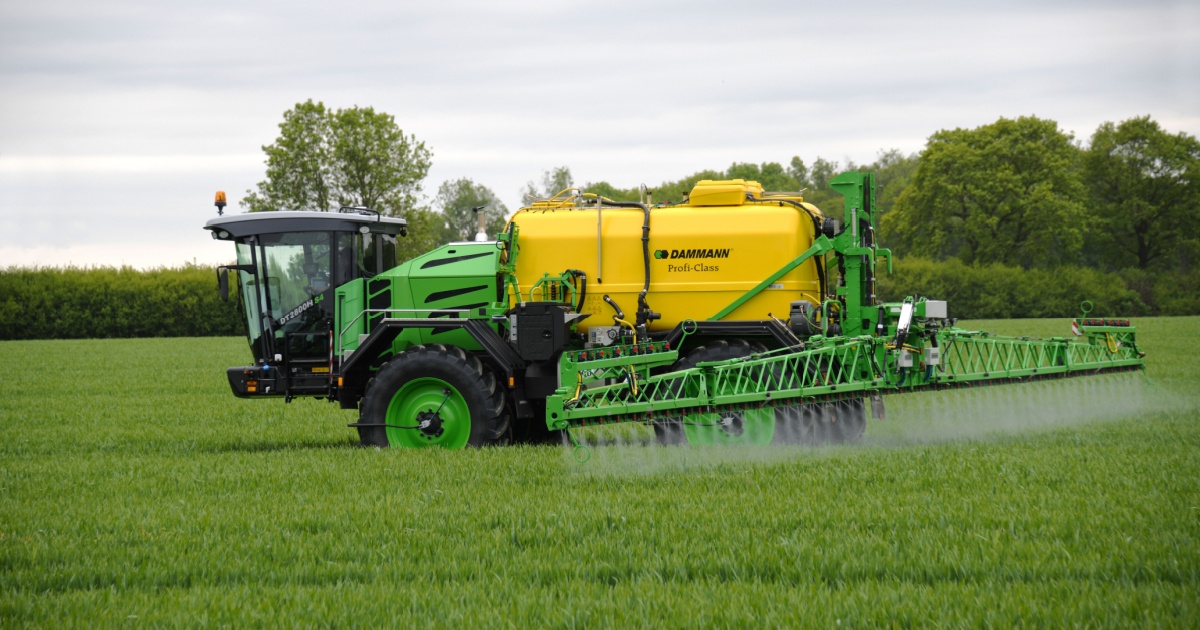

Most of us know Roundup. That bright yellow bottle has lived in the garage for decades, or maybe in the shed at the family farm. You’ve seen it on the shelves of hardware stores, used it on a gravel driveway, or watched crop dusters lay it down over fields of corn and soybeans. For most of those decades, it felt as routine as a bar of soap. Then, one day, headlines started appearing. Lawsuits. Verdicts. A cancer diagnosis linked to this familiar green spray. And now, the highest court in the country is being asked to decide what happens next.
The story of Roundup, and the chemical at its heart, glyphosate, is not a simple one. It involves science that regulators interpret differently, a federal government now publicly backing the company behind the weedkiller, a populist health movement that feels betrayed, and more than 100,000 Americans who believe their cancer came from a bottle they were never warned about. To understand it fully, you need to trace the path from a community garden in St. Louis to the steps of the Supreme Court.
And somewhere in all of it, you need to ask a question that has become surprisingly hard to answer: is this chemical, the most widely used herbicide on earth, actually safe?
The Case That Reached the Supreme Court
The Supreme Court is considering a case in which a Missouri jury awarded $1.25 million to a man who developed non-Hodgkin lymphoma, a type of blood cancer, after spraying Roundup on a community garden in St. Louis. His name is John Durnell, and his story mirrors thousands of others. After multiple rounds of chemotherapy, Durnell is recovering from blood cancer that a Missouri jury found in 2023 was caused by his exposure to Roundup.
The case before the justices, heard on April 27, 2026, asks what might seem like a dry legal question: does the federal law governing pesticide product labels supersede state labeling requirements? But the stakes are enormous. The case involves over 100,000 lawsuits and “billions and billions” of dollars, and Monsanto argues the ruling will affect the very future of U.S. agriculture and innovation.
At the center of the legal fight is a 1972 federal law called FIFRA, the Federal Insecticide, Fungicide and Rodenticide Act. The core question is whether FIFRA prevents people from suing under state law when a manufacturer fails to warn them of cancer risk, given that the EPA has approved labels for glyphosate-based products that do not include cancer warnings. Monsanto, now owned by German pharmaceutical company Bayer, says yes. Durnell and thousands like him say no.
The Supreme Court appeared divided during arguments, in a case that arrived after a wave of litigation that included some multibillion-dollar verdicts against Bayer. Several justices seemed sympathetic to the company’s argument that it cannot be sued under state law because federal regulators have found Roundup likely doesn’t cause cancer, while others questioned whether that wrongly prevents states from responding to changing science. Chief Justice John Roberts put it plainly, asking whether waiting for an EPA review that happens only every 15 years means states can do nothing in response to new evidence of risk. The Supreme Court’s decision is expected by early July.
Billions Already Spent, Thousands of Claims Still Pending
This case didn’t arrive in a vacuum. Bayer has already spent more than $10 billion resolving Roundup cases, and roughly 65,000 claims are still pending, according to reporting from C&EN. In February 2026, Bayer proposed a $7.25 billion settlement aimed at resolving current and future cancer lawsuits over Roundup, including lawsuits that would be foreclosed by a Supreme Court ruling in Monsanto’s favor.
The first major verdict came in 2018, when a California jury awarded DeWayne Johnson, a former school groundskeeper, $289 million after finding that Monsanto failed to warn him of the cancer risks associated with Roundup. One of the attorneys who helped win that case was RFK Jr., then an environmental lawyer in California. Through subsequent appeals, Johnson’s award was reduced to $20.4 million, but it marked the beginning of a legal avalanche.
In 2015, a working group of the International Agency for Research on Cancer (IARC), the cancer research arm of the World Health Organization, reviewed the available science on glyphosate and classified it as “probably carcinogenic to humans.” That finding triggered a flood of lawsuits from Americans who had been diagnosed with non-Hodgkin lymphoma after using Roundup.
What the Science Actually Says
This is where things get complicated, and where precise language matters.
The WHO’s IARC classified glyphosate as Group 2A “probably carcinogenic to humans” in 2015, but the U.S. Environmental Protection Agency has determined that glyphosate is not likely to be carcinogenic to humans when used as directed. Two of the world’s major regulatory voices, pointing in opposite directions. Both are drawing on science. Both reaching different conclusions.
It’s important to note that the International Agency for Research on Cancer (IARC), part of the World Health Organization, evaluates hazard—whether something can cause cancer under some circumstances—not the level of real-world risk at typical exposure levels. In that system, Group 2A includes substances with limited human evidence but sufficient evidence from animal studies, and it also includes a range of exposures encountered in everyday life. Even IARC’s highest category, Group 1 (“carcinogenic to humans”), includes well-known risks such as tobacco smoke, processed meat, and alcoholic beverages. In other words, these classifications reflect the strength of evidence for carcinogenic potential, not how likely harm is at typical exposure.
The EPA’s position is not without challenge. The agency concluded that glyphosate is not likely to be carcinogenic to humans, a classification it has maintained based on a broad dataset including both industry-submitted and independent studies. Critics argue the agency has leaned too heavily on industry-funded research. Researchers at the University of Vienna analyzed studies submitted to regulators by pesticide companies and found, as US Right to Know has documented, that most did not comply with modern scientific standards and lacked the tests most capable of detecting cancer risks.
On the independent science side, the picture has been getting more concerning. A comprehensive carcinogenicity study involving scientists from Europe and the United States found that low doses of glyphosate cause multiple types of cancer in rats. That two-year study tracked rats exposed to glyphosate-based herbicides from pregnancy through adulthood and found statistically significant increases in both benign and malignant tumors in several organs, including cancers of the blood, skin, liver, thyroid, ovaries, kidneys, bones, and mammary glands. Researchers also found that almost half of leukemia-related deaths occurred in the first year of the animals’ lives, suggesting that exposure early in life may be particularly dangerous.
These are animal studies, which means the findings don’t automatically translate to humans. Scientists and regulators frequently note that animal carcinogenicity findings require human evidence before drawing firm causal conclusions. Still, a 2025 review of the scientific literature found new evidence for an association between glyphosate-based herbicide exposure and increased risk of non-Hodgkin lymphoma in humans, plus a new animal study showing carcinogenicity in rats and evidence that glyphosate is genotoxic, meaning it can damage the genetic material, in human cells.
In March 2026, a letter signed by 70 public health experts stated plainly that “the evidence that glyphosate and glyphosate-based herbicides harm human health at levels of current use is now so strong that no additional delays in regulation can be justified,” and called on regulatory agencies around the world to treat glyphosate as hazardous.
Where MAHA and Trump Collide
For the Make America Healthy Again (MAHA) movement, glyphosate has long been enemy number one. The MAHA movement, which helped deliver Donald Trump back to the White House after their preferred presidential candidate, Robert F. Kennedy Jr., dropped out and endorsed Trump, has made opposing glyphosate, the most commonly used herbicide in the U.S., a central cause.
But in February 2026, the Trump administration made a move that blindsided them. President Trump signed an executive order invoking the Defense Production Act to protect domestic production of glyphosate-based herbicides, declaring that any interruption in their supply could leave the U.S. food supply and defense industrial base vulnerable to hostile foreign actors, according to CNBC’s reporting on the order. The administration cited the fact that there is only one domestic producer of glyphosate-based herbicides, with U.S. needs far exceeding current output.
The order put Kennedy, now Secretary of Health and Human Services, in an extraordinarily awkward position. In 2018, Kennedy had helped win a lawsuit alleging Monsanto knew that Roundup caused cancer, and as recently as early 2026 he reiterated publicly that “I believe glyphosate causes cancer.” Yet when the executive order came down, Kennedy publicly supported it, writing on social media that he backed Trump’s order to bring “agricultural chemical production back to the United States and end our near-total reliance on adversarial nations,” as CNN reported in February 2026.
The MAHA community was not persuaded. Kelly Ryerson, a MAHA advocate known on social media as “the Glyphosate Girl,” described the previous months as “really, really rough,” saying they have faced “an attack coming from the executive branch, the judicial branch and over in Congress,” according to CNBC. The Supreme Court arguments and the farm bill have put MAHA squarely at odds with Trump and the majority of Republicans in Congress.
Dozens of MAHA activists gathered outside the Supreme Court on the day of oral arguments for what they called a “People vs. Poison” rally, decrying Monsanto’s efforts to shield itself from lawsuits. Speakers included both Republican and Democratic lawmakers, a rare sight in today’s political climate. The chemistry of the moment, if not the herbicide itself, had united unlikely allies.
Meanwhile, the farm bill under consideration in the House contains provisions that would go even further than a Supreme Court ruling. Section 10205 of the proposed legislation would require uniform pesticide labels nationally, preventing states and local governments from requiring health and safety warnings that go beyond what the EPA has approved or from holding manufacturers liable for not giving such warnings.
How Most People Are Being Exposed
The legal and political battles may seem distant from daily life, but glyphosate exposure is not. Most of the U.S. population has been exposed to glyphosate, including children as young as 3, according to the ATSDR, the Agency for Toxic Substances and Disease Registry, a public health agency within the CDC. Most exposure comes through products like whole-wheat bread, whole-grain cereals and crackers, oatmeal, popcorn, and legumes.
Glyphosate is currently the most widely used herbicide in the U.S., applied to almost 90% of corn, soy, and cotton crops, as well as in orchards, vineyards, and public parks. In 2021, nearly 150,000 tons of glyphosate were sprayed onto American crops, equivalent to roughly one pound per person in the country that year.
The residue is pervasive and is frequently detected in food, water, and even breast milk. According to the CNN February 2026 investigation, farmers are also spraying more glyphosate closer to harvest time, which means residues on grain and food products have less time to dissipate before reaching store shelves.
It’s also worth knowing what we don’t fully understand yet. The ATSDR notes that glyphosate has been associated with respiratory effects including nasal irritation and asthma in people using glyphosate products regularly, and that workers using large amounts over long periods are most at risk. Beyond cancer, a 2025 review in the scientific literature found an expanding body of research linking glyphosate exposure to metabolic, neurological, reproductive, and cancer-related health concerns.
Read More: Weed Killer Found in Bread: Should You Be Concerned?
What This Means for You
The Supreme Court’s ruling, expected by early July 2026, will not directly resolve whether glyphosate causes cancer. That question sits in a different court, the scientific one, and the jury is still genuinely deliberating. What the court’s decision will determine is whether ordinary Americans retain the legal right to hold pesticide manufacturers accountable through state courts when federal agencies haven’t acted on emerging evidence. That’s a meaningful difference, especially given that, as the ATSDR notes, the EPA reviews its own labeling determinations only every 15 years. A lot of science can accumulate in 15 years.
From a practical standpoint, the most evidence-backed step you can take right now is to shift toward organic food where possible. The “single most effective” way to reduce exposure to glyphosate is to eat foods with the USDA’s organic seal, according to toxicology researchers, since organic standards prohibit glyphosate use. If you can’t go fully organic, prioritizing organic versions of heavily sprayed crops, particularly oats, corn, soy-based products, wheat, and legumes, makes the most sense based on where residues tend to be highest.
If you live near farmland or areas of heavy pesticide use, filtering your drinking water is also a reasonable precaution, as is limiting consumption of highly processed foods made from corn, soy, or wheat. If you apply any weedkiller yourself, always wash your hands immediately after, and don’t let children or pets on treated areas until at least 24 hours have passed.
None of this means Roundup is definitively dangerous for every person who has ever used it. Science doesn’t work that way, and honest reporting doesn’t either. What it does mean is that the debate is real, the evidence is growing, and waiting for the politics to sort themselves out is not the same as being informed. For anyone who has used this product for years, paying attention to what the courts, the scientists, and the regulators do next is more than just news. It’s personal.
Disclaimer: This information is not intended to be a substitute for professional medical advice, diagnosis or treatment and is for information only. Always seek the advice of your physician or another qualified health provider with any questions about your medical condition and/or current medication. Do not disregard professional medical advice or delay seeking advice or treatment because of something you have read here.
AI Disclaimer: This article was created with the assistance of AI tools and reviewed by a human editor.
Read More: Study Warns Glyphosate Weedkiller May Be Linked to Liver Disease Epidemic