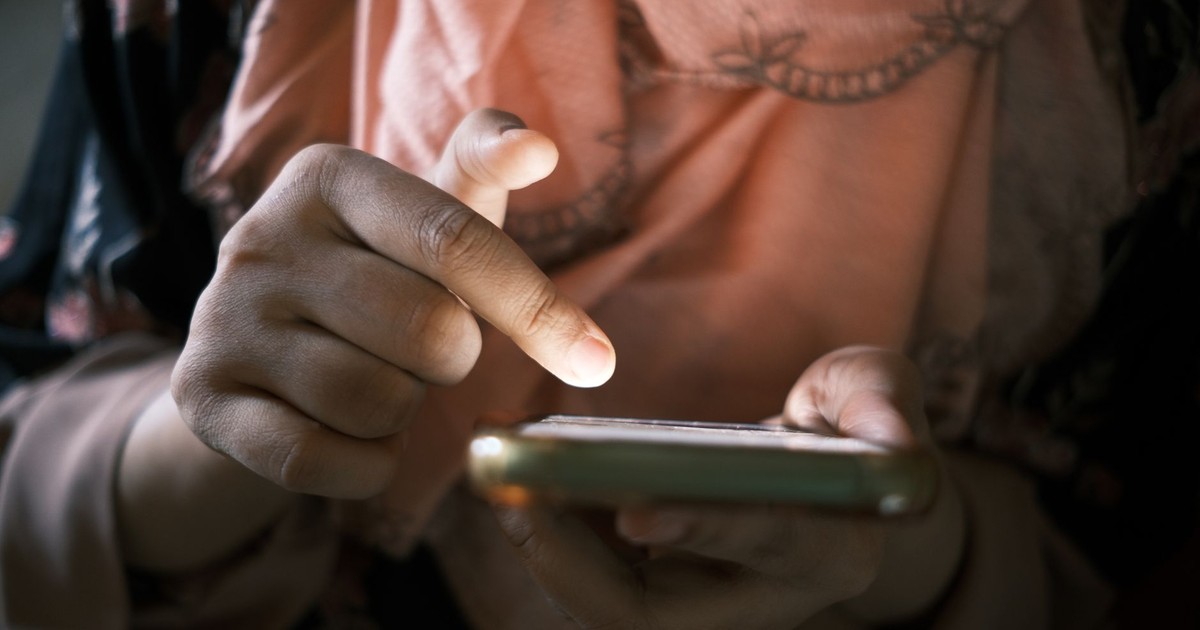

Two and a half hours can disappear surprisingly quickly on social media. A few minutes checking Instagram, another scroll through Facebook, some TikTok or YouTube Shorts, and suddenly you’ve crossed 150 minutes.
That number stood out in a large study involving more than 183,000 adults.
Researchers analyzing 11 years of survey data found that people reporting at least 150 minutes of social media use per day consistently showed a stronger association with self-reported depression. The pattern appeared year after year, even as the platforms people used and the way social media worked changed dramatically.
But the finding doesn’t mean 150 minutes is a magic cutoff between healthy and unhealthy use. The study can’t tell us whether spending more time on social media contributes to depression, whether people experiencing depression tend to spend more time scrolling, or whether both are happening.
What it does reveal is a remarkably persistent pattern, and one that appears to be more specific to social media than to screen time in general.
What the Study Actually Found
The research was published in npj Mental Health Research in 2026. The team analyzed 183,300 anonymous surveys from adults aged 18 to 70, making it one of the broadest examinations of the social media-depression link across the adult lifespan rather than focusing exclusively on teenagers or college students.
The data came from the Media Behaviors and Influence Study, conducted annually since 2002 by Prosper Insights & Analytics, with researchers focusing on 11 years of data beginning in 2014. The survey contains 1,318 questions about people’s lives and behavior and measures health across 31 different dimensions, including depression.
Professor Hans Breiter of the University of Cincinnati’s College of Engineering and Applied Science led the work using machine learning to identify connections between heavy daily social media use and depression. The team collaborated with co-lead author Martin Block, Professor Emeritus in Northwestern University’s Medill School’s Integrated Marketing Communications program.
In the researchers’ models, social media use was a stronger predictor of self-reported depression than several other factors, including a person’s job, educational background, or time spent watching TV, surfing the web, or playing video games.
People reporting at least 150 minutes of social media use per day showed a consistent association with self-reported depression, with the same general pattern appearing in every one of the 11 years examined.
Machine-learning models correctly classified depression status 72–77% of the time across study years, according to the published study.
Why Social Media Stands Apart From Other Screen Time
Watching a film, searching for information, gaming with friends, and continuously scrolling through short social media posts may be very different experiences. The researchers argue that social media deserves particular attention rather than treating all screen time as equally harmful.
News consumption, for example, barely registered as a depression predictor, reaching statistical significance in only two of the 11 years examined.
According to the University of Cincinnati, people today also consume considerably more content made by strangers, a departure from earlier social networking, when feeds were largely populated by updates from friends, colleagues, and family. Recommendation algorithms now play a much larger role in determining what appears in people’s feeds.
Professor Breiter was direct in his assessment: “Mental health and happiness are about engaging the world and having purpose, not passively watching something for hours.”
In separate comments, he added: “We should not subject ourselves to a product using addiction science to optimize our viewing time.”
The 150-Minute Mark: What It Does and Doesn’t Mean
Because the study enrolled new participants each year rather than tracking the same people over time, researchers cannot determine whether heavy social media use drives depression or whether people who are already depressed tend to scroll more. Both directions remain plausible, and other factors could influence both behaviors simultaneously.
The relationship could also be bidirectional. Someone experiencing depression may withdraw from social activities, spend more time at home, and turn to their phone as an accessible source of distraction. More time online could then potentially displace sleep, exercise, or face-to-face contact.
The study also treats all social media time as equivalent, which matters because passive scrolling and active interaction may have different psychological effects. Prior research on active versus passive social media use, published in the Journal of Computer-Mediated Communication, found that passive use was associated with greater depressive symptoms, while active use showed more complex and sometimes positive associations with social wellbeing.
Researchers describe the 150-minute mark as a finding to investigate further, not a clinical cutoff or personal health rule. Below that level, social media use contributed little to depression classification in the models. At and above it, the relationship became more apparent.
The Signal That Kept Getting Stronger
The association didn’t just appear consistently over 11 years. Social media also became a stronger predictor of self-reported depression as the years passed, eventually exceeding several other screen-based activities in predictive importance.
The researchers note that social media itself changed considerably during this period, including a shift toward algorithmically recommended content from strangers rather than primarily posts from friends and family. The study, however, wasn’t designed to determine whether those changes explain the strengthening association.
“When it comes to depression and social media, the argument is salient across scientific test after test of those 11 years,” Professor Breiter told the University of Cincinnati.
UC research associate Vikram Suresh, who co-led the study alongside Professor Block, identified a key gap the research addresses.
“Much of the published research has focused on younger populations, single datasets or broad measures of screen time. We need studies that distinguish social media from other digital activities and examine whether the same associations appear across different populations and years,” he said.
Depression in the study was self-reported rather than established through clinical diagnosis, and people’s estimates of their own social media time may not perfectly match what a device would record. Even with those limitations, the size of the dataset and the repeated pattern across 11 years make the finding worth further investigation.
Read More: What the Landmark Verdict Means for Social Media Addiction and Big Tech
What 150 Minutes Really Means
The researchers aren’t suggesting that someone who spends 149 minutes on social media is in the clear while someone who spends 151 minutes is suddenly at risk for depression.
The 150-minute mark is where a consistent pattern emerged in their models. It should be treated as something for researchers to investigate further, not as a clinical cutoff.
There’s also another complication that a screen-time total can’t capture: what you’re actually doing during those minutes.
Messaging a friend, participating in a community, or looking for specific information isn’t necessarily the same experience as repeatedly scrolling through an open-ended feed. Previous research has suggested that passive and active forms of social media use may have different relationships with wellbeing, something the new study wasn’t able to fully separate.
That makes total screen time only part of the picture.
UC senior research associate and study co-author Sumra Bari suggested practical ways people who want to reduce their use can create a little more friction, including setting timers, disabling notifications, or logging out after each session. She also acknowledged that simply abandoning social media isn’t realistic for everyone, particularly when so much work and social interaction now happens online.
The study doesn’t show that social media causes depression, and it doesn’t establish a universally “safe” amount of scrolling. What it does show is that across more than 183,000 surveys and 11 years of changing platforms, the same relationship kept appearing.
Two and a half hours isn’t a diagnosis or a danger line. But if you’ve never looked at how much of your day disappears into a feed, it might be an interesting number to check.
Disclaimer: The information provided here is for educational and informational purposes only and is not a substitute for professional psychological, psychiatric, or mental health advice, diagnosis, or treatment. Always seek the guidance of a licensed mental health professional, therapist, psychologist, or psychiatrist with any questions or concerns about your emotional well-being or mental health conditions. Never ignore professional advice or delay seeking support because of something you have read here.
AI Disclaimer: This article was created with the assistance of AI tools and reviewed by a human editor.
Read More: We’re More Connected Than Ever — and More Alone. Here’s Why.