
We all know exercise is associated with a longer, healthier life. But does what you do for exercise matter too?
Running, cycling, swimming, lifting weights, and even walking all challenge the body in different ways. Some build cardiovascular fitness, others preserve strength and balance, while certain sports add something that’s harder to measure: regular social interaction.
Researchers have been trying to determine whether those differences show up in longevity. One of the most intriguing answers came from the Copenhagen City Heart Study, which followed more than 8,500 Danish adults for up to 25 years and compared participation in eight different sports with a sedentary lifestyle.
The results produced some surprising standouts. The activities associated with the greatest longevity weren’t necessarily the ones most people would expect, and the pattern raised an interesting possibility: the benefits of a sport may depend on more than how hard it makes your heart work.
There is an important caveat. This was an observational study, so it can’t prove that playing a particular sport adds a certain number of years to your life. People who choose different activities can also differ in income, social connection, overall health, and other habits. But when the Copenhagen findings are considered alongside other large studies, an interesting picture begins to emerge.
Here are 10 sports and activities that research has linked with longer life, starting with the surprising standouts from the Copenhagen study.
1. Tennis and Racquet Sports: The Sports Longevity Benefits Leader
The Copenhagen City Heart Study found tennis associated with 9.7 years of additional life expectancy compared with being sedentary, the largest gap of any sport studied. Tennis demands explosive lateral movement, upper-body power, cardiovascular endurance, and fast reaction time all at once. It is also rarely played alone, which may matter more than previously assumed.
The study’s authors noted that leisure-time sports with more inherent social interaction were associated with the best longevity outcomes, a finding they flagged as warranting further investigation. Tennis, with its doubles format, club culture, and built-in opponent requirement, sits near the top of that social engagement spectrum. Whether the social dimension actually drives the longevity association has not been proven, but the pattern has drawn continued research attention.
Broader research reinforces racquet sports’ apparent edge. Cornell University’s evidence-based living program highlighted research showing that people who regularly played racquet sports had a 47% lower risk of death from all causes and a 56% lower risk of dying from cardiovascular disease compared with people who did not participate in those activities.
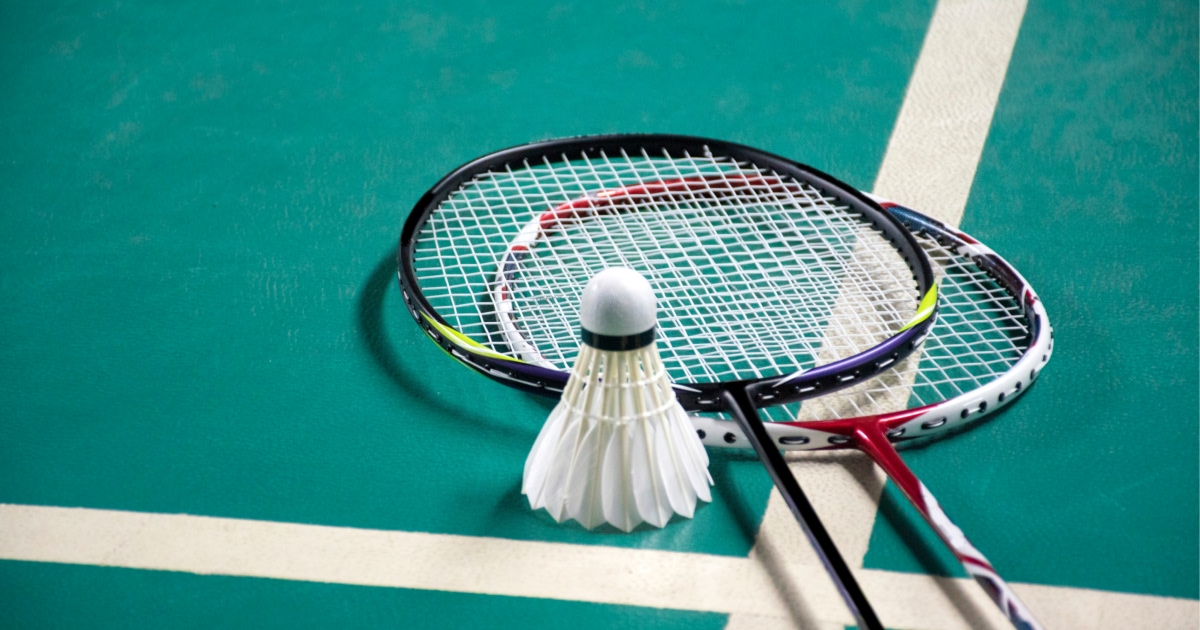
2. Badminton: The Underrated Longevity Sport
Badminton was associated with 6.2 additional years of life expectancy in the Copenhagen study, placing it second behind tennis and ahead of better-known endurance activities such as cycling and jogging.
Badminton combines cardiovascular exercise with balance, coordination, agility, and rapid changes in direction. Like tennis, it is typically played with other people, giving it both a physical and social component. Whether that combination helps explain its strong showing in the Copenhagen study remains an open question.
3. Soccer: The Team Sport Advantage
Soccer was associated with 4.7 additional years of life expectancy in the Copenhagen data, placing it third.
The sport combines sustained aerobic activity with repeated bursts of higher-intensity movement, strength, coordination, and social interaction. Those varied demands may help explain why team sports perform well in some observational studies, although the Copenhagen study cannot tell us which characteristics, if any, are responsible for the association.
4. Cycling: Accessible and Joint-Friendly
Cycling was associated with 3.7 additional years of life expectancy in the Copenhagen cohort. One of its practical advantages is that it is low-impact, with the bicycle supporting much of the rider’s body weight rather than repeatedly loading the joints as running does. That can make it an appealing activity for some people who find higher-impact exercise uncomfortable.
Cycling can also be incorporated into everyday life through commuting or running errands, potentially making regular physical activity easier to maintain. And when it comes to longevity, consistency may matter more than maximizing the intensity of every workout.
For those interested in the broader relationship between daily movement and healthy aging, walking every day offers a related look at how regular movement can add up over time.
5. Swimming: Heart-Protective at Any Age
Swimming was associated with 3.4 additional years of life expectancy in the Copenhagen study. WakeMed Health cites research finding that swimmers had a 41% lower risk of death from heart disease or stroke and a 28% lower risk of premature death overall compared with people who did not swim.
Swimming also provides aerobic exercise without the repeated impact associated with activities such as running. The buoyancy of water reduces weight-bearing stress, which can make swimming an appealing option for some people with arthritis or joint pain.
Lap swimming requires coordinated breathing, full-body muscular engagement, and sustained aerobic effort. Access can be a limitation, however, since regular swimming generally requires a pool or suitable open-water environment.
6. Running and Jogging: The Evidence Is Strong, With Nuance
Jogging was associated with 3.2 additional years of life expectancy in the Copenhagen data. The broader running literature adds considerable weight to this finding.
A 2017 review in Progress in Cardiovascular Diseases found that runners had a 25% to 40% lower risk of premature mortality and lived approximately three years longer than non-runners. As with the Copenhagen findings, these are observational associations rather than guarantees that running itself adds a specific number of years to someone’s life.
A 2019 systematic review and meta-analysis similarly found that any amount of running was associated with a 27% lower risk of all-cause mortality for both men and women compared with no running.
Running’s association with longevity has appeared across multiple large studies. Its higher-impact nature may make it less suitable for some people, however, particularly those dealing with existing injuries or certain joint and mobility problems. Gradually increasing distance and intensity can also help the body adapt to the demands of running.
7. Calisthenics and Bodyweight Training: The Forgotten Classic
Calisthenics was associated with 3.1 additional years of life expectancy in the Copenhagen study, putting it remarkably close to jogging.
Calisthenics includes bodyweight exercises such as push-ups, pull-ups, squats, and lunges and can help build and preserve strength without requiring specialized equipment. Maintaining strength and physical function becomes increasingly important with age.
The broader exercise literature also supports including strength-focused activity as part of an active lifestyle. A 2022 cohort study published in JAMA Network Open, which used data from more than 272,000 older adults followed for over a decade, found lower mortality risk associated with several different forms of recreational physical activity.
8. Resistance Training: The Strength-Longevity Connection
Resistance training wasn’t part of the Copenhagen sport ranking, but broader longevity research gives it an important place on this list.
That same JAMA Network Open analysis found that achieving recommended amounts of physical activity through a variety of recreational activities was associated with lower mortality compared with no participation. Other research has increasingly examined resistance exercise alongside aerobic activity when looking at long-term health.
Resistance training helps preserve strength and muscle, supports bone health, and can make everyday tasks easier to perform as people age. Maintaining muscle and strength is an important part of preserving physical function later in life, giving resistance exercise benefits that extend beyond what happens during the workout itself.
9. Walking and Hiking: The Accessible Foundation
Walking rarely receives credit proportional to its evidence base. The 2022 JAMA Network Open cohort study found that walking for exercise was associated with a significant reduction in all-cause mortality risk among older adults.
Hiking adds varied terrain, elevation changes, and potentially greater cardiovascular demands, while ordinary walking remains one of the most accessible forms of physical activity available.
It requires little equipment, carries relatively low barriers to participation, and can easily be done with other people. For adults who don’t enjoy or can’t comfortably perform higher-intensity sports, walking provides an accessible way to accumulate regular physical activity, and large observational studies have consistently associated walking with better health outcomes.
10. Golf: Surprisingly Strong Data
A Karolinska Institutet study published in the Scandinavian Journal of Medicine & Science in Sports found that golfers had a 40% lower mortality rate than non-golfers of the same sex, age, and socioeconomic status, corresponding to roughly five additional years of life expectancy.
Golf combines several characteristics that may be relevant to healthy aging: substantial amounts of walking for players who don’t use a cart, coordination and balance, time outdoors, and regular social interaction.
Which of those factors contributed most to the mortality association isn’t clear. As with the Copenhagen research, golfers may differ from non-golfers in other ways that are difficult to fully account for. Still, golf is another example of an activity that doesn’t need to resemble a traditional high-intensity workout to be associated with longevity.
Read More: 15 Habits to Help You Lose Weight While You Sleep
Does Doing a Variety of Sports Matter Too?
A 2026 study published in BMJ Medicine tracked more than 111,000 adults across two major long-term cohorts for over 30 years and found that consistently engaging in a variety of exercise types, from walking to weightlifting, was associated with a lower risk of premature mortality, even when researchers accounted for total physical activity.
Participants who engaged in the greatest variety of activities had a 19% lower risk of premature death compared with those reporting the least variety.
The study can’t tell us exactly why. Different activities may challenge different parts of the body, variety could reduce some of the limitations of doing only one type of exercise, or people who participate in many activities may differ in other health-related ways.
Still, the findings raise the possibility that mixing different types of activity may offer benefits beyond simply accumulating more exercise overall.
The Bigger Picture
It’s tempting to look at these studies and conclude that everyone should grab a tennis racquet. The evidence isn’t that simple.
The Copenhagen study found associations, not guarantees. Tennis players may live differently from sedentary people in ways researchers can’t completely account for, and playing tennis certainly doesn’t automatically add 9.7 years to someone’s life.
What becomes more convincing when looking across the research is the bigger pattern: regular physical activity is consistently associated with a lower risk of premature death, and there may be advantages to doing activities that combine different types of movement, challenge the cardiovascular system, and keep people socially engaged.
Newer research also suggests variety may matter. Rather than searching for one perfect exercise, combining activities such as walking, strength training, cycling, swimming, or a racquet sport may expose the body to different physical demands while making an active lifestyle easier to sustain.
Ultimately, the best longevity sport may not be the one sitting at the top of a research ranking. It’s the one you enjoy enough to still be doing years from now. If that’s tennis, the research gives you another reason to keep playing. If it’s walking, swimming, lifting weights, golf, or something else entirely, consistency is likely far more important than chasing the supposed perfect sport.
Disclaimer: This information is not intended to be a substitute for professional medical advice, diagnosis, or treatment and is for information only. Always seek the advice of your physician or another qualified health provider with any questions about your medical condition and/or current medication. Do not disregard professional medical advice or delay seeking advice or treatment because of something you have read here.
AI Disclaimer: This article was created with the assistance of AI tools and reviewed by a human editor.
Read More: Does Drinking Hot Water Help You Lose Weight and Improve Your Skin? What the Research Says