The Three-Dot Tattoo Has More Than One Meaning — Here’s What They All Are
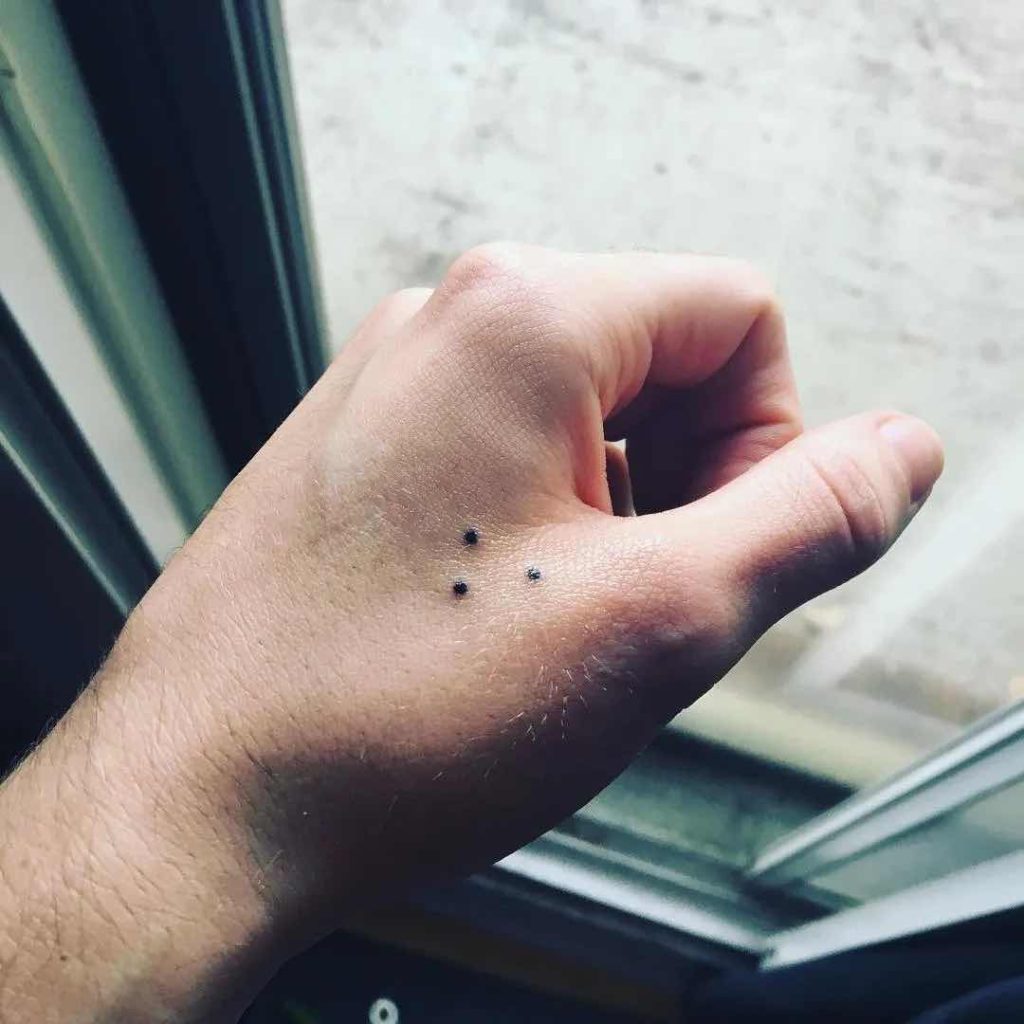
Three tiny marks. No shading. No outlines. Just three dots, arranged in a triangle or a line, small enough to fit in the webbing between your thumb and forefinger. Millions of people have this tattoo – and most of them mean something completely different by it. When a viral social media post in July 2026 pointed out the tattoo’s darkest association, plenty of people wearing it had genuinely no idea what they were displaying, or why others were reacting with alarm.
The confusion is real, and it runs in both directions. Someone getting a minimalist tattoo as a quiet nod to the past, present, and future can wear the exact same design as a former gang member marking his lifestyle in ink. Three dot tattoo meaning, it turns out, is almost entirely context-dependent – and the context stretches across continents, centuries, and cultures in ways that most people have never heard about.
The story doesn’t start in any prison yard. It starts much further back, with three dots used across multiple civilizations to signal something whole, complete, or sacred. Understanding what those three marks actually mean requires following them through some unexpected places.
The “Mi Vida Loca” Connection
The three dots tattoo is a common prison tattoo that represents “mi vida loca,” or “my crazy life.” It’s not associated with any particular gang, but with the gang lifestyle itself. That distinction matters more than it might first appear. Just like the similarly infamous teardrop tattoo, three dots are not tied to any specific gang affiliation – you can find them on both sides of the rivalry between the Norteños and the Sureños, as well as among members of the Salvadoran Mara Salvatrucha.
The easiest way to identify whether a dot tattoo is gang-related is through placement and style. Gang members typically get three dot tattoos in a triangle formation on the outer corner of the eye or in the webbing of the thumb. The tattoo is often inked between the thumb and index finger or under the eye, depending on personal or cultural meaning. Among Sureño gang members specifically, the three-dot tattoo is often created using a stick-and-poke method, requiring very rudimentary tools.
Source: iNKPPL
That stick-and-poke origin carries its own health consequences. Three-dot tattoos can also carry religious significance, such as representing Christianity’s holy trinity – but in prison settings, where professional equipment is unavailable, the method of application matters as much as the meaning. Homemade tattooing equipment carries the risk of hepatitis B and C, HIV, tetanus, and bacterial infections, according to UW Health. Dr. Anne Chapas, a board-certified dermatologist at Union Square Laser Dermatology in New York, has consistently noted that unsterile tattooing instruments are among the most preventable sources of bloodborne infection – a risk that applies to any stick-and-poke tattoo performed outside a licensed studio.
The Same Dots, A Different Continent
While American prison culture was cementing its own interpretation of the three dot tattoo meaning, Russia was doing something entirely different with the same symbol. In Russian prison culture, the three dots tattoo is associated with the highest-ranking criminals in the Russian underworld. During the Soviet era, Russian prisons were controlled by a powerful criminal organization known as the Thieves in Law, or “vory v zakone.” These professional criminals followed a strict code of conduct called the Vorovskoy Zakon, or “thieves’ law,” which dictated every aspect of their behavior, including the tattoos they were permitted to wear. The design signals time spent in prison, loyalty to criminal traditions, and mutual trust among inmates.
France tells yet another version of the story. There, three dots have historically represented the phrase “Mort aux Vaches” – literally “death to cows,” French slang directed at law enforcement – making it a symbol of anti-police sentiment popular in anarchist circles. In 2026, it has since been adopted by many in the Gen Z population who prefer minimalist tattoos, with three dots said to represent “continuity or balance.” The same mark, worn in the same city, can mean something radically different depending on the generation of the person wearing it.
Sweden adds another layer. Historically, Swedish sailors used three dots – called “luffarprickar,” or hobo dots – as protective symbols applied before their first voyage. The design held a superstitious significance among maritime communities, entirely removed from criminal connotations.
Three Dots Across World Religions
Long before any of these subcultures adopted the symbol, three dots carried sacred weight in multiple religious traditions. The three dots symbol has existed for centuries and appears in religion, mysticism, and underground cultures. In ancient history, three dots were used to represent completeness, as in the Holy Trinity (Father, Son, and Holy Spirit) or the cycle of life (birth, life, and death).
Christians get three-dot tattoos as a homage to the Father, Son, and Holy Ghost, with the dots typically arranged in a vertical pattern and most commonly placed on the finger, wrist, or shoulder. The arrangement itself shifts the meaning: when arranged as an ellipsis – a row of three dots – the tattoo represents the past, present, and future. Arranged vertically, the same three dots can represent death, life, and reincarnation.
The number three has carried philosophical and metaphysical weight across virtually every major belief system. In Buddhism, three dots can reference the Three Jewels – the Buddha, the Dharma, and the Sangha. In Hinduism, the Trimurti – Brahma, Vishnu, and Shiva – maps neatly onto a three-point symbol. The dots don’t belong to any single tradition. They’re a shorthand for completeness itself.
Apo Whang-Od and the Batok Tradition
Of all the contexts in which three dots appear, perhaps the most profound is the one least known outside the Philippines. Batok refers to the traditional Filipino tattooing practice, particularly in the northern Luzon region, that has been around for more than a thousand years. It involves hand-tapped designs applied to the skin using thorns or other sharp objects attached to a stick, often made from bamboo. The elaborate designs once adorned both men and women, holding deep cultural and spiritual significance – often representing tribal identity and kinship, bravery, beauty, and social status.
At 106 years old when she made international headlines, Whang-Od is one of the world’s oldest tattoo artists, and she has been practicing batok – the traditional form of tattooing used by the region’s indigenous tribes – since she was a teenager. As CNN reported, her tool of choice is a pomelo thorn attached to a bamboo stick, tapped by hand to create marks that have meant something specific to the Kalinga people for generations.
Whang-Od’s signature tattoo is the three dots, similar to an ellipsis, which symbolize her and her two apprentices: her niece Grace Palicas and her grandniece Elyang Wigan, as Good Morning America reported. The three dots function like an artist’s signature, signifying “made in Kalinga.” She has become a living symbol of Kalinga culture, widely recognized for the revival of traditional hand-tapped tattoo culture in contemporary society.
Whang-Od graced the cover of Vogue Philippines in April 2023, making her the oldest person to front any edition of the magazine – at 106 years old, according to CNN. The coverage brought her global attention and ignited new interest in batok among tattoo enthusiasts who travel to the remote mountain village of Buscalan specifically to receive her three-dot mark. To them, those three dots represent something entirely different from “mi vida loca” – they’re a connection to one of the oldest surviving tattooing traditions on Earth.
Five Dots: A Different Symbol with a Clearer Meaning
Closely related to the three-dot tattoo, and often confused with it, is the five-dot design. Five dots represent time done in prison. Also known as the quincunx, the four dots on the outside represent four walls, with the fifth on the inside representing the prisoner. This tattoo can be found internationally, among both American and European inmates.
Finding five dots of ink with any other meaning is uncommon – in fact, most tattoo artists will not take requests for a five dot tattoo, as it is considered to be something “earned” by people who have served time. The five-dot design, unlike the three-dot tattoo, has retained a more singular, widely-recognized meaning across cultures.
Why Placement and Context Change Everything
Chicano tattoo culture gave the three-dot design much of its American aesthetic foundation. Freddy Negrete, widely credited as one of the fathers of the Chicano black-and-gray tattoo style, helped develop this art form from its prison origins, turning a mark of the streets into a recognized and respected artistic tradition that continued through generations of tattoo artists. Negrete honed his style while incarcerated in the California state prison system, and his designs eventually found their way out of prison yards and into mainstream tattoo studios across Los Angeles and beyond.
Despite gaining popularity as a minimalist tattoo, the three dots tattoo can still be misinterpreted, particularly in law enforcement circles. For people who wear three dots as a personal symbol of resilience, a spiritual marker, or a minimalist aesthetic choice, that misinterpretation can carry real consequences – from social stigma to unwanted scrutiny. While this tattoo style has been linked to gangs, the meaning of party dots depends on context, and the easiest way to discern whether a dot tattoo is gang-related is through the placement and style of the artwork.
The gap between those two realities – a symbol loaded with criminal history and a symbol worn by someone marking their faith, their grief, their survival, or their heritage – is where most of the confusion lives. Modern interpretations of three dots can include themes like personal growth, overcoming challenges, or embracing a complicated life story. For many, the tattoo is less about a specific phrase and more about what it represents emotionally – a reminder of where they have been or what they have made it through.
That’s especially visible in the tattoo removal industry. Tattoo removal clinics like Removery regularly work with clients who want three-dot tattoos removed – not because the meaning has changed, but because the social reading of the tattoo has created problems they didn’t anticipate when they got inked. If you’re curious about the broader biology of what happens when ink enters the skin and stays there for decades, this piece on tattoos and the immune system explains what researchers are only now starting to map.
If you’re thinking about getting three dots tattooed, placement is the single most important decision you’ll make. A triangular arrangement between the thumb and forefinger or beneath the eye will almost certainly be read through a gang-culture lens, regardless of your personal intention. The same design placed on the inner wrist, the shoulder, or the collarbone carries far less of that baggage, and gives you room to communicate your own meaning without the ambiguity.
If you already have three dots and you’re only now discovering their layered history, the tattoo’s meaning is still your own. The whole history of this symbol is one of meanings layered on top of each other across cultures and centuries – no single reading owns it. The three dot tattoo is a reminder that even the smallest designs can carry layered meaning. Whether it represents “Mi Vida Loca,” a connection to a specific culture, gang affiliation, or a personal story of resilience, it is not something that has a single, universal interpretation.
And if someone you know is wearing three dots, the most useful thing you can do before drawing conclusions is simply ask. Context is everything – and sometimes three dots are just three dots.
Disclaimer: This information is not intended to be a substitute for professional medical advice, diagnosis, or treatment and is for information only. Always seek the advice of your physician or another qualified health provider with any questions about your medical condition and/or current medication. Do not disregard professional medical advice or delay seeking advice or treatment because of something you have read here.
AI Disclaimer: This article was created with the assistance of AI tools and reviewed by a human editor.