
A Brazilian tree growing deep in the Atlantic Forest produces a compound that, in laboratory testing, matched the antiviral potency of drugs pharmaceutical companies have spent billions developing. The tree isn’t new to science. But what researchers extracted from its leaves in 2026 is making chemists take notice.
The compounds are called galloylquinic acids, and they were extracted from the leaves of Copaifera lucens Dwyer, a species native to Brazil’s Atlantic Forest. Galloylquinic acids had already earned attention for activity against other pathogens. Nobody had looked hard at what they could do to SARS-CoV-2, the virus responsible for COVID-19, until a research team decided to put the two together.
Scientists from the University of São Paulo and collaborating researchers at Delta University for Science and Technology and Tanta University in Egypt isolated the compounds from the tree’s leaves and introduced them to SARS-CoV-2. According to findings published in Scientific Reports, the compounds attacked the virus across multiple stages of its life cycle. That breadth of action is what makes this early-stage discovery stand out from much of what has come before in plant-based antiviral research.
How the Tree Kills COVID in the Lab
The species was chosen because the research group led by Jairo Kenupp Bastos, a pharmacist and Full Professor of Pharmacognosy at the Ribeirão Preto School of Pharmaceutical Sciences at the University of São Paulo, coordinated the study with extensive experience in the phytochemistry and pharmacology of Copaifera species. The team’s decades of work on Copaifera chemistry pointed them directly to this plant.
When the galloylquinic acids were introduced to SARS-CoV-2 in the lab, the results across several key measures were striking. The compounds attacked the virus across multiple stages of its life cycle and interfered with the spike protein that allows COVID to invade human cells. The spike protein is the virus’s primary entry tool. The study evaluated the antiviral efficacy and underlying molecular mechanisms of these galloylquinic acids extracted from Copaifera lucens leaves against SARS-CoV-2 using both laboratory (in vitro) and computational (in silico) approaches.
The laboratory test results were strong. Cytotoxicity assays revealed a CC50 of 387.7 µg/mL, while antiviral testing showed an IC50 of 3.81 µg/mL, yielding a high selectivity index of 102. In plain terms, the dose required to kill human cells was roughly 100 times higher than the dose needed to suppress the virus, which is a favorable safety profile in preclinical testing.
The results revealed that galloylquinic acids exhibit strong activity against the coronavirus variant by inhibiting viral entry into cells, viral replication, and viral protein expression. All three of those stages are distinct. Blocking all of them simultaneously is something most current COVID antivirals don’t do.
Matching Drugs Already on the Market
To put this in context, consider the current treatment landscape. Three approved antivirals – remdesivir, molnupiravir, and nirmatrelvir – are currently available for the treatment of COVID-19. Both remdesivir and molnupiravir are nucleoside analogs (compounds that mimic RNA building blocks to disrupt viral copying) that inhibit viral replication by blocking RdRp, the viral enzyme responsible for copying the virus’s genetic material.
However, due to the emergence of specific mutations, resistance has been reported against all three of the approved key antivirals. The 2025 IDSA clinical practice guidelines for COVID-19 antiviral treatment, published in Clinical Infectious Diseases in April 2026, also note that molnupiravir carries significant safety limitations, including restricted use during pregnancy and in patients under 18, alongside ongoing concerns about mutagenesis in people with prolonged viral replication. These are real-world gaps that keep scientists looking for alternatives.
The galloylquinic acids from Copaifera lucens appear to work through several of the same mechanisms while adding others. Bastos’s team evaluated activity at both the spike protein receptor binding domain (the region that latches onto human cells) and at the RdRp enzyme – the same replication machinery that remdesivir and molnupiravir target. According to their study in Scientific Reports, galloylquinic acids inhibited both the papain-like protease (a key viral enzyme) and the spike protein receptor binding domain with notable potency, approaching the efficacy of remdesivir and molnupiravir.
The advantage of hitting multiple targets goes beyond potency. Laboratory findings suggest these molecules can interfere with the virus in several different ways, offering a broader approach than many existing antiviral strategies. When a virus faces pressure at multiple points simultaneously, it becomes far harder to mutate around all of them at once.
Why a Multi-Target Approach Matters
Antiviral resistance works roughly the same way antibiotic resistance does – the more narrowly a drug acts, the easier it is for the pathogen to evolve a workaround. A single mutation in one protein can render a drug useless. The galloylquinic acids from this tree don’t give the virus that easy path. Because these compounds interfere with the virus in several different ways, they function as multi-target antiviral candidates, making it harder for resistance to develop.
Additionally, the anti-inflammatory and immunomodulatory activities of these compounds were also observed. Immunomodulation means the compounds may help regulate the body’s immune response – a significant consideration given that some of the worst COVID-19 outcomes result from the immune system overreacting, rather than from the virus itself. An antiviral that also damps down runaway inflammation addresses two problems at once.
This broader biological activity isn’t surprising given the compound class’s track record. Previous research from the same team reported antifungal and anticancer activities in laboratory and animal studies. The selection of galloylquinic acids for screening against SARS-CoV-2 was guided by their previously reported broad-spectrum antiviral properties, including significant inhibition against HIV-1 in biochemical assays. Compounds that have already demonstrated activity across multiple pathogens are naturally good candidates for investigation against new ones.
The biological analysis in this study was led jointly by Mohamed Abd El-Salam, an assistant professor of pharmacognosy and natural product chemistry at the Faculty of Pharmacy at Delta University for Science and Technology in Egypt, alongside Professor Lamiaa A. Al-Madboly, Head of the Department of Microbiology at the Faculty of Pharmacy at Tanta University, and Associate Professor Rasha M. El-Morsi, also from Delta University. Additional contributions came from researchers at Alexandria University, the Czech Republic, and Spain.
The Forest This Tree Comes From
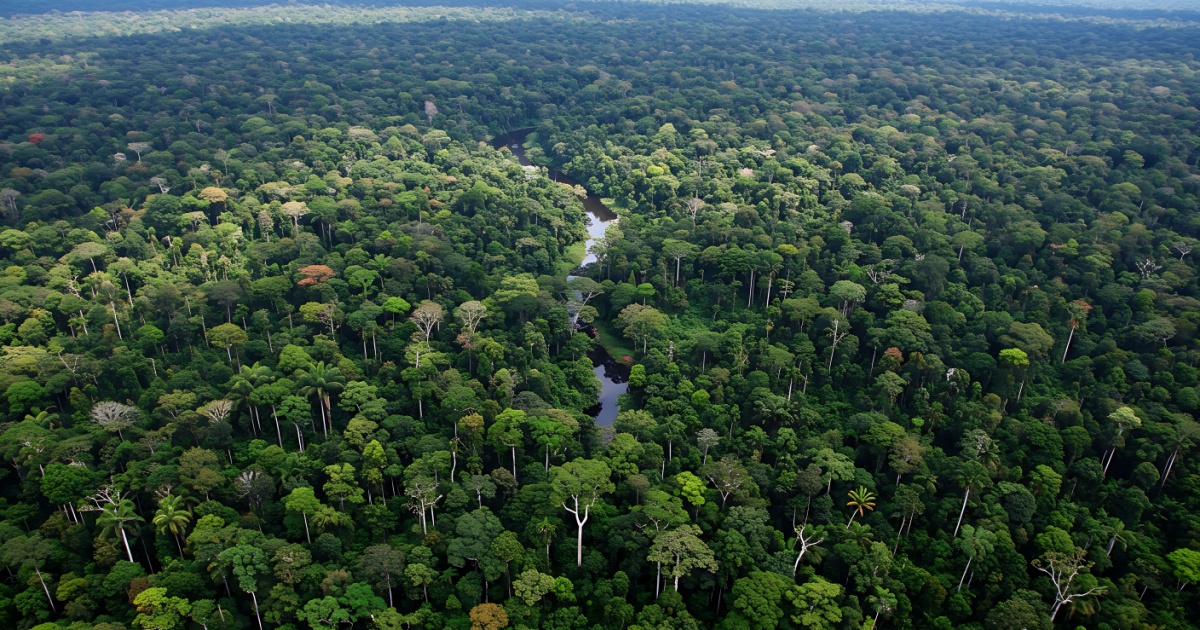
The Atlantic Forest, where Copaifera lucens grows, is one of the most biologically dense places on Earth – and one of the most threatened. It contains approximately 20,000 vascular plant species, about 8,000 of which are endemic – meaning they grow nowhere else on Earth. A 2024 study published in Science found that about 65% of all Atlantic Forest tree species and 82% of endemic species are classified as threatened.
Brazil’s Atlantic Forest continues to lose thousands of hectares of mature forest each year, even though it is supposed to be protected under federal law – and most of this deforestation is illegal. Agriculture is the primary driver. “It’s really alarming to find that we are still losing large amounts of area of mature forests,” Luis Fernando Guedes Pinto, executive director of the SOS Mata Atlântica Foundation, told Mongabay in 2025.
What makes this context directly relevant to the Copaifera lucens findings is the argument the researchers themselves made: this discovery is precisely what’s at stake when intact forest is destroyed. A tree with demonstrable antiviral activity against one of the most consequential viruses of the past century was sitting in a forest that continues to disappear. The researchers noted the discovery supports the case for protecting biodiversity – not as a vague environmental principle, but as a practical medical argument.
Read More: Best herbs for flu season
What This Means
This is early-stage laboratory research – no human trials have been run, and there is no Copaifera lucens supplement, extract, or drug available. The findings from the study are a proof of concept: the galloylquinic acids from this tree can suppress SARS-CoV-2 activity under laboratory conditions, through multiple mechanisms, with potency approaching that of approved antivirals.
The next practical step in this research pipeline is animal testing, followed by human trials if the results hold. That process typically takes years, and many promising lab findings don’t survive it. The more useful takeaway right now is what this discovery represents about where medicine is still finding answers – not in novel synthetic chemistry alone, but in specific plant species growing in specific forests that are disappearing faster than they can be studied. The most actionable thing any individual can do with this information is stay engaged with the science as it progresses and follow standard COVID prevention guidelines. Vaccination, avoiding close contact with confirmed cases, and seeking early medical care remain the primary tools available today.
Disclaimer: This information is not intended to be a substitute for professional medical advice, diagnosis, or treatment and is for information only. Always seek the advice of your physician or another qualified health provider with any questions about your medical condition and/or current medication. Do not disregard professional medical advice or delay seeking advice or treatment because of something you have read here.
AI Disclaimer: This article was created with the assistance of AI tools and reviewed by a human editor.
Read More: First American to Get COVID Shot Reveals What Happened Over 6 Years