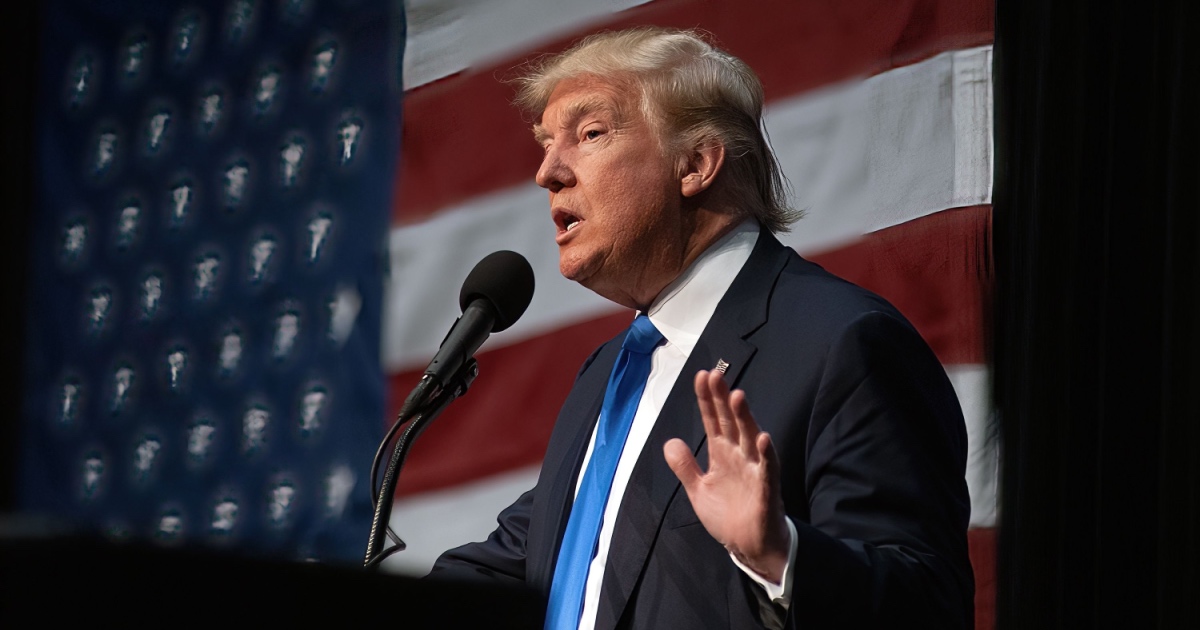

The moment many viewers noticed was about three seconds long. President Donald Trump, seated in the Oval Office for a children’s book segment on Usha Vance’s podcast, reached toward a stack of books. What followed wasn’t a smooth, natural grab. His shoulder rotated outward at an unusual angle, and he used an odd four-fingered grip to retrieve the book rather than the natural hand-shaping most adults use automatically. For most people watching, it looked like an awkward reach. For one licensed speech-language pathologist, it looked like something else entirely.
Hilary Shae, a speech-language pathologist specializing in concussion recovery, has spent months documenting observable patterns in Trump’s public appearances. When she analyzed slow-motion footage from Trump’s July 4, 2026 appearance on Vance’s “Storytime with the Second Lady” podcast, she concluded the book grab was, in her words, “actually quite informative from a neurological perspective.” Her assessment was blunt: “Donald Trump went on Usha Vance’s show, and that turned out to be a big mistake for him,” Shae said. “Because he demonstrated signs and symptoms of dementia in both the speech and language aspect, as well as the motor-functioning aspect.”
The appearance itself was straightforward. Trump joined Vance on the podcast, which was posted online on July 4, 2026, to read “Presidents Play!” – a children’s book from the White House Historical Association that features illustrations of presidents enjoying sports and using the White House grounds for recreation. Trump pre-taped the appearance in mid-June in the Oval Office. What Shae focused on had nothing to do with the book’s content or Trump’s off-script commentary on former presidents. Her attention was on the physical mechanics of picking up a book.
Trump Dementia Signs: What a Pathologist Saw in the Grip
On the physical side, Shae used slowed-down footage from the appearance to demonstrate Trump having a difficult time grabbing the book, as well as the awkward “external rotation” of his shoulder when he turned to grab it from a stack of other books.
Shae explained that dementia patients can struggle with “pre-shaping,” which refers to the brain’s process of preparing movements before we make them, such as when you reach for something to grab it. In healthy individuals, the brain unconsciously calculates the size, shape, and weight of an object before the hand makes contact, adjusting finger position mid-reach. A person picking up a book naturally fans their fingers to match the book’s width before they touch it.
When that pre-shaping mechanism is disrupted, a patient may default to the simplest grip possible, as Trump appeared to do. This is consistent with published research: a 2025 study in Frontiers in Aging Neuroscience found that motor function measures including grip strength, hand dexterity, balance, and gait may serve as early physical indicators of cognitive decline and dementia risk. Separately, a 2021 review published in Springer found that hand fine motor skill disability was more prevalent in patients with moderate to severe dementia than in those with milder forms.
Shae’s interpretation of Trump’s grip is an observational clinical inference, not a diagnosis. She did not diagnose the president, and no public evidence has emerged showing that Trump has suffered either a stroke or a transient ischemic attack. Speech-language pathologists can identify patterns and symptoms, but diagnosing an underlying neurological condition would require a full medical evaluation.
When Words Don’t Come Out Right
The physical observation was only half of Shae’s analysis. The other half was speech. She suggested a similar dynamic is visible in some of Trump’s public addresses, in which he struggles with properly pronouncing multi-syllabic words, and in these instances tends to verbalize a “much simpler approximation of those words,” while leaning on simpler vocabulary as much as possible.
In a separate analysis of Trump’s July 4 speech at the National Mall, Shae pointed out that Trump “couldn’t say ‘250th anniversary'” or the word “magnificent,” and shared clips that showed Trump stopping hard as those words came up. The term clinicians use for this type of error is phonemic paraphasia – when the brain’s coordination of sounds and syllables breaks down, causing a person to substitute similar-sounding fragments or abandon a word mid-attempt.
According to Dr. Harry Segal, a senior lecturer in the Psychology Department at Cornell University and in the Psychiatry Department at Weill Cornell Medicine, phonemic paraphasia – swapping parts of words for others that sound similar – represents “signs of early dementia, even though they are intermittent.” In an analysis published by Cornell University, Segal stated that “Trump has shown evidence of dementia for the past year as indicated by his strange gait, phonemic paraphasia – when he begins a word and can’t finish it – and decline in the complexity of his words and concepts,” adding that “this limited capacity explains his poor debate performance.”
Shae also flagged a condition called dysarthria, which is a weakness in the muscles used for speech. Dysarthria is a motor speech disorder that can cause weakness in the muscles used for speaking. “Dysarthria is kind of like a weakness over time of use,” Shae said. “So when someone is speaking, and over a short period of time, they might lose their breath, their voice might go really low.” She noted this pattern “could be consistent with a TIA, which is a transient ischemic attack, or a stroke.”
These concerns fit a pattern that multiple clinicians have now identified independently. Dr. Vin Gupta, a medical analyst for NBC News, stated that Trump’s behavior should prompt “a more thorough public assessment of his neurological fitness,” and that what he observed could be signs of early Alzheimer’s or frontotemporal dementia. Gupta stressed that his comments were based solely on publicly observable behavior and that he had not reviewed Trump’s medical records.
What Dementia Actually Looks Like
Dementia is a term for a group of symptoms that cause a loss of cognitive functioning – affecting thinking, memory, mood, and behavior, according to the Cleveland Clinic. The disease doesn’t always announce itself through forgetfulness first.
People with dementia often develop behaviors that look like other conditions, but the underlying cause is different. As Shae explains, what might look like kleptomania in a psychiatric sense can in dementia patients be a symptom of “changes in the brain affecting memory, judgment, impulse control, or the ability to recognize ownership.”
Language changes are among the most reliably documented early signals. Research from the University of California, San Francisco Memory and Aging Center confirms that people with Alzheimer’s disease often have difficulty with language expression, word fluency, and naming objects. The 2021 Springer review found that dementia syndromes can include language impairments extending from word-finding difficulties to non-fluent effortful speech and semantic aphasia – a condition where a person loses understanding of word meanings. Motor planning deficits, too, can appear before more obvious cognitive symptoms. A 2024 study found that individuals with mild cognitive impairment may experience visual-motor difficulties when cognitive load is high and have difficulties integrating motor planning with visual feedback.
The scale of dementia in the U.S. provides context for why these signals matter. According to the Alzheimer’s Association’s 2026 Facts and Figures report, an estimated 7.4 million Americans age 65 and older are living with Alzheimer’s disease in 2026. About 1 in 9 people age 65 and older – roughly 11% – has Alzheimer’s. Meanwhile, between 2000 and 2024, deaths from stroke, heart disease, and HIV decreased, whereas reported deaths from Alzheimer’s disease increased 134 percent, according to the same Alzheimer’s Association data.
You can read more about the research behind recognizing cognitive changes in early signs of cognitive decline.
The Limits of Remote Assessment
Official health reports, repeated perfect Montreal Cognitive Assessment scores, Trump’s own forceful denials, and plausible alternative explanations – including normal aging, chronic stress, and longstanding rhetorical style – all represent legitimate counterarguments to Shae’s analysis. The American Psychiatric Association’s Goldwater Rule exists precisely because remote behavioral observation, however informed, carries ethical and scientific limits as a diagnostic method.
A proper clinical diagnosis requires a physical exam, symptom review, personal and family medical history, imaging of the brain, genetic testing, and a full assessment of mind and behavior. No such assessment has been made public. What Shae and others are doing is identifying observable behavioral patterns and mapping them against known clinical criteria – a process with genuine value for raising flags but clear limits as a diagnostic method.
The clinical community has been developing more reliable tools for diagnosis. In May 2025, the FDA cleared the first blood test for Alzheimer’s disease diagnosis – the Lumipulse G pTau217/β-Amyloid 1-42 Plasma Ratio test – a milestone that brings laboratory-confirmed diagnosis closer to primary care. A second test followed: in October 2025, Roche’s Elecsys obtained FDA clearance for a plasma test of phosphorylated tau 181 to rule out Alzheimer’s disease in primary care settings. These tests measure abnormal levels of the proteins beta-amyloid and tau, which accumulate in the brain years before symptoms appear.
The Hill reported that Representative Jamie Raskin’s April 2026 letter to the White House physician cited that “experts have repeatedly warned that the President has been exhibiting signs consistent with dementia and cognitive decline,” and demanded a publicly released comprehensive neuropsychological assessment. No such assessment has been released.
Read More: Trump Dementia: What’s Behind the Health Concerns in 2026
What This Means for You
The public debate about Trump’s cognitive health is a highly visible illustration of what dementia warning signs actually look like in practice. Family members often first notice changes in grip, stumbles on familiar words, abrupt topic shifts, and a retreat toward simpler vocabulary – the same patterns clinicians are now flagging in Trump’s public appearances.
If you recognize any of these patterns in someone close to you, the new generation of blood-based diagnostic tools means a conversation with a primary care doctor is more productive now than at any point in recent memory. Both the Lumipulse and Elecsys plasma tests are available in clinical settings and can help rule Alzheimer’s in or out without waiting for symptoms to become severe. A comprehensive neurological examination – which includes assessment of cranial nerves, motor function, coordination, reflexes, sensation, and gait – remains the clinical standard, but blood biomarkers can now point the way there much earlier. Watching someone struggle to grip a book or lose a word mid-sentence isn’t a diagnosis. Asking a doctor about it might be the start of one.
Disclaimer: The author is not a licensed medical professional. The information provided is for general informational and educational purposes only and is based on research from publicly available, reputable sources. It is not intended to constitute, and should not be relied upon as, medical advice, diagnosis, or treatment. Always consult a licensed physician or other qualified healthcare provider regarding any medical condition, symptoms, or medications. Do not disregard, avoid, or delay seeking professional medical advice or treatment because of information contained herein.
AI Disclaimer: This article was created with the assistance of AI tools and reviewed by a human editor.
Read More: Florida Airport Renamed After Trump — And the Terms Are Unlike Anything Before