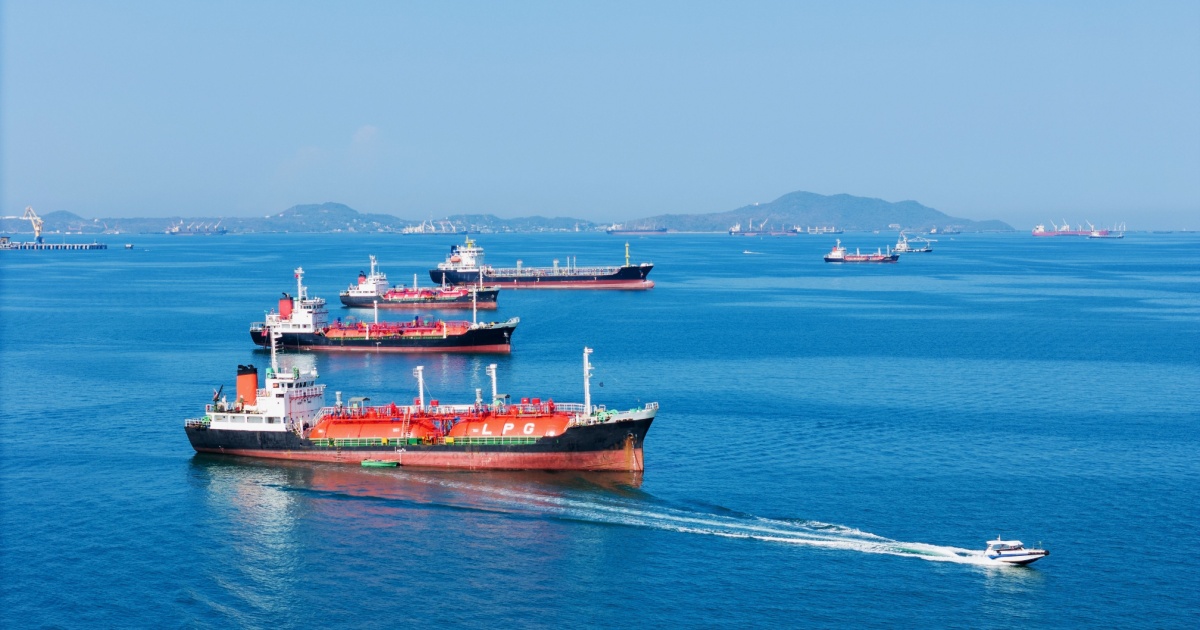

Somewhere in the Persian Gulf right now, roughly 20,000 seafarers are waiting. They’ve been waiting for weeks, stranded on vessels that can’t move, in a waterway that the world depends on but that one nation has, in effect, locked shut. They didn’t start the war. Most of them have nothing to do with it. Yet they’re the ones sitting in the middle of it.
That’s the human picture at the center of what’s been one of the most dramatic geopolitical reversals of 2026. In the space of just 36 hours, the United States launched a major military escort operation, watched it collapse under pressure from its own allies, and then quietly shelved the whole thing while insisting progress was being made. For anyone trying to make sense of what happened – and what it means for energy prices, global trade, and the prospect of a real peace deal – here is the full story.
The crisis didn’t begin last week. It started on February 28, 2026, when the United States and Israel launched military strikes against Iran, an operation the Pentagon labeled “Epic Fury.” Iran retaliated by blocking shipping traffic through the Strait of Hormuz, a narrow channel of water that, until that point, carried roughly 25% of the world’s seaborne oil trade and 20% of its liquefied natural gas. The Iranian Revolutionary Guard Corps issued warnings forbidding passage through the strait, boarded and attacked merchant ships, and laid sea mines in the waterway. A ceasefire was declared on April 8, but even after the ceasefire announcement, ship traffic through the Strait of Hormuz remained far below pre-war levels.
What Was “Project Freedom”?
Project Freedom was designed to provide U.S. military surveillance, firepower, and personnel on board commercial ships so they could safely transit out of the Persian Gulf through the Strait of Hormuz. Trump had announced the operation over the weekend as a way to break Iran’s blockade, and his top national security leaders spent much of Tuesday talking up the effort in public briefings at the Pentagon and White House.
According to a CENTCOM press release, the operation was to include “guided-missile destroyers, over 100 land and sea-based aircraft, multi-domain unmanned platforms, and 15,000 service members.” The stated justification was urgent and humanitarian in tone. The Trump administration said that nearly 23,000 sailors on vessels representing 87 countries had been stranded in the Persian Gulf because of Iran’s de facto closure of the strait. At a White House briefing, Secretary of State Marco Rubio said the goal of Project Freedom was to “rescue” those sailors, who had been “left for dead” by the Iranian regime. Rubio also confirmed that at least 10 crew members had already died.
According to the International Maritime Organization (IMO), up to 20,000 seafarers remained stranded on some 2,000 vessels in the Strait of Hormuz. The IMO stated there was “no precedent for the stranding of so many seafarers in the modern age.”
The operation officially kicked off on Monday, May 4. U.S. Central Command (CENTCOM) announced that two U.S.-flagged ships had made it through the strait as part of Project Freedom. At a Pentagon briefing, Defense Secretary Pete Hegseth declared on Tuesday morning that Iran “said they control the strait – they do not,” according to CNBC. By Tuesday evening, the whole thing was over.
Why It Collapsed: The Saudi Factor
Trump’s abrupt reversal came after a key Gulf ally suspended the U.S. military’s ability to use its bases and airspace to carry out the operation, according to two U.S. officials. That ally was Saudi Arabia.
Trump had surprised Gulf allies by announcing Project Freedom on social media on Sunday afternoon, angering leadership in Saudi Arabia. In response, Riyadh informed Washington it would not allow U.S. military aircraft to fly from Prince Sultan Airbase southeast of the Saudi capital or transit Saudi airspace in support of the effort.
This was not a minor logistical inconvenience. The U.S. military refers to such permissions as ABO – access, basing, and overflight. Saudi Arabia and Jordan are essential for basing aircraft on their territory, Kuwait is essential for overflight, and Oman is essential for both overflight and maritime logistics. Without those permissions, military aircraft were essential to protecting ships under Project Freedom, providing them with a kind of defensive umbrella – and without that umbrella, the operation had no roof.
A call between Trump and Saudi Crown Prince Mohammed bin Salman did not resolve the crisis, forcing the president to halt the project in order to restore the U.S. military’s access to vital airspace. According to NBC News, Saudi officials were blindsided by Project Freedom, and Kuwait also cut off access to its airspace, leaving the U.S. without the defensive umbrella needed to protect ships transiting the strait.
Other close Gulf allies were also caught off guard by the announcement, with the U.S. speaking to Qatar’s leaders only after the effort had already begun. A Qatari official said in a statement that when Trump did call the emir, they discussed the “implications for maritime security and global supply chains,” and that the emir stressed the importance of de-escalation.
Saudi Arabia denied the NBC report. A Saudi source close to the government told AFP that the NBC account “isn’t true,” and that the U.S. still has regular access to Saudi bases and airspace. But analysts pointed to a deeper tension beyond the base access question. One theory about the abrupt suspension was that Saudi Arabia and other Gulf states were made nervous by the Trump administration’s low-key response to the latest wave of Iranian attacks against the United Arab Emirates. The Gulf states were worried that the U.S. might not protect them against Iranian retaliation because the U.S. was focused on making a deal with Iran.
That concern had real basis. The United Arab Emirates said it had been attacked with ballistic missiles, cruise missiles, and drones coming from Iran, resulting in three injuries. CENTCOM Commander Admiral Brad Cooper told reporters, according to CNBC, that Iran’s Islamic Revolutionary Guard Corps “launched multiple cruise missiles, drones and small boats at ships that we are protecting.”
Iran’s Response – and the Mockery
Tehran wasted no time making its position clear. Iranian Foreign Minister Abbas Araghchi suggested that Project Freedom could interfere with peace talks, calling the initiative “Project Deadlock” and warning “there’s no military solution to a political crisis.” “As talks are making progress with Pakistan’s gracious effort, the U.S. should be wary of being dragged back into quagmire by ill-wishers,” Araghchi wrote on X.
The response was not purely diplomatic. On Monday, two U.S. Navy destroyers that crossed the Strait of Hormuz faced a barrage of Iranian missiles, drones and boats. The ships were not hit due to defensive measures and air support. Admiral Brad Cooper, commander of U.S. Central Command, confirmed that Iran had launched an attack against U.S. naval and commercial vessels, leading the U.S. to destroy six Iranian small boats, as reported by CBS News.
Iran’s parliament speaker and top negotiator, Mohammad Bagher Ghalibaf, then posted online to mock the Trump administration for pausing the operation. “Operation Trust Me Bro failed,” he wrote. “Now back to routine with Operation Fauxios.” It was a pointed message about how Tehran viewed the entire episode.
The difficulty was not that the Iranian navy is stronger than the U.S. can field. It was that corporations tend to be risk-averse. Most shipping companies are not going to risk their reputations, their very expensive cargo, and the lives of their employees if there is a decent possibility of getting hit by a missile or stopped by the Islamic Revolutionary Guard Corps. The numbers bore this out: weekly passages through the strait reportedly dropped 11% over the previous week, and only two U.S. merchant ships transited the area in the 24 hours Project Freedom was in effect.
What Trump Said – And Why It Surprised His Own Team
Trump wrote on Truth Social: “Based on the request of Pakistan and other Countries, the tremendous Military Success that we have had during the Campaign against the Country of Iran and, additionally, the fact that Great Progress has been made toward a Complete and Final Agreement with Representatives of Iran, we have mutually agreed that, while the Blockade will remain in full force and effect, Project Freedom (The Movement of Ships through the Strait of Hormuz) will be paused for a short period of time to see whether or not the Agreement can be finalized and signed.”
That represented a surprising about-face from the Trump administration, which just hours earlier had framed Project Freedom as a matter of life or death for thousands of civilian sailors. The reversal was particularly awkward for Defense Secretary Pete Hegseth, who had spent most of his morning press conference at the Pentagon explaining why Project Freedom was so necessary. According to The New Republic, Hegseth had told reporters “We maintain the upper hand, and Project Freedom only strengthens that hand” – only for Trump to shelve the plan hours later.
Crucially, the U.S. naval blockade on Iranian ports remained in place throughout the pause. Project Freedom – the escort mission for commercial ships – was what stopped. The U.S. military continued to maintain a larger footprint in the region than at the start of the war, with two carrier strike groups in the area and additional logistics, support, and resupplied stockpiles.
The Global Economy Is Already Feeling It
This is not a distant geopolitical drama. The closure of the Strait of Hormuz has already rewritten the outlook for the global economy in 2026, and every day the waterway remains restricted makes the damage harder to undo.
Global oil supply plummeted by 10.1 million barrels per day to 97 million barrels per day in March, with continued attacks on energy infrastructure in the Middle East and ongoing restrictions to tanker movements through the Strait of Hormuz leading to the largest disruption in history. With oil-importing nations scrambling to source replacement barrels from an increasingly shrinking pool of supply, physical crude oil prices surged to record levels near $150 per barrel.
The World Bank’s April 2026 Commodity Markets Outlook put it starkly. Energy prices are projected to surge by 24% this year to their highest level since Russia’s invasion of Ukraine in 2022. “The war is hitting the global economy in cumulative waves: first through higher energy prices, then higher food prices, and finally, higher inflation, which will push up interest rates and make debt even more expensive,” said Indermit Gill, the World Bank Group’s Chief Economist. “The poorest people, who spend the highest share of their income on food and fuels, will be hit the hardest.”
Research from the Federal Reserve Bank of Dallas modeled multiple scenarios. A closure of the Strait of Hormuz that removes close to 20% of global oil supplies from the market during Q2 2026 is expected to raise the average West Texas Intermediate price of oil to $98 per barrel and lower global real GDP growth by an annualized 2.9 percentage points. An outage lasting three quarters could cause the WTI price to peak at $167 per barrel in October 2026.
It’s not just oil. Up to 30% of internationally traded fertilizers normally transit the Strait of Hormuz. The price shock and the shortage of fertilizer during the spring planting season could reduce the planting and yields of corn in the U.S. – the main feedstock for U.S. beef, poultry, and dairy – and potentially increase global food prices into 2027.
Consumers are already seeing the effects. Markets responded to the latest dramatic events with oil prices retreating but remaining well above $100 a barrel, while average gas prices in the U.S. climbed to $4.48 a gallon. Jet fuel in North America has spiked 95% since the war began, causing multiple airlines to raise prices for checked baggage. Shipping services, including the U.S. Postal Service, Amazon, and FedEx, implemented fuel surcharges.
The International Energy Agency noted that resuming flows through the Strait of Hormuz remains the single most important variable in easing the pressure on energy supplies, prices, and the global economy.
The UN, Russia, China, and the Bigger Picture
While the bilateral U.S.-Iran dynamic has dominated headlines, Saudi Arabia, the United Arab Emirates, Kuwait, Bahrain, and Qatar joined the United States in submitting a draft resolution to the UN Security Council on freedom of navigation in the Strait of Hormuz. The draft resolution requires Iran to cease attacks, mining, and tolling, and demands that Iran disclose the number and location of the sea mines it has laid and cooperate with efforts to remove them, while supporting the establishment of a humanitarian corridor.
Secretary of State Rubio directly challenged Moscow and Beijing, arguing it was in their own interest for the resolution to pass. “To both the Chinese and the Russians, I have argued that it is in their interest for that resolution to pass,” Rubio said. “It is in their interest not to see international waterways, particularly the Strait of Hormuz, closed and cause economic chaos for dozens and dozens of countries around the world.” The appeal carries practical logic: in 2024, an estimated 84% of crude oil and condensate shipments through the strait were destined for Asian markets, with China receiving a third of its oil via the strait.
Looking further ahead, a new U.S.-backed proposal gaining attention is a concept known as “ARAM Express,” a proposed consortium between the United States and Gulf partners to develop a multidirectional overland network for oil, gas, and petrochemicals. The plan envisions pipelines extending westward to the Red Sea and Mediterranean, as well as southern routes toward the Arabian Sea, creating multiple export pathways that would reduce reliance on the strait, through which roughly one-third of the world’s seaborne oil currently flows.
The Peace Deal on the Table
The reason Trump gave for pausing Project Freedom was diplomatic progress. That progress is real, though fragile. The White House believes it is getting close to an agreement with Iran on a one-page memorandum of understanding to end the war and set a framework for more detailed nuclear negotiations.
The one-page, 14-point memorandum is being negotiated between Trump’s envoys Steve Witkoff and Jared Kushner and several Iranian officials, both directly and through mediators. In its current form, the MOU would declare an end to the war in the region and the start of a 30-day period of negotiations on a detailed agreement to open the strait, limit Iran’s nuclear program, and lift U.S. sanctions.
Among other provisions, the deal would involve Iran committing to a moratorium on nuclear enrichment, the U.S. agreeing to lift its sanctions and release billions in frozen Iranian funds, and both sides lifting restrictions around transit through the Strait of Hormuz. Officials suggested the moratorium on nuclear enrichment would last at least 12 years, which would be a compromise between Iran’s earlier proposal of a five-year moratorium and the U.S. proposal of 20 years.
Iran’s response has been cautious. Public statements from Iranian officials offer a less confident view that a deal will be reached soon. Iran’s Foreign Ministry said Tehran is still reviewing the U.S. proposal but “strongly rejected” some of its terms, according to Iranian state media. Many of the terms laid out in the memo would be contingent on a final agreement being reached, leaving the possibility of renewed war or an extended limbo in which the hot war has stopped but nothing is truly resolved.
Read More: Why Gas Prices Could Take Months to Fall
What This Means for You
The collapse of Project Freedom within 36 hours is a signal that even U.S. military power has limits when its own regional partners won’t cooperate. The episode exposed a gap between Washington’s strategic ambitions and the willingness of Gulf allies to absorb the risk that comes with them. Saudi Arabia and Kuwait did not want to see Iranian missiles raining down on their territory in exchange for an operation that may or may not work – and they said so by withdrawing the access that made it possible.
The stakes are concrete for ordinary people. If the strait remains blocked, oil prices stay elevated, gas stays expensive, food prices keep climbing, and the risk of a broader recession grows. Higher energy, fertilizer, and transport costs – including freight rates, bunker fuel prices, and insurance premiums – may increase food costs and intensify cost-of-living pressures, particularly for the most vulnerable, according to UNCTAD. In developing economies, inflation is now projected to average 5.1% in 2026, a full percentage point higher than was expected before the war, according to the World Bank.
The best realistic path forward is a negotiated deal. That deal is being worked on. It involves nuclear enrichment timelines, frozen assets worth billions of dollars, and a new framework for who controls one of the most important waterways on earth. Whether it holds together – and whether Iran agrees to terms in time – is the question that global markets, stranded sailors, and anyone who buys gas, groceries, or goods online has a direct stake in answering. The 20,000 seafarers still waiting in the Persian Gulf don’t have the luxury of treating that question as abstract. For the rest of us, it’s fast becoming personal too.
AI Disclaimer: This article was created with the assistance of AI tools and reviewed by a human editor.
Read More: 20+ Things Trump Did in 2025 You Might Have Missed