
Something about watching a man sit perfectly still while the world around him erupts into chaos stays with you. It’s the kind of moment that humans aren’t built for, not really – our nervous systems are wired to scream, flinch, drop to the floor. Yet on the night of April 25, 2026, that is precisely what the footage showed: a president who didn’t move, surrounded by people who did.
The White House Correspondents’ Dinner at the Washington Hilton was supposed to be a celebration. More than 2,600 guests filled the ballroom, the room buzzing with black ties and camera flashes. It was the first White House Correspondents’ Dinner Trump attended as president – he had skipped every previous one, both during his first term and in 2025. The evening featured mentalist Oz Pearlman as the celebrity performer, and the room included Vice President JD Vance, Secretary of State Marco Rubio, Defense Secretary Pete Hegseth, and FBI Director Kash Patel, among others. It was a rare gathering of almost the entire administration in one place. Then, at 8:36 p.m., everything changed.
What happened next produced some of the most analyzed footage of Trump’s presidency. The question experts and onlookers kept returning to wasn’t just who did it or why – it was how Trump himself responded in those first few seconds, and what that might actually mean.
What Happened at the Washington Hilton
According to court documents, on April 6, 2026, Allen made a reservation at the Washington Hilton hotel for three nights, from April 24 to April 26, 2026. He traveled by train from his home near Los Angeles to Chicago before boarding a train from Chicago to Washington, D.C., arriving in the District at approximately 1 p.m. on April 24, 2026, and checking into the Washington Hilton later that day. At approximately 8:40 p.m., Allen approached a security checkpoint on the Terrace Level of the hotel leading to the hotel’s ballroom and ran through the magnetometer holding a long gun.
U.S. Secret Service personnel assigned to the checkpoint heard a loud gunshot. A Secret Service officer wearing a ballistic vest was shot once in the chest. The Secret Service officer drew his service weapon and fired multiple times at Allen, who fell to the ground and suffered minor injuries but was not shot. The president and first lady Melania Trump were safely evacuated from the dinner, and none of the attendees were seriously injured.
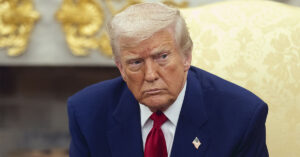
Inside the ballroom, witnesses described the surreal gap between what they heard and what they understood. A Getty photographer on the dais recalled hearing “three or four loud bangs,” with the thought briefly crossing his mind that it might be gunfire, before “what felt like a sea of Secret Service agents were just pouring into the room.” While most people hit the floor or scrambled for cover, video captured the president remaining seated with remarkably little visible reaction.
Who Was Cole Tomas Allen?
Cole Tomas Allen was identified as a Caltech-educated tutor, video game developer, and mechanical engineer from Torrance, California. He earned a degree in mechanical engineering at Caltech, the California Institute of Technology, in 2017, before going on to receive a master’s in computer science at California State University, Dominguez Hills, in 2025.
According to law enforcement, Allen worked for C2 Education, a tutoring firm in Torrance, and received a “Teacher of the Month” award from the company in December 2024. Wired reported that Allen had been employed part-time at C2 Education since March 2020. He also developed video games in his spare time. Nothing in his public life obviously flagged what he was planning.
Shortly before 8:40 p.m. on April 25, 2026, Allen sent a note to family members before the attack, saying he intended to target administration officials and expressed his political anger, while noting, “I don’t expect forgiveness.” Officials called the email a “manifesto,” in which Allen wrote that he planned to target Trump administration officials, “prioritized from highest-ranking to lowest,” according to court documents unsealed by NPR. Cole Tomas Allen’s guns were legally purchased, according to a senior law enforcement official and law enforcement documents reviewed by NBC News. A search of state and federal court databases showed no indication Allen had ever previously been charged with a crime.
Authorities reviewed the statement Allen allegedly sent and his social media history, which Trump described as “anti-Christian.” According to a CNN review of social media accounts that appear to belong to Allen, he shared posts comparing Trump to Adolf Hitler and encouraged others critical of his presidency to purchase guns. The accounts shifted in recent years from posts about video games to increasingly angry political messages. Family members told investigators and Secret Service agents that Allen “made radical statements and that he constantly referenced a plan to do ‘something’ to fix the issues with today’s world,” that he was part of a group called “The Wide Awakes,” attended protests in California, and would regularly go to a shooting range to train with firearms.
The incident was the third apparent attempt on Trump’s life since 2024, following the July 2024 attempt near Butler, Pennsylvania, and the September 2024 attempt at Trump’s golf club in West Palm Beach, Florida.
The Moment That Experts Couldn’t Stop Analyzing
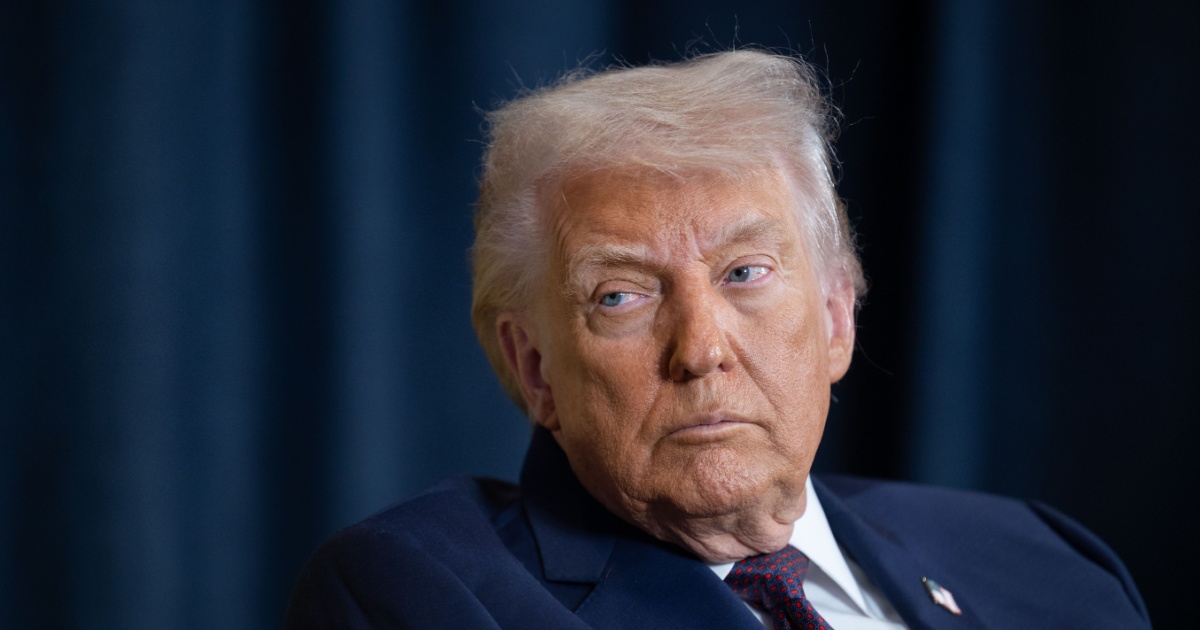
Video of the shooting’s first moments spread rapidly. What captured attention wasn’t just the chaos itself – it was the contrast. People nearby dropped, ducked, or leaned away. Trump did not flinch.
In the aftermath of the incident, body language expert Darren Stanton analyzed the footage of the moment the shots rang out. Stanton said: “He was in discussion with someone at the time the shots went off and what was interesting was there wasn’t the slightest flinch from him. He either has nerves of steel or just wasn’t aware of it.”
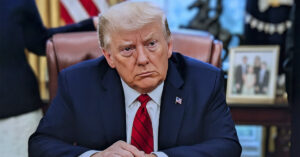
A separate reading came from Dr. John Paul Garrison, a clinical and forensic psychologist known online as Dr. G. Garrison is an American clinical and forensic psychologist specializing in body language analysis, anxiety management, and true crime evaluations. He examined the footage in a detailed YouTube analysis. Dr. G described Trump as looking “indifferent, almost unimpressed” by what was unfolding around him, while noting that the people surrounding Trump showed a textbook “freeze response” – the first instinctive step in human threat processing. Those around Trump then leaned backward, the beginning of the “flight” instinct, even though that physical movement wouldn’t actually protect them from anything.
What struck Dr. G was how different Trump’s response appeared compared to everyone else in the frame. The people around him were cycling through the normal human sequence – freeze, then flee. Trump appeared to skip both.
Dr. G also highlighted something odd in how the evacuation unfolded: Garrison noted that “for whatever reason, they actually got Vice President JD Vance out much faster than they got President Trump out,” pointing to the moment agents were “actually picking JD Vance up by his jacket” while still working to get Trump out. That detail sparked considerable discussion online about Secret Service priorities and decision-making, though no official explanation for the sequence has been offered.
Trump’s Own Explanation
The president addressed his reaction directly the following day in an interview with CBS News correspondent Norah O’Donnell on 60 Minutes. His account was candid in a way that surprised many viewers.
Trump told O’Donnell: “It was a little bit me. I wanted to see what was happening, and I wasn’t making it that easy for them. I wanted to see what was going on. And by that time we started to realize maybe it was a bad problem – different kind of a problem, bad one. And different than what would be normal noise from a ballroom, which you hear all the time.”
He added: “I was surrounded by great people. And I probably made them act a little bit more slowly.”
In the same interview, Trump said he “wasn’t worried” about possible injuries. “I wasn’t worried. I understand life. We live in a crazy world,” Trump told 60 Minutes.
It was a striking admission – the president effectively saying he chose to slow his own security detail because he wanted to assess the situation himself rather than be moved immediately. Whether that reflects composure, curiosity, or something else is something only Trump knows. But it does line up with what the body language analysts observed: a man who didn’t react the way most people would.
The 60 Minutes interview also turned combative when O’Donnell read an excerpt from the suspect’s reported writings. Trump became defensive and said that O’Donnell “should be ashamed” of herself: “You shouldn’t be reading that on ’60 Minutes,’ you’re a disgrace.”
A Security Gap Nobody Expected
The incident also raised serious questions about how the event was secured in the first place. The dinner was not designated a National Special Security Event (NSSE) – a formal classification granted by the Department of Homeland Security for high-profile events that may be targets of criminal activity, such as presidential inaugurations and State of the Union addresses, which trigger full Secret Service coordination authority.
CBS News noted that because the Washington Hilton was a “functioning hotel with numerous public spaces during the dinner,” only the areas where the dinner took place were secured by the Secret Service. That created a gap Allen exploited directly. The suspect was seen leaving his 10th-floor room inside the hotel, dressed in black and carrying a shotgun, a handgun, and several knives in a black bag, according to hotel surveillance footage reviewed by senior law enforcement officials. He used an interior stairwell to bypass heavily monitored areas of the hotel, senior law enforcement sources told CBS News, and exited onto the same level as the foyer leading to the dinner’s red carpet.
A D.C. government official offered an explanation for why the dinner didn’t receive top-tier security status, noting that such designations are usually confirmed well in advance for events the president is expected to attend – and Trump only confirmed his attendance at a relatively late stage. In early March, President Trump announced publicly that he would attend the dinner. Days later, on or around April 6, Allen made a reservation at the Washington Hilton for the event, according to the affidavit filed in the case.
Former Homeland Security officials noted the challenge of securing a functioning hotel is fundamentally different from securing a standalone venue. Douglas Smith, former Assistant Secretary of the Department of Homeland Security, acknowledged the challenge directly: “Unless you’re willing to buy out the entire hotel and create a security perimeter around it weeks in advance, there’s only so much you can do.”
The president praised the Secret Service in the wake of the attack and ordered a review of security procedures. White House chief of staff Susie Wiles was set to convene a meeting with senior administration officials, the Secret Service, and the Department of Homeland Security to assess protocols for major presidential events. The review would examine what worked in stopping Saturday’s attack and explore additional measures to strengthen security as Trump prepares for a series of high-profile upcoming appearances.
The Charges and What Comes Next
Cole Tomas Allen, 31, of Torrance, California, was arraigned in U.S. District Court on charges stemming from the April 25, 2026, shooting. Allen is charged with one count of attempt to assassinate the President of the United States, transportation of a firearm and ammunition in interstate commerce with intent to commit a felony, and discharge of a firearm during a crime of violence.
He faces life in prison if convicted. Allen briefly appeared in federal court on April 27 for an initial hearing and had not entered a plea as of April 28.
Acting Attorney General Todd Blanche said at the Department of Justice press conference: “Cole Allen now faces the full weight of federal justice. This alleged assassin was stopped because of the courage and professionalism of law enforcement officers who responded without hesitation by doing their jobs. Because of them, the President of the United States, administration officials and all attendees at the dinner were safe.”
Read More: Poll Reveals How Popular Melania Trump Is Compared To Other First Ladies
What This Means for You
It would be easy to reduce this story to a news headline. But the questions it raises are worth sitting with. A 31-year-old educator with no criminal record, who had passed background checks, legally purchased his weapons months in advance, traveled across the country by train, and checked into the same hotel as the president – all without triggering any early-warning tripwire. That’s the part of this story that deserves slow, careful attention.
The security gaps identified here are not minor. The highest security level was not invoked for the event, and the Associated Press noted that the lobby of the Washington Hilton regularly remains open to other guests during the dinner, with security and screening typically located closer to the ballroom itself. The NSSE designation exists precisely for situations like this one. Whether a dinner with the President, Vice President, and multiple Cabinet members in attendance should automatically clear that bar seems far less ambiguous now than it did before April 25.
As for Trump’s unblinking calm in those first seconds – the body language experts offered two competing frames. Either he has an unusually high threshold for perceived danger, possibly shaped by having already survived two prior attempts on his life, or he genuinely didn’t register what was happening until moments later. His own account suggests something in between: awareness without panic, and a deliberate choice to slow down and assess rather than react. Acting Attorney General Blanche defended the outcome plainly, saying “Law enforcement did not fail. They did exactly what they were trained to do,” and adding that Allen “was a floor above the ballroom, with hundreds of federal agents between him and the president of the United States.” Whether the president’s personal composure in those first seconds was reassuring or concerning may ultimately say more about the observer than the observed. What is harder to argue with is that the systems around him – the designation protocols, the hotel security perimeter, the intelligence that might have flagged a radicalized guest – had real gaps. Those are the ones worth watching as the review unfolds.
AI Disclaimer: This article was created with the assistance of AI tools and reviewed by a human editor.
Read More: People are Furious After Finding Out About All The Things Trump Named After Himself=