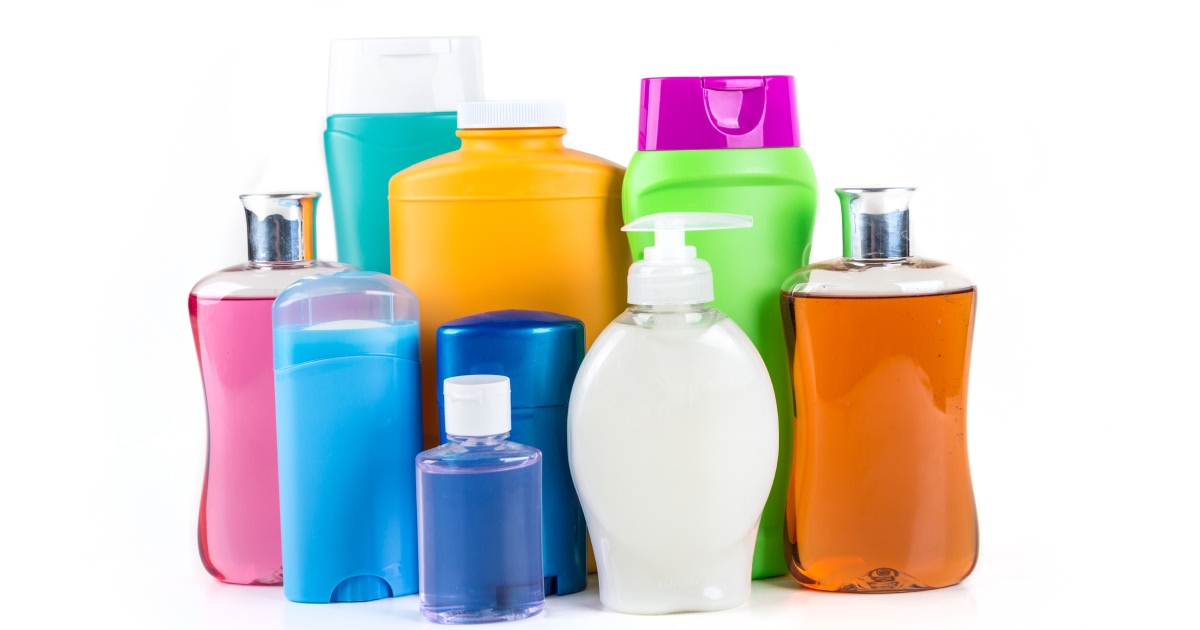
A bottle of baby lotion sitting on a store shelf lists 16 ingredients. Lab analysis of that same sealed bottle detects 51 distinct chemicals. That gap – between what is printed and what is present – is the central finding of a study published in Environment & Health in August 2026, and it applies not just to baby lotion but to nearly everything in the personal care and cleaning aisles of America’s biggest retailers.
The research, published in the peer-reviewed journal Environment & Health, tested 113 products sourced from Target, Amazon, Walmart, and Dollar Tree. The results were consistent across the board: 98% of those products contained at least one chemical not disclosed on the label, and 85% contained at least one undisclosed chemical with known or suspected health hazards. The study tested products that millions of Americans use every day – shampoo, sunscreen, deodorant, toothpaste, and laundry detergent – bought from the country’s most prominent retail chains.
Undisclosed harmful chemicals were found across product categories, price points, and marketing claims. Even products carrying claims that consumers have learned to trust – “phthalate-free,” “100% natural,” “non-toxic,” “hypoallergenic” – were implicated. More than one in four products contained a chemical that directly contradicted claims on the package, including “phthalate-free” products that contained phthalates. The problem is not confined to one category or one corner of the shelf.
What the study found: by the numbers
On average, each product contained 51 detected chemicals – more than three times the average of 16 ingredients listed on its label. The study was conducted by researchers at the Million Marker Research Institute in Berkeley and the Southwest Research Institute in San Antonio, working as co-authors on the Environment & Health paper.
Endocrine-disrupting chemicals (EDCs) – including bisphenols, phthalates, and parabens – are linked to adverse health outcomes such as breast cancer, metabolic disease, and obesity. The study’s authors specifically focused on detecting these compounds because of the documented evidence linking them to chronic disease, and because many consumers are actively trying to avoid them.
The undisclosed chemicals found in tested products included endocrine-disrupting compounds such as phthalates and parabens, fragrance chemicals, and silicone contaminants. Researchers also identified butylated hydroxytoluene (BHT), a widely used preservative, among the unlisted substances. More than half of the products – 57.5% – failed testing based on undisclosed contaminants, including many marketed as “natural,” “non-toxic,” or “fragrance-free.”
Researchers found synthetic chemicals in some products marketed as “100% natural,” as well as fragrance, phthalates, parabens, silicones, or oxybenzone in products claiming to be specifically free of those substances. Some products labeled “hypoallergenic” contained known allergens or sensitizers.
Jenna Hua, an environmental health scientist and co-author of the study, described the consumer implications directly. “That means someone can carefully read ingredient lists, choose ‘clean’ products, and still end up exposed to the very chemicals they were trying to avoid,” she said. “People shouldn’t need a chemistry lab to know what they’re bringing into their homes or putting on their skin. The next generation of product safety must look beyond the label and test what is actually there.”
How hidden chemicals get into sealed products
The existence of undisclosed chemicals in products does not necessarily mean manufacturers are deliberately hiding ingredients, though the labeling failures are real regardless of intent. The researchers identified several pathways by which chemicals end up in finished products without appearing on any label.
Chemical contamination during manufacturing is one documented route. Chemicals can leach from packaging materials, storage containers, or processing equipment into the product itself. Others may form through reactions between listed ingredients during production or after packaging, producing compounds that no one added intentionally and that no label captures. More than one-quarter of products contained chemicals that contradicted their own labels or company websites, and the authors argue that testing finished, packaged products for undisclosed chemicals should be a standard part of product safety and quality control.
Under FDA rules, manufacturers can shield individual fragrance and flavor ingredients from label disclosure by designating them as trade secrets, allowing the entire blend to appear under a single generic term. Reliance on product labels alone may therefore underestimate the full chemical complexity of consumer exposures.
The scale of what can hide behind the single word “fragrance” is considerable. According to the MADE SAFE organization, a fragrance formulation may contain upwards of one hundred individual ingredients – all concealed from the consumer under that single umbrella term. This is the legally permitted default under current U.S. cosmetic regulations, and the new study’s findings land squarely on top of it.
“These findings reveal substantial gaps in product transparency and demonstrate that ingredient labels alone cannot reliably convey product safety,” the researchers wrote in Environment & Health.
The science behind non-targeted analysis
The technique that enabled this research is called non-targeted analysis (NTA). Unlike conventional chemical testing – which looks for specific named compounds – NTA takes a comprehensive inventory of everything detectable in a sample. The researchers used NTA to identify chemicals found in a wide range of personal care and cleaning products to assess the scope and complexity of undisclosed chemical exposure.
Research published in Environmental Health Perspectives describes how non-targeted analysis relies on high-resolution mass spectrometry and computational tools to detect and identify chemical compounds without requiring the researcher to specify what they are looking for in advance. The approach functions more like a chemical fingerprint of the entire product than a targeted search for any particular substance. This reveals not just what companies intend to put in a product, but what actually ends up there by the time it reaches the shelf.
The researchers’ call to action goes beyond publishing results. The authors argue that current U.S. oversight remains too dependent on ingredient disclosure and manufacturer reporting. Although the Modernization of Cosmetics Regulation Act of 2022 (MoCRA) expanded the FDA’s authority over cosmetics, routine testing of finished products for undisclosed chemical contaminants is still generally not required.
A company can fully comply with labeling requirements while the bottle on the shelf contains unlisted compounds, because no one is required to test the bottle. MoCRA, according to the FDA, requires facility registration and product listing – a meaningful expansion of oversight, but one that does not mandate the kind of independent, non-targeted chemical analysis this study conducted.
The health stakes: what these chemicals actually do
Phthalates
Phthalates are plasticizers – chemicals that add flexibility and durability to materials – and they appear routinely in fragrances, nail polish, and hair sprays. A 2026 study published in Reproductive Biology and Endocrinology found that phthalates are linked to reduced sperm count and impaired male reproductive health. Research published in Reproductive Toxicology found that phthalates can disrupt ovarian follicle growth and increase oxidative stress in ovarian tissue. These findings are classified as moderate evidence, drawn from multiple studies, though long-term dose-response data remain limited.
Parabens
Parabens are synthetic preservatives used across cosmetics, pharmaceuticals, and food products to prevent bacterial and mold growth. According to the MADE SAFE organization, parabens are a group of synthetic antimicrobial preservatives, and pregnant women and children – two of the most vulnerable populations – were found to have higher paraben levels than non-pregnant adults. The presence of parabens in products that do not list them – especially those used by pregnant women – is a concern supported by observational data, though causal relationships require further study.
Bisphenols and other EDCs
Bisphenol A (BPA) and related compounds interfere with the endocrine system by mimicking estrogen. Products at every price point in the study’s sample contained bisphenols, and these compounds can migrate into product formulations through packaging and processing. The link between EDC exposure and adverse health outcomes is supported by multiple peer-reviewed analyses, though evidence on specific dose thresholds and long-term effects continues to develop.
For readers who have been checking labels and choosing products marketed as free from these compounds, this article on toxic chemicals in plastic containers provides additional context on how EDC exposure accumulates across multiple everyday sources.
A loophole bigger than most consumers realize
Under current FDA rules – confirmed on the agency’s trade secret ingredients page – a manufacturer can list the entire chemical contents of a fragrance blend as a single word: “Fragrance.” Individual components, which may number over a hundred, are not required to be disclosed because they are considered proprietary trade secrets.
Fragrance is not a marginal ingredient in the personal care industry. It is present in shampoos, conditioners, lotions, soaps, cleaning products, and even some products not primarily thought of as fragranced. Phthalates, which are often used as solvents and fixatives in fragrance formulations, frequently appear in products this way – unlisted, legally protected, and biologically active.
About 26% of products in the study contained chemicals that directly contradicted claims on the label or the company website – including products marketed as natural, non-toxic, organic, or free of specific chemicals that contained the very substances the labels claimed to exclude.
The regulatory gap — and what the researchers want done
The study’s authors argue that ingredient-based oversight – the current model, in which the responsibility for accurate labeling lies with manufacturers and enforcement happens only after complaints or adverse events – is structurally insufficient for detecting the kind of chemical complexity this study revealed.
Their core recommendation is that non-targeted testing of finished, packaged products should become a standard requirement – not voluntary, not post-market, but built into the process by which products reach retail shelves. The researchers acknowledge that for certain chemical categories – fragrances and botanicals in particular – companies do not legally have to disclose all chemicals in the product, and argue that this legal shield is incompatible with meaningful consumer protection.
MoCRA, which Congress passed in December 2022 and which represents the most significant expansion of FDA cosmetic authority since 1938, created requirements around facility registration, product listing, and good manufacturing practices – but did not mandate independent post-market chemical testing of the kind this study conducted.
One practical limitation for shoppers: the specific brands and products tested have not been released, and the authors have said they will appear in an upcoming report. Until that naming occurs, consumers cannot know which specific products were flagged. The data indicate the problem is distributed broadly, not concentrated in one brand or one store.
Key takeaways
The 2026 Environment & Health study does not conclude that every unlabeled chemical causes harm at every exposure level. The researchers are careful to note that the study identified chemicals present – not health outcomes. What dosage of which specific compound produces which specific effect is a question that requires further research, and some of the chemicals detected may pose minimal risk at the concentrations found. The study’s authors acknowledge this limitation explicitly.
What the research does establish is that the label is not a reliable inventory. Products averaged 51 detectable chemicals against 16 listed ingredients – a threefold gap that cannot be explained by labeling imprecision or minor trace contamination. It reflects a systematic disconnect between what manufacturers are required to disclose and what independent chemical analysis actually finds.
For consumers, the practical implications are limited by the fact that specific products have not yet been named. Reading labels more carefully will not resolve a problem that exists below the level of label disclosure. Choosing products with shorter ingredient lists, avoiding products with “fragrance” listed when possible, and consulting tools like the Environmental Working Group’s Skin Deep database – which evaluates cosmetic ingredient safety – are imperfect but currently available strategies.
A regulatory system that permits the word “fragrance” to stand in for a hundred undisclosed compounds, that does not require independent testing of finished products, and that places the burden of detecting mislabeling on researchers operating outside the regulatory structure – rather than on the system itself – is not designed to catch what this study found. The researchers’ call for non-targeted testing of finished products follows directly from what the testing revealed.
Disclaimer: This information is not intended to be a substitute for professional medical advice, diagnosis, or treatment and is for information only. Always seek the advice of your physician or another qualified health provider with any questions about your medical condition and/or current medication. Do not disregard professional medical advice or delay seeking advice or treatment because of something you have read here.
AI Disclaimer: This article was created with the assistance of AI tools and reviewed by a human editor.
Read More: Dollar Stores Are Full of Toxic Products