

When Health and Human Services Secretary Robert F. Kennedy Jr. promised to “end the war on saturated fats,” he lit a fresh fuse in a long-running nutrition debate. His comments came as the U.S. Dietary Guidelines are being rewritten, a process that shapes school meals, military rations, food labels, and the advice many doctors give their patients. For decades, official advice has urged Americans to keep saturated fat low, usually below 10% of daily calories. Yet some researchers argue these limits are outdated and too focused on single nutrients. Kennedy’s promise sounds simple, but the science and policy behind the U.S. Dietary Guidelines are complex, slow, and deeply contested. This article unpacks what Kennedy actually said, how the guideline process works, what the evidence says about saturated fat, and what ordinary eaters should do while the politics play out.
RFK Jr’s Plans to Change Nutrition Advice

At a Food Allergy Fund Leadership Forum in New York, Kennedy told attendees he planned to change the tone of federal nutrition advice. According to one account of the event, he said, “We’re ending the war on saturated fats in this country. So, we’re going to publish dietary guidelines that are going to stress the importance of protein and saturated fats.” He added that “those will come out, I think, next month” and that the shift would “really revolutionize the food system in the country, the food culture in this country.”
In a separate appearance at the White House, Kennedy also told reporters, “We’re about to release dietary guidelines that are going to change the food culture in this country.” Kennedy has repeatedly linked these plans to his own carnivore-style diet. He previously said in an interview that his diet is “mainly meat and then fermented… anything fermented,” including yogurt, coleslaw, and kimchi. That personal pattern is far from the plant-forward direction proposed by many nutrition experts who advise the government, which sets up an unusual public clash between the health secretary’s rhetoric and the scientific committee’s recommendations.
The U.S. Dietary Guidelines

Image Credit: Pexels
Despite the political spotlight on Kennedy’s remarks, the U.S. Dietary Guidelines follow a structured process that runs on science, law, and lengthy review. The guidelines are issued jointly by the Department of Health and Human Services and the Department of Agriculture every 5 years. An independent Dietary Guidelines Advisory Committee, or DGAC, reviews hundreds of studies and produces a Scientific Report. The committee describes this report as “independent, science-based advice and recommendations” for the two departments to consider when drafting the 2025 – 2030 guidelines. The committee examined topics such as saturated fat, red and processed meat, plant-based protein, and dietary patterns with varying levels of ultra-processed foods.
Public comments and agency input then feed into the final policy document. That document will set nutrition standards for key programs, including the National School Lunch Program and the Special Supplemental Nutrition Program for Women, Infants, and Children. News coverage has repeatedly noted that the guidelines influence school meals, medical advice, and industry nutrition standards across the country. Kennedy can frame priorities and language, but he does not control the scientific record. His promise to end a “war on saturated fats” must still pass through a process built around consensus evidence and legal deadlines.
The Current Guidelines on Saturated Fat

Until new rules are published, the 2020 – 2025 U.S. Dietary Guidelines remain in force. These guidelines state that it is important for adults and children over age 2 to get less than 10 percent of daily calories from saturated fat. For someone eating 2,000 calories per day, government fact sheets explain that 10 percent equals about 20 grams of saturated fat. Those limits did not appear suddenly. A National Research Council report accepted “a target level of 10 percent or less of calories from saturated fatty acids” decades ago, reflecting early evidence that saturated fat raised LDL cholesterol.
The World Health Organization still advises that saturated fat intake “should be less than 10% of total energy intake,” with a shift toward unsaturated fats. The American Heart Association goes even further. It warns that “saturated fats can raise your ‘bad’ cholesterol and put you at higher risk for heart disease” and recommends keeping saturated fat below 6 percent of total calories. These positions show a broad mainstream consensus that current U.S. Dietary Guidelines limits are not especially aggressive, and may already sit near the high end of what some cardiology groups consider safe.
The 2025 Scientific Report

Kennedy’s comments land awkwardly beside the 2025 DGAC Scientific Report, which leans toward tighter control of saturated fat, not a full release. A legal and policy summary of the report states that the committee “reaffirms guidance from the Dietary Guidelines for Americans 2020 – 2025 to limit foods and beverages higher in saturated fat and to limit total saturated fat intake to less than 10% of calories per day.” The same summary notes that the committee “reiterates current guidance to lower consumption of butter and replace butter with vegetable oils higher in unsaturated fatty acids.”
It also highlights a stronger stance on red and processed meats, explaining that the report finds “compelling evidence that dietary patterns with higher intakes of red and processed meats are related to detrimental health consequences.” Instead, the committee emphasizes plant-based protein. It urges people to eat more beans, peas, lentils, nuts, seeds, soy products, and seafood, while reducing meat, poultry, and eggs. The Scientific Report also keeps a strong focus on added sugars and sodium, encouraging limits in line with previous editions. In other words, the expert panel that informs the U.S. Dietary Guidelines did not declare peace with saturated fat. It doubled down on the long-standing cap and called for more plants and fewer fatty animal foods in typical American diets.
The Evidence About Saturated Fat and Health

Image Credit: Pixabay
The case against saturated fat rests mainly on its effect on blood lipids and heart disease risk. The American Heart Association explains that “decades of science have proven that saturated fats can raise your ‘bad’ cholesterol and put you at higher risk for heart disease.” Higher LDL cholesterol is a major contributor to atherosclerosis, which can lead to heart attacks and strokes. The World Health Organization echoes this view, recommending that saturated fat stay below 10% of total energy, with a shift toward unsaturated fats, especially polyunsaturated fats from plant oils and fish.
Multiple randomized trials and observational studies have shown that replacing saturated fat with polyunsaturated fat can lower LDL cholesterol and reduce cardiovascular events. These studies have been reviewed by U.S. guideline committees and international bodies over several decades. However, not all saturated fats behave identically. Short and medium-chain saturated fats may have different metabolic effects from long-chain fats. Some cohort studies suggest that saturated fat from fermented dairy might carry less risk than saturated fat from processed meat. These nuances do not erase the overall association between high saturated fat diets and cardiovascular disease, but they complicate attempts to summarize the science in a single percentage number for an entire population.
The Rebellion Against Strict Limits

Kennedy’s rhetoric resonates with a small but vocal group of scientists who argue that strict population-wide limits on saturated fat are no longer justified. In 2020, a workshop of leading nutrition researchers in Washington examined the latest evidence on saturated fat and heart disease. After reviewing clinical trials and observational studies, the expert group sent a letter to the U.S. Departments of Agriculture and Health and Human Services. The letter stated, “There is no strong scientific evidence that the current population-wide upper limits on commonly consumed saturated fats will prevent cardiovascular disease.”
Janet King, a professor at the University of California, Berkeley, said, “We agreed that there is no evidence that the current population-wide upper limits on commonly consumed saturated fats in the U.S. will prevent cardiovascular disease or reduce mortality.” Workshop co-chair Arne Astrup argued that looking only at total saturated fat ignores the food matrix. He said that “the approach to look at saturated fat as one group, and to predict health effects… based on the total content of saturated fat is likely to lead to erroneous conclusions.” These critics want U.S. Dietary Guidelines to focus more on whole foods such as dark chocolate, whole-fat dairy, and unprocessed meat, which they note sometimes show neutral associations with cardiovascular risk. Their position does not dismiss risk entirely, but it challenges the idea that a single percentage limit should rule every eating pattern and every source of saturated fat.
Whole Foods and Ultra-Processed Foods

Kennedy often frames his coming guidelines as a push toward “whole foods,” which aligns partially with the DGAC report and many independent experts. Reporting on the process suggests that the new U.S. Dietary Guidelines are expected to address both saturated fat and ultra-processed foods, along with dairy recommendations. The Scientific Report emphasizes vegetables, fruits, legumes, whole grains, nuts, and seafood as core components of healthy patterns. It “discourages consumption of red or processed meats, saturated fats, salty or sugary snacks, and sugar-sweetened beverages and foods.” In practice, many of these discouraged items are ultra-processed, heavily marketed, and easy to overeat.
Yet the committee stopped short of issuing specific numeric limits on ultra-processed foods because studies use different definitions and methods. It instead recommended that future committees examine ultra-processed foods more closely. Critics of strict saturated fat limits argue that focusing narrowly on one nutrient distracts from bigger problems, such as refined starches, added sugars, and industrial snacks. Astrup urged that “future recommendations should move away from a nutrient-based analytical strategy to a food-based approach.” On that point, Kennedy’s talk of whole foods overlaps with a broader shift in nutrition science, even if his enthusiasm for saturated fat goes far beyond what most guideline panels endorse.
Kennedy’s Power and Limits

Image Credit: Shutterstock
Even as a cabinet-level official, Kennedy cannot simply erase the scientific record around saturated fat. The law requires Health and Human Services and the Department of Agriculture to consider the DGAC Scientific Report, public comments, and internal agency expertise when finalizing the U.S. Dietary Guidelines. Advocacy groups have already urged the departments to keep the current caps on saturated fat. A comment from the Center for Science in the Public Interest notes that the 2020 – 2025 guidelines included the same quantitative daily limits on sodium, added sugars, and saturated fats recommended by the 2025 DGAC, and argues that the limits are grounded in evidence linking these nutrients to cardiovascular disease and obesity.
Policy analyses also underscore that many DGAC recommendations are similar to past reports and that the committee continues to discourage high intake of saturated fat and red meat while encouraging plant-based protein sources. That continuity makes a complete reversal unlikely unless political decision makers are willing to overrule the advisory panel. Some reporting has suggested that Kennedy wants shorter, clearer guidelines that fit on 4 pages and that emphasize whole foods. The final document may change the tone and presentation of the U.S. Dietary Guidelines, even if the numeric limit on saturated fat stays close to the current 10 percent threshold.
Read More: Doritos and Cheetos Go Artificial-Color-Free—But Does It Really Improve Health?
What Ordinary Eaters Should Do Right Now

Image Credit: Pexels
For people planning meals this week, the fight over a “war on saturated fats” can feel distant and confusing. Until new guidelines are officially released, the 2020 – 2025 U.S. Dietary Guidelines and long-standing advice from groups such as the American Heart Association still apply. That means keeping saturated fat in a moderate range, with most fats coming from unsaturated sources such as vegetable oils, nuts, seeds, and fish. The American Heart Association suggests that people at risk of heart disease may benefit from keeping saturated fat below 6 percent of calories, while also paying attention to sodium, added sugars, and overall diet quality.
At the same time, emerging research supports a more nuanced view. Some foods rich in saturated fat, such as fermented dairy, might fit into healthy patterns for certain individuals, especially when the rest of the diet is rich in vegetables, whole grains, and minimally processed foods. The most practical path while politics play out is simple. Talk with a healthcare professional about personal risk factors. Focus on dietary patterns that emphasize whole or minimally processed foods. Use saturated fat sparingly, choose healthier fats often, and be cautious of anyone promising effortless health gains from unlimited butter or endless steak.
The Bottom Line
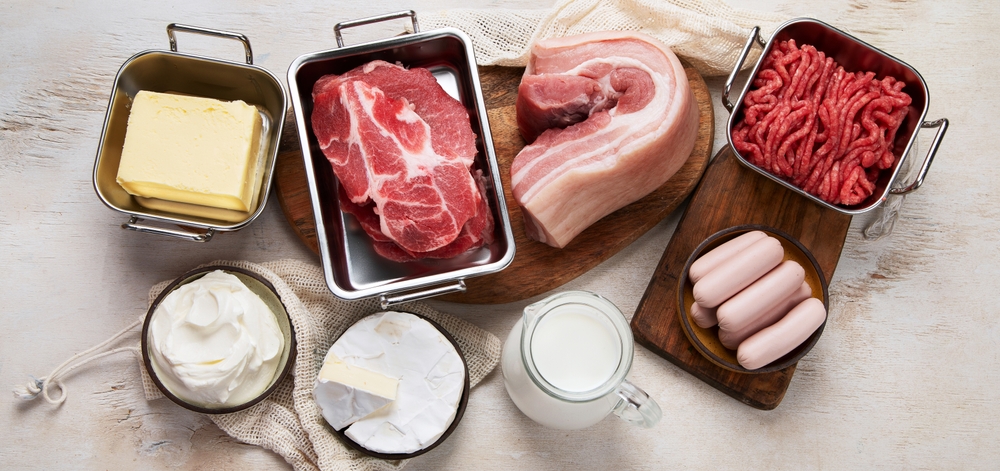
Kennedy’s vow to end the “war on saturated fats” gives a catchy name to a dispute that has simmered for decades. On one side stand public health institutions such as the World Health Organization, the U.S. Dietary Guidelines Advisory Committee, and the American Heart Association, which still see clear reasons to limit saturated fat for the population as a whole. On the other side are scientists who argue that strict numeric caps oversimplify a complex food system, especially when many ultra-processed products stay technically low in saturated fat but high in other harmful ingredients.
Kennedy’s own carnivore-style preferences and his promise to “stress the importance of protein and saturated fats” add a political edge to what began as a technical nutrition question. The coming 2025 – 2030 U.S. Dietary Guidelines will not end this argument, but they will signal which evidence federal agencies consider most persuasive. For now, the safest course for most people remains steady. Eat plenty of minimally processed foods, choose unsaturated fats often, keep saturated fat in moderation, and watch how the final guidelines translate the science into advice that will shape school lunches, hospital menus, and supermarket labels for years to come.
Disclaimer: This article was created with AI assistance and edited by a human for accuracy and clarity.
Read More: Why This Oil is the New Low Saturated Fat Alternative to Olive Oil