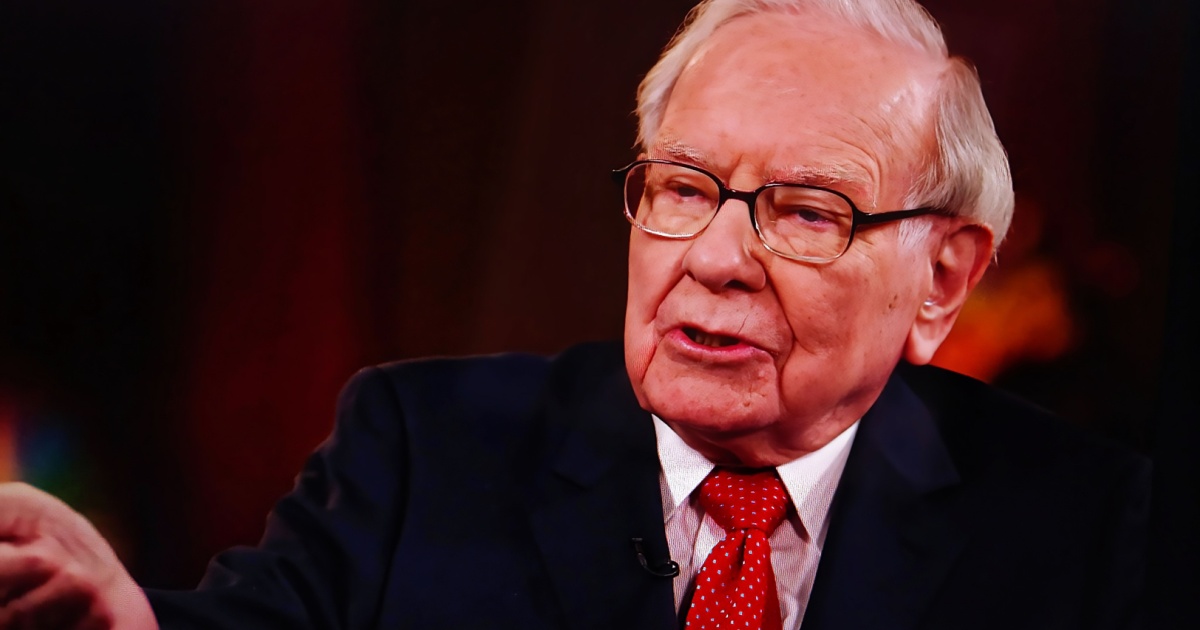

Most people, when they picture Warren Buffett, picture spreadsheets. A man in Omaha quietly reading annual reports, compounding wealth over decades through patience and numbers. What they rarely picture is a terrified young man who couldn’t stand up in front of a room and say his own name. That version of Buffett exists too. And the way he solved that problem turned out to be the most important investment decision he ever made – not in a stock, but in himself.
Despite his immense wealth and status, Buffett evaluates his success on the basis of a skill he struggled with early in his career: communication. That might sound like a modest claim from a man who built one of the most celebrated investment empires in history. But Buffett doesn’t mean it modestly. He means it as the literal, practical truth of how careers are made or stalled, and he’s been saying it for decades to anyone young enough to still do something about it.
If you’ve ever felt like your ideas weren’t landing the way they deserved to, or that someone less qualified was advancing faster simply because they expressed themselves better, Buffett’s perspective on this is worth understanding fully. Because the gap he’s describing isn’t about charm. It’s about something far more learnable than that.
Why Communication Skills Success Starts Before Any Other Skill
Buffett was so terrified of public speaking that he enrolled in a Dale Carnegie course to overcome his fear. “If I hadn’t done that,” he has said, “my whole life would be different.” In his office, you won’t see his diplomas from the University of Nebraska or Columbia on the wall – but you will see his Dale Carnegie graduation certificate proudly displayed.
The course itself has been around longer than most institutions people revere. From its 1912 debut, the Dale Carnegie Course grew out of a simple discovery: getting people to speak about things that stirred them made them unafraid to address an audience. Buffett’s own path to enrolling wasn’t straightforward. When the time came to start the class at Columbia Business School, he canceled payment on his check. After graduate school, he moved back to Omaha, started in the securities business, and knew it was time to face his fears – enrolling again.
The thought of public speaking had made him “physically ill,” and he specifically chose college courses to avoid talking in front of a class, he told author Gillian Zoe Segal in an interview for her 2015 book, “Getting There: A Book of Mentors.”
His most quoted line on the subject cuts straight through the philosophy. In a video posted on LinkedIn, Buffett said: “The one easy way to become worth 50 percent more than you are now – at least – is to hone your communication skills – both written and verbal.” He continued: “If you can’t communicate, it’s like winking at a girl in the dark – nothing happens. You can have all the brainpower in the world, but you have to be able to transmit it. And the transmission is communication.”
That word – transmit – is the key. Ideas trapped inside someone who can’t express them clearly are functionally invisible. And in a world where careers are built on influence, persuasion, and collaboration, invisibility is expensive.
The 50 Percent Claim That Stops People in Their Tracks
Buffett told a class of business students that effective public speaking raises a person’s value by 50 percent instantly. That figure tends to get people’s attention because it’s so specific. He doesn’t say “somewhat more valuable” or “better positioned.” He says 50 percent, and he says it as a floor, not a ceiling.
What backs that number up? Research does, and it goes back further than most people realize. Buffett is widely regarded as one of the greatest investors ever, yet he evaluates his success on the basis of communication – a stance reinforced by research from the Carnegie Institute of Technology, as reported by Inc., which found that 85 percent of financial success comes from the ability to communicate and negotiate effectively, not from technical knowledge or raw intelligence. The implication is clear: people who get ahead aren’t simply the ones who know the most. They’re the ones who can make other people understand and act on what they know.
This isn’t a soft, feel-good framing of success. It’s a structural reality of how organizations work. When asked about one tip he could give young graduates just starting their careers, Buffett returned to the same message: “If you can’t communicate, it’s like winking at a girl in the dark – nothing happens. You can have all the brainpower in the world, but you have to be able to transmit it.”
What Employers Are Actually Looking For Right Now
Buffett’s view isn’t an outlier. It lines up with what hiring managers are saying across industries in 2026. Verbal and written communication skills are at the top of the wishlist for college graduate resumes, and strong communication has become even more critical to success in business with the advent of AI.
The numbers reflect this. According to the same Carnegie Institute of Technology research reported by Inc., 85 percent of financial success is tied to the ability to communicate and negotiate. And among hiring decision-makers, the signal is consistent: a 2025 report found that 93 percent of employers consider communication skills essential when hiring and promoting employees.
The NACE Job Outlook 2026 survey backs that up from a different angle. When skills-based hiring enters the picture, critical thinking, communication, and teamwork consistently top the list of what employers say they want from candidates entering the workforce. LinkedIn’s 2026 Skills on the Rise analysis found that employers are looking less at job titles or degrees and more at what people can actually do – an observable shift in how careers are being built.
What does that mean in practice? The person who can clearly explain a complex idea in a meeting, write a memo that moves people to action, or give a presentation that doesn’t put the room to sleep has a measurable advantage, regardless of their credentials on paper.
The Business Cost of Getting This Wrong
Communication isn’t just a personal career asset. When it breaks down inside organizations, the cost is staggering. According to Apollo Technical, U.S. companies lose $1.2 trillion annually as a result of miscommunication and collaboration failures – a figure the site attributes to a Grammarly study of business communication costs.
Flip that around and the upside becomes just as striking. Research cited by the same source found that strong communication makes teams 20 to 25 percent more productive. And a 2025 analysis found that leaders with strong communication skills are 47 percent more effective in achieving business goals than those who struggle in this area.
These aren’t abstract leadership ideals. They’re metrics that affect promotions, project outcomes, team culture, and whether an organization trusts you to take on more responsibility. The leaders who rise aren’t always the most technically skilled. They’re often the ones who can articulate a direction clearly and bring people with them.
Why AI Makes This More Important, Not Less
A reasonable objection at this point might be: with AI doing more of the writing, summarizing, and presenting, does communication skill still matter? Several of the most powerful business leaders in the world have answered that question recently, and their answer is an emphatic yes.
As Gen Z enters a workforce increasingly shaped by AI, JPMorgan Chase CEO Jamie Dimon has placed communication at the center of his career advice. In a December 2025 appearance on Fox Business’ “Mornings with Maria,” Dimon said people need to learn critical thinking, emotional intelligence, how to communicate, and how to write. He framed those abilities as the foundation for a successful career, not AI fluency alone.
The data from LinkedIn confirms the same tension: AI literacy was the top skill on LinkedIn’s 2025 Skills on the Rise list, but soft skills like conflict mitigation, adaptability, and innovative thinking made up roughly half of the list. Skills like communication, adaptability, and conflict resolution are rising as employers seek professionals who can collaborate, think critically, and handle uncertainty. LinkedIn Career Expert Cayla Dengate noted that while AI is reshaping industries, human skills remain critical for professionals who want to stand out.
This is the dynamic Buffett understood intuitively decades before AI existed. The ability to make people understand you, trust you, and follow your thinking isn’t something a tool replaces. It’s something that compounds over time, the way a good investment does.
Read More: 12 Signs You’ve Already Achieved Success by Midlife
What to Do Now
If you ask Buffett about the secret of his success, he may well credit the Dale Carnegie speaking course he took many years ago. Developing good public speaking skills can increase your future earnings by 50 percent, he once told a Columbia Business School audience. He didn’t say you need to become a polished orator overnight. He said modest improvement compounds – and his own life is the proof.
When the course was over, Buffett went to the University of Omaha and announced that he wanted to start teaching. He knew that if he didn’t speak in front of people quickly, he would lapse right back to where he started. “I just kept doing it, and now you can’t stop me from talking,” he jokes. The lesson isn’t that he had some natural gift waiting to emerge. The lesson is that he showed up, repeatedly, until the fear stopped running the show.
The practical path forward looks less glamorous than most people expect. It means volunteering to present in meetings rather than watching from the side. It means writing clearly when an email or memo could be vague. It means listening better so that when you do speak, it’s actually responsive to what’s in the room. None of these require a personality transplant. They require the same thing Buffett prescribed for himself: doing the thing that feels uncomfortable, enough times that it stops feeling that way.
Buffett’s own writing approach is a useful guide here. He writes his annual shareholders letter as if talking to his two sisters – Doris and Bertie – keeping the information accessible rather than jargon-heavy. “It’s ‘Dear Doris and Bertie’ at the start and then I take that off at the end,” he told CNBC. Although they’re smart, his sisters are “not active in business, so they’re not reading about it every day. I pretend that they’ve been away for a year and I’m reporting to them on their investment.” That principle scales to every form of communication. Clarity isn’t dumbing things down. It’s the highest form of respect for your audience, and the clearest signal that you actually understand what you’re talking about.
Communication skills and success are not separate conversations. For Buffett, they’ve always been the same one.
AI Disclaimer: This article was created with the assistance of AI tools and reviewed by a human editor.
Read More: Warren Buffett Exposed the Top Reason for Donald Trump’s Business Failures