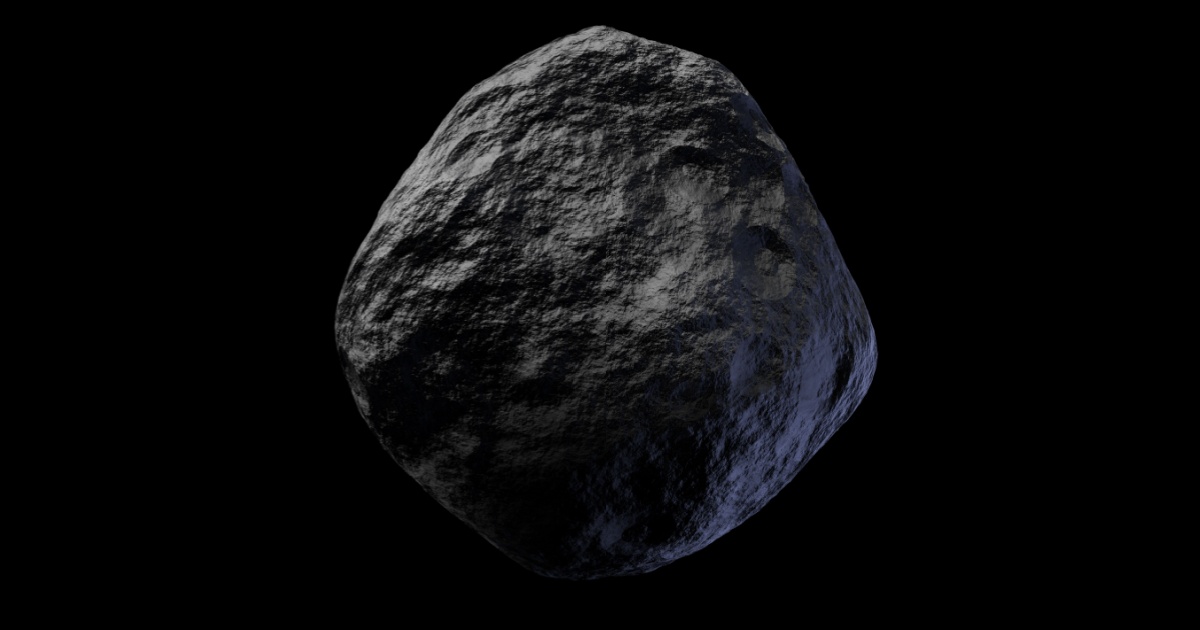

Space is big. Disturbingly big. And most of the time, it goes about its business without us paying much attention. But every so often, something out there catches scientists’ eyes in a way that stops the room. Asteroid Bennu is one of those things. It’s a rocky, spinning lump about 1,610 feet wide – roughly the size of the Empire State Building – and it’s been quietly orbiting the Sun since before any of us were born. Now, the more scientists study it, the more they realize it deserves a second look. Because buried inside decades of tracking data and a landmark NASA mission is a scenario that nobody can fully dismiss: a potential collision with Earth on September 24, 2182.
Here’s the number that keeps showing up in the research: asteroid Bennu, with a diameter of around 500 meters, has been predicted to strike our planet in September 2182 with a 1-in-2,700 chance – that’s a 0.037% probability. To put it plainly, the Asteroid Bennu impact risk is real but very small. NASA assures that “there is no chance Bennu will hit Earth for at least a century,” and even in 2182, the odds are over 99.96% that it will miss. So why are scientists still watching it so closely? Because 0.037% isn’t zero, and the consequences, if it hit, would be severe enough that no responsible space agency can simply look the other way.
Before diving deeper, it helps to understand what kind of object Bennu actually is. Bennu is a “rubble-pile” asteroid shaped like a spinning top that orbits the Sun every roughly 1.2 years and passes near Earth every six years or so. A rubble-pile asteroid isn’t one solid chunk of rock – it’s more like a loose collection of boulders and debris held together by gravity, which matters a lot when scientists think about how to deal with it. Bennu is classified as a “potentially hazardous asteroid,” meaning the object is more than 460 feet (140 meters) wide and could theoretically come within 4.65 million miles of Earth.
What the Data Actually Shows About Bennu 2182 NASA Predictions
Nearly all of the riskiest encounters with Bennu will occur in the late 2100s and early 2200s, with the single likeliest impact coming on the afternoon of September 24, 2182. On that Tuesday, Bennu has about a 1-in-2,700 chance of hitting Earth. That specific date – the NASA Asteroid Bennu impact risk September 24 2182 – comes from highly detailed orbital modeling. The team, led by Davide Farnocchia, a navigation engineer at NASA’s Jet Propulsion Laboratory, reached its estimate by pinpointing Bennu’s distance from Earth to within about seven feet at dozens of times between 2019 and 2020 – a level of precision like measuring the distance between the Empire State Building and the Eiffel Tower to within a few thousandths of an inch.
The key event that determines everything is a 2135 flyby. The 2135 approach will create many lines of variation, and Bennu may pass through a gravitational “keyhole” during the 2135 passage, which could create an impact scenario at a future encounter. The keyholes are all less than roughly 20 km wide, with some keyholes being only 5 meters wide. A “gravity keyhole” is a tiny zone in space – think of it as a specific window. If Bennu passes through one of those windows during its 2135 flyby, Earth’s own gravity would subtly bend its path and send it on a collision course for 2182. “In 2135, we’ll know for sure,” Farnocchia says, as Bennu will be close enough to track with ground radar and map out its future path.
One of the invisible forces making this calculation so tricky is something called the Yarkovsky effect. Scientists used OSIRIS-REx data to measure a key non-gravitational force acting on Bennu known as the Yarkovsky effect. As sunlight heats up Bennu’s surface, the asteroid re-emits energy as it cools. Because Bennu rotates, the net result is a subtle thrust acting on the asteroid. “The effect on Bennu is equivalent to the weight of three grapes constantly acting on the asteroid – tiny, yes, but significant when determining Bennu’s future impact chances over the decades and centuries to come,” said study co-author Steve Chesley, a senior research scientist at NASA’s Jet Propulsion Laboratory. Three grapes’ worth of force, over 150 years, can shift an asteroid’s path by hundreds of miles. That’s the precision scientists are working with.
The cumulative picture is sobering. Bennu has a cumulative chance of around 1-in-1,750 of impacting Earth between 2178 and 2290, with the greatest risk being on September 24, 2182. When you account for all the possible encounter windows over that span, the probability adds up slightly higher than that single 1-in-2,700 figure. Bennu currently sits at Torino Scale 1 – meaning extremely low likelihood, requiring no public action, just tracking – and a Palermo Scale value around -1.6, meaning about 4% of the background risk, currently the highest of any known object.
How Likely Is Asteroid Bennu to Hit Earth?
This is the question everyone asks, and the honest answer is: not very likely at all – but not impossible either. Despite the slightly elevated chance of impact, the risks from Bennu shouldn’t keep anyone awake at night. There’s more than a 99.9 percent chance that Bennu will not hit Earth in the next three centuries. The 1-in-2,700 probability for the Bennu 1 in 2700 chance scenario refers specifically to the September 24, 2182 encounter. That’s the single most dangerous date on the asteroid’s calendar, but it’s still a very slim margin.
To understand how likely is Asteroid Bennu to hit Earth, it helps to compare the odds. Your lifetime risk of dying in a car accident in the US is roughly 1 in 100. Your risk of being struck by lightning over a lifetime is about 1 in 15,000. Bennu’s impact odds of 1 in 2,700 for one specific date in 2182 sound alarming in isolation, but the key context is that this is a risk spread across all of humanity 156 years from now – not a personal risk to any individual alive today. The researchers behind the NASA-sponsored study emphasize that the risk remains very small. “I don’t think we need to do anything about Bennu,” planetary scientist Lindley Johnson of NASA’s Planetary Defense Coordination Office said at a press briefing.
“The OSIRIS-REx data give us so much more precise information, we can test the limits of our models and calculate the future trajectory of Bennu to a very high degree of certainty through 2135,” said study lead author Davide Farnocchia of the Center for Near-Earth Object Studies (CNEOS). “We’ve never modeled an asteroid’s trajectory to this precision before.” What he’s really saying is that scientists know more about Bennu than any other asteroid in existence. The uncertainty isn’t coming from poor data – it’s a genuine physical uncertainty in how the cosmos will behave 100-plus years from now.
What Would Happen If Asteroid Bennu Hit Earth?
This is where things get genuinely serious. Even with a greater than 99.9% chance of a miss, scientists have done the math on the 0.037% scenario. If Bennu impacted Earth, it would release the energy equivalent to the detonation of 1.4 billion tons of TNT, causing regional destruction but lacking the potential to cause global devastation.
A February 2025 study published in Science Advances by the IBS Center for Climate Physics at Pusan National University in South Korea modeled the exact fallout of a Bennu-type collision using advanced climate models and a supercomputer called Aleph. Their simulations, which injected up to 400 million tons of dust into the stratosphere, showed marked disruptions in climate, atmospheric chemistry, and global photosynthesis. Global mean temperatures are projected to drop by 4 degrees Celsius, and global precipitation decreases by 15%. The largest relative reductions in global terrestrial and marine net primary productivity reach 36 and 25%, respectively.
To put that in plain terms: a 4-degree global temperature drop would mean crop failures on a massive scale. A 15% drop in rainfall would devastate water supplies across entire continents. A one-third drop in land plant productivity (which is what “terrestrial net primary productivity” means) would collapse food chains. Medium-size asteroids such as Bennu collide with Earth about every 100,000 to 200,000 years, according to the study. The researchers found the strike could lead to a global “impact winter” that could reduce rainfall and cool the planet, among other effects that might persist for years.
At first, the impact would create a powerful crater and cause material to spray up into the air near the strike site. The collision would generate a powerful shock wave and earthquakes too. Large quantities of aerosols and gases released by the impact could ascend into the atmosphere, altering Earth’s climate with lingering effects. If Bennu were to strike the ocean, it would trigger massive tsunamis and launch large amounts of water vapor into the air.
Compared to the asteroid that killed the dinosaurs, Bennu is small. An impact from Bennu wouldn’t cause a mass extinction like the dino-killing Chicxulub impact 66 million years ago. That asteroid was probably about six miles across; Bennu is less than a third of a mile wide, on average. But “not a mass extinction” is not the same as “not catastrophic.” The area of devastation would be much, much broader than just the impact crater, as much as 100 times the crater’s size. “An object Bennu’s size impacting on the Eastern Seaboard would pretty much devastate things up and down the coast,” Lindley Johnson of NASA warned.
The OSIRIS-REx Mission: What NASA Already Did About Bennu
The most important thing to understand about NASA’s current posture on Bennu is that the agency didn’t simply sit back and wait. OSIRIS-REx – the first U.S. mission to collect an asteroid sample in 2020 – delivered that sample to Earth on September 24, 2023. The mission spent years orbiting and studying Bennu, collecting 121.6 grams of material (twice the mission’s minimum goal), and returning it safely to the Utah desert for analysis.
The NASA OSIRIS-REx mission produced more than just impact probability data. In January 2025, NASA announced that the Bennu samples contain something extraordinary. Studies of rock and dust from asteroid Bennu revealed molecules that, on our planet, are key to life, as well as a history of saltwater that could have served as the “broth” for these compounds to interact and combine. The findings do not show evidence for life itself, but they suggest the conditions necessary for the emergence of life were widespread across the early solar system.
Among the most compelling detections were amino acids – 14 of the 20 that life on Earth uses to make proteins – and all five nucleobases that life on Earth uses to store and transmit genetic instructions in more complex molecules, such as DNA and RNA. Amino acids are the building blocks of proteins – the molecules that carry out virtually every function inside living cells. Nucleobases are the letters of the genetic code. Finding both, together, in an uncontaminated asteroid sample is a big deal. “OSIRIS-REx has been a highly successful mission,” said Jason Dworkin, OSIRIS-REx project scientist at NASA Goddard. “Data from OSIRIS-REx adds major brushstrokes to a picture of a solar system teeming with the potential for life. Why we, so far, only see life on Earth and not elsewhere, that’s the truly tantalizing question.”
More recently, in late 2025, a paper published in Proceedings of the National Academy of Sciences reported an even newer find: researchers found a previously undetected amino acid – tryptophan – which had not been observed previously in meteorites and returned samples. They also found that different types of rocks in the samples have distinct organic chemistries, indicating the wet, alkaline environment in which they originated was host to heterogeneous aqueous reactions. Such asteroids may have seeded Earth and other bodies with the prebiotic inventory for the origin of life.
It’s a genuinely strange situation: the space rock that might one day threaten Earth is also telling us something profound about where life itself might have come from.
What NASA Is Doing About the Asteroid Earth Impact Risk Right Now
After OSIRIS-REx completed its primary Bennu mission, the spacecraft was renamed OSIRIS-APEX and repurposed. After dropping off its sample to Earth on September 24, 2023, the mission became OSIRIS-APEX (Apophis Explorer). Its next target is the near-Earth asteroid Apophis. Scientists will use those observations to refine models that also apply to Bennu. Every asteroid studied teaches them more about how these rocks behave.
On the planetary defense front, NASA already proved something critical in September 2022. NASA’s Double Asteroid Redirection Test (DART), built and managed by the Johns Hopkins Applied Physics Laboratory for NASA’s Planetary Defense Coordination Office, was the world’s first planetary defense technology demonstration that validated asteroid deflection using a kinetic impactor spacecraft. Launched in November 2021, DART traveled for over 10 months before intentionally colliding with the asteroid moonlet Dimorphos.
The result, as confirmed by NASA’s planetary defense office, was a success. NASA confirmed that DART’s hypervelocity impact with Dimorphos successfully altered Dimorphos’ orbit around Didymos, marking humanity’s first time purposely changing the motion of a celestial object and the first demonstration of asteroid deflection technology. Prior to DART’s impact, Dimorphos orbited Didymos once every 11 hours and 55 minutes, and DART’s impact shortened this time to 11 hours and 23 minutes – a difference of 32 minutes.
This matters for Bennu because it means the tool kit works. Johnson says “multiple kinetic impactors” could divert Bennu away from a collision. “That’s feasible in a 50-year time frame,” he says. The catch is that scientists would need to confirm Bennu was on a collision course well in advance – and that confirmation is most likely to come during or after the 2135 flyby. With more than a century between that moment and any potential 2182 impact, there’s real time to act. If needed.
NASA is also developing the Near-Earth Object (NEO) Surveyor, an infrared space telescope designed to expedite the discovery and characterization of potentially hazardous near-Earth objects. The NEO Surveyor is expected to launch in June 2028, significantly enhancing humanity’s ability to detect and respond to asteroid threats well in advance.
For those interested in the broader scope of how NASA monitors asteroid threats, the Hearty Soul has covered how the agency’s planetary defense procedures would work in a real emergency.
The 2135 Flyby: The Moment That Decides Everything
Mark your calendar for September 2135. That’s the moment when all the uncertainty begins to resolve. On September 25, 2135, Bennu’s approach distance is roughly 203,000 km (give or take 20,000 km). There is no chance of an Earth impact in 2135. The 2135 flyby won’t be dangerous itself. But it’s the hinge point that determines what happens next.
Analysts had identified 26 half-mile-wide gravitational keyholes along Bennu’s path in the 2135 encounter. If Bennu’s trajectory passed through one of those keyholes, Earth’s gravity could then put the asteroid on a collision course in 2182. Thanks to the exquisite tracking precision of the OSIRIS-REx mission, researchers were able to rule out all but two such keyholes. Two down, two to go. By the time 2135 arrives, orbital tracking will have narrowed things down even further. And once scientists know which side of those remaining keyholes Bennu passes through, the 2182 question will essentially be answered.
The good news is that we have time – lots of it. The bad news is that the clock only runs one direction. Decades of tracking, including precision data from OSIRIS-REx, have pinned down Bennu’s orbit with high accuracy. Scientists know it will make a close flyby in 2135, and Earth’s gravity during that encounter could nudge Bennu’s path, making it tricky to predict its course in the 2180s. The 156 years between now and 2135 are an asset. They give astronomers time to measure, refine, and eventually predict with near-certainty what will happen.
Read More: NASA Prepping For Doomsday Scenario Where Asteroid Has 72 Percent Chance of Impacting Earth
What This Means for You
Let’s be direct: the Asteroid Bennu impact risk is not something that affects your life today, or your children’s lives, or your grandchildren’s lives. The NASA Bennu 2182 prediction refers to a probability that remains below 0.04%, sitting 156 years in the future. The more important takeaway is what this story reveals about how science actually works – and why it matters.
NASA isn’t panicking. Scientists aren’t hiding anything. What they’re doing is what good science does: measuring, modeling, and preparing. The OSIRIS-REx mission gathered data that improved impact predictions and also rewrote what we know about where life’s building blocks come from. The DART mission proved we can nudge an asteroid off course if we need to. The NEO Surveyor telescope will expand the net even further after 2028. All of that preparation happened not because Bennu is definitely going to hit, but because “probably not” isn’t the same as “definitely not” – and the consequences, however unlikely, are worth taking seriously.
The next real update on what is the probability of Asteroid Bennu hitting Earth in 2182 will come from observations made closer to the 2135 flyby, using technology that doesn’t fully exist yet. By then, scientists expect to have a definitive answer. Until that moment, keep perspective: the sky is not falling. But it is being watched – carefully, precisely, and by some of the best minds on the planet.
A.I. Disclaimer: This article was created with AI assistance and edited by a human for accuracy and clarity.
Read More: Minerals Discovered in Meteorite Could Hold Secrets to Asteroid Formation