
Every second of a stroke, brain cells are dying. That brutal fact has driven emergency medicine for decades, and yet the gap between when a stroke starts and when a patient actually receives treatment remains one of the most stubborn problems in all of medicine. Most people have heard the phrase “time is brain,” but what that really means, at the cellular level, is startling. An estimated 1.9 million neurons are lost every single minute during an acute ischemic stroke. And while hospital stroke teams have become faster and more sophisticated, nothing meaningful has existed to protect the brain during the window before the ambulance arrives, before the CT scanner, before any clot-busting drug reaches a vein.
That may be about to change. Researchers have spent years trying to solve a problem that has defeated some of the best minds in neuroscience: how do you get a protective drug into the brain quickly, without a needle, without a hospital, and without a doctor present? A team from Hong Kong thinks they’ve found the answer, and the method is almost disarmingly simple. A nasal spray. Not a metaphor, not a future concept. A physical spray you inhale through your nose.
The implications of a working nasal spray stroke treatment extend far beyond any single hospital or country. If the early data holds up, this could reshape the first fifteen minutes of stroke response everywhere in the world, from a suburban kitchen in the US to a rural road in a low-income country. Here’s what we know right now.
What Makes Stroke So Hard to Treat in Time
According to data cited by HKUMed, ischemic stroke is the second leading cause of death in the world, resulting in a global cost of over US$890 billion each year. The global burden of stroke, measured in disability-adjusted life years (a metric combining years of healthy life lost to illness and premature death), rose from 137 million in 2000 to 160 million by 2021.
The sheer scale of this problem is matched only by the speed at which it unfolds. Brain cells begin dying very quickly once oxygen supply is interrupted. The most widely used emergency treatment for ischemic stroke is intravenous thrombolysis, which means injecting a clot-dissolving drug called tissue plasminogen activator (tPA) directly into a vein. To be most effective, clot-busting drugs must typically be given within 4.5 hours of symptom onset, though advanced imaging can help identify individuals who may benefit from treatment at later time points.
The problem is the journey. Over 85 percent of stroke patients worldwide do not receive treatment in time, with timely intervention within the narrow therapeutic window remaining one of the major obstacles the medical community is working to overcome. Traffic, geography, delayed recognition of symptoms, and the time needed to confirm stroke type with brain imaging all eat into those precious hours. For millions of people every year, the treatment window closes before treatment even starts.
Current medical treatments aim to reopen blocked blood vessels using clot-dissolving drugs or mechanical clot removal procedures called thrombectomy. The blood-brain barrier severely restricts drug penetration into the injured brain, limiting the translation of promising neuroprotective agents into clinical success. That barrier, a tightly packed layer of cells lining the brain’s blood vessels, is the body’s way of keeping harmful substances out. Useful as it is, it has also blocked decades of promising stroke drugs from ever reaching the brain tissue they were meant to protect.
The Nasal Spray Stroke Breakthrough From Hong Kong
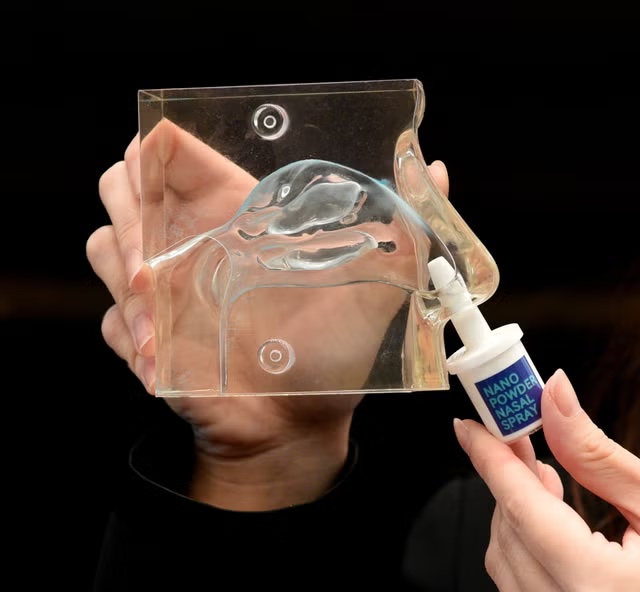
A research team from the Department of Pharmacology and Pharmacy at the LKS Faculty of Medicine, the University of Hong Kong, in collaboration with the InnoHK Advanced Biomedical Instrumentation Centre, has developed the world’s first “NanoPowder nasal spray.” This innovation successfully overcomes the challenge of crossing the blood-brain barrier, enabling the delivery of medication to the brain without the need for injections or surgery. When used promptly at the early onset of stroke, the nasal spray provides prehospital emergency treatment, helping to save time, thus protecting brain cells and reducing complications.
The research team spent over a decade developing the “Nano-in-Micron” technology platform and subsequently used it to create the NanoPowder nasal spray. The spray operates through four key steps: inhalation, deposition, de-agglomeration, and delivery. The micron-sized powder is inhaled into the nasal cavity, where it effectively deposits in the target area. Upon contact with nasal mucus, the powders rapidly break apart into nanoparticles, which then travel along the nose-to-brain pathway, bypassing the blood-brain barrier to deliver the drug directly to the brain.
This nose-to-brain route is not unique to the NanoPowder spray. It’s a concept that has attracted growing interest across neuroscience. Intranasal delivery has emerged as a compelling alternative route that bypasses the blood-brain barrier and enables rapid access to the central nervous system through olfactory, trigeminal, and perivascular pathways. What the Hong Kong team appears to have solved is the practical delivery challenge: getting the drug to deposit reliably in the right part of the nasal cavity, break apart at the right speed, and reach the brain in a clinically meaningful timeframe.
What the Animal Studies Showed
Preclinical studies show that the NanoPowder nasal spray is designed to reduce brain damage by more than 80 percent and improve stroke survival rates, according to a 2026 press release from HKUMed. To be clear, these are animal studies, not human trials. Preclinical results often don’t translate directly to humans, and the researchers themselves have been careful not to overstate what this means for patients yet. But an 80 percent reduction in ischemic brain damage is a finding that demands attention regardless.
Professor Aviva Chow Shing-fung, Associate Professor in the Department of Pharmacology and Pharmacy at HKUMed and Co-Principal Investigator at the ABIC, noted that the nasal spray “allows patients to receive early protection en route to hospital or even within the community, significantly slowing the death of brain cells under ischemic conditions and effectively preserving still-viable brain tissues, thereby buying valuable time for subsequent treatments.”
That phrase, “buying time,” is the key to understanding what this treatment is designed to do. The approach is not intended to replace existing hospital treatments but to serve as an urgent, prehospital support measure. The key breakthrough lies in shifting stroke treatment from the hospital setting to the prehospital stage, enabling neuroprotection rather than merely clot dissolution or surgery.
Neuroprotection, in this context, means shielding surviving brain cells from the wave of damage that follows a clot. When blood flow to part of the brain is blocked, the immediate zone of cell death is surrounded by a larger area of stressed but potentially salvageable tissue. That surrounding zone can remain viable for a period of time, but inflammation, oxidative stress (cellular damage from unstable molecules), and the cascade of chemical signals triggered by the initial injury all work to expand the damage. Protecting those borderline cells before hospital treatment begins is exactly what this spray aims to do.
Who Would Use It and How
The spray was designed to quickly deliver medicine directly into the brain during the earliest moments of a stroke. Clinical trials of the NanoPowder nasal spray are scheduled to take place in 2030, with plans to first make the drug available for paramedic use, followed by distribution to high-risk groups in care facilities before commercial sale through pharmacies.
That rollout plan matters. Paramedic use first, then care facilities, then the general public. This suggests the team is thinking carefully about who administers the drug and under what conditions. Stroke is not always easy to identify, and not every episode of facial drooping or arm weakness turns out to be an ischemic stroke. Hemorrhagic strokes (those caused by a bleed in the brain rather than a clot) require different treatment, and giving a neuroprotective agent intended for ischemic strokes to someone experiencing a bleed could carry risk. The researchers are clearly aware that a prehospital tool needs to be designed with those realities in mind.
The spray is portable, easy to use, and works rapidly. For anyone who has sat with a family member in the back of an ambulance watching the minutes tick by, that combination, portable, needle-free, and fast-acting, describes something that simply hasn’t existed before in stroke care. Recognizing the early warning signs of a stroke remains critical, since any prehospital treatment is only useful if someone recognizes what’s happening in the first place.
The Blood-Brain Barrier Problem This Spray Solves
The blood-brain barrier has defeated many promising stroke drugs before they ever reached patients. That barrier presents a significant obstacle to the effective treatment of central nervous system disorders, limiting the ability of therapeutic agents to reach the brain. Intranasal drug delivery, which bypasses the blood-brain barrier, has attracted considerable attention in recent years.
What the NanoPowder spray does is use the body’s own anatomy as the delivery route. The olfactory nerves (the nerves responsible for smell) run from the nasal cavity directly through a thin bone into the brain. This anatomical shortcut exists naturally and doesn’t require any medical procedure to access. Intranasal drug delivery is gaining momentum as an approach for central nervous system therapies due to its ability to bypass the blood-brain barrier via olfactory and trigeminal pathways. It also enables drug absorption while avoiding the metabolic drawbacks of oral administration, such as breakdown in the liver before the drug even reaches the brain.
The innovation here is not just the pathway but the formulation. Getting a drug to travel efficiently along this route, in the right particle size, at the right speed, and in meaningful quantities, is technically demanding. Scientists spent more than a decade developing the Nano-in-Micron technology platform. That investment of time reflects how genuinely difficult the engineering problem was to solve.
Read More: Stroke Myths That Put Lives at Risk, Know the Warning Signs to Stay Safe
Recognition From the Scientific Community
The innovation was awarded the “Special Grand Prize – Prize of the Chinese Delegation” and “Gold Medal with Congratulations of the Jury” at the 51st International Exhibition of Inventions Geneva. Every year since 1972, the International Exhibition of Inventions Geneva has brought together over 1,000 exhibitors from 35 countries and regions to present their inventions, research, and new, market-ready products, and the Special Grand Prize is its highest honor. Winning at this stage, before human trials, signals that independent experts in the field have judged the underlying science and design to be credible and significant.
The team is currently engaged in the next phase of work that must happen before human trials can begin. When used promptly at the early onset of stroke, the nasal spray provides prehospital emergency treatment, helping to save time, protecting brain cells, and reducing complications. The research team is actively collecting feedback from emergency physicians and neurologists to ensure the invention aligns with real-world treatment protocols.
That last point, gathering clinical feedback now, is a sign of methodological maturity. Many promising laboratory discoveries stall or fail during clinical translation because they were developed in isolation from the people who would actually use them. Building that input in early is a meaningful signal about how seriously the team is taking the path from preclinical success to real-world deployment.
Read More: Mini Stroke Before a Full Stroke
What Does It All Mean?
The NanoPowder nasal spray stroke treatment is not available yet. The drug is expected to begin clinical trials in 2030, and the full path to pharmacy shelves involves safety studies, regulatory approval, and large-scale human trials that could take years beyond that. Anyone who tells you otherwise is getting ahead of the evidence.
What this research does change right now is the way we should think about prehospital stroke response. For decades, the answer to “what do you do while waiting for the ambulance?” has been frustratingly thin: keep the person calm, don’t give them food or water, note the time symptoms started, and wait. The idea that a protective drug could exist in a spray format, usable by a paramedic or even a trained bystander, opens a genuinely new category of emergency response that didn’t exist before.
If you’re over 40, know your stroke risk factors. High blood pressure, atrial fibrillation, diabetes, smoking, and a history of cardiovascular disease all raise your chances of a stroke. Make sure the people in your household know the FAST signs: Face drooping, Arm weakness, Speech difficulty, and Time to call 911. Stroke patients who arrive by ambulance tend to be diagnosed and treated more quickly, because emergency assessment starts on the way. That principle won’t change even if a prehospital spray becomes available someday. What could change is how much brain survives the trip.
Disclaimer: This information is not intended to be a substitute for professional medical advice, diagnosis, or treatment and is for information only. Always seek the advice of your physician or another qualified health provider with any questions about your medical condition and/or current medication. Do not disregard professional medical advice or delay seeking advice or treatment because of something you have read here.
AI Disclaimer: This article was created with the assistance of AI tools and reviewed by a human editor.
Read More: Warning Signs of Stroke You Might Be Missing – Know Every One