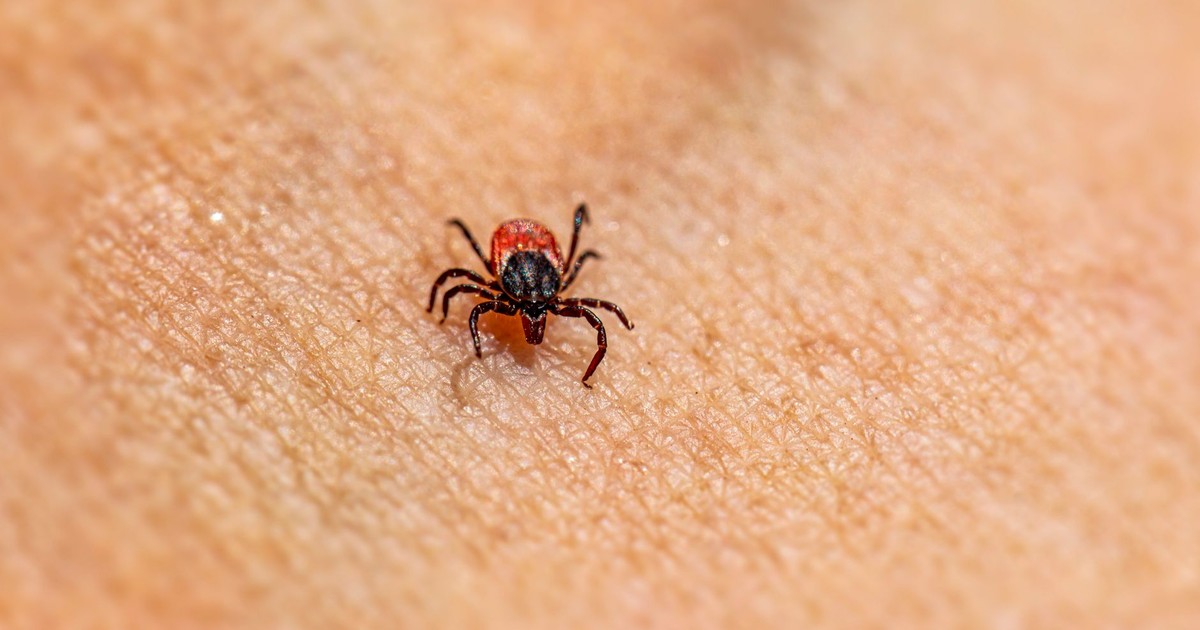

Tick season in 2026 has started earlier and more aggressively than at any point in the past nine years. Emergency rooms in the Northeast are reporting tick bite visit rates not seen since 2017, and a university research lab in Pennsylvania has processed more than twice as many tick submissions this May compared to the same period in 2025. The spike isn’t a fluke of geography, either. Tick infections by state now reach every corner of the country, from the densely wooded hills of New England to the sun-baked suburbs of California.
Every year, an estimated 31 million people in the United States are bitten by a tick, and Lyme disease alone accounts for an estimated 476,000 patients treated annually. Those numbers dwarf many better-publicized health threats, yet most people still think of tick bites as a rural, seasonal inconvenience rather than a genuine public health risk. 2026 is making that misconception harder to hold onto.
Ticks inhabit nearly all of the United States, with varying concentrations depending on species and location. Blacklegged ticks and western blacklegged ticks, the two species capable of carrying Lyme disease bacteria, are concentrated on the eastern half of the country and the Pacific Coast. But concentration doesn’t mean exclusivity. The following data from the CDC’s Tick Bite Data Tracker, is a breakdown of the states and regions where tick infections are hitting hardest right now.
1. Pennsylvania
The Pennsylvania Tick Research Lab at East Stroudsburg University has recorded more than twice as many ticks this May compared to the same time last year. That’s not a slight uptick in numbers – it’s a dramatic acceleration in activity in the space of twelve months. Pennsylvania sits at the center of one of the most tick-dense regions in the country, and 2026 is reinforcing that position.
Northeastern states carry the largest share of Lyme disease cases, and New York, Pennsylvania, and New Jersey alone accounted for 47.4% of all cases nationwide from 2019 to 2022. Pennsylvania’s burden stands out even within that group. The state ranks near the top nationally for tick populations, driven by its warm climate corridors, high humidity, and woodland coverage.
The blacklegged tick – often called the deer tick – is Pennsylvania’s primary threat. The five most common and dangerous tick-borne illnesses in Pennsylvania are Lyme disease, Powassan virus, two forms of anaplasmosis, babesiosis, and hard tick relapsing fever. If you live in or travel through Pennsylvania this season, treat outdoor clothing with permethrin before any time in wooded or grassy areas.
2. New York
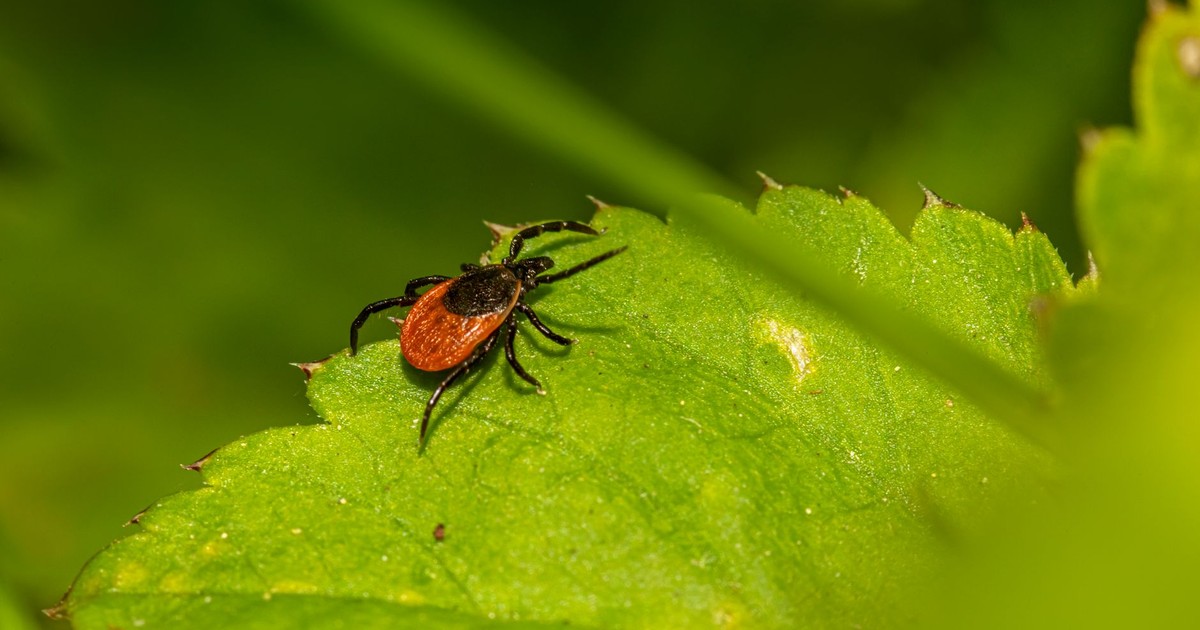
Diseases most commonly transmitted by ticks in New York State include Lyme disease, anaplasmosis, babesiosis, ehrlichiosis, Rocky Mountain spotted fever, and Powassan encephalitis. That’s a longer list than most states manage, and it reflects both the diversity of tick species present and the scale of human-tick contact across the state’s many parks, trails, and suburbs.
New York City itself is consistently ranked among the most tick-affected cities in the country. New York City, Los Angeles, Philadelphia, San Francisco, and Washington, D.C. rank as the top five tick-infested cities in the country. The risk isn’t confined to the Adirondacks or the Hudson Valley. Suburban and even urban green spaces carry meaningful exposure risk, and tick activity in New York ramps up in both spring and fall as different life stages of the blacklegged tick become active.
Most ticks seen in the Northeast so far in 2026 have been large adult ticks, but in the coming weeks, juvenile nymphs will become more common. The emergence of nymphs, combined with more people spending time outdoors, are among the reasons tick bites tend to peak in May. Tiny nymphs are harder to see and often stay attached longer, increasing the risk of infection. If you’re in New York, that window matters: check your skin, scalp, and clothing every time you come in from outside.
3. New Jersey
New Jersey’s position between two of the country’s highest-burden states is not incidental. New York, Pennsylvania, and New Jersey alone accounted for 47.4% of all Lyme disease cases nationwide from 2019 to 2022, making the Northeast the most consistently affected area in the country, year after year.
As of 2024, the Asian longhorned tick has been confirmed in New Jersey, alongside Arkansas, Connecticut, Delaware, Georgia, Illinois, Indiana, Kentucky, Maryland, Massachusetts, Missouri, New York, North Carolina, Ohio, and Pennsylvania, among other states. This invasive species, first detected in the U.S. in 2017, is being closely monitored by public health authorities. It reproduces asexually, meaning a single female can establish a new population without a mate, and it feeds aggressively on both animals and humans.
New Jersey residents should also be aware of the state’s dual-season tick risk. Adult blacklegged ticks are active in early spring and again in late fall, while nymphs dominate the summer months. That creates an extended window of exposure across roughly eight months of the year. Performing a full-body tick check after any outdoor activity is the single most effective habit to build.
4. Maine
Maine set a new record in the number of tick-borne disease cases reported in 2025. About 3,653 cases of Lyme disease were recorded, nearly 400 more than in 2024, which itself broke the record set the year before. Cases of babesiosis and anaplasmosis also increased and set new highs.
The greatest risk of being bitten in Maine exists in spring, summer, and fall. Adult ticks may also be active any time winter temperatures rise above freezing. Maine’s cold winters no longer offer the protective buffer they once did. Climate change is increasing tick populations; as winters become milder and warm seasons lengthen, tick survival increases significantly. That ecological shift is showing up directly in Maine’s case counts, which have now broken annual records multiple years running.
On a per-capita basis, Maine’s disease burden is severe. Data from Statista shows Maine recorded 213 Lyme disease cases per 100,000 people in 2023, the highest incidence rate of any state in the country. If you’re hiking, camping, or living near woodland in Maine, consider permethrin-treated gear as a baseline, not an option.
5. Rhode Island
Rhode Island has long held the unfortunate distinction of carrying one of the highest per-capita Lyme disease rates in the United States. Lyme disease has been identified across most of the country and remains one of the most concerning tick-borne illnesses. It’s transmitted by deer ticks, which live in many environments and can come into contact with people in both residential and natural settings. Rhode Island’s small size and high woodland density relative to its population put residents in frequent contact with those ticks.
Beyond Lyme, Rhode Island carries a significant babesiosis burden. In 2024, there were 161 cases of babesiosis in Rhode Island, with an incidence rate of 14.7 cases per 100,000 people. The disease is most commonly reported in older male adults, and Washington County had the highest rate at 38.5 per 100,000. Babesiosis in Rhode Island peaks sharply in summer, with 80% of cases occurring between June and August.
Babesiosis – a malaria-like infection caused by a microscopic parasite that attacks red blood cells – can be severe or even fatal in older adults and people without a spleen. It often co-infects with Lyme disease, meaning a single tick bite can deliver more than one pathogen simultaneously. Anaplasmosis is most common in the upper Midwest and Northeast states, corresponding with the distribution of Lyme disease. Co-infections are possible because the blacklegged tick that carries the bacteria can also transmit Lyme disease and babesiosis. Rhode Island residents over 60, in particular, should discuss tick-borne illness awareness with their doctors before peak season.
6. Connecticut: The State That Named Lyme Disease Still Leads Tick Infections by State
Connecticut, the state that gave Lyme disease its name, is already seeing significant tick activity in 2026. According to a press release from the Connecticut Agricultural Experiment Station (CAES), which runs the state’s tick testing program, an average of 30 tick submissions per day are being received for testing, and greater than 40% have tested positive for Lyme disease spirochetes.
The average infection rate since 1996 has been 32% for adult blacklegged ticks and 22% for nymphs, but in recent years those rates have increased substantially. For comparison, in many lower-risk regions, pathogen-positive tick rates typically hover in the single digits. A positive rate above 40% means that if you’re bitten in Connecticut this season, the odds of exposure to a Lyme-causing pathogen are genuinely significant, not remote.
Connecticut also sits squarely in the range of the Asian longhorned tick, which has been confirmed in the state. For residents, the practical implication is straightforward: apply an EPA-registered repellent containing DEET or picaridin before outdoor activity, and check for ticks immediately after returning home. Don’t wait until you notice symptoms. Lyme symptoms – including the characteristic bullseye rash, fever, fatigue, and joint pain – can take three to thirty days to appear after a bite.
7. Virginia and the Mid-Atlantic Region
Virginia occupies a geographic middle ground between the high-Lyme Northeast and the Rocky Mountain spotted fever zone of the Southeast, and it carries meaningful exposure to both. The Southeast and South-Central U.S. see more cases of ehrlichiosis or spotted fever rickettsiosis, and Virginia’s southern counties fall into that distribution.
Rocky Mountain spotted fever is caused by bacteria transmitted by the American dog tick in most of the eastern U.S. and the brown dog tick in the Southwest. It can be rapidly fatal if not treated promptly with the antibiotic doxycycline. Despite its name, Rocky Mountain spotted fever is most commonly reported in the Southeast and South-Central states. Virginia, Maryland, and Washington, D.C. sit at the northern edge of that concentration. A rash developing after a tick bite in these states should be taken seriously and assessed quickly.
Arkansas reported 19.7% of spotted fever rickettsiosis cases between 2019 and 2022, the highest percentage of any state, followed by North Carolina at 15.8%, Alabama at 10.1%, and Missouri at 8.4%. Virginia’s border location and diverse tick species give it exposure to multiple disease types simultaneously. Checking for ticks after outdoor activity applies here with equal urgency.
8. California
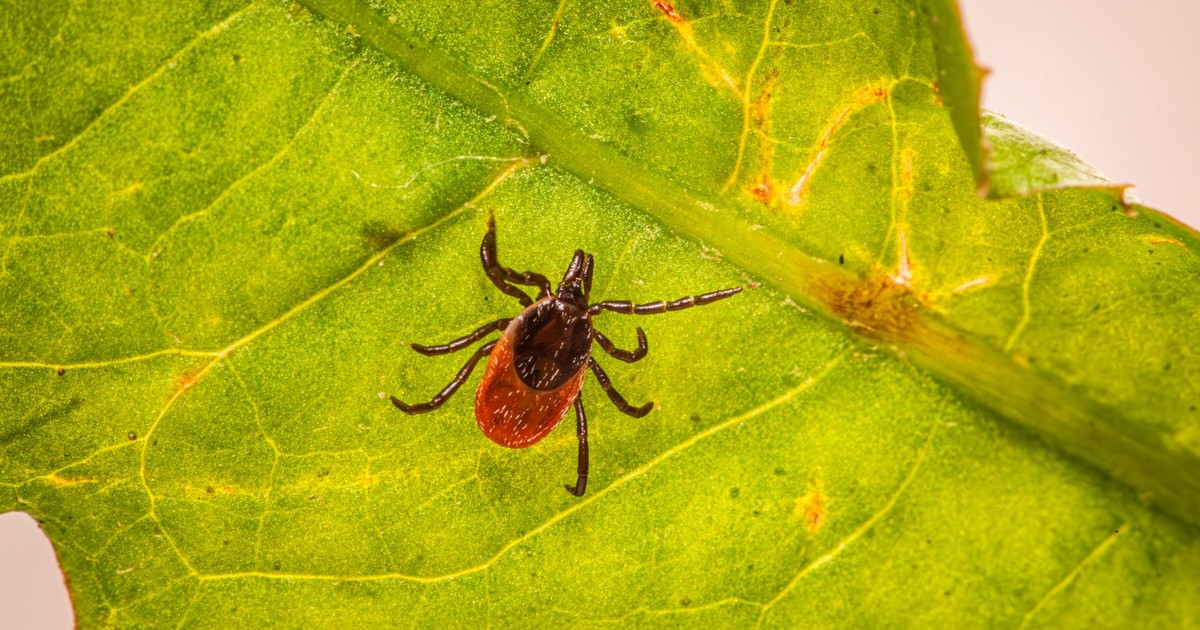
California’s tick risk is geographically distinct from the Northeast, but no less real. The western blacklegged tick, also called the western deer tick, is the Pacific Coast counterpart to the eastern blacklegged tick and carries the same Lyme disease bacteria. Populations of blacklegged ticks and western blacklegged ticks are concentrated on the eastern half of the United States and the Pacific Coast.
California’s coastal woodlands, redwood forests, and chaparral shrublands are prime habitat for the western blacklegged tick, and the state’s year-round mild climate means tick season doesn’t have a clean endpoint. California, Florida, Texas, Pennsylvania, and New York topped the list of states with significant tick problems in 2025, with New York City, Los Angeles, Philadelphia, San Francisco, and Washington, D.C. ranking as the top five tick-infested cities in the country.
Los Angeles residents hiking in the Santa Monica Mountains, the San Gabriel foothills, or Griffith Park are in genuine contact zones. Outdoor enthusiasts in the Bay Area face similar risk in Marin County woodlands and East Bay hills. Light-colored clothing makes ticks easier to spot, tucking pants into socks eliminates a common entry route, and a thorough body check after hiking is non-negotiable. Don’t assume you’re outside the risk zone.
9. Florida
Florida’s consistently warm temperatures and high humidity create ideal conditions for ticks to survive, reproduce, and remain active throughout the year. Unlike the Northeast, where tick activity has seasonal peaks and troughs, Florida’s tick season is essentially continuous. That means exposure risk doesn’t drop off in winter the way it does in cooler states.
Florida is home to multiple tick species, including the lone star tick, American dog tick, and deer tick, each capable of carrying different diseases. Dense forests, grassy areas, and abundant wildlife such as deer, raccoons, and rodents provide ideal hosts and habitats, increasing the likelihood of human exposure. The lone star tick, which is spreading steadily northward and is now well-established across the Southeast, is also linked to alpha-gal syndrome (AGS), a potentially severe allergy to red meat and dairy that develops after a bite.
Florida residents should be aware that tick bites often go unnoticed. The nymph stage of the deer tick is roughly the size of a poppy seed, and the lone star tick’s larval stage is smaller still. Both can feed for days without detection. A thorough tick check, including the scalp, behind the knees, in the armpits, and around the waistband, should follow every outdoor excursion. Anyone in Florida who develops unexplained fatigue, fever, or a rash after time outdoors should mention possible tick exposure to their doctor.
10. The Midwest: Michigan, Wisconsin, and Minnesota
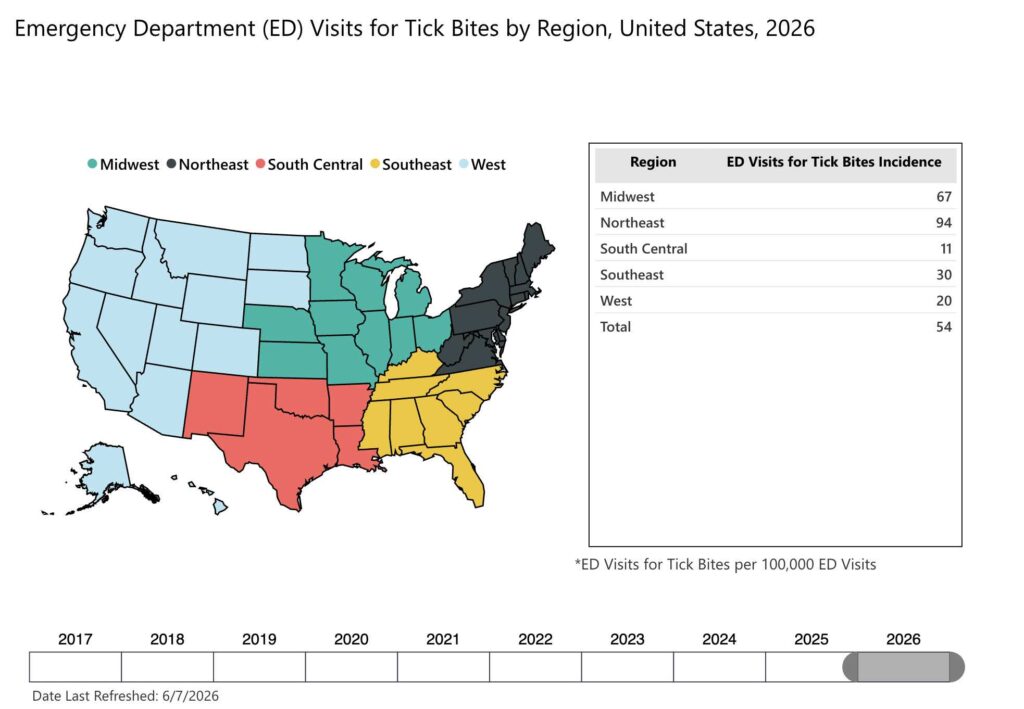
The CDC’s surveillance data, analyzed by region, shows the Northeast with the highest rate of emergency department visits for tick bites in 2026, at 58 per 100,000 ED visits. The Midwest follows at 40 per 100,000 – the Southeast reported 21, while the West and South Central regions saw lower rates of 16 and 7, respectively.
Michigan has seen Lyme disease cases increase by nearly 169% over the last five years, recording 1,215 cases in 2024 compared to 452 in 2020. The state has also seen anaplasmosis cases rise nearly fivefold over the same period, with 82 cases in 2024 compared to 17 in 2020. Anaplasmosis is a bacterial infection spread by the same deer tick responsible for Lyme disease, and it can cause fever, severe headaches, and muscle pain serious enough to require hospitalization.
Wisconsin and Minnesota carry some of the highest Lyme disease burdens outside the Northeast. Both states have large populations of blacklegged ticks in wooded and lakeside areas, and both have seen babesiosis cases climb over the past decade. The Midwest currently ranks second among U.S. regions for the highest rate of tick-related emergency visits, signaling that the problem extends well beyond the traditionally high-risk Northeast corridor. Residents in all three states should follow the same precautions as those in the Northeast: permethrin-treated clothing, regular tick checks, and prompt removal of any attached tick.
Read More: CDC Issues 2026 Tick Bite Warning: What Every American Needs to Know
What to Do No Matter Where You Live
Powassan virus spreads through the bites of infected ticks and has been reported in the Northeast and Great Lakes regions of the U.S. Unlike Lyme disease, Powassan can be transmitted in as little as 15 minutes of tick attachment, and there’s no specific treatment. That makes prevention the only reliable strategy, and it applies regardless of which state you’re in.
Options for preventing tick bites outdoors include wearing EPA-registered insect repellent and permethrin-treated clothing, performing tick checks, and removing attached ticks as quickly as possible – steps that can go a long way in protecting you and your family from diseases spread by ticks. If you develop a rash or fever in the days to weeks after a bite, or after being in an area with ticks, seek medical care promptly. Symptoms of Lyme disease can mimic flu, and Rocky Mountain spotted fever can become life-threatening within days of onset. Early treatment with antibiotics is effective when started promptly.
The Bottom Line
With an estimated 31 million people bitten by ticks every year in the United States, the scale of this threat is not a niche concern. Reports of tick bites rise every spring and summer, and with them, reports of Lyme disease. Northeastern states carry the heaviest burden – New York, Pennsylvania, and New Jersey alone accounted for 47.4% of all cases nationwide from 2019 to 2022 – but as Michigan, Wisconsin, Florida, and California’s data show, the problem has spread well beyond the traditional epicenter.
To check the current tick-bite ER visit rate in your region, the CDC’s Tick Bite Tracker provides regularly updated surveillance data by region. For a full breakdown of the symptoms of Lyme disease before they escalate – including the bullseye rash, early flu-like symptoms, and later neurological signs – that knowledge is as practical as any repellent. The single most effective thing most people can do right now costs nothing: check for ticks every time you come inside, every day, from now through fall.
Disclaimer: This information is not intended to be a substitute for professional medical advice, diagnosis, or treatment and is for information only. Always seek the advice of your physician or another qualified health provider with any questions about your medical condition and/or current medication. Do not disregard professional medical advice or delay seeking advice or treatment because of something you have read here.
AI Disclaimer: This article was created with the assistance of AI tools and reviewed by a human editor.
Read More: 10+ Areas On Your Body Ticks Love To Bite