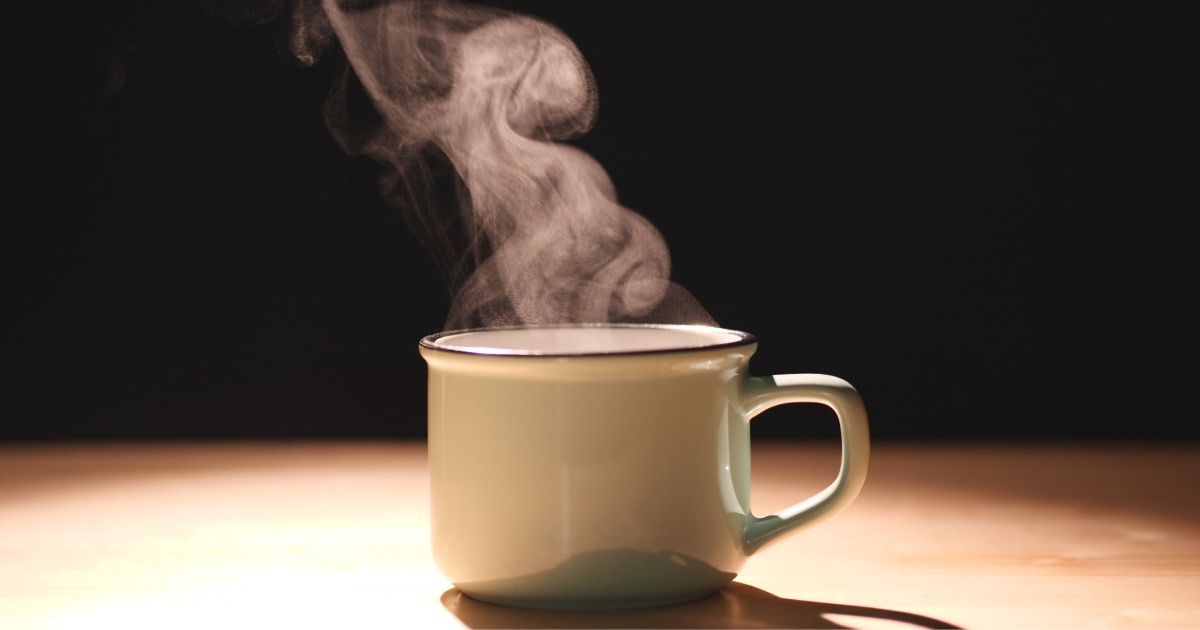

Before Dr. Andy Gaya takes the first sip of a freshly made cup of tea or coffee, he does something remarkably simple: he waits.
Usually about three minutes.
Gaya is a consultant clinical oncologist who specializes in gastrointestinal cancers, and the habit isn’t about enjoying tea at the perfect temperature. It’s a precaution shaped by evidence linking very hot beverages to a higher risk of esophageal cancer.
That doesn’t mean hot tea or coffee causes cancer, nor is three minutes a scientifically established “safe” waiting period. The concern is repeated exposure to very high temperatures, particularly beverages consumed above about 65°C (149°F). In 2016, the International Agency for Research on Cancer classified drinking very hot beverages as “probably carcinogenic to humans.”
Now, a huge UK study involving nearly one million adults has added new evidence to the picture. People who said they preferred their drinks “very hot” had substantially higher rates of one particular type of esophageal cancer than those who preferred them warm.
So where does Gaya’s three-minute rule come from, and does waiting a few minutes really make a difference? The answer is more interesting, and more nuanced, than the headline suggests.
What IARC actually says about hot drinks cancer risk
The formal scientific concern about hot drinks cancer risk began with maté, a South American herbal drink typically consumed at temperatures above 70°C (158°F), and with very hot tea drunk in parts of Central Asia and East Africa – regions where esophageal cancer rates are among the highest in the world.
In 2016, the International Agency for Research on Cancer (IARC), the WHO’s cancer research agency, formally classified drinking very hot beverages as probably carcinogenic to humans, placing them in Group 2A. The threshold IARC uses for “very hot” is any beverage consumed at above 65°C (149°F). The classification means a link between very hot beverages and esophageal cancer is considered likely, but IARC is also clear that the available evidence cannot determine what proportion of esophageal cancer cases worldwide is attributable to this habit, or precisely how much repeated exposure would tip the risk for any given individual.
The classification rests on limited evidence from epidemiological studies showing positive associations between esophageal cancer and drinking very hot beverages – not conclusive proof. It places very hot drinks in a category alongside other agents that are probably, but not definitively, carcinogenic to humans. The biological explanation is plausible: repeated thermal injury to the delicate cells lining the esophagus may damage them in ways that, over years, increase the odds of cancerous changes. The mechanism has not been proven in humans with the same certainty established for tobacco.
Cancer Research UK stresses that the elevated risk is associated with temperature, not with tea or coffee themselves. Drinking either beverage at a moderate temperature does not appear to elevate this risk.
The new UK evidence that changes the picture
For years, most of the data came from regions where drinks are traditionally consumed at near-boiling temperatures, leaving an open question about whether the findings applied to Western populations. A research team from Oxford Population Health’s Cancer Epidemiology Unit addressed that gap directly, publishing the largest study of its kind in the International Journal of Cancer on 9 September 2026. The team analyzed data from 977,282 adults enrolled in the UK Biobank and the Million Women Study, following their health records for more than a decade.
The study compared participants according to whether they described their preferred drinks as warm, hot, or very hot. Those who preferred very hot beverages had approximately 3.17 times the risk of developing esophageal SCC compared with participants who drank them warm, while people who preferred drinks that were simply “hot” had nearly twice the risk.
Frequency also mattered. After controlling for drink temperature, consuming six or more hot drinks daily compared with fewer than six was associated with a 71% increase in esophageal SCC risk.
Keren Papier, a senior nutritional epidemiologist at Oxford Population Health who led the study, told CNN that it is “the largest study to date” and that it “does really add to the evidence that drinking very hot and hot beverages could increase the risk of this type of cancer.” The Oxford study found a strong association between very hot beverages and esophageal squamous cell carcinoma, but found no material association with esophageal adenocarcinoma, the other main form of the disease – making the finding specific to SCC, not a general claim about all esophageal cancer.
The research was observational and relied on self-reported habits. It can show a strong association but cannot prove that hot drinks caused the cancers. Drink temperature was self-reported rather than directly measured, meaning the categories “warm,” “hot,” and “very hot” cannot be translated into precise temperatures – a real limitation when the central variable is temperature itself.
For readers interested in other evidence-backed habits that cancer specialists pay attention to in their own lives, this overview of foods oncologists avoid covers additional diet-related research.
The three-minute rule: practical habit, not scientific threshold
Dr. Gaya says he avoids drinking beverages while they are extremely hot because of their association with esophageal cancer. His personal rule is to leave a hot drink for around three minutes before taking the first sip – a habit he describes as something that “costs nothing.”
Three minutes is not a scientifically validated threshold. It is not drawn from a study that measured how quickly a beverage cools to a safe temperature. How fast a drink drops from, say, 78°C to below 65°C depends on the starting temperature, the size and material of the cup, the volume of liquid, and the surrounding environment. A large ceramic mug on a cold kitchen counter cools differently from a paper takeaway cup. A cappuccino cools faster than a pot of green tea poured into a glass. The three-minute figure is a practical habit offered by an experienced clinician, not a guaranteed safe zone.
The evidence supports not drinking beverages that are scalding hot. Temperature, rather than the type of beverage, appears responsible for the elevated esophageal cancer risk. If a drink is hot enough to be uncomfortable to hold in the mouth, it is probably hot enough to be worth letting cool.
Putting the risk in perspective
According to Cancer Research UK’s oesophageal cancer risk data, smoking and heavy alcohol use are the dominant established causes of esophageal cancer, with the two together raising risk substantially more than either does alone. Around 35% of oesophageal cancer cases in the UK are caused by smoking. Compared with those established risk factors, the contribution of very hot drink temperature – while real enough to warrant IARC’s Group 2A classification – is not yet quantified with the same precision.
The risk of being diagnosed with esophageal SCC in the UK is relatively low overall. According to Cancer Research UK’s incidence statistics, oesophageal cancer accounts for around 2% of all new cancer cases in the UK. A threefold elevation in the relative risk of a rare cancer still leaves the absolute risk modest for most people. An observational association in a study does not mean that an occasional hot cup of tea will cause cancer.
Why the esophagus is particularly vulnerable
The esophagus’s lining consists of squamous cells – flat and tightly layered – that form a barrier against the friction of swallowing. Unlike the stomach, the esophagus has no thick mucus lining designed to manage extreme temperatures or chemical assault. When very hot liquid passes through repeatedly over years, the resulting inflammation and cellular damage may, over time, create conditions that make cancerous changes more likely. This is the mechanism that makes the IARC finding biologically plausible rather than arbitrary.
Squamous cell carcinoma, the type linked to drink temperature, is driven mainly by smoking, heavy drinking, and socioeconomic deprivation. The Oxford study adds hot beverage temperature to that picture in a Western population for the first time at this scale. A heavy smoker who also drinks alcohol and favors scalding beverages carries a different risk profile from a non-smoker who occasionally drinks tea too hot.
Read more: Does drinking hot water help you lose weight and improve your skin? What the research says
What this means for you
A Small Change, Not a Cancer-Proofing Rule
The takeaway isn’t that tea and coffee are dangerous. It’s that regularly drinking them while they’re scalding hot may be an avoidable risk.
Dr. Gaya’s three-minute rule offers an easy way to build a cooling period into something many people do several times a day. But three minutes shouldn’t be treated as a magic number. Depending on the drink, cup, starting temperature, and surroundings, it may take longer to cool below the temperatures researchers are concerned about.
You don’t need a thermometer beside the kettle, either. Letting a freshly poured drink sit for a few minutes, adding a little cold water or milk, and avoiding temperatures that feel uncomfortably hot in the mouth are simple ways to reduce exposure.
And perspective matters. Smoking and heavy alcohol consumption remain much better-established risk factors for esophageal cancer. Letting your coffee cool doesn’t cancel those risks, and an occasional overly hot sip doesn’t mean someone will develop cancer.
But that’s also what makes this particular precaution appealing. It costs nothing, requires no major lifestyle change, and doesn’t require giving up tea or coffee.
Sometimes the easiest health habit is simply waiting a few minutes.
Disclaimer: This information is not intended to be a substitute for professional medical advice, diagnosis, or treatment and is for information only. Always seek the advice of your physician or another qualified health provider with any questions about your medical condition and/or current medication. Do not disregard professional medical advice or delay seeking advice or treatment because of something you have read here.
AI Disclaimer: This article was created with the assistance of AI tools and reviewed by a human editor.