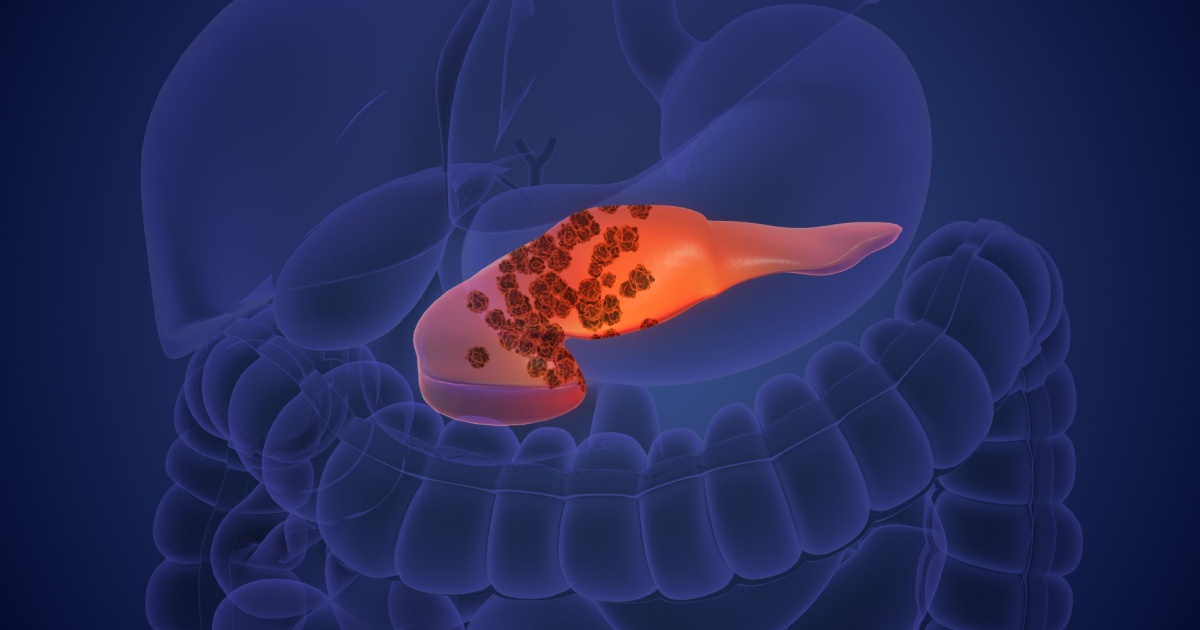
A Phase 1/2 trial tested a new drug combination in 61 people with pancreatic cancer that had already spread. None of the 61 had received any treatment yet. The combination included a daily pill, daraxonrasib (Rasonque), plus standard chemo. Tumors shrank or went away in 60.7% of patients, roughly 3 in 5. At this stage of the disease, the five-year survival rate is just 3.4%, according to U.S. SEER data. That number carries real weight.
The results were presented on November 20, 2026, in Barcelona. The meeting was a major international cancer research symposium, the EORTC-NCI-AACR meeting. Dr. Wungki Park presented the data. He is a cancer doctor at Memorial Sloan Kettering Cancer Center in New York.
Doctors are careful not to call this a cure. The BBC reported that doctors in the trial say it is unclear how long the treatment can keep the disease at bay. They also said patients should not view it as a cure. The trial had a median follow-up of 18.3 months. That means researchers tracked patients for about 18 months on average. The results show a pattern of deep tumor responses. This is a cancer that has long resisted almost every treatment tried.
What the Phase 1/2 Trial Found
The trial gave patients 200 mg of daraxonrasib once a day. It was combined with two chemo drugs, gemcitabine and nab-paclitaxel. The chemo doses were 1,000 mg/m² and 125 mg/m². Both were given on days 1 and 15 of a 28-day cycle. All 61 people in the study had Stage 4 pancreatic cancer, meaning the cancer had spread to other organs. None had received any prior treatment.
The confirmed response rate was 60.7%. That means tumors shrank a lot or went away in more than 6 out of 10 patients. In 8.2% of patients, which is 5 of the 61 people in the trial, scans showed no detectable cancer. Doctors call this a complete response. That is about 1 in 12. Dr. Park said that in about 1 in 12 patients, the cancer “completely disappeared.” Asked whether those patients were regarded as cured, he said: “This is the closest to cure.” He also said, “We’ve never seen such a thing.” A complete response means no cancer could be seen on CT scans. It does not confirm a cure. It is too early to know whether the cancer will return in those five patients. Overall, the drug combination stopped tumor growth in 90.2% of people in the trial. That figure includes both patients whose tumors shrank and those whose tumors stayed stable.
The median time before the cancer started growing again was 12.8 months. Doctors call this progression-free survival. That’s more than a year of disease control. In this cancer, time for most people with advanced disease is often measured in months.
A year after starting treatment, 76.6% of patients were still alive. For comparison, about 40 to 45% of patients given chemo alone typically survive to the one-year mark. That’s a large gap. But the trial did not directly compare the drug combination against a chemo-only group. A head-to-head Phase 3 trial called RASolute-303 is still needed to confirm that difference.
Read More: The Biggest Breakthrough in Pancreatic Cancer in Decades is Here
Dr. Park noted the findings were important in part because the study had a median follow-up of 18.3 months. That’s longer than many early trials of this kind. Longer follow-up gives a clearer picture of how long the responses last. It shows more than just whether tumors shrank in the short term.
Why Pancreatic Cancer Has Been So Hard to Treat
As of January 2026, the five-year survival rate for pancreatic cancer overall is 13%. Once the cancer has spread, the outlook is far worse. Pancreatic cancer has the lowest survival rate of all common cancers in the UK. The picture is similar in the United States and much of the world.
Part of the reason chemo alone has limited results is the biology of the disease itself. Daraxonrasib works by targeting a family of proteins called RAS, including KRAS, NRAS, and HRAS. These proteins are mutated, meaning changed in a harmful way, in most pancreatic cancers. Those changes cause the proteins to act like a “stuck accelerator” in cancer cells, telling them to keep growing when they should stop.
For decades, RAS proteins were seen as almost impossible to drug. Their shape made it very hard to design a molecule that could attach to them in a reliable way. Daraxonrasib changed that. Dr. Sam Godfrey of Cancer Research UK, speaking to the BBC, described it as finding “a way of drugging the undruggable.” Cancer Research UK chief executive Michelle Mitchell called the results “the biggest leap forward we’ve seen in decades” for pancreatic cancer patients.
The interest is real. Still, these results come from an early, open-label study. No comparison group received chemo alone. A comparison with past chemo rates is useful. It is not a direct head-to-head finding.
The Drug’s Path to This Point
The FDA approved daraxonrasib (Rasonque) as a monotherapy in August 2026. Monotherapy means the drug used on its own, without other cancer treatments. That approval was for Stage 4 pancreatic cancer that had already been treated. It covers patients who had already gone through at least one earlier round of treatment. It was based on results from a separate, larger randomized trial.
That Phase 3 trial was called RASolute 302. It enrolled 500 adults, making it much larger than the Phase 1/2 combination study. In that trial, daraxonrasib used alone nearly doubled median survival, from 6.7 months on chemo to 13.2 months. The drug also cut the risk of death by 60% compared with chemotherapy.
In September 2026, the FDA granted the combo a special fast-track status, called Breakthrough Therapy Designation. This status was for Stage 4 pancreatic cancer that had not yet been treated. That is the same combination tested in the Barcelona trial. The status is meant to speed up work on drugs that show early signs of a big improvement over current treatments.
The combination trial’s results were reported by The Guardian on November 20. They build on the earlier daraxonrasib findings by testing the drug in patients who had not yet received any treatment at all. This is called the first-line setting. It is where the largest number of newly diagnosed patients would eventually use the drug if it is approved.
Side Effects: What the Trial Recorded
The drug’s benefits come with real side effects. Skin reactions occurred in 86% of patients receiving daraxonrasib. Of those, 10% had Grade 3 reactions. Those are serious enough to interfere with daily life or require medical care.
Former U.S. Senator Ben Sasse was diagnosed with Stage 4 pancreatic cancer in December 2025. He described his experience with the drug to the New York Post. He was first given three to four months to live and far exceeded that estimate. He reported the skin side effect directly, calling it a “nasty drug” for what it did to his skin. By September 2026, he said some of his tumors were developing resistance to treatment. That shows lasting control is not guaranteed. How long responses last is a question the longer studies will need to answer.
The combination also includes the chemo drugs gemcitabine and nab-paclitaxel. Both drugs have their own known side effects, including fatigue, nerve pain or numbness, and lower white blood cell counts. Anyone entering a trial for this combination should talk through the full list of side effects with their cancer doctor.
What This Means Going Forward
This was an early trial. The 61-patient size is too small to draw firm conclusions. The study had no randomized comparison group. So the survival figures can’t be compared with chemo alone in a strict way. Dr. Park and others presenting the data said there was a “compelling rationale” to test the combination as a possible first treatment. They did not describe it as a proven standard of care.
A Phase 3 trial called RASolute-303 will test the combination in a larger, randomized setting. That trial’s results will show whether the response rates and survival benefits seen in the Phase 1/2 study hold up at scale. It will also compare the combination directly against a chemo-only group.
Daraxonrasib also targets RAS changes found in some other cancers. These include certain lung and ovarian cancers. That means researchers are watching these results with interest across more than one cancer type.
What to Do Now
If you or someone you care about has Stage 4 pancreatic cancer, ask your cancer doctor about daraxonrasib. You can ask whether it is an option on its own or in a trial with chemo, based on your treatment history. The FDA-approved use on its own covers previously treated patients. The combination is still being tested as a first treatment. That FDA status means trials are actively enrolling.
The 60.7% response rate and 76.6% one-year survival rate from this Phase 1/2 trial are encouraging. But they come from 61 patients followed for a median of 18.3 months. Cancer doctors will want to see Phase 3 data before recommending it as a standard first treatment. For now, asking about trial eligibility, including RASolute-303, is a fair question to bring to your care team.
Do not stop, start, or change any cancer treatment based on this or any news article. Decisions about this treatment are complex. They must be made with a cancer doctor who knows your full medical picture.
Disclaimer: The author is not a licensed medical professional. The information provided is for general informational and educational purposes only and is based on research from publicly available, reputable sources. It is not intended to constitute, and should not be relied upon as, medical advice, diagnosis, or treatment. Always consult a licensed physician or other qualified healthcare provider regarding any medical condition, symptoms, or medications. Do not disregard, avoid, or delay seeking professional medical advice or treatment because of information contained herein.
AI Disclaimer: This article was created with the assistance of AI tools and reviewed by a human editor.