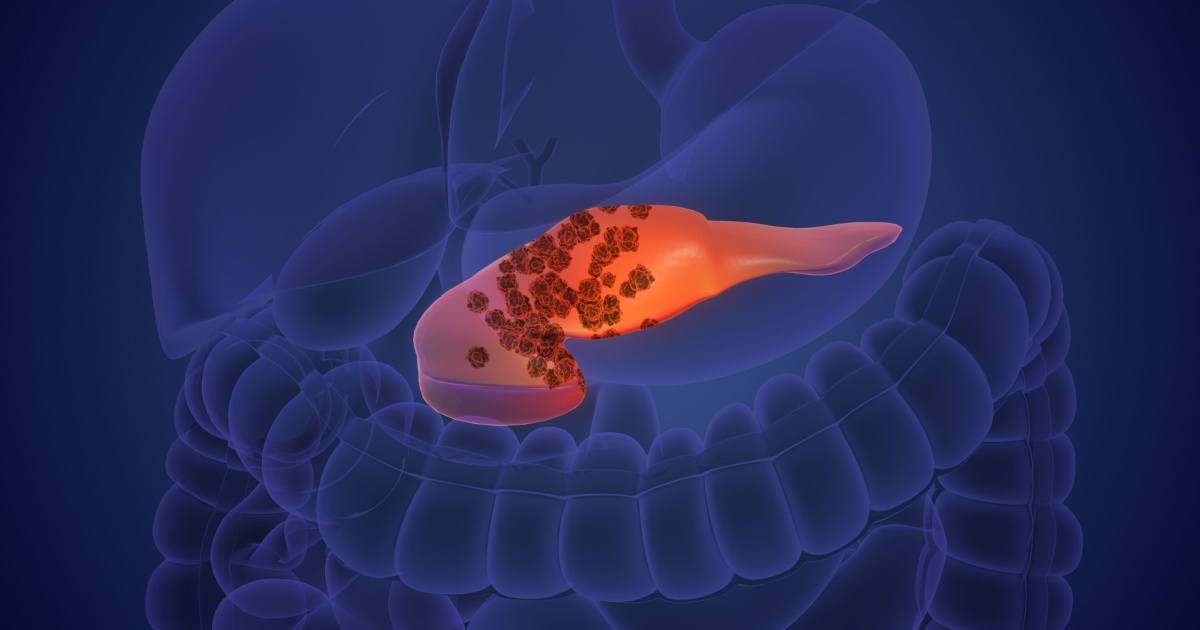

A cancer drug receiving a standing ovation from a packed auditorium full of oncologists is not a routine event. When Dr. Brian Wolpin of Dana-Farber Cancer Institute advanced to a single slide at the 2026 American Society of Clinical Oncology Annual Meeting in Chicago, the response from thousands of cancer specialists was cheering, whistling, and applause that lasted 42 seconds. Wolpin quipped from the stage: “That time was not built into my talk.”
The slide showed that a once-daily pancreatic cancer pill called daraxonrasib had cut the risk of death by 60 percent in patients with previously treated metastatic pancreatic cancer. For a disease where survival is typically measured in weeks, not years, that number landed like nothing the field had seen before.
Pancreatic cancer has defeated almost every targeted therapy thrown at it for decades. Chemotherapy remains the backbone of treatment, offering modest time extensions at the cost of brutal side effects. The idea that a pill, taken once a day, could double survival compared to intravenous chemo represented not just a statistical result but a shift in what the field thought was possible.
Why Pancreatic Cancer Has Been So Hard to Treat
Results from the phase 3 RASolute 302 trial showed that daraxonrasib, an oral once-daily pill, reduced the risk of death by 60% compared with standard chemotherapy in patients with previously treated metastatic pancreatic ductal adenocarcinoma (PDAC). The data drew a standing ovation from the packed auditorium. Julie R. Gralow, MD, chief medical officer and executive vice president of ASCO, called the finding “a grand slam” for both patients and investigators.
Lead investigator Dr. Brian Wolpin called daraxonrasib “the new standard of care” for patients who have received at least one prior line of treatment.
Daraxonrasib is the first of a new class of “RAS(ON) multi-selective inhibitors” – drugs that switch off the active form of the protein across multiple KRAS variants, and even in tumors with no detectable RAS mutation. That makes it potentially relevant for virtually every patient with pancreatic cancer, regardless of their tumor’s genetic profile.
Mutations in RAS genes, primarily one called KRAS, drive more than 9 out of 10 pancreatic cancers, but they have historically been very difficult to target. Dr. Sam Godfrey, research information lead at Cancer Research UK, described the challenge plainly: “KRAS used to be considered undruggable, like nothing could touch it. It was a bit like a light switch that’s stuck on, but there’s no actual switch to turn it off.”
Daraxonrasib found the wiring. The drug goes after the active “switched-on” state of RAS proteins – the growth signal that, in pancreatic cancer, is stuck in the “on” position in the vast majority of tumors, constantly telling cancer cells to grow and spread. Rather than binding directly to KRAS, daraxonrasib attaches to a cellular protein called cyclophilin A, which then latches onto the active RAS protein and shuts down its signaling. That mechanism lets it work across multiple RAS mutation subtypes, meaning most patients with metastatic PDAC may be eligible without needing a particular genetic subtype.
The Numbers Behind the Standing Ovation
The Phase 3 RASolute 302 trial, run by California-based Revolution Medicines and published simultaneously in The New England Journal of Medicine, randomized 500 patients with metastatic pancreatic ductal adenocarcinoma who had progressed on prior treatment. They received either oral daraxonrasib 300 mg once daily or an investigator’s choice of standard intravenous chemotherapy.
The results were striking across every endpoint measured. After a median follow-up of 8.5 months, the median overall survival among patients with RAS G12 mutations assigned to daraxonrasib was 13.2 months, compared with 6.6 months for those assigned to chemotherapy. The median progression-free survival – the time until the cancer started growing again – was 7.3 months with daraxonrasib and 3.5 months with chemotherapy in the RAS G12 population.
The overall response rate was approximately three times higher in patients treated with daraxonrasib than in those treated with chemotherapy: 33.2% versus 11.8% in the RAS G12 group. Although the dual primary endpoints of the trial were overall survival and progression-free survival among patients with RAS G12 mutations, the survival benefit with daraxonrasib was seen equally among patients with other RAS mutations or wild-type RAS.
Tolerability was one of the more striking secondary findings. Some 43.6% of patients on daraxonrasib experienced a grade 3 or higher treatment-related adverse event, compared to 57.5% of patients receiving chemotherapy. About 14% of patients taking daraxonrasib developed a serious rash and 12% experienced serious stomatitis (an inflamed or sore mouth). About 1.2% of patients discontinued taking the drug due to adverse events, compared to 11.2% for patients on chemotherapy.
An analysis of patient-reported outcomes showed that daraxonrasib was significantly better at delaying deterioration in symptoms of pain and global health status and quality-of-life scores compared with chemotherapy.
Why This Matters for 67,530 People
Median overall survival nearly doubled – 13.2 months with daraxonrasib versus 6.7 months with chemotherapy. To understand why that number created a standing ovation in a room full of specialists, consider the baseline: pancreatic cancer kills roughly 50,000 Americans every year, with a five-year survival rate of just 3 percent for metastatic disease. It is currently the third leading cause of cancer-related death in the United States, after lung and colon cancer.
In 2026, an estimated 67,530 Americans will be diagnosed with pancreatic cancer, and 52,740 are expected to die from the disease, according to the Pancreatic Cancer Action Network.
The reaction from oncologists who treat this disease daily was visceral. Dr. Rachna Shroff, chief of hematology/oncology at the University of Arizona Cancer Center and ASCO’s selected commentator on the study, described it as “a game changer in pancreatic cancer.” “Having treated pancreatic cancer for 16 years, I actually started crying in clinic. This is such an incredibly impactful study for our patients,” she said.
Dr. Anna Berkenblit, chief scientific and medical officer at the Pancreatic Cancer Action Network, called the data “the most significant advance we have ever seen in pancreatic cancer.”
The signs of pancreatic cancer are often subtle until the disease has already spread – which is precisely why new second-line options like daraxonrasib matter so much for patients who are diagnosed late.
A Public Face on a Private Diagnosis
Before the RASolute 302 data reached the ASCO plenary stage, daraxonrasib had already become known to millions of Americans through a very different kind of presentation. Former U.S. Senator Ben Sasse of Nebraska was 54 years old and had been diagnosed with terminal pancreatic cancer in December 2025. He entered a clinical trial, and the drug began shrinking his tumors.
Sasse spoke on CBS News “60 Minutes” in an interview that aired on April 26, 2026, describing what the drug had done. He reported: “I have much, much less pain than I had four months ago when I was diagnosed, and I have a massive 76% reduction in tumor volume over the last four months.”
Sasse had been taking morphine to relieve pain caused by pancreatic tumors pressing against his spine, and he said daraxonrasib had reduced his overall pain by around 80 percent. The drug did come with side effects. Side effects included nausea and other gastrointestinal issues, and some patients develop a rash “that can be significant.” Sasse himself described the drug as “nasty,” saying his body struggled to grow skin normally.
Where the Drug Stands Now
Oncologists are being flooded with requests as a special access program gets started, the Associated Press reported. The FDA has moved to allow access before formal approval. Maker Revolution Medicines funded the study, and the FDA plans to expedite review of the drug. The agency authorized an expanded access program on May 1, 2026, allowing pancreatic cancer patients who meet certain criteria to receive daraxonrasib before formal approval.
Truist Securities wrote in a note to investors that the dataset “derisks approval and supports rapid adoption as the rolling NDA progresses,” with potential for a U.S. launch in the third quarter of 2026.
Dr. Wolpin said researchers will explore the drug’s use earlier in the disease, including to see if tumor shrinkage might let more patients qualify for surgery – an option that is currently unavailable to the majority of those diagnosed at a metastatic stage.
Phase III trials, including RASolute 303 and RASolve 301, are already evaluating daraxonrasib in earlier treatment lines and in non-small cell lung cancer. RAS mutations are found in around 30% of all cancers, which means the implications of this class of drugs extend well beyond pancreatic cancer.
Targeted oncology therapies have historically cost tens of thousands of dollars per month, and daraxonrasib’s price has not yet been set. Dr. Emil Lou, a medical oncologist at the University of Minnesota, pointed out that most cancer patients receive care in community settings rather than large university hospitals – a structural reality that raises equity concerns as access to the expanded program gets underway. Daraxonrasib is not yet approved by any regulatory authority, and researchers are already working to understand how cancers may develop resistance to it.
Read More: Deadly Brain Tumor Disappears After Experimental Cancer Treatment
What to Do Now
The phase 3 data is now published in the New England Journal of Medicine – meaning your oncologist has access to the same results that stopped a room full of cancer specialists in their tracks. Daraxonrasib cut the risk of death by 60% compared with standard chemotherapy and pushed median overall survival past one year for the first time in any phase 3 trial for previously treated metastatic pancreatic cancer.
If you or someone close to you has received a pancreatic cancer diagnosis, the most immediate step is asking your oncologist about biomarker testing, specifically for KRAS mutations. The RASolute 302 trial enrolled patients with RAS G12, G13, and Q61 mutations and even wild-type RAS, and the drug showed benefit across all groups. Knowing your tumor’s genetic profile matters for determining eligibility for the FDA’s expanded access program, which is currently the most direct route to the drug before formal approval. Access applications go through the treating oncologist – not directly from patients. The drug’s price is not yet set, insurance coverage in a standard sense does not yet exist, and those are questions worth raising explicitly at your next appointment. The equity concerns are real: most pancreatic cancer patients are treated in community settings, not large academic centers, and getting to the expanded access program may require navigating systems that are not yet built for it. Ask your oncologist directly whether they can apply on your behalf.
Disclaimer: This information is not intended to be a substitute for professional medical advice, diagnosis, or treatment and is for information only. Always seek the advice of your physician or another qualified health provider with any questions about your medical condition and/or current medication. Do not disregard professional medical advice or delay seeking advice or treatment because of something you have read here.
AI Disclaimer: This article was created with the assistance of AI tools and reviewed by a human editor.
Read More: Pancreatic Cancer Risk Factors: What the Latest Research Actually Shows