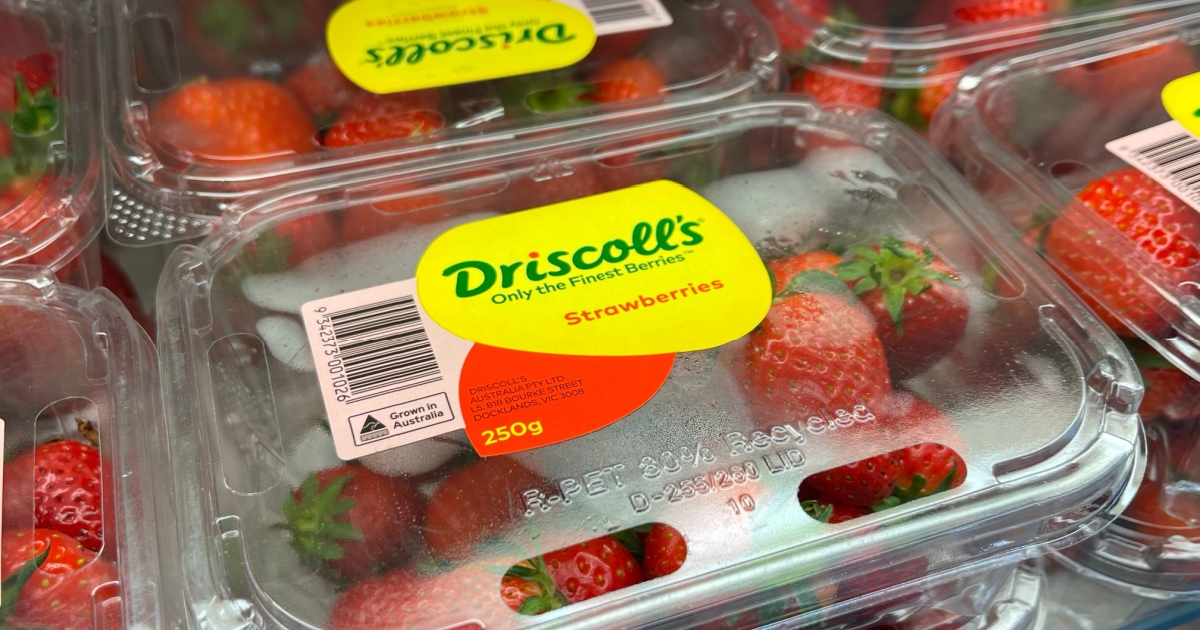

Driscoll’s markets its strawberries with the tagline “Only the Finest Berries.” Every clamshell carries that promise. What the packaging doesn’t mention, according to a lawsuit filed in June 2026, is that those same conventional berries allegedly contain residues of eight different PFAS compounds – the synthetic chemicals scientists call “forever chemicals” because they don’t break down in the environment or the human body.
Six shoppers across four states filed a class action lawsuit against Driscoll’s on June 26, 2026, in the U.S. District Court for the Northern District of California, alleging the world’s largest berry company sold conventional strawberries carrying per- and polyfluoroalkyl substances (PFAS) despite marketing them as safe, premium, and sustainably grown. The plaintiffs aren’t claiming the strawberries made them sick. They’re arguing they were misled into paying a premium for a product they believed matched the company’s wholesome image.
That legal action followed independent lab testing that went public weeks earlier, a separate whistleblower complaint from inside the company, and a growing national conversation about how forever chemicals in strawberries and other produce are quietly entering the food supply through the pesticides farmers use to protect their crops.
What the Mamavation Lab Testing Found About Forever Chemicals in Strawberries
Consumer advocacy group Mamavation sent two boxes of Driscoll’s strawberries purchased from a grocery store in Southern California to an EPA-certified laboratory, requesting testing for more than 500 pesticides in May 2026. According to the laboratory, Driscoll’s conventional strawberries contained residues of 12 different pesticides at levels prohibited in the European Union, Taiwan, Chile, Korea, and Russia. Eight of those pesticides are classified as PFAS “forever chemicals.”
The class action lawsuit cites this Mamavation testing as its central evidence, with the complaint claiming that several of the detected pesticides exceeded the limits allowed in the EU, Russia, Taiwan, and Chile.
The organic Driscoll’s strawberries tested in the same investigation told a very different story. According to Mamavation’s findings, the organic samples showed no detectable pesticide or PFAS residues – a distinction that matters practically for anyone deciding what to buy.
Driscoll’s responded to the Mamavation report by stating: “Driscoll’s and our independent grower partners operate in full compliance with applicable US federal, state and local pesticide and food-safety regulations, including frequent oversight by the US Environmental Protection Agency and the California Department of Pesticide Regulation.” The company also noted that all Driscoll’s growers undergo third-party audits by independent auditors.
No federal agency has ordered a recall of Driscoll’s strawberries, and the FDA has not declared the company’s products unsafe for consumers. The detected levels, while allegedly above international thresholds, fall within U.S. EPA legal tolerance limits.
A Whistleblower Adds Another Layer
Two days before the class action was filed, a separate lawsuit landed in Ventura County Superior Court. A former food safety compliance manager at Driscoll’s named David Harada filed a whistleblower lawsuit accusing the company of selling produce that allegedly violated pesticide laws in the United States and Canada, with the complaint alleging unlawful retaliation and wrongful termination.
According to the lawsuit, Harada began working for Driscoll’s in September 2022 as an agronomist monitoring pesticide use on crops. Within a month, he allegedly identified two independent California growers who may have exceeded legal limits on the number of pesticide applications per year. A company executive confirmed the violations but did not report them to authorities – instead asking Harada whether Driscoll’s could claim “plausible deniability” to avoid liability.
The complaint says an August 2023 third-party audit identified more than 175 overapplications of 12 chemicals on California strawberry crops from 2021 through 2022. After his promotion to compliance manager in March 2024, Harada discovered that company leadership had removed Canadian pesticide rules from Driscoll’s compliance tracking system more than a year earlier, effectively allowing the company to ignore Canada’s stricter pesticide standards. He alleges an internal investigation found roughly 50% of Driscoll’s shipments to Canada from 2022 to 2024 contained fruit that exceeded Canadian maximum residue limits, with those shipments valued at nearly $100 million.
Driscoll’s denied Harada’s allegations and pledged to defend itself in court. A spokesperson said the company encourages employees to raise concerns in good faith and prohibits retaliation against anyone who does so. “As a family-owned company, food safety, quality and integrity are fundamental to who we are,” the company said.
Forever Chemicals in Strawberries Are Part of a Broader Produce Problem
The Driscoll’s lawsuit spotlighted a contamination issue that had already been building across the fresh produce industry. According to the Environmental Working Group’s 2026 Shopper’s Guide, PFAS pesticides appeared on 63% of Dirty Dozen produce samples, with most items averaging four or more pesticides per sample. Strawberries ranked among the top five most contaminated items on this year’s Dirty Dozen list.
Residues of the PFAS pesticide fludioxonil were found in 14% of all produce samples and in nearly 90% of peaches and plums. Fludioxonil is a fungicide – a chemical used to prevent mold on crops – and the European Food Safety Authority concluded in November 2024 that it meets the criteria for an endocrine-disrupting chemical, meaning it can interfere with the body’s hormone system.
Regulators typically evaluate pesticides one at a time, but consumers are exposed to mixtures simultaneously – a growing area of concern among researchers.
Strawberries are particularly vulnerable to pesticide accumulation. Their soft skin can’t be peeled, they grow close to the ground where soil contamination is a factor, and their susceptibility to mold and pests means growers apply fungicides frequently throughout the growing season. PFAS chemicals don’t break down easily, and emerging research suggests they may accumulate in crops and carry potential reproductive and developmental risks.
PFAS reach the food supply through more than one pathway. Research published in 2025 found that PFAS in biosolids (the treated waste products from sewage) and wastewater used for irrigation has become a topic of urgent concern due to the potential for contamination of food crops. The EWG’s 2026 guide analyzed USDA testing data and found that 75% of non-organic fresh produce sold in the U.S. contains residues of potentially harmful pesticides.
If you’re thinking about broader dietary patterns and the produce most worth buying organic, the evidence on pesticides and fresh fruit makes a strong case for prioritizing thin-skinned items like strawberries, spinach, and grapes.
What the Science Says About PFAS Health Risks
There is ongoing debate within the EPA about whether single fluorinated pesticides are technically classified as PFAS, but many of their metabolites – the breakdown products the body produces after exposure – are long-lived to the point of being considered “forever chemicals.” These compounds accumulate in the body over time and have been associated with cancer risks, reproductive diseases, developmental problems in children, and immune suppression.
Several PFAS chemicals have been linked to cancer, obesity, thyroid disease, high cholesterol, decreased fertility, liver damage, hormone disruption, and damage to the immune system, according to the U.S. Environmental Protection Agency.
A 2023 meta-analysis published in La Medicina del Lavoro found that high-level PFAS exposure was associated with a 1.74 times increased risk of kidney cancer and a 2.22 times increased risk of testicular cancer. The evidence on PFAS and cancer is growing, though researchers note that most studies measure occupational or environmental exposure rather than dietary exposure alone.
The scale of PFAS contamination in the U.S. is already significant. A November 2024 EWG analysis of EPA drinking water testing data found that more than 143 million Americans are at risk from drinking water contaminated with toxic PFAS.
Regulatory action has been uneven. On April 10, 2024, the EPA established the first enforceable national drinking water standards for PFAS, setting maximum contaminant levels at 4 parts per trillion for PFOA and PFOS – the two most studied PFAS compounds. In May 2026, the EPA proposed rescinding those drinking water regulations for four of the six originally regulated PFAS chemicals, keeping enforceable limits only for PFOA and PFOS.
What This Means for You
The Driscoll’s class action is still in early stages – there is no settlement, no claims process, and no money to collect. No court has certified a class, and the allegations remain unproven. An initial hearing is set for September in front of a San Jose federal judge. The case will take time to resolve.
Organic strawberries showed no detectable PFAS or pesticide residues in the Mamavation testing, while conventional samples showed multiple. If budget is a concern, the organic-versus-conventional calculation matters most for thin-skinned, high-residue fruits like strawberries. The solution is not to stop eating fresh produce – fruits and vegetables are the backbone of a healthy diet. Choosing more of the EWG’s Clean Fifteen and fewer items from the Dirty Dozen, or buying organic versions of the most contaminated fruits and vegetables, is the most effective way to reduce pesticide exposure without giving up the nutritional benefits of fresh produce.
EWG Science Analyst Varun Subramaniam noted that most PFAS pesticides break down into trifluoroacetic acid (TFA), which is highly persistent and known to contaminate soil and water, and that there is simply not yet enough research to fully assess the short- and long-term impacts of PFAS pesticides on human health. That uncertainty is precisely why consumer groups and plaintiffs’ attorneys are pressing the issue in court and in the media. The legal proceedings against Driscoll’s may be unresolved, but the question of what belongs on a food label – and what consumers have a right to know before paying a premium – is one that won’t be waiting for a verdict.
Disclaimer: This information is not intended to be a substitute for professional medical advice, diagnosis, or treatment and is for information only. Always seek the advice of your physician or another qualified health provider with any questions about your medical condition and/or current medication. Do not disregard professional medical advice or delay seeking advice or treatment because of something you have read here.
AI Disclaimer: This article was created with the assistance of AI tools and reviewed by a human editor.
Read More: The 2026 Dirty Dozen Is Out — And Forever Chemicals Are Now on Your Produce