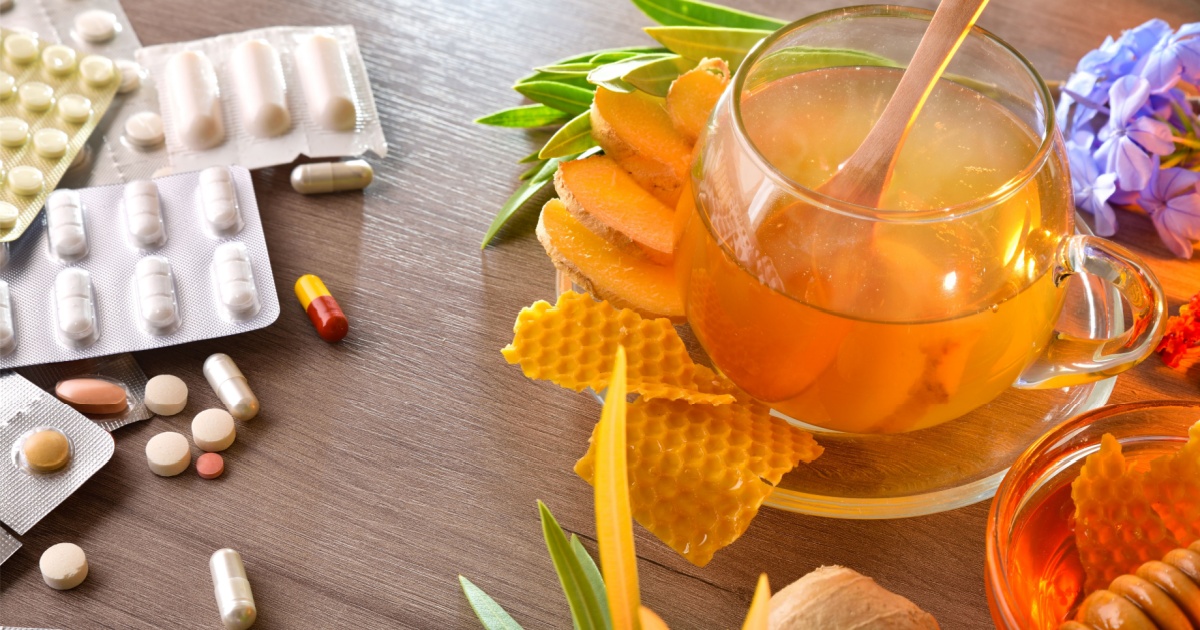

Most people who take herbal supplements think of them as a safe, natural choice. They pick up a bottle of St. John’s wort for low mood, some ginkgo for memory, or a garlic supplement for their heart. Natural, plant-based, sold freely without a prescription. What could go wrong?
The answer, for a growing number of patients, is quite a lot. The problem isn’t usually the herb on its own. It’s what happens when that herb meets a prescription drug inside the body. Neither the patient nor their doctor knows the combination is happening at all.
This isn’t a niche concern for alternative health enthusiasts. It touches anyone who takes a regular prescription, follows the news about wellness, or simply assumes that “natural” and “safe” mean the same thing. They don’t, and the gap between those two ideas is where real harm tends to occur.
Why “Natural” Doesn’t Mean “Inert”
Plants produce biologically active compounds. That’s precisely why they’ve been used medicinally for thousands of years, and it’s exactly what makes them capable of interfering with pharmaceutical drugs. Food components and herbal substances can inhibit or enhance the therapeutic effects of drugs, thus influencing their efficacy and safety.
The main pathway through which this happens involves a family of liver enzymes called cytochrome P450, often shortened to CYP450. These enzymes are responsible for breaking down most prescription medications in the body. Cytochrome P450 enzymes are essential for the metabolism of drugs, and when ingested herbs have CYP activity, they can cause a variety of reactions by either inhibiting or inducing that activity. When an herb inhibits these enzymes, drug levels in the blood can climb to toxic heights. When an herb speeds them up, the drug may be cleared from the body before it can do its job.
There’s a second route too, through what are called drug transporters – proteins that act as gatekeepers controlling how much of a drug enters certain tissues and organs. Herb-mediated blockage and activation of protein transporters and drug-metabolizing enzymes, such as the CYP450 framework, is a common method through which pharmaceuticals and herbs interact.
The result of either pathway can be an entirely different drug concentration in the blood from the one a prescribing doctor calculated. And in some situations, that difference becomes dangerous.
The Scale of the Problem
Almost 70% of individuals use herbal remedies alongside conventional pharmaceuticals, according to recent estimates. That number alone should prompt serious attention. But the risk is compounded by how rarely patients mention their herbal use to their doctor.
A meta-analysis of 86 studies examining patient disclosure rates found that only 33% of patients disclosed their use of biologically-based complementary medicine to their doctor. Reasons for staying silent included lack of inquiry from their medical provider, fear of disapproval, a belief that disclosure wasn’t important, and a conviction that the supplements were simply safe. A separate review found the figure could be even higher: around 40% to 70% of US patients did not report their complementary and alternative medicine use to their doctors.
The surgical setting makes this especially stark. A pharmacovigilance center at the University of Florence conducted a survey across three hospitals on 478 patients admitted for preoperative assessment; nearly 50% used at least one herbal remedy, and 23% of those were exposed to at least one potentially harmful herb-drug interaction. In another study, 25% of Israeli hospital inpatients consumed herbal or dietary supplements, and in 72% of those cases the hospital team was completely unaware. Patients cited reasons including “not important, not medicine” or a belief that their doctor wouldn’t understand.
The practical consequence of this communication gap is that clinicians are often trying to manage drug dosing without knowing the full picture.
St. John’s Wort: The Most Documented Offender
No herb has been studied more thoroughly for its interactions with prescription drugs than St. John’s wort, the bright-yellow flowering plant widely used for mild to moderate depression. Its reputation as a gentler, natural alternative to antidepressants has made it one of the most popular herbal supplements in the world, but that popularity sits awkwardly alongside a substantial body of evidence about what it does to other medications.
Evidence from interaction studies and case reports suggests that St. John’s wort may induce the CYP 3A4 enzyme system and the P-glycoprotein drug transporter in a clinically relevant manner, thereby reducing the efficacy of co-medications.
The clinical consequences of this are wide-ranging. A number of clinically significant interactions have been identified with prescribed medicines including warfarin, cyclosporin, HIV protease inhibitors, theophylline, digoxin, and oral contraceptives, resulting in decreased concentration or effect of those medicines.
Some of those interactions carry serious, documented consequences. A 2020 review in the British Journal of Pharmacology confirmed that in 2000, a pharmacokinetic interaction between St. John’s wort and cyclosporine caused acute rejection in two heart transplant patients, both of whom had been on 900mg of a commercial St. John’s wort extract daily; cyclosporine concentrations returned to therapeutic range only after patients stopped taking the herb. Cyclosporine (an immunosuppressant drug used to prevent organ rejection) requires precise blood levels to work. St. John’s wort accelerated its metabolism to the point where those levels dropped, the immune system was no longer suppressed, and the transplanted organs were attacked.
The contraceptive interaction is another serious concern. Efficacy of hormonal contraceptives may be impaired, as reflected by case reports of irregular bleedings and unwanted pregnancies.
Then there’s the risk that runs in the opposite direction. When St. John’s wort is combined with antidepressants that work on serotonin, a condition called serotonin syndrome becomes possible. Serotonin syndrome most often results from combining serotonergic herbs such as St. John’s wort with antidepressants like serotonin reuptake inhibitors (SSRIs), a dangerous state in which serotonin accumulates to potentially life-threatening levels. Possible drug interactions can include serotonin syndrome, a potentially fatal condition that causes high levels of the chemical serotonin to accumulate in the body, heart disease due to impaired efficacy of blood pressure medications, or unplanned pregnancy due to contraceptive failure.
Other herbs including black cohosh, ginseng, Syrian rue, turmeric, rhodiola, and ashwagandha have also been linked to serotonin syndrome when used with SSRIs or serotonin-norepinephrine reuptake inhibitors. This matters because several of these herbs sit comfortably in the wellness mainstream, sold as stress adaptogens or mood supporters, without any indication on their labels that they may interact with an antidepressant prescription.
Blood Thinners, Blood Pressure, and Bleeding Risk
Warfarin is one of the most widely prescribed drugs in the world. It’s also one of the most sensitive, requiring careful dose calibration to keep the blood “thin enough” to prevent clots without tipping into dangerous bleeding. Warfarin, the most commonly used anticoagulant, has a narrow therapeutic index and a significant number of medicinal herb and food interactions.
The herbs that show the greatest potential to interact with warfarin include garlic, ginger, ginkgo, St. John’s wort, and ginseng, plants commonly consumed both as food and for therapeutic purposes. In general, these plants can potentiate the effect of warfarin by stimulating anticoagulation in multiple ways, and the clinical outcome associated with this interaction is an increased risk of bleeding.
Ginkgo biloba deserves particular attention here. Ginkgo products have been reported to cause bleeding in some cases, and taking them alongside other medications that can also cause bleeding, such as warfarin, may increase that risk. A 2025 analysis published in PLOS One examined over 2,600 prescriptions involving Ginkgo biloba extract and found that 342 exhibited drug interactions, with a prevalence rate of nearly 13%; Ginkgo biloba most frequently interacted with antiplatelets, anticoagulants, and non-steroidal anti-inflammatory drugs.
The interaction between ginkgo and warfarin cuts in multiple directions. St. John’s wort can counteract warfarin’s blood-thinning properties, while garlic, ginger, and ginkgo may enhance its effects, leading to heightened bleeding risks. According to the Mayo Clinic, licorice may change how warfarin works and raise bleeding risk, and can also lower potassium levels, raising the risk of serious side effects from digoxin.
If you take any blood thinner or blood pressure medication regularly, this is the category that most demands a conversation with your prescribing doctor before adding any herbal supplement to your routine. For more on how common foods and supplements can affect cardiovascular health, see this guide to natural blood thinners and heart health.
The Cancer Patient’s Dilemma
Cancer patients are among the most frequent users of herbal supplements, often seeking to manage the brutal side effects of chemotherapy or to feel some sense of agency over their health. Some of the principal reasons cancer patients combine herbal products with their anti-cancer drugs include the need to manage side effects associated with chemotherapy and to enhance a general sense of well-being.
The problem is that cancer drugs leave almost no margin for error. Herb-drug interactions with anti-cancer agents frequently result from inhibition or induction of cytochrome P450 enzymes or transporter proteins, increasing or decreasing exposure of the anticancer agent; they may be highly relevant due to the narrow therapeutic window of anticancer medications and the massive impact of potential toxicity or treatment failure.
A review of clinical literature published in Frontiers in Oncology identified six herbal products, namely echinacea, garlic, ginseng, grapefruit juice, milk thistle, and St. John’s wort, that have shown interactions with chemotherapeutic agents in humans. Those aren’t fringe herbs. They’re in every health food store and many kitchen cupboards.
Because oncological treatments have a narrow therapeutic margin, associated with a lack of regulatory control and clinical evidence concerning these supplements, interactions can lead to increased toxicity or decreased effectiveness of oncological treatment. For patients fighting cancer, a reduction in chemotherapy efficacy because of an unmonitored herbal supplement is not a minor inconvenience.
The Regulatory Gap and What It Means for Consumers
Part of what makes herbal-drug interactions so difficult to manage is the regulatory environment surrounding supplements. Since the COVID-19 pandemic, the use of herbal medicine, already growing due to the aging of the world population and the search for alternatives to conventional pharmacotherapy, has considerably increased. Yet the oversight has not kept pace.
Unlike prescription drugs, herbal supplements are not required to prove safety or efficacy before they reach shelves. Herbal product use by cancer patients has significantly risen in recent decades; however, these agents lack governmental oversight and are biologically active, with a potential for interactions with chemotherapy and other cancer drugs.
Labeling is also inconsistent. An increasing number of in vitro and animal studies, case reports, and clinical trials evaluating herb-drug interactions have been reported, and the majority of these interactions may be difficult to predict. When even researchers struggle to predict interactions, consumers reading a product label have almost no way to protect themselves without professional guidance.
There’s also the question of dose variability between products. Active compounds like hyperforin and hypericin are present in very different concentrations across commercial St. John’s wort products; a German study analyzing 33 different products showed that hyperforin content varied from less than 0.5 mg per unit to 13 mg per unit. A supplement that appears identical to one you’ve taken safely before may contain a very different dose of the compound driving the interaction.
Current data on patient disclosure of herbal use to healthcare providers reveals rates as low as 25 to 33%, which means millions of people are navigating this complex terrain without their clinicians knowing the full picture of what they’re taking.
Read More: 8 Drug Interactions You Should Know About Before Taking Vitamin D
What to Do Now
The science here is clear enough to act on, even if the full scope of interactions across all herbs and all drugs is still being documented. A few straightforward steps can significantly reduce your risk.
Tell your doctor and pharmacist everything you take. That means every supplement, herbal tea you drink regularly, protein powder, and over-the-counter product. To avoid a drug interaction, be sure to tell your doctor, pharmacist, and other healthcare providers about all the medicines you take, including prescription, over-the-counter, vitamins, and herbal or dietary supplements. This is especially critical if you are taking any medication with a narrow therapeutic index, which includes warfarin, cyclosporine, digoxin, thyroid medications, and most chemotherapy agents.
Pay particular attention if you’re on a blood thinner, an antidepressant, an immunosuppressant, or a hormonal contraceptive. These are the drug classes where documented herb-drug interactions have caused real clinical harm. The interaction doesn’t have to be dramatic to matter. Even a modest shift in drug concentration can push certain medications outside their safe range.
If you are considering starting an herbal supplement, a quick check through a pharmacist is a genuinely useful step. Specialized medication reconciliation tools are now part of enhanced electronic health record systems, and there are separate apps for herbal supplements that check the possibility of interactions, supported by Agency for Healthcare Research and Quality-funded digital health initiatives.
The bottom line is this: plant-based does not mean pharmacologically inactive. The same chemical complexity that gives herbs their therapeutic potential is what makes them capable of interfering with the drugs designed to keep you well. Asking your doctor one direct question before adding something new to your routine takes less than a minute. The interactions it might prevent can take far longer to recover from.
Disclaimer: The author is not a licensed medical professional. The information provided is for general informational and educational purposes only and is based on research from publicly available, reputable sources. It is not intended to constitute, and should not be relied upon as, medical advice, diagnosis, or treatment. Always consult a licensed physician or other qualified healthcare provider regarding any medical condition, symptoms, or medications. Do not disregard, avoid, or delay seeking professional medical advice or treatment because of information contained herein.
AI Disclaimer: This article was created with the assistance of AI tools and reviewed by a human editor.
Read More: The Top 10 Medicinal Plants and Herbs for Your Health