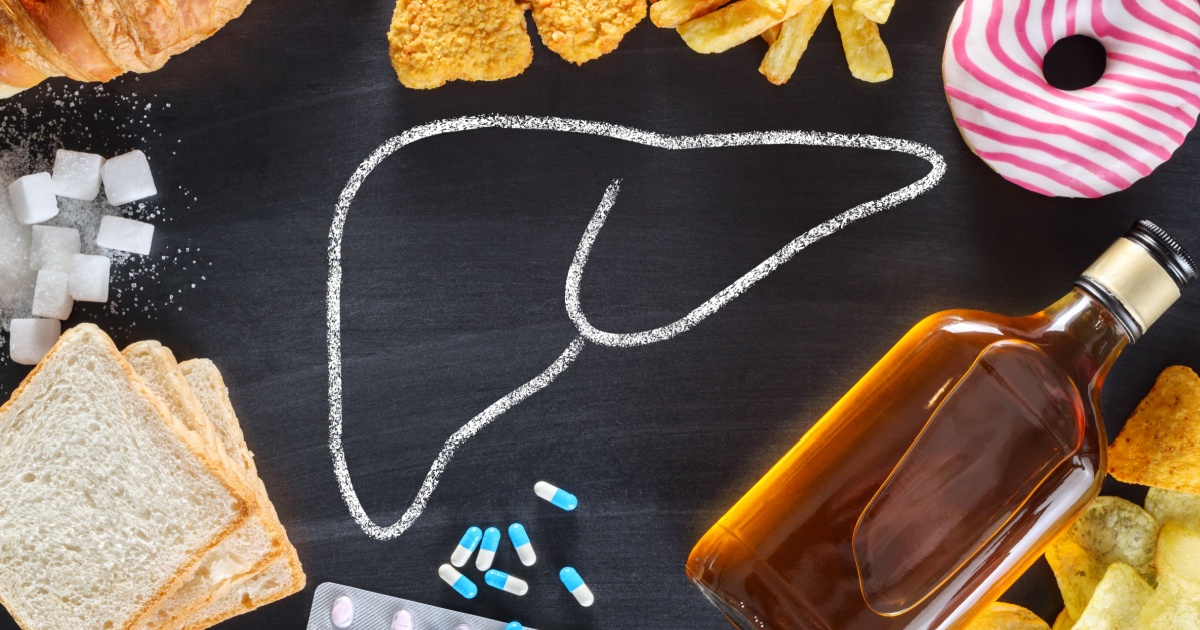

Your liver never sends a dramatic warning. No alarm goes off, no obvious moment where everything suddenly feels wrong. It just quietly keeps working – filtering toxins, processing nutrients, regulating metabolism, producing bile – until one day, it can’t keep up anymore. By that point, many people have no idea anything has been building for years.
Liver damage often goes unnoticed until cirrhosis occurs. If you begin treatment early enough, you can often prevent permanent damage – but you may not have symptoms in the early stages. That’s the uncomfortable reality: the liver is so good at compensating for injury that the window to act can close before you even know it’s open.
What makes this especially tricky is that the causes of liver damage aren’t always what people expect. Alcohol is the first thing most people think of. But there are other culprits – some of them sitting in your kitchen, medicine cabinet, or supplement drawer right now – that can push your liver toward serious trouble without you ever taking a sip. Understanding them isn’t about fear. It’s about knowing what to actually watch for, and what to do.
1. Too Much Sugar
Most people understand that sugar is bad for their teeth and their waistline. Fewer realize it can quietly dismantle liver health too – and not just in people who are overweight.
The liver is the only organ in the body that can process fructose, but when you consume high fructose corn syrup – the kind found in processed foods, not fruit – the liver turns it into fat. Some of this fat gets stored in the liver, leading to non-alcoholic fatty liver disease (NAFLD) and insulin resistance in the body that increases your risk for obesity, heart disease, and other metabolic conditions like diabetes.
In a randomized controlled trial involving 94 healthy men, researchers studied the metabolic effects of daily sugar-sweetened beverage consumption for several weeks. They found that beverages sweetened with fructose and sucrose, but not glucose, increase the ability of the liver to produce lipids. This matters because the participants were otherwise healthy men, not people with pre-existing liver problems.
Recent evidence suggests that diets high in sugar – from sucrose and/or high-fructose corn syrup – not only increase the risk of NAFLD, but also non-alcoholic steatohepatitis (NASH), a more advanced and inflammatory form of liver damage. The practical takeaway is straightforward: check ingredient labels for high fructose corn syrup, added sugars, and sweetened beverages, and treat them as genuinely risky – not just for your weight, but for the organ doing the metabolic heavy lifting.
2. Certain “Natural” Herbal Supplements
The supplement aisle can be a confusing place. Many products carry the word “natural,” which most people reasonably interpret as meaning safe. But natural and safe are not the same thing, and few examples illustrate this better than kava.
Kava kava is an herbal derived from roots of the plant Piper methysticum, which has been used for centuries as a recreational and ceremonial drink in Oceania and more recently in concentrated forms in herbal medications to treat anxiety and insomnia. Products labeled as kava have been linked to the development of clinically apparent acute liver injury, which can be severe and even fatal.
Clinically apparent liver injury due to kava supplementation is rare, but it is increasingly recognized as a side effect, leading to restrictions in many countries, including Germany, the United Kingdom, Switzerland, France, Canada, and Japan. There seems to be convincing evidence in some cases of severe hepatitis ending in fulminant hepatic failure, requiring liver transplantation, and even leading to death. Patients typically present with fatigue, nausea, elevations in liver enzyme levels, and jaundice two to 24 weeks after starting use of the product.
Kava is not the only herbal supplement linked to liver injury – it’s simply one of the most studied. The broader lesson is this: always tell your doctor what supplements you’re taking, including herbal teas, powders, and capsules. They may interact with medications or place extra strain on a liver that’s already working hard. For a closer look at supplements that can damage your liver, including other commonly used products beyond kava, that resource is a smart starting point before reaching for anything new.
3. MASH: The Fatty Liver Condition Most People Haven’t Heard Of
You may have heard of fatty liver disease. But the term MASH – metabolic dysfunction-associated steatohepatitis – is newer and describes something more serious. It’s the advanced, inflammatory stage of fatty liver disease, and it’s now among the leading causes of liver-related illness worldwide.
MASH happens because you have excess fat cells in your liver – a condition once called nonalcoholic steatohepatitis (NASH). Excess fat cells cause chronic inflammation that can lead to worsening liver damage. MASH is often associated with having overweight, high blood lipids, and high blood sugar. But the numbers show just how widespread the underlying risk has become. As the rates of obesity and type 2 diabetes continue to increase globally, so does the prevalence of metabolic dysfunction-associated steatotic liver disease, or MASLD – currently affecting 38% of all adults.
Up to 70% of people with type 2 diabetes also have MASLD. That connection matters because MASLD and MASH usually don’t have any signs or symptoms and can develop over many years unnoticed. The good news is that early-stage disease is often reversible. With healthy lifestyle changes, you can prevent, slow down, or even reverse the buildup of extra fat in your liver. Losing weight is a great place to start – losing 5% to 10% of your current body weight can help reduce extra fat in your liver. If you have diabetes or metabolic syndrome, ask your doctor specifically about your liver health. It’s not always on the standard checklist.
4. High-Dose Vitamin A Supplements
Vitamin A is an essential nutrient. It supports vision, immune function, and cellular repair. Getting it from food – fruits, vegetables, eggs, dairy – is completely fine. The problem arises when people take high-dose vitamin A supplements, often in the belief that more of a good thing must be better.
Vitamin A is a fat-soluble vitamin necessary for health. The recommended daily allowance is approximately 700 to 900 micrograms for adults – amounts that can be provided by a normal diet. Higher doses of vitamin A can be toxic, leading to liver injury, jaundice, enlargement of the liver and spleen, portal hypertension, and cirrhosis.
Because vitamin A is fat-soluble, the body doesn’t flush out excess amounts the way it does with water-soluble vitamins. The liver, which stores vitamin A in hepatic stellate cells, becomes overwhelmed, leading to retinoid accumulation, oxidative stress, and inflammation. Pathologically, vitamin A toxicity progresses from hepatic steatosis – fatty liver – to fibrosis and cirrhosis.
Vitamin A toxicity may be more common in the U.S. than a deficiency, due to high doses of preformed vitamin A found in some supplements. Vitamin A is fat-soluble, meaning that any amount not immediately needed by the body is absorbed and stored in fat tissue or the liver. If too much is stored, it can become toxic. The practical advice from the NIH Office of Dietary Supplements is clear: the tolerable upper intake level for adults is 3,000 micrograms of preformed vitamin A per day. Before taking any standalone vitamin A supplement, talk to your doctor – most people in developed countries already get enough from food alone.
5. Acetaminophen: The Painkiller Most People Underestimate
Acetaminophen – sold under brand names like Tylenol – is one of the most widely used medications in the world. It’s in pain relievers, cold and flu tablets, sleep aids, and prescription combination drugs. That ubiquity is exactly what makes it dangerous.
Acetaminophen toxicity is the most common cause of acute liver failure in the United States, responsible for 56,000 emergency department visits and 2,600 hospitalizations annually. Approximately 50% of these poisonings are unintentional, often resulting from patients misinterpreting dosing instructions or unknowingly consuming multiple acetaminophen-containing products.
The FDA reports that acetaminophen is found in over 600 medications, including cold and flu treatments, increasing its widespread accessibility. It’s easy to accidentally double up: take a headache tablet in the morning, a cold capsule in the afternoon, and a sleep aid at night – and you may have exceeded the safe daily limit without realizing it. Severe liver damage can occur in people who take more than four grams of acetaminophen in 24 hours. And that’s considered conservative, because if taken with alcohol, even two grams can cause problems.
The habit to adopt immediately: before taking any over-the-counter medication, read the drug facts label and check for acetaminophen in the ingredients list. Research from a US multicenter prospective study found that susceptible patients often take several preparations simultaneously – making it easy to exceed safe limits without realizing it. That pattern should be enough to make label-reading a non-negotiable habit.
6. Trans Fats Hiding in “Healthy” Packaged Foods
Trans fats have a complicated public health history. Many countries have moved to restrict or ban them, and manufacturers have reformulated thousands of products. But the risk hasn’t fully disappeared – and the way trans fat labeling works means many people believe they’re avoiding something they’re still consuming.
Trans fats – listed on ingredient labels as “partially hydrogenated oils” – promote fat storage in ways that directly burden the liver. A diet high in these fats is associated with weight gain and the same metabolic conditions (insulin resistance, elevated blood lipids, abdominal fat) that drive the development of fatty liver disease. Research has established a link between western diets high in fat and sugar and the development of non-alcoholic fatty liver disease – the leading cause of chronic liver disease – and has shown how fatty liver disease, fueled by these diets, can stealthily evolve into liver cancer.
The labeling trap is real. In the United States, a product can legally state “0 grams of trans fat” on its packaging if it contains less than 0.5 grams per serving. If you eat multiple servings – or multiple “0g” products in a day – the amounts add up. The only way to know for certain is to check the ingredients list for any mention of partially hydrogenated oils. If those words appear, the product contains trans fats, regardless of what the front of the package claims.
When shopping, prioritize whole foods, choose products whose ingredient lists are short and readable, and treat any packaged baked goods, fried snacks, or shelf-stable spreads with extra scrutiny. Your liver processes every fat you eat – and some fats are far harder on it than others.
Read More: 8 Signs of Poor Liver Health & the Best Supplements to Help Support It
What This Means for You
The liver has a remarkable capacity to heal itself in the early stages of damage. Some amount of fibrosis – the early stage of scarring – is reversible. Liver cells can regenerate, and scarring can diminish if the damage slows down enough for recovery. That regenerative ability is an opportunity, not a guarantee.
Once liver damage progresses to advanced fibrosis or cirrhosis, it becomes much harder to undo. Early-stage fibrosis can often improve with treatment, but cirrhosis can cause permanent damage that significantly affects liver function – and in severe cases, requires transplantation. The six things covered in this article – excess sugar, herbal supplements, MASH, high-dose vitamin A, accidental acetaminophen overuse, and hidden trans fats – are all largely controllable with awareness and a few deliberate choices.
Read labels. Tell your doctor everything you take, including supplements. Request a liver function panel at your next routine checkup, especially if you carry any metabolic risk factors like diabetes, high blood pressure, or excess abdominal weight. The liver rarely shouts for help. But if you know what to listen for, the whispers are loud enough.
Disclaimer: The author is not a licensed medical professional. The information provided is for general informational and educational purposes only and is based on research from publicly available, reputable sources. It is not intended to constitute, and should not be relied upon as, medical advice, diagnosis, or treatment. Always consult a licensed physician or other qualified healthcare provider regarding any medical condition, symptoms, or medications. Do not disregard, avoid, or delay seeking professional medical advice or treatment because of information contained herein.
AI Disclaimer: This article was created with the assistance of AI tools and reviewed by a human editor.
Read More: 9 Warning Signs Your Liver May Be Failing