Scientists Re-Tested the Shroud of Turin — Here’s What They Found
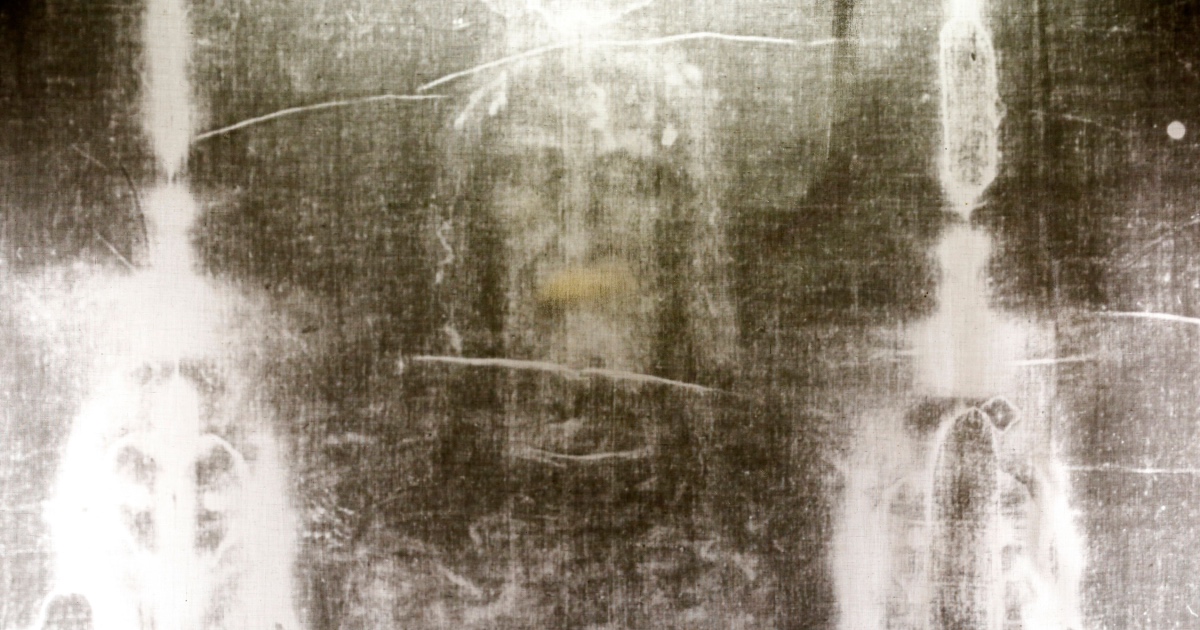
The cloth measures roughly 4.4 meters long and just over a meter wide, about the size of a dining table laid end to end. Researchers have been prodding, photographing, and debating it for decades. But in March 2026, a team of geneticists did something that hadn’t been done before: they sequenced every fragment of biological material embedded in a sample collected nearly half a century earlier, and the results did not simplify anything.
The Shroud of Turin is the linen cloth kept at the Cathedral of Saint John the Baptist in Turin, Italy, bearing the faint front-and-back image of a man who appears to have been crucified. Millions regard it as the burial cloth of Jesus of Nazareth. Scientists have regarded it as one of the most thoroughly tested artifacts in history – and yet, after every round of Shroud of Turin testing, the central question remains stubbornly open.
What the 2026 study added was not a verdict, but a biological portrait of everywhere the cloth has been and everyone who has ever touched it. That portrait is stranger, and more complicated, than most headlines suggested.
The 1988 Carbon Dating That Seemed to Settle Everything
In 1988, three accelerator mass spectrometry laboratories conducted radiocarbon dating on the Shroud, yielding a date range of 1260-1390 CE. The labs were at Oxford, the University of Arizona, and ETH Zürich, and their findings were published in Nature. The results provided what the researchers called conclusive evidence that the linen of the Shroud is medieval.
The timing aligned neatly with the cloth’s documented history. The Shroud’s first well-documented public appearance came in the 1350s, when it was displayed by a renowned professor of forensic medicine who later claimed to have identified human blood of the AB group on the cloth. That medieval window – roughly the 14th century – fit squarely inside what the carbon tests found.
Various hypotheses have since been proposed to challenge the validity of those dates, and the controversy has persisted. Critics pointed to the possibility of contamination from medieval repairs, fire residue from a 1532 blaze, and bacterial coatings. But a 2026 textile analysis published in npj Heritage Science found that the analyzed fragments are consistent with the main body of the Shroud and show no evidence of contamination – lending further support to the original medieval dating. Radiocarbon dating remains the most methodologically rigorous test applied to the cloth, and no subsequent study has overturned that medieval result.
The 2026 DNA Study: A Completely Different Kind of Test
On March 22, 2026, a team of international researchers coordinated by geneticist Gianni Barcaccia of the University of Padua and Alessandro Achilli of the University of Pavia published an in-depth metagenomic study of the Shroud of Turin on bioRxiv. Metagenomics means sequencing every fragment of genetic material in a sample – human, plant, animal, and microbial – rather than targeting one specific organism or gene.
The researchers pulled together all the genetic sequences found on a fragment of the Shroud that was clipped by scientists in 1978, sequencing all the genetic fragments in the mix and matching them to known human ancestry groups, plants, animals, and microbes. This was the first time those 1978 samples – collected during the landmark STURP (Shroud of Turin Research Project) campaign – had been subjected to this kind of whole-ecosystem genetic analysis.
The study, which had not yet been peer-reviewed at the time of publication, has some methodological weaknesses that limit interpretation of the research, according to outside experts. That caveat matters. A preprint is a first public look at research before it passes independent scientific review – it represents what the researchers found, but not yet a finding that the broader scientific community has formally validated.
The Near Eastern DNA That Points Toward the Levant
Several human mitochondrial DNA lineages were identified in the samples, including H1b, which is common in Western Eurasia, and H33, which is prevalent in the Near East and frequent among the Druze. The Druze are an Arabic-speaking ethno-religious minority currently present in the Holy Land, Jordan, Lebanon, and Syria – a geographic footprint that overlaps with the region traditionally associated with the origins of the cloth.
The scientists confirmed the presence of a genome predominantly from the Middle East. For those who believe the Shroud originated in ancient Palestine, this was the most encouraging finding in the study. Human DNA traces pointing toward the Levant could, in principle, suggest contact with people from that region over a long period of time.
The key limitation, however, is that DNA on a cloth doesn’t come with a timestamp. A visitor from the Near East who touched the Shroud in 1400 CE would leave the same genetic trace as a person from the same region who touched it in 100 CE. The 2026 study could identify where the DNA came from, but not when it arrived on the cloth.
The Unexpected Indian DNA – Nearly 40% of the Human Signal
A related 2015 study by the same team found human DNA associated with the Indian subcontinent in dust collected from the cloth, with over 55.6% of DNA from the Near East and around 38.7% from India, while Europeans accounted for less than 5.6%. The 2026 study’s findings built on that earlier work, confirming Indian-associated lineages as a substantial fraction of the human DNA signal on the cloth.
That proportion is striking given the Shroud’s European custodial history – it has been housed in Turin since 1578 and was displayed across France and Belgium for centuries before that. Indian DNA does not fit obviously into a medieval European relic. One explanation the researchers offered is trade and pilgrimage routes: fine Indian linen was imported across the ancient Mediterranean world, and the Temple of Jerusalem reportedly used Indian textiles for ceremonial purposes. The presence of Indian DNA may be explained by the use of fine Indian linen at the Temple of Jerusalem, used for the garments of the High Priest during the afternoon rituals of Yom Kippur.
Another explanation is simpler: the cloth has been handled by pilgrims, scholars, priests, and researchers from across the world for centuries, and some of those individuals carried Indian genetic ancestry. As researchers have noted, distinguishing ancient DNA from more recent contamination requires robust statistical methods that go well beyond standard sequencing.
Carrots, Red Coral, Peanuts – and a Biological Menagerie
The results turned up a wide mix of DNA, including human genetic material linked to populations spread across Europe, the Near East, and parts of western Asia, along with traces from various animals and plants such as livestock, domestic pets, and common food crops. The plant DNA inventory was particularly eyebrow-raising. Researchers found genetic traces from carrots, wheat, corn, bananas, and peanuts – a combination that would be impossible in a first-century Palestinian context, since corn and peanuts are New World crops that reached the Old World only after 1492 CE.
Barcaccia’s team also noted the presence of DNA from Mediterranean red coral (Corallium rubrum), which they suggested points to “Mediterranean origins or transit through Mediterranean regions.” Red coral DNA on a piece of linen might seem bizarre, but it reflects how the cloth has functioned as a kind of biological sponge, picking up material from every environment it has passed through.
Bacterial species accounted for 10% to 31% of the DNA detected. The cloth hosts a full microbiome – bacteria commonly found on human skin, fungi, molds, and microorganisms from multiple distinct ecosystems. Rather than narrowing the story of the Shroud, the biological complexity the researchers uncovered illustrates just how many hands and environments have contributed to its current state.
Salt-Loving Microbes and the Dead Sea Connection
One of the most geographically specific findings in the 2026 study came not from human DNA but from archaea – a domain of single-celled microorganisms distinct from both bacteria and standard cells. Microorganisms thriving in extremely saline environments, such as the Dead Sea, were detected on the cloth. These halophilic archaea (microbes that require extremely salty conditions to survive) are not found in ordinary indoor environments or typical European storage conditions.
The reconstructed microbiome of the Shroud revealed archaeal communities adapted to high salinity, alongside fungi including molds and microbes commonly found on human skin. The Dead Sea region sits at one of the lowest points on Earth and has salt concentrations roughly ten times that of the ocean. For these specific organisms to appear in the fabric, the cloth would need to have been stored in or transported through an extremely saline environment at some point in its history.
This finding is consistent with a Middle Eastern origin or transit – it cannot confirm one, but it adds a layer of biological corroboration that is hard to explain by ordinary European storage conditions. It’s one of the few findings in the 2026 study that points to a specific type of environment, rather than simply reflecting the diversity of people who have touched the cloth.
What This Means for the Debate
Distinguishing ancient DNA from more recent contamination remains one of the central methodological challenges in this line of research. The 2026 study is a meticulous biological inventory of everything currently on the cloth – but it cannot tell us which of those biological traces arrived in the first century and which arrived last week. Outside experts note that the study’s inability to separate ancient DNA from recent contamination is among its key methodological limitations.
What the study does establish is that the Shroud has been in contact with an extraordinary range of people, places, and environments over its documented history. Human DNA from the Near East, microbial signatures consistent with high-salinity regions, and a botanical record that spans multiple continents all point to a cloth that has functioned as a biological archive. The 1988 radiocarbon dating placed the linen itself in the medieval period with 95% confidence; the 2026 DNA work adds biological texture to the story of where the cloth traveled after it was made, but it doesn’t rewrite the carbon record.
For anyone following shroud of turin testing closely, the honest summary is this: the science has grown more sophisticated, but the mystery has grown with it. The cloth that has fascinated researchers for decades is now revealed as a layered biological document – one whose full meaning may require tools that don’t yet exist to read properly. The ancient mysteries of the Yonaguni Monument share something with the Shroud: in both cases, improved technology deepens the question as much as it answers it.
AI Disclaimer: This article was created with the assistance of AI tools and reviewed by a human editor.