Trump Bought Dell Stock Months Before Pentagon Handed It a $9.7B Contract
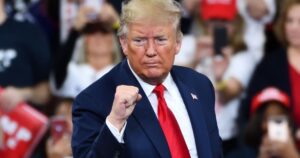
The Trump 9.7 billion deal sits at the intersection of presidential stock trading, a mega Pentagon contract, and a web of financial relationships that ethics watchdogs say should never have been allowed to exist simultaneously. On February 10, 2026, financial disclosure forms show Trump’s portfolio acquired between $1 million and $5 million in Dell Technologies stock. Nine days later, he stood before a crowd in Rome, Georgia, and told supporters to go out and buy a Dell computer. Three months after that, his administration’s Pentagon handed Dell a $9.7 billion contract.
The sequence became public in May 2026, when the U.S. Office of Government Ethics released Trump’s financial disclosures. What those filings revealed wasn’t just a single well-timed stock purchase. Trump’s investment portfolio executed more than 3,600 transactions in the first quarter of 2026 alone, primarily targeting major banks, manufacturers, and Big Tech companies. Dell was among them, and Dell was the name that, weeks later, would be attached to one of the largest Pentagon software contracts in recent memory.
The White House has consistently maintained there is nothing improper about any of it. But ethics lawyers and government watchdogs are not so easily convinced. The combination of stock purchases, public praise, a $6.25 billion personal donation from the Dell family to a Trump-branded program, and a multibillion-dollar federal contract has produced what one senior government oversight official described, without apparent hesitation, as ringing alarm bells.
What the Trump 9.7 Billion Deal Actually Covers
The Department of Defense announced a five-year, roughly $9.7 billion deal with Dell to provide a suite of software to the U.S. military. The contract calls for Dell to provide Microsoft 365, advanced cloud subscriptions, and on-premises licensing capability. Dell Federal Systems, the government-focused unit of the company, won the contract after a competitive process, according to Defense Department Chief Information Officer Kirsten Davies and acting Navy Chief Information Officer Barry Tanner, who spoke to reporters at a Pentagon briefing.
The agreement will streamline and consolidate critical Microsoft software and services across the Department of War, the intelligence community, and the U.S. Coast Guard, according to Kirsten Davies. The $9.7 billion is not new funding but a consolidation of budgets from contracts that have come up for renewal simultaneously. Pentagon officials said the restructuring would save $422 million annually by consolidating existing IT budgets from across the services and agencies into a single efficient vehicle.
On its technical merits, the deal has defenders. Acting Navy CIO Barry Tanner said vendors were evaluated based on competition, comparison to GSA schedule pricing, and overall chain of value to the department. Dell has a long-running partnership with Microsoft and has long served as a major procurement channel for Windows licenses across the federal government. None of that changed the optics of what surrounded the announcement.
The Stock Purchases, the Rally, and the Praise
On February 10, Trump purchased somewhere between $1 million and $5 million worth of Dell stock, according to his periodic financial transaction report. That filing, released through the Office of Government Ethics in May, also showed Trump went on a sweeping tech stock buying spree in the first three months of 2026, picking up securities in more than three dozen companies.
The Dell purchase stood out not just for its size but for what followed it. Ethics experts say Trump’s recent investments in and public praise for the tech company create the appearance of a conflict of interest. According to The Street, Trump told a crowd in Rome, Georgia, in February 2026, to “go out and buy a Dell computer.” He repeated similar praise at the State of the Union and again at a White House Mother’s Day event in May.
The financial impact of all this on Trump’s portfolio is not trivial. Dell’s stock narrowly beat its previous record gain from March 2024, and shares are now up 234% in 2026. When Dell reported first-quarter earnings in late May, the stock posted its best single day ever. Dell saw a flood of artificial intelligence-related demand for its servers, with quarterly revenue soaring nearly 88% year over year and AI server revenue alone increasing 757% from a year earlier to $16.1 billion. Those earnings were the primary driver of the stock surge, but the Pentagon contract announcement days earlier added its own momentum. Dell shares jumped around 39% in extended trading as investors welcomed evidence that spending on AI infrastructure continues to gather pace.
For someone who bought between $1 million and $5 million in Dell stock in February, a 234% rise in share price represents a substantial gain by any measure.
The Dell Family Connection
The financial relationship between Donald Trump and the Dell family runs deeper than stock ownership. In December 2025, Michael Dell and his wife Susan appeared alongside Trump at the White House to announce a $6.25 billion donation to “Trump Accounts,” a tax-advantaged investment program for children. The pledge will provide $250 to roughly 25 million American children aged 10 and under from households with a median income below $150,000.
White House spokesman Kush Desai defended the relationship by telling reporters that Trump’s praise for the Dells was “rooted only in their patriotic contribution of over $6 billion” to Trump Accounts. That explanation, however, raises its own questions for ethics lawyers, since it means the president’s public promotion of a private company was tied directly to a multibillion-dollar donation made in his name.
Margaret Dylus-Yukins, senior legal counsel for ethics at the Campaign Legal Center, echoed conflict-of-interest concerns and pointed out that the contract raises issues for Michael Dell himself, “who is subject to the federal ethics rules as a member of the President’s Council of Advisors on Science and Technology.” Michael Dell also sits on Trump’s Council of Advisors on Science and Technology, informing public policy regarding the economy, public health, national security, energy, and emerging technologies. That role means Dell isn’t just a private citizen donating to a presidential program and running a company that won a federal contract. He is, at least nominally, a government advisor subject to ethics constraints that don’t apply to the president himself.
The clearest explanation for why none of this has triggered legal consequences comes down to a specific gap in federal law. Presidents are not required to sell off financial stakes that might pose a conflict of interest. They are also exempt from a conflict-of-interest law that bars federal workers from taking official actions that could benefit their personal finances. This exemption, which applies exclusively to the president and vice president, means that even if Trump’s stock purchases were timed with advance knowledge of the Pentagon contract, no existing federal statute would make that illegal for a sitting president.
The Brennan Center for Justice has documented this gap and called for legislative reform to bring the president under the same conflict-of-interest rules that govern every other federal employee. So far, those reforms have not passed.
Most U.S. presidents since Lyndon B. Johnson have placed personal holdings into qualified blind trusts to limit conflicts. Jimmy Carter liquidated his peanut farm. Barack Obama held Treasury notes and index funds. Joe Biden used a blind-trust arrangement. Trump has taken a different approach. His assets are held in a trust run by his own children, unlike previous presidents who used blind trusts managed by independent parties. The Trump Organization has said the accounts are managed independently by third-party financial institutions, and a spokesman stated the president’s assets are held in a trust managed by his children, adding there are “no conflicts of interest.”
Even if the trades are made by third parties, the president can still be aware of them because his investments are not in a blind trust. That distinction matters: a true blind trust requires the owner to have no knowledge of what is being bought or sold on their behalf. A trust managed by family members, with no legal requirement for information barriers, does not carry the same guarantee.
What Ethics Watchdogs Are Saying
Greg Williams, director of the Center for Defense Information at the nonprofit Project on Government Oversight, stated plainly: “This absolutely does ring alarm bells with regard to conflicts of interest.”
Dylus-Yukins of the Campaign Legal Center framed it as a departure from established presidential norms rather than a legal violation. According to the Detroit News, she said that “the ethics norm has been for presidents to historically avoid even the appearance of self-enrichment.” The Dell situation, she argued, fails that standard regardless of whether any law was technically broken.
The Dell episode has renewed calls in Washington for stronger statutory conflict-of-interest protections that explicitly cover the occupant of the White House. Dell is far from the first company to receive a Trump administration contract or other beneficial action after Trump purchased their stock. Trump allegedly bought stock in Amazon and Microsoft months before the Pentagon announced agreements with both companies. Earlier this year, he also bought a sizable amount of Nvidia stock right before the AI chipmaker received permission to export its advanced H200 processors to China.
The Dell contract story is not primarily about one stock trade. It’s about a structural problem that has now produced a clear, documented pattern: a president who holds individual stocks in companies that depend on federal contracts and regulatory decisions, and who is legally exempt from the conflict-of-interest rules that govern every other federal employee.
When public officials have personal financial interests, such as stocks or businesses, that could be affected by their decisions, it creates a conflict of interest. Federal law addresses this for most officials, preventing them from prioritizing their financial interest over the public good. The president, alone among federal officeholders, sits outside that framework. Whether that changes depends on Congress passing legislation that has been proposed and stalled repeatedly. Until then, financial disclosures released through the Office of Government Ethics remain the public’s primary window into what assets a sitting president holds and when they were acquired. The Dell sequence, from the February stock purchase to the Georgia rally to the $9.7 billion Pentagon contract, is now fully visible in that window. What happens next is a question for lawmakers, not ethics lawyers.
Disclaimer: This information is not intended to be a substitute for professional financial advice, investment advice, tax advice, or legal advice, and is provided for informational purposes only. Always seek the guidance of a qualified financial advisor, accountant, or other licensed professional regarding your personal financial situation or investment decisions. Do not make financial, investment, or tax decisions based solely on information presented here. Past performance is not indicative of future results, and all investments carry risk, including the potential loss of principal.
AI Disclaimer: This article was created with the assistance of AI tools and reviewed by a human editor.