A Psychologist Claims Trump’s July 4 Behavior Signals He Knows the End Is Near
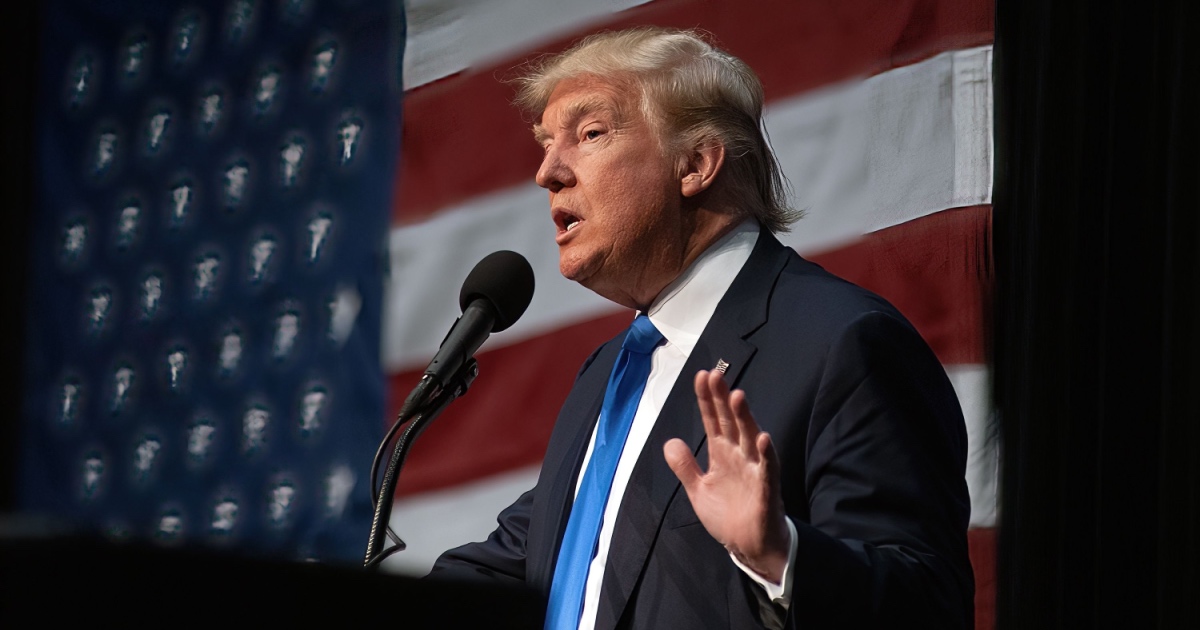
Donald Trump was recognizing a 107-year-old guest during his July 4th Independence Day speech when something happened that one clinical psychologist found more significant than the milestone itself: a flicker of genuine sadness crossed the president’s face. According to Dr. John Paul Garrison, a licensed clinical and forensic psychologist who appears publicly under the moniker “Dr. G,” that expression was almost unprecedented for this president – and it carried a specific clinical meaning.
Garrison made his assessment while appearing on the YouTube channel of speech-language pathologist Hilary Shae, where he analyzed a clip from Trump’s July 4th address. The moment in question involved Trump acknowledging an attendee who had reached the age of 107. The reaction Garrison flagged wasn’t what Trump said. It was what his face did immediately after.
After the comment, Garrison observed “actual sadness on his brow, which you almost never see from President Donald Trump,” adding that while Trump was joking about health in that moment, “there seems to be real sadness in his eyes as he’s talking about that.” For a president who has projected near-constant bravado and confidence throughout his public life, a visible, unprompted moment of grief – captured on a national broadcast – struck Garrison as clinically significant in the context of Trump behavior psychology.
Shae seconded that read, noting that Trump “doesn’t seem to have a ton of awareness of what’s going on from a medical perspective,” but that “a lot of times when the end is near, people do tend to become aware of it and they start talking about things that are death-related, lamenting about the past, wishing they did things – and Donald Trump has been doing that for a while.” Neither Garrison nor Shae has examined Trump clinically. Their analysis is based solely on publicly available video. Still, the observations they raise – about speech patterns, emotional affect, and behavioral change – align with a pattern that other credentialed experts have been flagging for months.
The Speech Patterns That Prompted the Analysis
During his July 4th address, Garrison catalogued what he described as noticeable slurred speech, word-finding difficulties, pauses, verbal substitutions, and unusual phrasing. He also observed reduced hand gestures, signs of visible frustration after verbal slips, and what appeared to be bracing behavior while speaking – while stressing the analysis is observational, not a diagnosis, and that factors like fatigue, stress, and normal aging must all be considered.
Garrison’s overall conclusion was pointed: “What we saw [on the 4th] was consistent slurring of his words. He seemed at times to have to prompt himself about what to say. He seemed to be struggling in ways that he did not used to struggle, and it doesn’t just seem like normal age-related changes.” Garrison said he believes “we are seeing distinct differences in President Trump now than where he was one year ago.”
Shae has been tracking similar patterns across multiple speeches. In an analysis of Trump’s Great American State Fair address a week earlier, she pointed out that he “couldn’t say ‘250th anniversary'” or the word “magnificent,” sharing clips that showed him stopping hard as those words came up. She described his difficulties as “consistent with dysarthria and ataxia or apraxia,” adding they “can occur after a stroke” and “can occur with other brain disorders and dementia.” Shae also explained that people with apraxia or ataxia often experience “phonemic paraphasias” – a neurological term for when the brain struggles to coordinate sounds and syllables correctly.
After reviewing the Great American State Fair speech, Shae argued that “the fact that there are so many examples of these speech difficulties in one 30-minute speech means that Donald Trump is getting worse.”
To be clear: Shae has not diagnosed the president, and no public evidence has emerged showing that Trump has suffered a stroke or a transient ischemic attack. Diagnosing an underlying neurological condition requires a full medical evaluation, not remote video analysis.
A Broader Pattern of Concern in Trump Behavior Psychology
Garrison and Shae are not the only credentialed voices drawing attention to Trump behavior psychology during the summer of 2026. Dr. John Gartner, a clinical psychologist and former assistant professor at Johns Hopkins University Medical School, has argued that Trump’s tendency to veer into extended tangents about projects such as the White House Ballroom or the Lincoln Memorial Reflecting Pool is evidence of cognitive decline. Gartner told The Daily Beast that “tangential speech is one of the diagnostic criteria for dementia,” pointing to Trump’s habit of drifting from the subject at hand and repeatedly returning to projects bearing his personal stamp.
Shae has also flagged motor behavior, not just speech. In a separate analysis, she argued that Trump made a “big mistake” during a televised appearance that revealed signs of cognitive decline in both speech and motor functioning. She explained that dementia patients can struggle with “pre-shaping” – the brain’s process of preparing movements before they’re made – and that this can cause someone to default to the simplest grip possible when reaching for an object.
Shae also analyzed a viral clip from a ribbon-cutting ceremony in North Dakota, in which Trump appeared to pocket a ceremonial pair of scissors. She said the behavior “actually looks more like a sign of dementia” than intentional theft, arguing it could indicate frontal lobe impairment. Her core argument is that what may look like kleptomania in a psychiatric sense can, in some dementia patients, be something different: “the stealing is usually a symptom of changes in the brain affecting memory, judgment, impulse control, or the ability to recognize ownership.”
For readers interested in the broader clinical context of how dementia is assessed differently from normal aging, this Hearty Soul overview lays out the criteria clinicians actually use, and why remote observation cannot substitute for formal evaluation.
What the Official Record Shows – and Doesn’t
Trump’s physician, Dr. Sean Barbabella, declared the president in “excellent health” and “fully fit” to serve as commander in chief after a medical exam at Walter Reed National Military Medical Center. The report said Trump underwent a CT scan and other heart imaging, along with cancer screenings and other preventive assessments carried out by 22 specialists.
The report also noted that Trump scored 30 out of 30 on a cognitive assessment. The Montreal Cognitive Assessment, the most commonly used tool of this kind, is a 30-point screening that covers memory, attention, language, and executive function. It takes roughly 10 minutes to complete. A score of 26 out of 30 is considered normal – the test is a dementia screening tool, not a measure of general intelligence.
Standard medical practice doesn’t call for repeated cognitive screenings in patients who have previously passed one cleanly. Trump has now taken the assessment at least four times on the public record – in 2018, April 2025, around October 2025, and again in May 2026 – each time returning a perfect score. Critics including Gartner have argued the test was never intended to substitute for a full frontotemporal dementia work-up, which would require detailed neuropsychological testing and brain imaging.
Rep. Jamie Raskin, Ranking Member of the House Judiciary Committee, wrote to White House physician Dr. Barbabella seeking information regarding Trump’s unexplained symptoms and frequent hospital visits, after a Washington Post report revealed that the president is being seen by 22 medical specialists. Raskin wrote that while he was glad the president had access to a “massive and robust medical care team,” he was “deeply concerned about why such a large team is now necessary.”
Raskin’s letter also raised questions about why Trump had two CT scans in just six months – a pattern that, in standard medical practice, typically occurs when there are concerning findings. The White House has rejected suggestions of decline, with Trump’s physician stating he remains in “excellent health” and is fully fit to carry out his duties.
Public Opinion and the Stakes
A Washington Post-ABC News-Ipsos poll found that approximately 59% of Americans say they don’t think Trump has the mental acuity to serve in office effectively, and 55% say they don’t believe his physical health is strong enough – both figures slightly higher than a similar survey conducted in February 2026.
A Reuters-Ipsos poll from February 2026 found that 61% of Americans agreed that Trump had “become erratic with age.” Even 30% of Republicans agreed with that sentiment.
The most recent YouGov polling from April 2026 found that 48% of Americans say Trump is too old to be president, with 35% saying he is suffering significant cognitive decline and 29% saying he is suffering significant physical decline.
What to Do With This Information
None of the assessments from Garrison, Shae, or Gartner constitutes a formal diagnosis. None of them examined Trump in a clinical setting, and nothing they’ve flagged has been confirmed by Trump’s own medical team – everything should be considered with that limitation in mind.
The July 4th episode, Garrison described, added something different to the existing clinical commentary: not a new speech symptom, but an emotional one. His argument isn’t just about slurred words or tangential speech. It’s about what a moment of visible, unguarded sadness – in a man whose public persona has rarely permitted it – might reflect about his inner state as he aged into his 80th year. Garrison holds Expert Level certifications from the Paul Ekman Group in micro-expressions and subtle facial expressions, making reading that kind of involuntary affect his area of specific training.
According to The Hill, Rep. Raskin’s April 2026 letter to Dr. Barbabella cited that “experts have repeatedly warned that the President has been exhibiting signs consistent with dementia and cognitive decline,” and demanded a publicly released comprehensive neuropsychological assessment. A proper diagnosis, however, requires far more than public observation: a physical exam, symptom review, personal and family medical history, brain imaging, genetic testing, and a full assessment of mind and behavior.
If you have a family member showing changes in speech patterns, word-finding, emotional expression, or motor coordination that seem to deviate from their usual baseline, that’s worth raising with a physician – regardless of who’s making the evening news.
Disclaimer: The author is not a licensed medical professional. The information provided is for general informational and educational purposes only and is based on research from publicly available, reputable sources. It is not intended to constitute, and should not be relied upon as, medical advice, diagnosis, or treatment. Always consult a licensed physician or other qualified healthcare provider regarding any medical condition, symptoms, or medications. Do not disregard, avoid, or delay seeking professional medical advice or treatment because of information contained herein.
AI Disclaimer: This article was created with the assistance of AI tools and reviewed by a human editor.