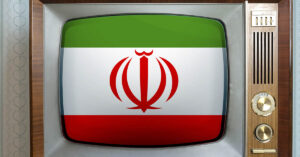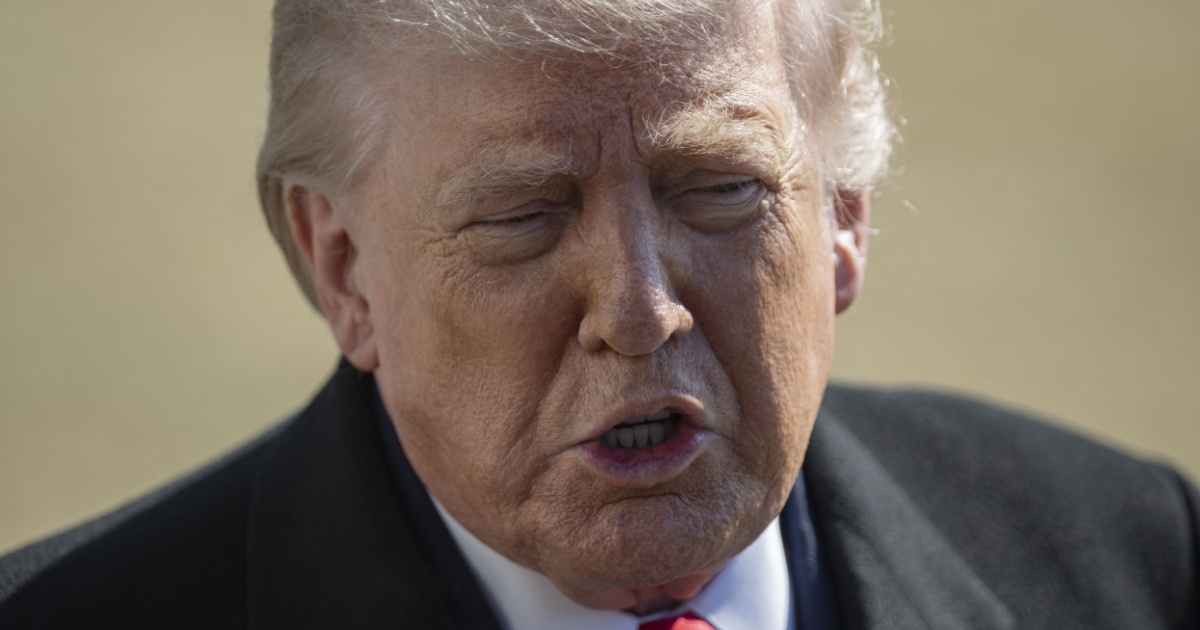

At a joint press conference alongside Ukrainian President Volodymyr Zelensky at the NATO summit in Ankara, Turkey, on July 8, 2026, Donald Trump told reporters that 111 missiles had been fired at the USS Abraham Lincoln by the “Islamic Republic of Japan.” He was plainly talking about Iran. Japan, a close US security ally, has not engaged in hostile military action against the United States in nearly a century.
At the same event, Trump called Zelensky “President Putin” while sitting directly next to him, before attempting to recover by claiming he was simply posing a question for the Russian leader. The two gaffes happened within the same press appearance, in front of a room full of journalists who were audibly laughing. The incident renewed calls for the 25th Amendment – the constitutional provision that allows a president to be declared unfit for office – and reignited a longer conversation about a pattern that critics say goes back years.
On the same day, Trump mistakenly referred to the 2015 Iran nuclear accord as the “JCPOC” rather than its correct acronym, JCPOA, and called TikTok “Tic Tac” while also describing Turkey as a “great company” before correcting himself to “country.” For a single day on the world stage, it was an unusually dense cluster of missteps. Taken together with his track record over the past several years, though, the Ankara slip-ups fit a recognizable pattern – a recurring trump geographical mistake that has followed him across multiple countries, continents, and administrations.
‘Islamic Republic of Japan’: What Actually Happened at the NATO Summit
Speaking to reporters at the NATO summit venue while fielding a question about European manufacturing of Patriot missile interceptors for Ukraine, the 80-year-old president pivoted to an anecdote about the USS Abraham Lincoln, saying: “We had 111 missiles shot by the Islamic Republic of Japan.” He was referring to Iran’s attack on the US aircraft carrier, which took place in March.
Japan and the United States are long-time security allies and have been deepening cooperation in addressing threats from countries such as China and North Korea. The idea of Japan firing over a hundred missiles at an American warship is, to put it mildly, not grounded in any current geopolitical reality. Iran, officially known as the Islamic Republic of Iran, has no linguistic or geographic overlap with Japan – making the substitution an odd one even as verbal shorthand.
Trump also appeared to mistake Ukrainian President Zelensky for Russian President Putin while discussing the ongoing Russian invasion of Ukraine. Gesturing toward Zelensky, Trump asked reporters, “You have a question for President Putin, please?” Following laughter from the press corps, Trump tried to walk it back by saying: “Do you have a question for President Putin – not Zelensky – Putin? What would you like to ask him? Because I’m gonna ask him that question.” According to The National News, Trump’s gaffes came after international travel and a packed summit schedule. During a NATO summit two years earlier, then-President Biden – also 81 at the time – introduced Zelensky as “President Putin.”
Greenland, Iceland, and a Press Secretary’s Denial
Six months before Ankara, Trump traveled to the World Economic Forum in Davos, Switzerland, to make his pitch for acquiring Greenland. The speech became notable for reasons beyond its diplomatic content.
Four times during the Davos address, Trump referred to Iceland instead of Greenland. “Our stock market took the first dip yesterday because of Iceland,” he said. “So Iceland has already cost us a lot of money, but that dip is peanuts compared to what it’s gone up.” Iceland is an independent island nation with nearly 400,000 residents, located east of Greenland. Trump was not discussing Iceland’s policies. He was discussing his attempt to acquire Greenland, Denmark’s autonomous territory in the Arctic. The two places share a similar name and little else.
White House Press Secretary Karoline Leavitt denied that Trump had said “Iceland” when he meant “Greenland,” even though video evidence showed he had done so repeatedly. In an X post following the address, Leavitt criticized a reporter for writing that Trump had appeared to mix up the two names several times, responding that Trump’s “written remarks referred to Greenland as a ‘piece of ice’ because that’s what it is.” The actual video showed Trump saying “Iceland” – out loud, on a live global broadcast – four times. The written remarks and the spoken remarks were different things.
Democratic lawmakers renewed calls for invoking the 25th Amendment following the Greenland-Iceland episode, according to a fact-check by Snopes. That amendment has never been successfully used to remove a sitting president, a threshold that matters when evaluating how much legislative weight those calls carry.
A Pattern That Goes Back Years
The Ankara and Davos incidents are the most recent examples, but the trump geographical mistake that critics keep cataloguing didn’t begin in 2026.
At the G7 summit in France in June 2026, Trump addressed the Emir of Qatar, Sheikh Tamim bin Hamad Al Thani, and told him: “They are the closest to Iran physically, so, with other countries, I noticed that they had to travel about 45 minutes to get there. With you, you could walk right across the border, so you are in a more dangerous position.” Qatar and Iran do not share a border. The two nations are separated by the Persian Gulf, with roughly 119 miles of water between them. Trump made the same claim in a separate exchange on Air Force One, as The Mirror USA noted, telling reporters: “They’re literally, you walk over from Iran to Qatar. You can walk it in one second. You go ‘boom boom,’ and now you’re in Qatar.”
During his first term in 2019, Trump made headlines when he claimed he was constructing a border wall in Colorado, despite the state sharing no border with Mexico. Speaking at an event in Pennsylvania, he declared: “We’re building a wall on the border of New Mexico. And we’re building a wall in Colorado. We’re building a wall in Texas. And we’re not building a wall in Kansas, but they get the benefit of the walls that we just mentioned.” Colorado sits directly north of New Mexico but doesn’t share a border with Mexico.
During a campaign rally in Atlanta, Georgia in 2016, Trump called Belgium “a beautiful city.” The Daily Caller covered the rally and noted the assumption was that Trump was referring to Brussels. Belgium is a country of 11 million people. Brussels is its capital. Around the same period, Trump had also publicly described Brussels as a place that felt like “a hellhole,” a remark that required some diplomatic smoothing when he later visited the city as president. Brussels, of course, is also the home of NATO headquarters – the alliance Trump was simultaneously criticizing for not doing enough.
For a look at the broader questions being raised about Trump’s cognitive fitness in 2026, the debate extends well beyond geography into clinical and constitutional territory, as covered in our earlier reporting on Trump’s fitness for office.
The Town Called Paradise
In November 2018, Trump visited Paradise, California – at the time the site of the deadliest wildfire in California history – and referred to it as “Pleasure.” He told the press: “And what we saw at Pleasure, what a name, right now… we just left Pleasure.”
The Camp Fire, which destroyed the town of Paradise, killed 85 people and burned through more than 153,000 acres, according to California Department of Forestry and Fire Protection records. Calling it “Pleasure” in front of survivors and first responders was noticed. The town’s name – Paradise – was on road signs, on the lips of every official he met that day, and in every news report he would have been briefed on before landing.
Greenland and Iceland are separate countries, despite their similar names – a distinction that has made Trump’s repeated mix-up a frequent target for political opponents and online commentators. Substitute “Paradise” for “Pleasure,” “Iran” for “Japan,” or “Greenland” for “Iceland,” and each individual error might be written off as a slip of the tongue on a busy day. The accumulation of them, across years, continents, and administrations, is what gives the pattern its political weight.
Read More: A New Poll Just Named the Worst American in All of History
What to Make of All of It
Social media users have labeled Trump the “dumbest President ever” following each new incident, while critics have repeatedly questioned how often similar mistakes have occurred during public appearances. Geographical errors have become a recurring source of controversy throughout Trump’s time in office, with each new incident quickly spreading online.
Trump’s latest geographical mishap, as AOL News noted in its July 8 coverage, prompted renewed demands for invoking the 25th Amendment. Whether those calls carry any legislative force is a separate matter – the Republican-controlled Congress has shown no appetite for acting on them, and the amendment has never been successfully used against a sitting president.
Between the Greenland-Iceland confusion at Davos in January 2026, the Qatar-Iran geography claim at the G7 in France in June, and the Iran-Japan substitution in Ankara in July, Trump made significant, verifiable geographical errors on three separate international stages across a single six-month stretch. Each was caught on camera. Each was reported globally. And in at least one case – the Davos speech – the White House’s response was to deny that the public had heard what it clearly heard.
Iran and Japan are not the same country. Greenland and Iceland are not interchangeable. Belgium is not a city. And Paradise, California, is not called Pleasure – something that matters especially when you’re standing in its ruins.
AI Disclaimer: This article was created with the assistance of AI tools and reviewed by a human editor.
Read More: Trump’s $2.2B Income Year Is Now Costing Him in the Polls