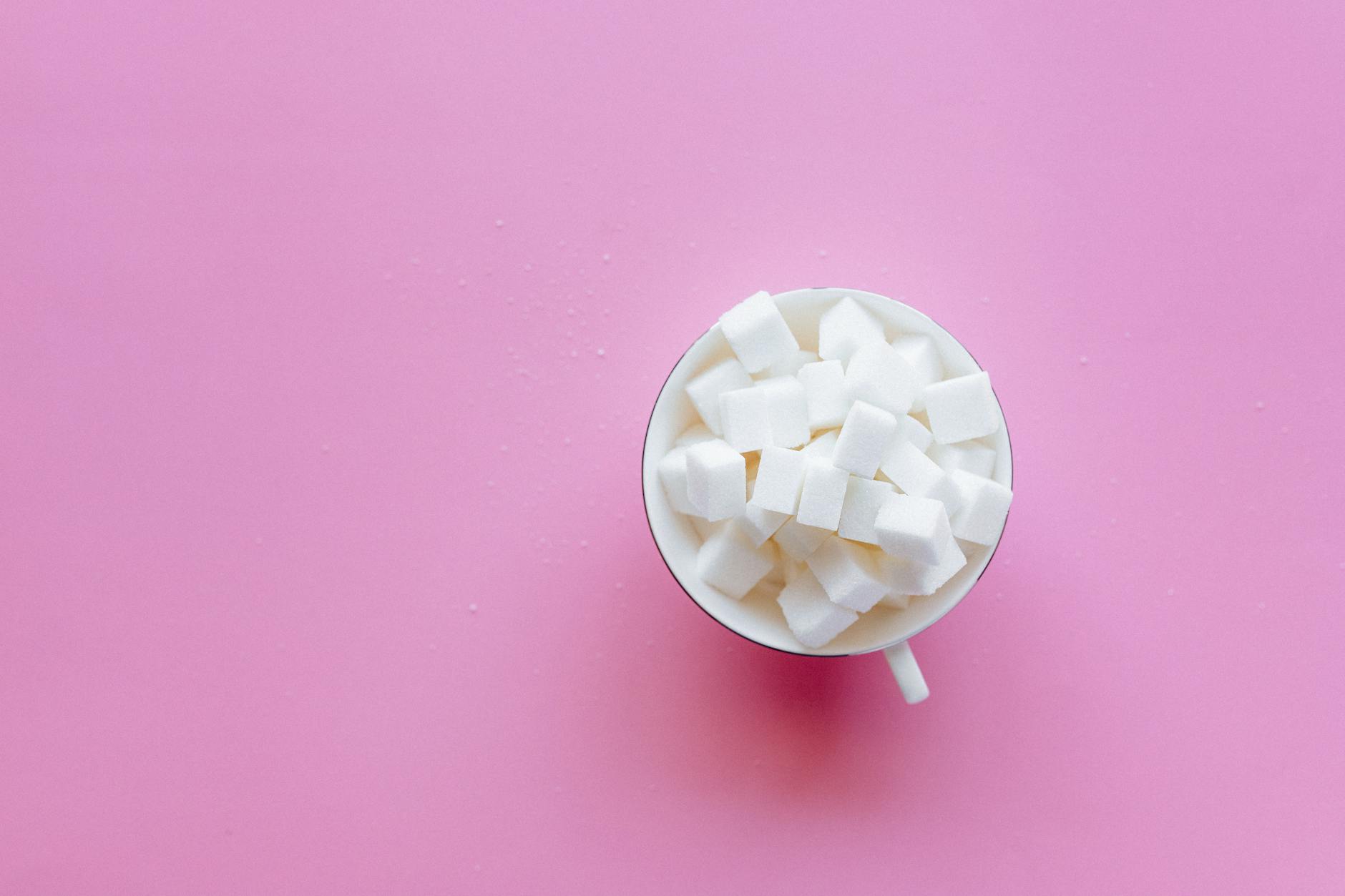

Reaching for a pack of sugar-free gum or a reduced-calorie candy bar has long felt like the responsible choice. No sugar spike, fewer calories, none of the guilt that comes with the real thing. For millions of people managing their weight or blood sugar, products sweetened with sugar alcohols like sorbitol have become a routine part of daily eating. That assumption of safety, however, is now facing serious scientific scrutiny.
A body of research building quietly for years has recently reached a new and more urgent pitch. The question researchers are asking is not simply whether sorbitol is “less bad” than table sugar. It’s whether, under certain biological conditions, it may be capable of causing the same type of metabolic damage to the liver that we normally associate with fructose, the sugar already most strongly implicated in fatty liver disease. The answer emerging from a 2025 study published in Science Signaling is deeply unsettling for anyone who has treated sugar-free products as a free pass.
What makes this story compelling is not just what the sweetener does, but when it does it. Your individual biology, specifically the composition of your gut microbiome (the community of bacteria living in your intestines), may determine whether sorbitol passes through your body harmlessly or becomes a driver of liver disease. That distinction has enormous implications, and most people who eat sugar-free products have no idea which category they fall into. Crucially, the primary experiments in this research were conducted in zebrafish, not humans, so how directly these findings apply to people is still an open question.
What Is Sorbitol, and Where Does It Come From?
Sorbitol is a type of sugar alcohol found naturally in some fruits and commercially manufactured to add sweetness and preserve moisture in low-calorie candy, gum, and other products. It is commonly added to sugar-free gum, protein bars, diet desserts, cough syrups, toothpaste, and other processed foods because it contains fewer calories than table sugar and produces a smaller spike in blood glucose. For food manufacturers, it offers an attractive profile that has made it a longtime staple of “diabetic-friendly” and low-calorie product formulations.
Sorbitol also occurs naturally in fruits such as peaches, apples, pears, and prunes. Researchers stress that naturally occurring levels in whole fruit are typically much lower and come packaged with fiber and nutrients that slow digestion. But the amounts delivered by packaged sugar-free products are a different matter entirely. Gut bacteria do a good job of clearing sorbitol when it is present at modest levels, such as those found in fruit, but problems arise when sorbitol quantities exceed what gut bacteria can degrade.
There is also a layer of complexity that few consumers would suspect: the body can make its own sorbitol. Using metabolomics and isotope tracing, researchers found that dietary glucose was converted to sorbitol by host intestinal cells, meaning that every time you eat a carbohydrate-rich meal, your gut is generating a small amount of sorbitol from the inside, regardless of whether you consumed any intentionally.
The Gut-Liver Axis: How Bacteria Determine What Happens Next
The pivot point in this entire story is the gut microbiome. Under normal conditions, the bacteria residing in your intestines act as a critical first line of defense. In control animals, bacteria degraded sorbitol before it could be transferred to the liver. The process is efficient enough that most healthy individuals with a robust and diverse microbiome never experience sorbitol accumulation at a meaningful level.
The trouble begins when those bacteria are absent, depleted, or overwhelmed. The research identifies a crucial line of defense in specific bacterial strains, notably from the Aeromonas genus, that can break down sorbitol into a harmless byproduct before it ever reaches the liver. An individual’s susceptibility to sorbitol’s negative effects appears to hinge dramatically on whether they possess these beneficial bacteria.
This creates a biologically asymmetric risk. Two people can consume identical amounts of sorbitol from the same sugar-free product and have completely different metabolic outcomes depending on the state of their gut microbiome. Antibiotic use, chronic stress, poor diet, aging, and gastrointestinal illness are all factors known to disrupt microbial diversity in the gut, potentially removing the exact bacterial strains that prevent sorbitol from reaching the liver. For those managing conditions like type 2 diabetes or insulin resistance, this is worth paying attention to, since those same conditions are also associated with less diverse gut microbiomes.
The Mechanism: From Sugar Alcohol to Liver Fat
When sorbitol does reach the liver in this animal model, the cascade of metabolic consequences is well-mapped by the Science Signaling research. Within the liver, sorbitol was converted into fructose 1-phosphate, which subsequently activated glucokinase and increased glycolytic flux, leading to increased hepatic glycogen and fat content.
Glucokinase is an enzyme that helps the liver process glucose. Unlike similar enzymes in other tissues, glucokinase is not switched off by the presence of excess glucose 6-phosphate. That means when it is activated by fructose 1-phosphate, there is no natural shut-off mechanism to prevent excessive glucose processing. The liver keeps converting glucose into fat even when it has already accumulated too much. The result is hepatic steatosis, the pathological fat buildup in the liver that defines early-stage MASLD (metabolic dysfunction-associated steatotic liver disease).
The most surprising finding from the research, according to senior author Gary Patti, is that sorbitol is essentially “one transformation away from fructose,” which means sorbitol can trigger effects similar to those caused by fructose itself. Patti is the Michael and Tana Powell Professor of Chemistry in Arts and Sciences and a professor of genetics and of medicine at the School of Medicine at WashU. He has previously shown that fructose processed by the liver can be diverted in ways that fuel cancer cell growth. His lab’s pivot to sorbitol was a logical extension of that work, and the results were more direct than expected.
The Zebrafish Model and What It Revealed
The primary experimental work in this study used zebrafish, a model organism whose biological systems closely mirror those of humans in key metabolic pathways. It is important to flag upfront that zebrafish are not humans, and results from animal studies do not automatically transfer to human biology. What the zebrafish model does allow is a controlled investigation of mechanisms that would be impossible to test directly in people.
Depletion of the gut microbiome in adult zebrafish led to the development of steatotic liver disease in animals on standard diets. The speed of onset was striking. In zebrafish lacking gut bacteria, liver disease developed within a week, even without high-sugar diets. This rapid development illustrates just how dependent the liver appears to be on the gut microbiome acting as a buffer against sorbitol accumulation.
The researchers then demonstrated reversibility. Antibiotic treatment of zebrafish to deplete gut microbiota resulted in hepatic steatosis, an effect mimicked by high concentrations of exogenous sorbitol and attenuated by inhibiting sorbitol formation or by intestinal repopulation with sorbitol-degrading Aeromonas bacteria.
The researchers say more studies are needed to determine whether similar mechanisms occur in humans and whether probiotic or microbiome-based therapies could eventually help protect against liver disease.
The Sugar-Free Sweetener Liver Disease Connection: Why It Matters Now
To appreciate the full significance of this research, you need to understand the scale of the disease it concerns. The global prevalence of MASLD has risen from 25.3% between 1990 and 2006 to 38.2% between 2016 and 2019, an increase of nearly 50% in global prevalence over the past three decades. By 2040, the MASLD prevalence rate for adults is projected to increase to more than 55%.
Fructose, which is heavily used in soft drinks and processed foods, has already been strongly linked to MASLD. The Patti lab’s research did not emerge in isolation. It builds on an established body of evidence showing how the liver processes fructose differently from other sugars, converting it into fat through pathways that bypass normal metabolic controls. MASLD, formerly known as nonalcoholic fatty liver disease, is associated with obesity, diabetes, and metabolic dysfunction. The findings may help explain why fatty liver disease has become so widespread, even among some people who try to avoid traditional sugar.
The sorbitol research adds a new variable to an already complex picture. People who reach for sugar-free products precisely because they have metabolic concerns, such as diabetes, insulin resistance, or weight management challenges, may also be the people with the most disrupted gut microbiomes. That makes them paradoxically more vulnerable to sorbitol’s liver effects, not less. The system can be overwhelmed by high levels of sorbitol from two sources: excessive consumption of “sugar-free” diet products and the body’s internal production of sorbitol from high glucose intake.
You can read more about how dietary habits affect liver health in this breakdown of foods that may harm your liver over time.
The Tipping Point Problem
One of the most practically relevant findings in this line of research is that even a healthy microbiome has limits. At low levels, such as those typically found in whole fruits, gut bacteria are usually effective at clearing sorbitol. Trouble begins when the amount of sorbitol exceeds what these microbes can handle. This overload can happen when large amounts of glucose are consumed, leading to increased production of sorbitol from glucose, or when the diet itself contains high levels of sorbitol.
This creates a precarious biological scenario. If a person lacks sufficient levels of sorbitol-degrading bacteria, the sugar alcohol passes from the gut into the portal vein, which carries it directly to the liver. The portal vein is the direct highway between the intestines and the liver, and whatever bypasses the gut’s microbial filter travels that route quickly and without further processing.
Even individuals with helpful bacteria may run into problems if their intake of glucose and sorbitol becomes too high, since the microbes can be overwhelmed. This means there is likely a threshold effect at play: small or occasional amounts of dietary sorbitol may pose little risk in people with healthy gut bacteria, while chronic or heavy consumption could overwhelm even a well-populated microbiome.
Limitations of the Current Evidence
Scientific rigor requires acknowledging what this research does not yet establish. The primary experiments were conducted in zebrafish, not humans. While zebrafish are a validated model for metabolic research, and many of the biochemical pathways involved are conserved across species, human gut microbiomes are significantly more complex and variable than those of zebrafish. The results do not mean people should panic over occasional sugar-free foods. The experiments involved concentrated exposures, and the research was conducted in zebrafish rather than humans.
The study does not establish a specific “safe” intake level for dietary sorbitol in humans, nor does it define exactly how depleted a person’s Aeromonas populations need to be before sorbitol accumulation becomes clinically meaningful. Translating the animal findings to human dietary risk requires careful epidemiological work that has not yet been published. The authors concluded that additional research is needed to better understand how gut bacteria regulate sorbitol metabolism and whether similar mechanisms occur in humans.
What the research does establish is a clear and biologically plausible mechanism by which a widely consumed sugar-free sweetener liver disease pathway could operate. These results indicate that sorbitol is derived from glucose in the zebrafish intestine, implicate gut microbiota in protecting against sorbitol-induced steatosis, and suggest that dietary sorbitol, which is used as a sugar substitute, may increase the risk of developing steatotic liver disease.
Read More: Common Foods and Drinks That Can Be Just as Bad for Your Liver as Alcohol
What This Means for You
The sorbitol research from Washington University represents a meaningful shift in how scientists and health-conscious consumers should think about “sugar-free” products. The central lesson is not that sorbitol is definitively dangerous for everyone. It is that the safety of a sweetener cannot be evaluated in isolation from the biological context of the person consuming it. In this case, that context is the health and diversity of your gut microbiome, something most people have never thought to factor into their snack choices.
For practical purposes, this translates to a few concrete steps. People who have recently completed antibiotic courses, who eat diets low in fiber and fermented foods, or who have conditions known to impair gut microbial diversity should be especially cautious about high sorbitol intake until more human data becomes available. Researchers are not calling for people to eliminate sorbitol entirely, noting that more studies are needed to determine whether similar mechanisms occur in humans. Second, the internal production pathway matters. When large amounts of glucose are consumed, the body’s own production of sorbitol from glucose increases, which means managing overall dietary sugar load remains important regardless of whether you consume sorbitol directly.
Third, and perhaps most importantly, the assumption that a “sugar-free” label confers metabolic safety is no longer supportable without caveats. A recent study found that artificial sweeteners, including sugar alcohols like sorbitol, may not be as harmless as previously thought, with research highlighting how these sugar substitutes can affect liver metabolism and contribute to steatotic liver disease, raising concerns about their widespread use. For anyone with existing risk factors for MASLD, including obesity, type 2 diabetes, or a family history of liver disease, that is a concern worth discussing with a healthcare provider. The liver is a remarkably resilient organ. Its resilience, though, depends on the full system around it, including the microbial community that helps protect it every time you eat.
Disclaimer: This information is not intended to be a substitute for professional medical advice, diagnosis, or treatment and is for information only. Always seek the advice of your physician or another qualified health provider with any questions about your medical condition and/or current medication. Do not disregard professional medical advice or delay seeking advice or treatment because of something you have read here.
AI Disclaimer: This article was created with the assistance of AI tools and reviewed by a human editor.
Read More: Research Finds 6 These Low Calorie Sweeteners May Speed Up Cognitive Decline