

More than half of widowed people – 54.6% – show no lasting psychological collapse after losing a partner. They grieve, and then, according to a 2025 study, they demonstrate what researchers classify as resilience. That number is not a reason to dismiss grief. It’s a reason to pay attention to what’s actually happening inside the women who move through it.
Major life events, relationships, losses, and moments of self-discovery don’t just change circumstances. They change the person living through them. Each of the ten life changing experiences for women described below has a documented before-and-after. A woman who has been through any of them tends to describe her life in two distinct chapters.
Several of these experiences are genuinely painful. None of them arrive on a schedule. But the evidence says they stick.
1. Making Her First Real Friend

The first time a woman has a friendship that feels genuinely mutual – not transactional, not competitive, not conditional on status or convenience – it rewires her expectations for every relationship that follows. Research published in the Journal of Youth and Adolescence found that friendships become primary sources of social support, replacing reliance on parental guidance and serving as a key influence on psychological well-being. That shift doesn’t happen gradually. It often arrives as a sudden recognition: this is what closeness is supposed to feel like.
The benefits extend well beyond emotional warmth. A 2025 review on friendship and well-being found that high-quality friendships in adolescence and early adulthood predict lower social anxiety, lower depression, and stronger social integration across decades. A woman who has experienced real friendship sets a higher standard for her own care, her own vulnerability, and the company she keeps. She becomes harder to settle for less.
Research also notes a strong link between social support and resilience, with women experiencing diverse psychological outcomes based on the quality of their available support networks. If a woman can identify even one friendship in her life that meets this definition of genuine mutuality, protecting and investing in that relationship is among the highest-return things she can do for her long-term health.
2. Discovering What She Actually Loves Doing

Most women can identify things they are good at. Fewer can name what they love doing when no one is asking them to be productive. Finding that thing – whether it’s writing, building, cooking, coaching, or something else entirely – is one of the most underrated life changing experiences for women because of what it does to almost every other area of life. Research on passion and career development from BetterUp shows a direct link between discovering and developing passions and achieving growth in both career and personal development.
The work implications alone are significant. Studies have shown that passionate workers are more resilient, perform better under pressure, and are more satisfied with their jobs. When a woman identifies what genuinely engages her, she starts making decisions based on internal signals rather than external expectations. Her tolerance for things that drain her – jobs, relationships, commitments – tends to drop.
Passion and burnout have a more complicated relationship than most people assume. A 2025 study in Social Sciences found that obsessive passion for work is a significant predictor of work-family conflict, which in turn escalates the risk of burnout. The distinction that matters is whether her engagement with what she loves comes from genuine joy or from compulsion to prove something. Women who find the former tend to report a quality of energy – focused, replenishable – that they hadn’t experienced before.
3. Hitting a Wall at Work

Women are more likely to consider a career change than men – 60% of women compared to 50% of men – a pattern that usually reflects something real: a job that stopped fitting, a ceiling that proved genuine, or a slow accumulation of days that felt like endurance rather than purpose. When that wall appears clearly enough, it becomes one of the most clarifying experiences in a woman’s life.
The 2025 Women in the Workplace report from McKinsey and LeanIn.Org found that 60% of senior-level women frequently feel burned out – the highest level recorded in the study’s five-year history – compared to 50% of senior-level men. That number coexists with a more hopeful one: women and men show equal commitment to their careers and equal motivation to do their best work when they receive comparable career support.
The wall, when it comes, often forces a woman to ask a question she’d been deferring: whether the career she built was the one she chose, or simply the one she accumulated. Most women who answer it honestly end up somewhere different within a few years. Belonging to a group built around shared purpose – a professional community, a mentorship circle, a peer network – frequently becomes the bridge between the old chapter and the next one.
4. Traveling Alone for the First Time

The first solo trip – even a short one – tends to produce an experience that feels disproportionate to its logistics. A weekend trip to a city she doesn’t know, a train journey with no one to consult, a meal eaten alone by choice rather than circumstance. The mechanics are simple. The psychological effect is not. A 2025 study on ResearchGate found that solo travel provides a controlled environment for resilience building, with measurable gains in self-efficacy and reductions in anxiety and stress.
More than three-quarters of all solo travelers are women, and searches for solo female travel have increased sharply since pre-pandemic levels. The appeal isn’t simply escape. Research links solo travel to measurable gains in self-efficacy, resilience, and emotional regulation – gains that persist long after returning home. The word researchers use most often is self-efficacy: the belief, built from evidence rather than affirmation, that she can handle things independently.
For many women, the trip becomes a reference point. When something difficult comes up later – a professional setback, a hard conversation, an unfamiliar situation – there’s a new entry in her internal record: she navigated an unknown city alone, solved the problem of the missed connection, ate dinner without company and found it fine. That record accumulates. It changes what she believes she is capable of.
5. Losing Someone She Loves

Grief doesn’t arrive on a predictable timeline or produce predictable outcomes, which is part of what makes it so disorienting. A 2025 study found that perinatal loss causes a range of short-term and long-term reactions in women, including shock, helplessness, frustration, and loneliness in the short-term, with anxiety, depression, and post-traumatic stress as potential long-term outcomes. The same broad pattern holds for other forms of loss: the death of a parent, a partner, a close friend.
What the research shows, and what many women report, is that loss also does something else. Research published in PLOS ONE in 2026 found that losing a partner not only has a negative impact but also enables life reorientation and promotes individual development, including becoming more independent and experiencing personal growth. That’s not a silver lining framed to make grief easier. It’s a description of what actually happens in a large proportion of cases when a woman is forced to rebuild her sense of who she is without a person she depended on.
Grief trajectories research – from the same Frontiers in Psychiatry study cited above – identified four patterns among widowed individuals: resilience in 54.6% of cases, chronic grief in 23.7%, depression improvement in 11.6%, and chronic depression in 10.1%. Those categories matter because they push back against both extremes: the assumption that grief inevitably resolves, and the assumption that it inevitably destroys. Most women pass through loss carrying real damage, and most also find their way to a version of themselves that couldn’t have existed before it.
6. Joining Something Bigger Than Herself

A book club, a running group, a volunteer organization, a faith community, a political campaign – the specific form matters less than the act of showing up regularly somewhere that has a purpose beyond any individual member. This kind of participation tends to do something to a woman that purely individual achievement cannot. Research published in PMC in 2025 found that social support interactions within groups teach skills that cascade forward across time and relationships, strengthening both interpersonal competence and psychological well-being.
The mechanism is partly social and partly cognitive. When a woman belongs to a group oriented around a shared goal, she receives feedback about herself that she can’t generate in isolation. She learns how she handles conflict, how she leads or follows, where her strengths surface under real conditions. That process also creates the conditions for deeper friendships to form – connections forged through action rather than proximity.
A woman who invests in one or two communities with genuine stakes tends to report a sturdiness in her identity that isn’t available through individual effort alone. She knows who she is because she’s seen herself in action alongside other people.
7. Having a Mental Health Crisis – and Getting Help

Data from NHS England shows that over 26% of women aged 16 to 24 report having a common mental health problem in any given week, compared to 17% of adults overall. Anxiety and depressive disorders are disproportionately common among women across the age spectrum, and the period before a woman seeks support often stretches far longer than it needs to. The crisis itself is not the turning point. Asking for help is.
What changes after treatment – therapy, medication, or both – is often a woman’s relationship with her own internal signals. She learns to recognize the difference between stress and alarm, between productive discomfort and genuine distress. She builds a vocabulary for what she’s experiencing that lets her communicate it more accurately and act on it earlier. That’s a set of skills that doesn’t disappear when the acute phase ends.
Research published in PLOS ONE in 2025 found that women improve their mental health through personal development work because they can transform their personalities, enhance their social and personal abilities, and strengthen their resilience to unforeseen adversity. The version of herself that comes through a mental health crisis with professional support tends to be more self-aware and more direct about her needs – qualities that affect every relationship and decision that follows.
8. Letting Go of the Need to Be Perfect

Perfectionism in women often presents as conscientiousness, diligence, or high standards. Internally, however, it is frequently experienced as a constant audit of performance, a baseline assumption that the current version of herself is insufficient, and a reluctance to act until conditions feel ideal. When that pattern breaks — usually through failure, exhaustion, or a relationship honest enough to name it — the shift can feel sudden. A broad body of research in Frontiers in Psychology and other peer-reviewed journals has found that maladaptive perfectionism is consistently associated with higher levels of burnout, anxiety, and lower life satisfaction across both clinical and non-clinical populations.
The connection between maladaptive perfectionism and burnout is well-established in clinical and occupational psychology. Studies consistently show that individuals with higher perfectionistic tendencies report greater anxiety, increased stress reactivity, and more difficulty delegating or tolerating imperfection. This is particularly true when perfectionism is self-critical rather than goal-oriented. Releasing that standard does not mean lowering quality. It means separating performance from identity — allowing a piece of writing, a decision, or a conversation to be adequate without it also functioning as proof of personal worth.
From a psychological perspective, this shift reflects a change in how standards are regulated rather than a loss of standards altogether. A person who becomes less driven by maladaptive perfectionism tends to make different behavioral choices: taking risks they previously avoided, sharing work before it feels fully finished, and staying engaged in relationships even when conflict arises instead of attempting to manage perception at all times. These behavioral changes — not just the internal shift in self-talk — are what make this pattern one of the more durable and consequential changes in how people approach their lives.
9. Accepting People as They Are
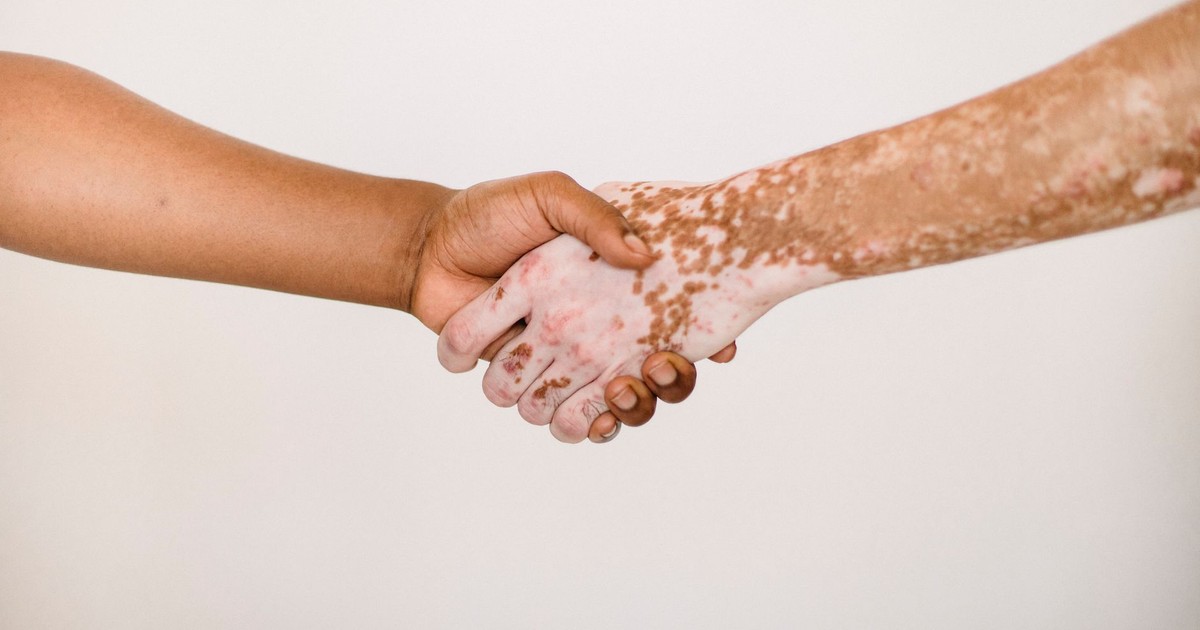
At some point a woman stops waiting for her mother to become different, her partner to change, her colleague to finally understand. She stops interpreting disappointing behavior as a problem to solve and starts accepting it as information. That shift, from management to acceptance, is one of the more peaceful and underappreciated life-changing experiences in adulthood.
Accepting someone is not the same as condoning their behavior, staying in a damaging relationship, or giving up on growth. Research on acceptance-based coping and psychological flexibility consistently finds that individuals who are more accepting of internal and external experiences tend to show lower emotional reactivity and improved relationship functioning over time. Acceptance does not eliminate discomfort; it reduces the secondary struggle against it, freeing attention for more adaptive action.
In clinical psychology, this approach is closely associated with Acceptance and Commitment Therapy (ACT), which emphasizes responding to thoughts and emotions without attempting to control or suppress them. Over time, this shift tends to recalibrate relationships: some become closer, freed from unspoken expectations, while others naturally drift when those expectations no longer sustain them. A person who develops greater acceptance is often more emotionally regulated in conflict, less reactive to disappointment, and clearer about their own needs.
Read More: 8 Powerful Life Lessons Every Woman Should Remember
What This Means for You

None of these ten experiences come with an ideal timing or a recommended order. Some arrive uninvited – loss, crisis, burnout. Others require a decision: to travel alone, to join something, to seek help, to let go. Each one demands something from a woman that ordinary life doesn’t. That demand is, in most cases, exactly what produces the change.
If you recognize several of these experiences in your own history, the more useful question is not which ones you’ve been through but what you did with them. The research is consistent: the women who extract the most durable change from hard experiences are the ones who seek support, name what happened, and use it to clarify what they want next. If you’re in the middle of one of these experiences right now – a career crisis, a loss, a friendship that’s teaching you what closeness feels like – waiting until it’s over before making meaning of it tends to delay the very growth that’s available inside it.
Disclaimer: The information provided here is for educational and informational purposes only and is not a substitute for professional psychological, psychiatric, or mental health advice, diagnosis, or treatment. Always seek the guidance of a licensed mental health professional, therapist, psychologist, or psychiatrist with any questions or concerns about your emotional well-being or mental health conditions. Never ignore professional advice or delay seeking support because of something you have read here.
AI Disclaimer: This article was created with the assistance of AI tools and reviewed by a human editor.