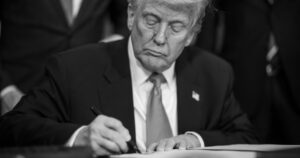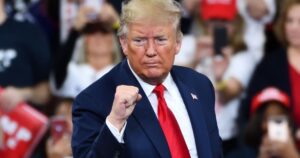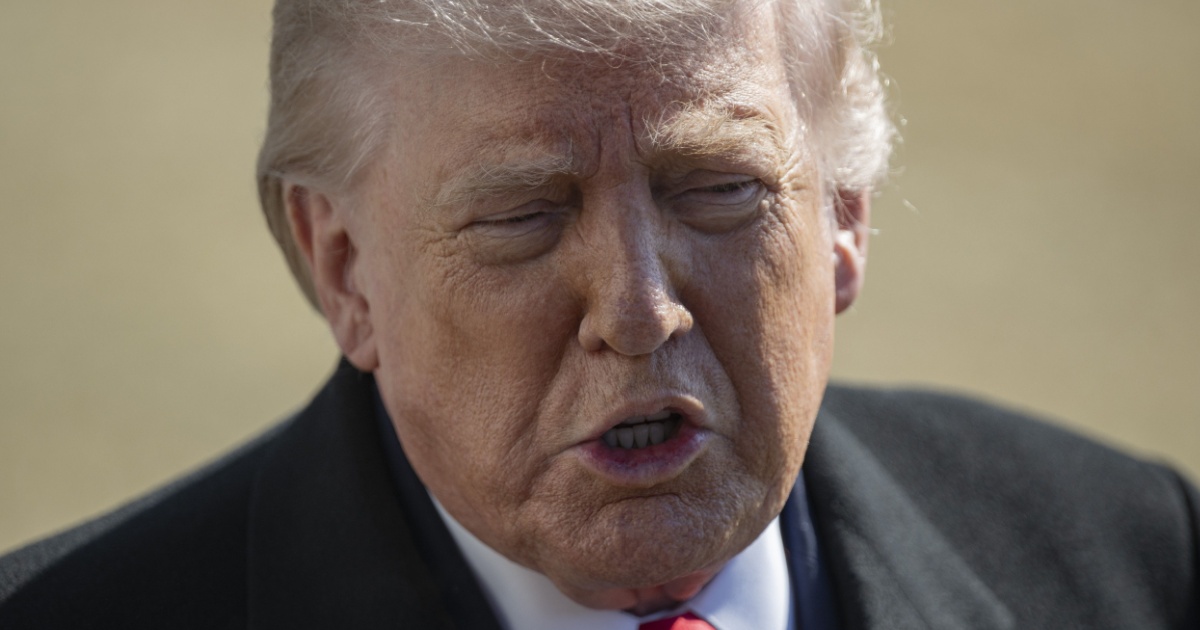

A New York jury found Trump guilty on all 34 felony counts of falsifying business records in May 2024. That single fact had no modern precedent. No sitting or former U.S. president had ever been convicted of a crime. The verdict arrived not from a partisan investigation but from 12 jurors who spent about a day and a half deliberating before reaching a unanimous decision. The Trump controversies documented here span two full presidential terms, multiple courtrooms, a leaked military group chat, and a dismantled foreign aid agency – and they are not equal in weight, but they are all part of the documented record.
Some of these events are legally significant. Others exposed failures of judgment or governance. A few fall into a category that resists easy categorization. Taken together, they form a picture of a political era that historians will be reconstructing long after the participants have left the stage. Here are ten-plus entries.
1. Became the First President Convicted of a Felony
A New York jury found Trump guilty in May 2024 on all 34 felony counts of falsifying business records to conceal a $130,000 hush-money payment to adult film star Stormy Daniels, making him the first president convicted of a crime. The conviction itself was historic enough. The circumstances surrounding it were equally extraordinary: the scheme involved Trump’s former personal attorney Michael Cohen paying Daniels to stay quiet during the 2016 presidential campaign, with Trump allegedly reimbursing Cohen through falsely labeled “legal expenses.”
After about a day and a half of deliberations, the 12 jurors unanimously agreed that Trump falsified business records to conceal the payment to Daniels in order to influence the 2016 presidential election. During sentencing, Trump told the court, “I would just like to explain that I was treated very, very unfairly,” reiterating the claim that the trial was politically motivated and arguing he was innocent despite the jury’s verdict.
Trump received an unconditional discharge for his criminal conviction, meaning he carries a criminal record but faces no other penalties. The legal saga continued into 2026. A federal judge twice denied Trump’s efforts to move the case to federal court – first after his March 2023 indictment, and a second time following the May 2024 conviction and the Supreme Court ruling on presidential immunity. The conviction stands.
2. The Signal Chat That Leaked Classified War Plans
In March 2025, The Atlantic published Signal messages that editor-in-chief Jeffrey Goldberg received from the most senior national security officials of the U.S. about military strikes in Yemen against Houthi terrorists, after he was added by National Security Advisor Michael Waltz to a war-planning group chat on Signal. The scandal broke not because of a whistleblower or an intelligence agency – but because the national security adviser accidentally texted the wrong person.
The newly revealed texts showed Hegseth sharing operational details about the pending Houthi attacks roughly two hours before the first strike occurred on March 15. He gave the group – which included Goldberg – information about the timing of the attacks and the weapons to be used. A source familiar with the matter said documents sent within the Pentagon about the operation were marked classified and included the same information Hegseth disclosed in the Signal chat about specific weapons platforms and timing. “It was classified when it was shared below the principal level,” this person said.
The administration’s response was to insist nothing classified had been shared. Then The Atlantic published the full transcript. Democratic Sen. Jack Reed, the ranking member on the Senate Armed Services Committee, called it “one of the most egregious failures of operational security and common sense I have ever seen.” When pressed during a White House event, Trump said, “I don’t know anything about it.”
3. The Longest Government Shutdown in U.S. History
The longest government shutdown in history came to an end after 43 days and more than a dozen attempts to reopen the government. For comparison, the previous record was 35 days, set during a dispute over border wall funding in December 2018 through January 2019. The shutdown ran from October 1 to November 12, 2025, as Congress failed to pass appropriations legislation for the 2026 fiscal year.
The bill that finally ended the standoff funds some agencies through the end of the following September, notably including SNAP, which provides food assistance to nearly 1 in 8 Americans. By day 20, approximately 750,000 workers were furloughed daily without pay, while 1.4 million essential workers continued working without paychecks. For millions of federal workers and program recipients, the record-breaking political deadlock wasn’t an abstraction – it was missed paychecks and empty pantries.
4. Attempting to End Birthright Citizenship
Executive Order 14160, titled “Protecting the Meaning and Value of American Citizenship,” was signed by Trump on January 20, 2025. It aimed to challenge the prevailing interpretation of the Citizenship Clause of the 14th Amendment, seeking to end birthright citizenship for children of unauthorized immigrants as well as immigrants legally but temporarily present in the U.S., such as those on student, work, or tourist visas.
Courts moved quickly. U.S. District Judge Leo Sorokin, an appointee of former President Barack Obama sitting on the federal bench in Boston, granted a nationwide preliminary injunction, affirming that the constitutional guarantee of citizenship applies broadly and finding the policy to be “unconstitutional and contrary to a federal statute.” Sorokin was the fourth federal judge to block the order, joining colleagues in Maryland, Washington, and New Hampshire who had each issued preliminary injunctions blocking the Trump administration from enforcing the birthright citizenship executive order. The attempt to rewrite one of the most settled doctrines in American constitutional law through a single executive order struck legal scholars across the political spectrum as legally untenable – and courts agreed, repeatedly.
5. Dismantling USAID and Gutting Foreign Aid
The Trump administration empowered DOGE to dismantle USAID, a key institution in foreign aid including HIV/AIDS prevention programs, halting critical humanitarian aid, disaster relief, and global health initiatives. The agency had operated for more than 60 years and disbursed aid to over 100 countries. Its sudden, unilateral elimination drew bipartisan alarm.
On March 10, 2025, Secretary of State Marco Rubio announced that the Trump administration was canceling 83% of programs at the U.S. Agency for International Development and intended to fold the remaining programs under the State Department, capping the quick and drastic dismantlement of the U.S. independent humanitarian organization. “After a 6 week review we are officially cancelling 83% of the programs at USAID,” Rubio said. According to internal USAID projections, if the cutbacks were not restored and other donors did not step in, 1 million starving children would lose access to food and nutrition each year, and up to 17.9 million more people would contract malaria annually, with as many as 166,000 deaths – a 39% increase from current rates.
6. The E. Jean Carroll Sexual Abuse Finding and Defamation Verdict
In May 2023, a federal jury found Trump liable for sexual abuse and defamation against writer E. Jean Carroll, awarding her $5 million in damages. In January 2024, a second jury found Trump liable for defamation again – this time awarding Carroll an additional $83.3 million after Trump continued making public statements about her following the first verdict. According to NPR’s coverage of the January 2024 verdict, the combined civil liability totaled over $88 million.
The Carroll verdicts never resulted in criminal charges, but as civil findings by two separate juries, they constitute a documented legal record. Trump was found – by a jury of his peers – to have sexually abused and repeatedly defamed a woman. He appealed the damages, but the findings of liability in both cases have stood.
7. Praising Putin’s Invasion of Ukraine as “Genius”
Just days after Russia invaded Ukraine in early 2022, Trump had nothing but praise. “I went in yesterday and there was a television screen, and I said, ‘This is genius,'” Trump said in a radio interview, adding: “Putin declares a big portion of Ukraine as independent. Oh, that’s wonderful… He used the word ‘independent,’ and ‘we’re gonna go out and we’re gonna go in and we’re gonna help keep peace.’ You gotta say that’s pretty savvy.”
The comments landed while Ukrainian cities were under active bombardment and NATO allies were scrambling to coordinate a response. The praise – from a former U.S. president and then-leading Republican candidate – handed Russian state media a gift and gave European leaders a preview of what a second Trump term might look like on the world stage. It proved prophetic. In his second term, Trump’s pressure on Ukraine to accept Russian territorial gains became a defining feature of U.S. foreign policy.
8. The New York Civil Fraud Verdict
Trump has always attracted fraud allegations, and on February 16, 2024, a Manhattan judge found him liable for inflating the value of his assets and net worth in order to obtain more favorable loans from banks. Judge Arthur Engoron ordered Trump to pay over $450 million in penalties – a sum that briefly raised questions about whether Trump would need to liquidate New York real estate holdings to cover it. He ultimately posted a bond, and the case went to appeal.
The civil fraud verdict was distinct from the hush-money criminal conviction: this was a business fraud case, not a campaign finance case. The finding established, legally, that Trump had systematically misrepresented the value of properties in his portfolio for years. For a man whose entire brand was built on the image of financial success, the documented reality – as established by a New York court – told a different story.
9. Sending Classified Information Emails – Wait, No. That Was the Other Party
The irony that defined the 2025 Signal scandal wasn’t lost on observers. During the 2016 presidential campaign, Trump relentlessly attacked Hillary Clinton over her use of a private email server for government communications, leading crowds in chants of “Lock her up.” The revelation that Trump’s own cabinet had shared war plans over an unsecure consumer messaging app sparked outrage, including from former Secretary of State Hillary Clinton, who posted on X: “You have got to be kidding me.”
The contrast between the 2016 campaign message and the 2025 Signal scandal was stark enough that it dominated political commentary for weeks. Clinton’s private server concerned retroactive classification of emails. Hegseth’s Signal messages included real-time military strike timing transmitted to Goldberg’s cellphone at 11:44 a.m. ET on March 15 – just 31 minutes before the first U.S. warplanes launched, and two hours before the period in which a primary target was expected to be killed.
👀 You have got to be kidding me.https://t.co/IhhvFvw6DG pic.twitter.com/bnNG4dGSpI
— Hillary Clinton (@HillaryClinton) March 24, 2025
10. Attempting to Buy Greenland – Twice
Trump was obsessed with the idea of buying Greenland during his first term, triggering diplomatic confusion in 2019. Denmark’s prime minister at the time called the overture absurd. That should have been the end of it. In his second term, Trump revived the idea with more aggression, stating that the U.S. would acquire Greenland “one way or another” and refusing to rule out military force to do so.
Greenland is neither a private island nor up for sale. At 836,330 square miles, it is the largest island in the world, one that exists within the Kingdom of Denmark but is largely autonomous. The renewed push in 2025 triggered a formal diplomatic protest from Denmark, a NATO ally, and prompted emergency consultations among European governments about U.S. intentions toward their sovereign territories.
11. Floating Venezuela as the 51st State
Barely five months after ordering a military operation that extracted a sitting head of state from his own capital city, Trump floated a proposal that would have been unthinkable in any recent American administration: turning a sovereign South American nation into the 51st state of the United States.
The remark, made in a phone call on May 12, 2026, was relayed publicly by Fox News correspondents and immediately ignited a firestorm of reactions from Caracas to Washington. Venezuela’s acting president flatly rejected the idea. The proposal was the latest in a series of territorial ambitions Trump publicly floated during his second term, following similar overtures toward Canada and Greenland. Constitutional scholars and international law experts broadly agree that such an annexation would face insurmountable legal, political, and diplomatic obstacles.
12. The Mass Federal Workforce Purge
The Trump administration sent mass emails encouraging federal workers to resign, with thinly veiled threats of termination. These emails, sent to approximately two million federal employees, warned of impending job cuts and reductions in benefits, creating a climate of fear and uncertainty. The tactic, which bore the fingerprints of DOGE and Elon Musk’s team, was widely criticized by federal employee unions and civil service groups.
Approximately 77,000 federal employees – about 3.2% of the workforce – accepted the administration’s buyout offer, falling short of the 5 – 10% target. The broader DOGE-led downsizing went further, with the agency laying off tens of thousands of workers, cutting foreign-aid programs including USAID, and shaking up global health efforts. Courts blocked portions of the downsizing, but the damage to federal institutional capacity – the loss of experienced staff, the gutting of institutional knowledge – is harder to reverse than a court order.
Read More: New Poll Results Are Creating Serious Problems for Trump in 2026
Approval Rating: A Verdict From the American Public?
Trump’s job approval rating now stands at 34% – the lowest mark of his second term, according to a Pew Research Center survey of 5,103 U.S. adults conducted April 20 – 26, 2026. The specific character assessments in that same survey are just as striking. One of the steepest declines has been in the share of Americans who say Trump “keeps his promises” – 38% say this describes him very or fairly well, down from 51% shortly after his reelection. The share who describe Trump as “mentally sharp” has also dropped, to 44%, down from 48% the previous August.
A majority of Americans – 56% – now say the overall level of ethics and honesty in the federal government has fallen during Trump’s term, according to the same Pew research. This represents a shift from early in his second term, when 47% expected ethics to decline and 31% thought they would rise. Those aren’t reactions to abstract policy disagreements. They’re responses to specific events – the ones documented above. Voters who want to make decisions based on the actual record, rather than on political branding or media noise, have a long paper trail to work from.
AI Disclaimer: This article was created with the assistance of AI tools and reviewed by a human editor.
Read More: Why Trump’s MAGA Base Believes He’s in ‘Perfect Health’